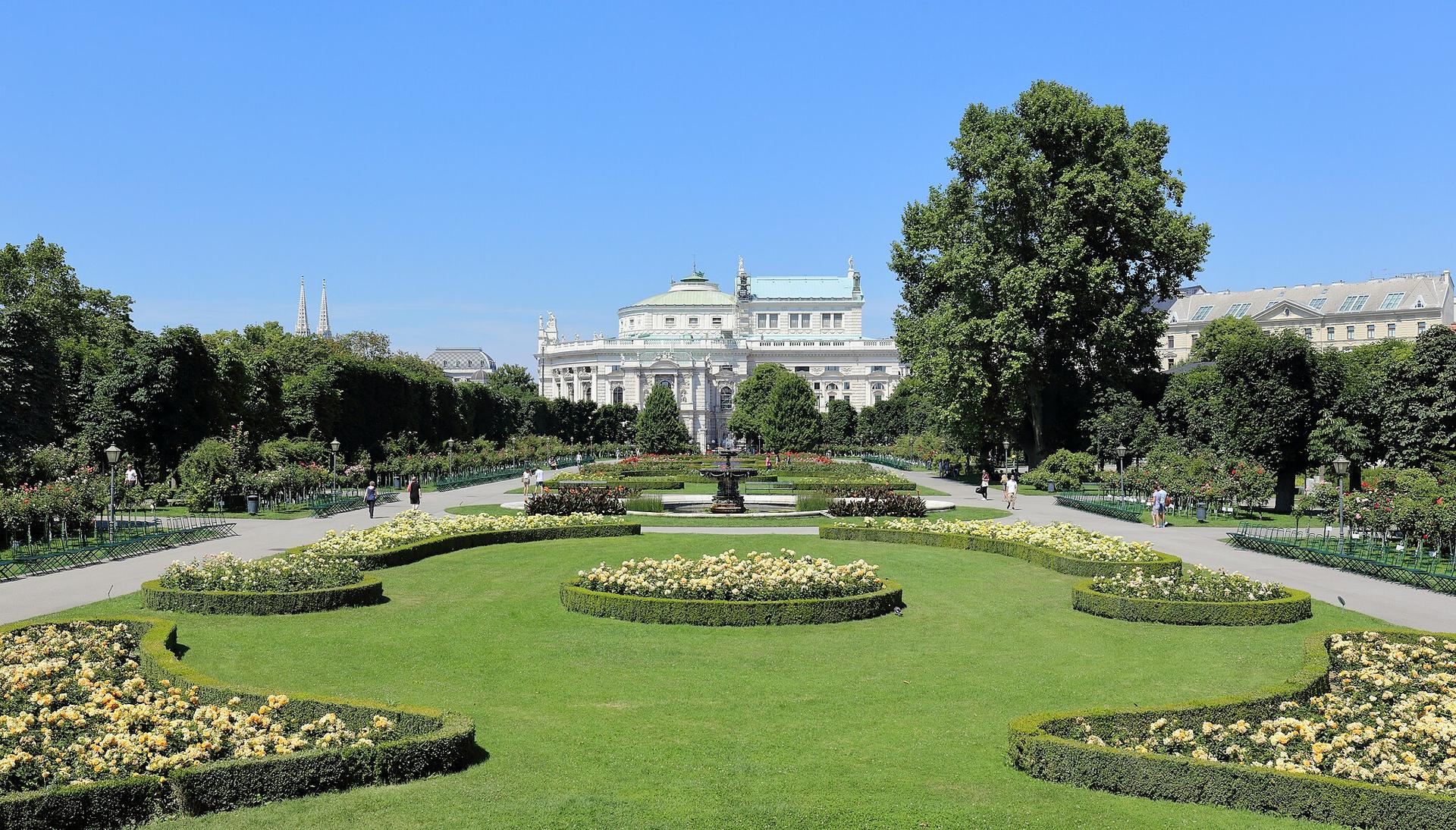
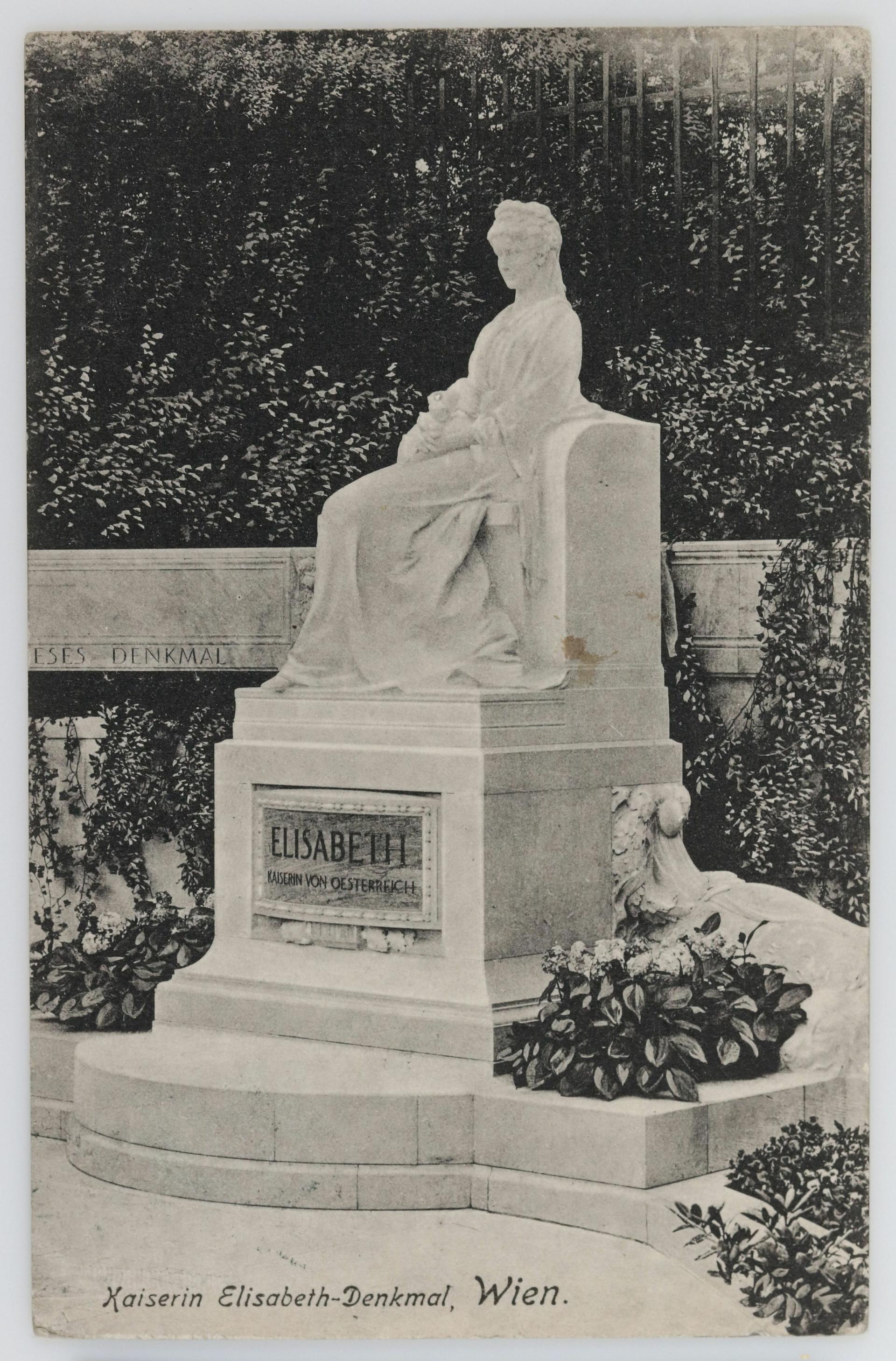
The seated white marble figure at the end of the lawn is her. Carved by , framed by the architect , unveiled on 4 June 1907.
Nine years after her death, and paid for by a public subscription that ran across the whole empire, from archdukes down to schoolchildren handing in small coins.
Which is the strange part. The woman who dodged state visits, who walked behind a fan and a parasol, who had barely lived in this city for decades and could not stand being looked at, became after her murder the most reproduced face in Austria. Plates, tins, postcards, statues. The grieving emperor approved all of it.
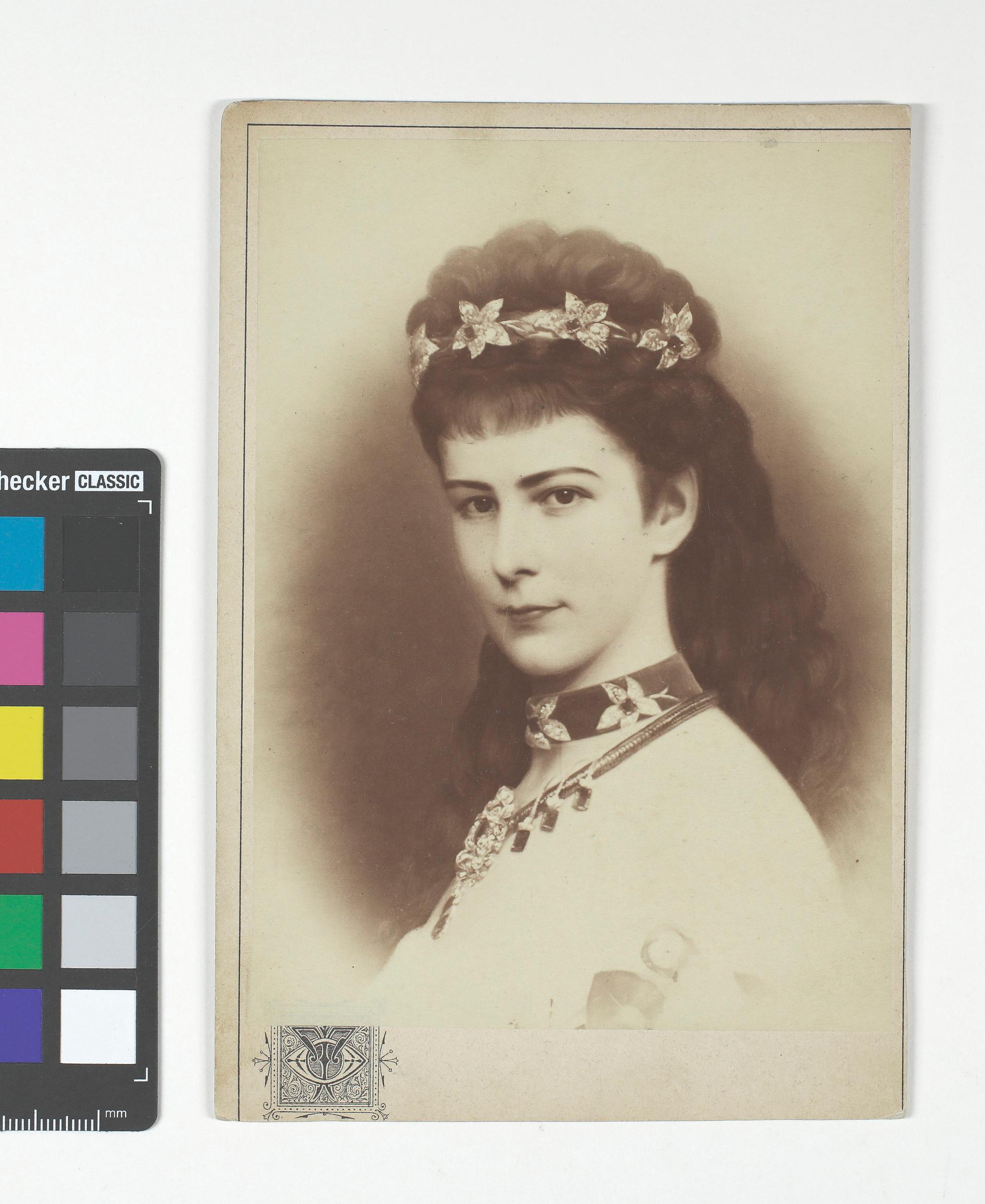
Look at the pose. Calm, composed, turned towards the city. She sat for almost no new portraits or photographs after she turned thirty-two, so this face is a guess, assembled from pictures of a much younger woman.
Walk back towards the palace. The next stop is a library, and it explains what she was doing with all those hours.
Sources. Story: Kaiserin-Elisabeth-Denkmal, Wien Geschichte Wiki; Empress Elisabeth of Austria, English Wikipedia; ROODS production 2026 Photos: Carl Ledermann jun., 1., Volksgarten - Kaiserin-Elisabeth-Denkmal, Ansichtskarte, 1908, Wien Museum Online Sammlung, Inv. 65861/161, CC0, https://sammlung.wienmuseum.at/en/object/426937-kaiserin-elisabeth-denkmal-wien; Volksgarten Vienna June 2006 300.jpg, Gryffindor, CC BY-SA 3.0, via Wikimedia Commons, https://commons.wikimedia.org/wiki/File:Volksgarten_Vienna_June_2006_300.jpg