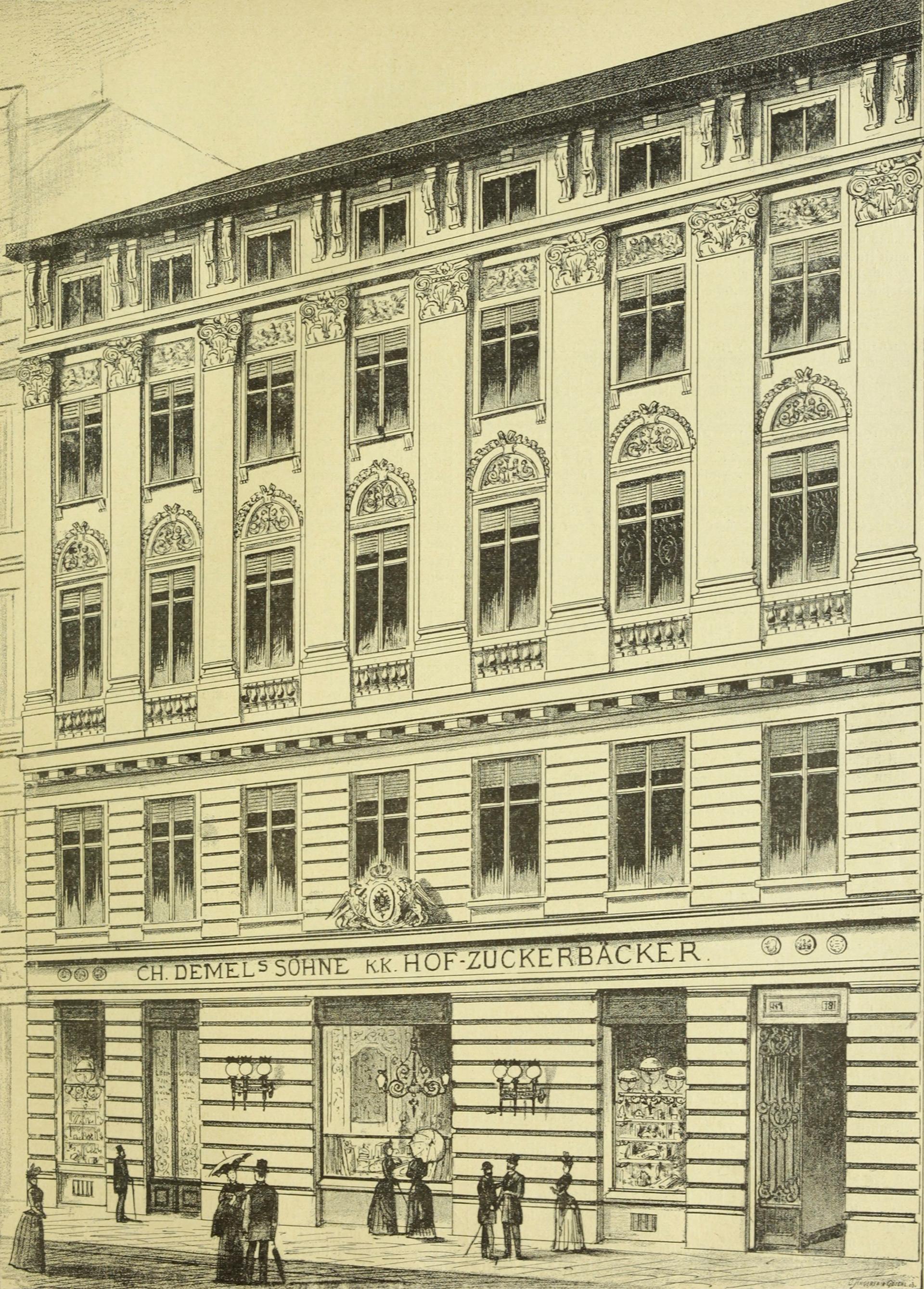
Kohlmarkt 14, the , holding that title since 1874 and still selling candied violets as the sweet the empress preferred.
Which tells you almost everything about her and food, because a violet was roughly the size of what she allowed herself.
was tall for her century, a metre seventy-three, and she spent forty years holding her weight near fifty kilos. She weighed herself daily, sometimes more often. Days went by on little more than beef juice, milk and eggs, and when the scale moved she stopped eating altogether for a while and called it a cure. Historians now read that as an eating disorder. The court read it as the empress being difficult.
And then the other side of it. In 1878, travelling incognito, she walked into an ordinary restaurant, ordered champagne, roast chicken and a salad, and finished with a considerable quantity of cake. Her companions were stunned.
She makes an odd patron saint for a pastry shop. Go in afterwards if you like. For now carry on up the Kohlmarkt towards , where the copper dome with the eagle on top is the front door of .
Sources. Story: Empress Elisabeth of Austria, English Wikipedia; Vandereycken & Van Deth, The Anorectic Empress, History Today 1996; Hofkonditorei Demel, Wien Geschichte Wiki; ROODS production 2026 Photos: Konditorei Demel, Vienna, 1888.jpg, public domain, via Wikimedia Commons, https://commons.wikimedia.org/wiki/File:Konditorei_Demel,_Vienna,_1888.jpg; Hans Nachbargauer, 1., Graben - Blick Richtung Kohlmarkt, Ansichtskarte, after 1904, Wien Museum Online Sammlung, Inv. 106758/4, CC0, https://sammlung.wienmuseum.at/en/object/608849-wien-graben