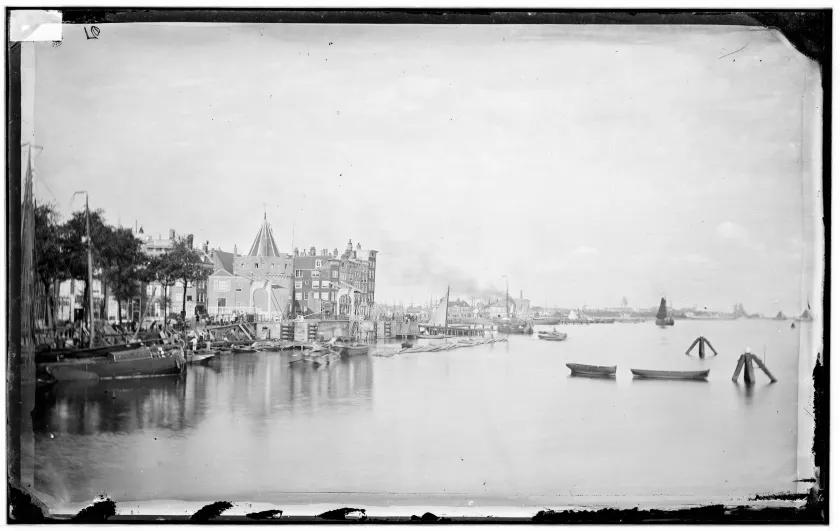
From the Odebrug you look across a narrow strip of water at the back of Central Station. Well into the nineteenth century there was no building there, and no ground either, because that was where the harbour of Amsterdam began, out in the open water of the IJ.
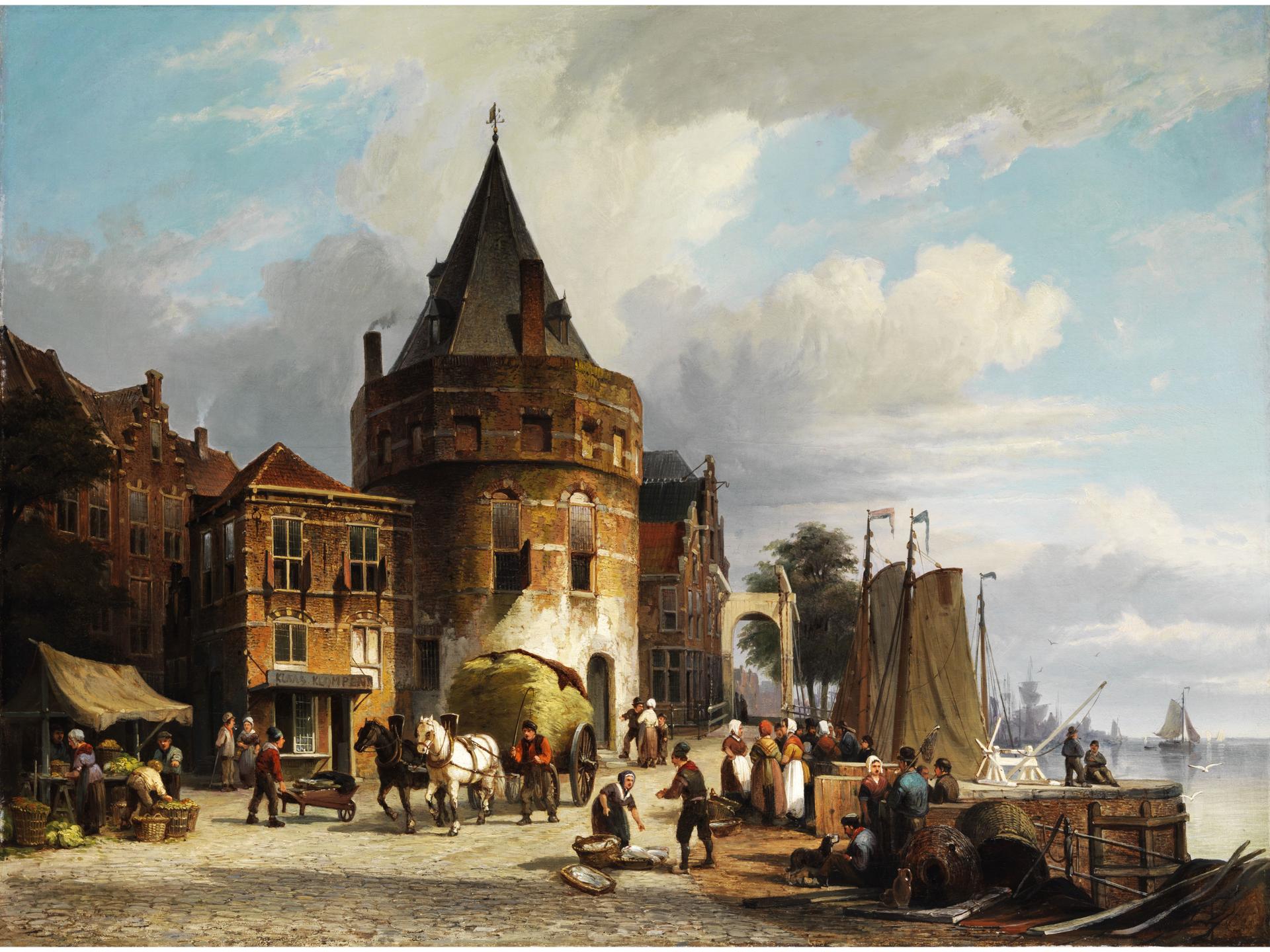
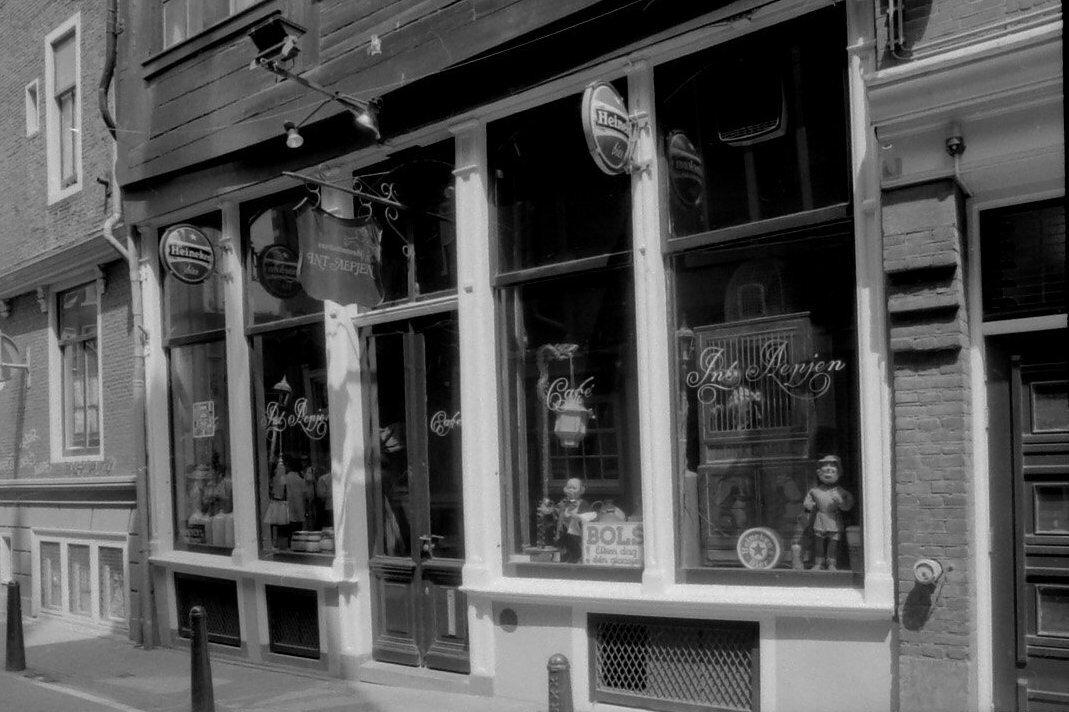
Seagoing ships moored between double rows of poles, and small lighters carried their cargo from there to the warehouses along the . Only beer ships were allowed to sail all the way through to the excise house, where the duty was charged by the barrel. That little building still stands, these days as a café.
The whole harbour sat behind a wall of poles, with floating booms in the gaps and guard huts beside them. Their names are still in use: the café Hannekes Boom on the waterfront is named after the boom that once hung across the channel there.
Anyone who came back after the boom bell had rung stayed outside the city for the night. For those sailors the city built the Nieuwe Stadsherberg in 1662, on oak piles in the water, with a long gangway to the shore near what is now café Karpershoek. Plenty of them missed that plank in the dark and disappeared into the cold IJ.
Around 1880 all of it vanished under three artificial islands carrying the station, which rests on close to nine thousand wooden piles. What is left of the old harbour is a few water steps in the alleys and a handful of names.
Sources. Story: Amsterdam City Archives; Wikipedia, Nieuwe Stadsherberg; Wikipedia, Amsterdam Centraal station Photos: Stadsarchief Amsterdam