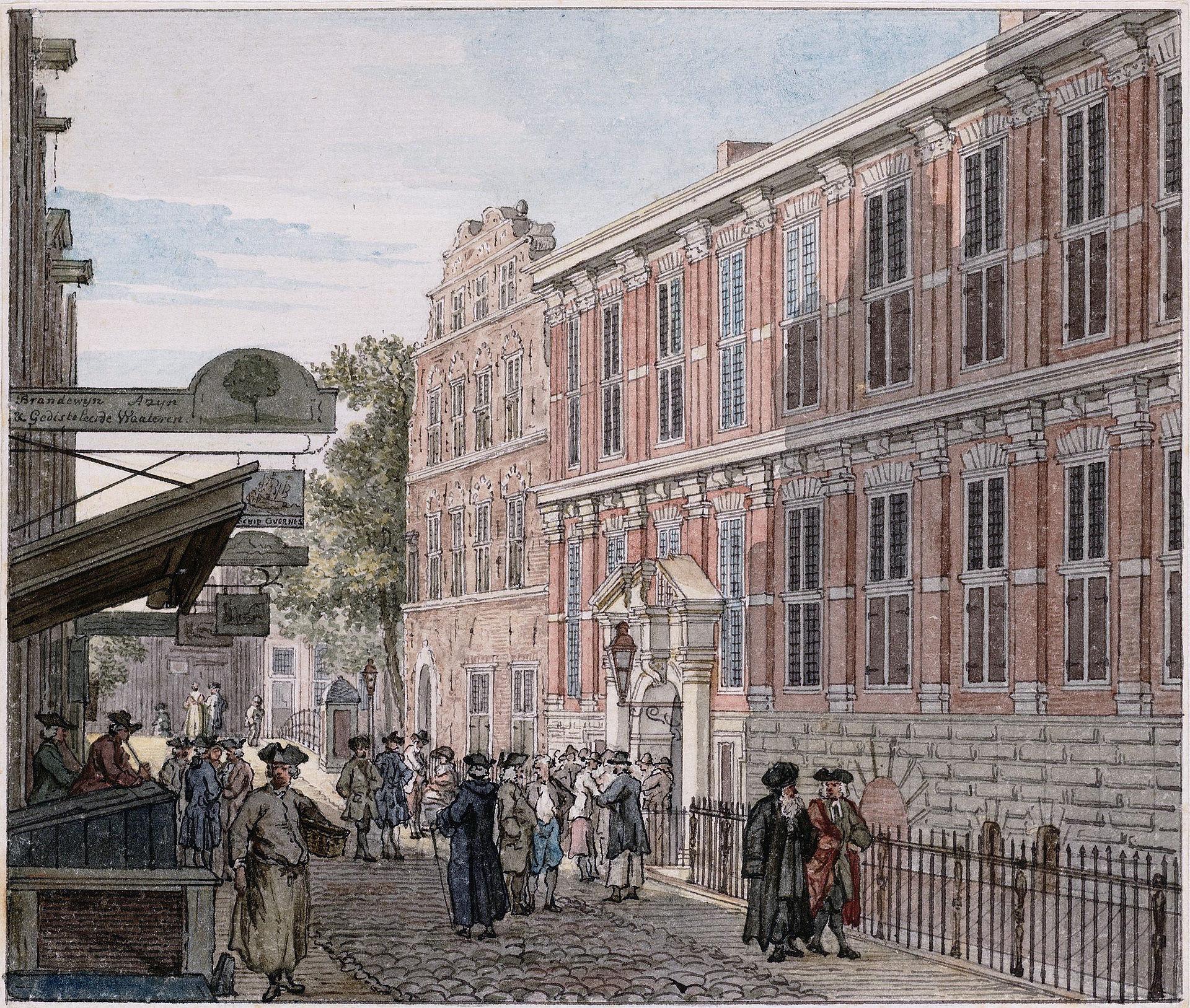
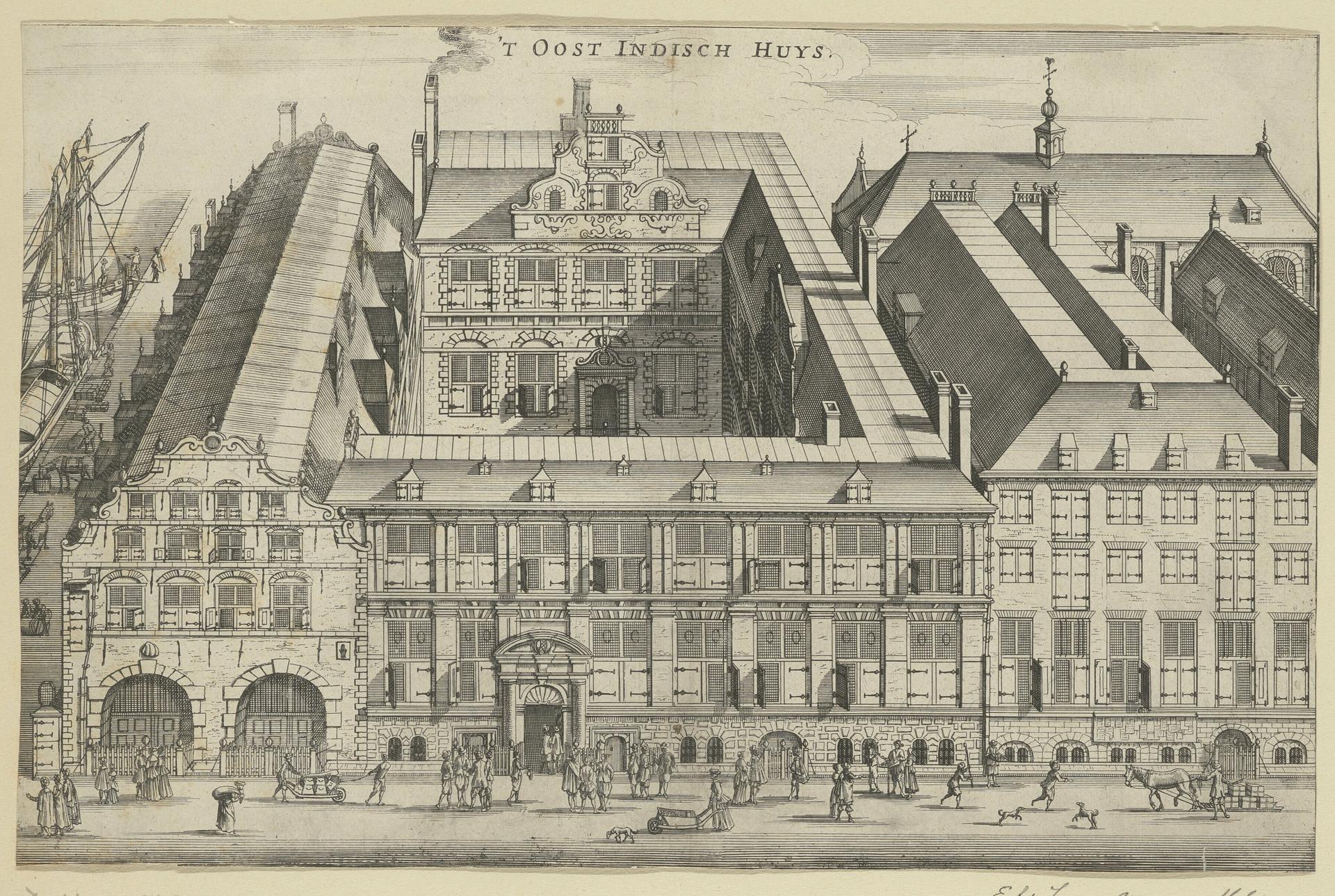
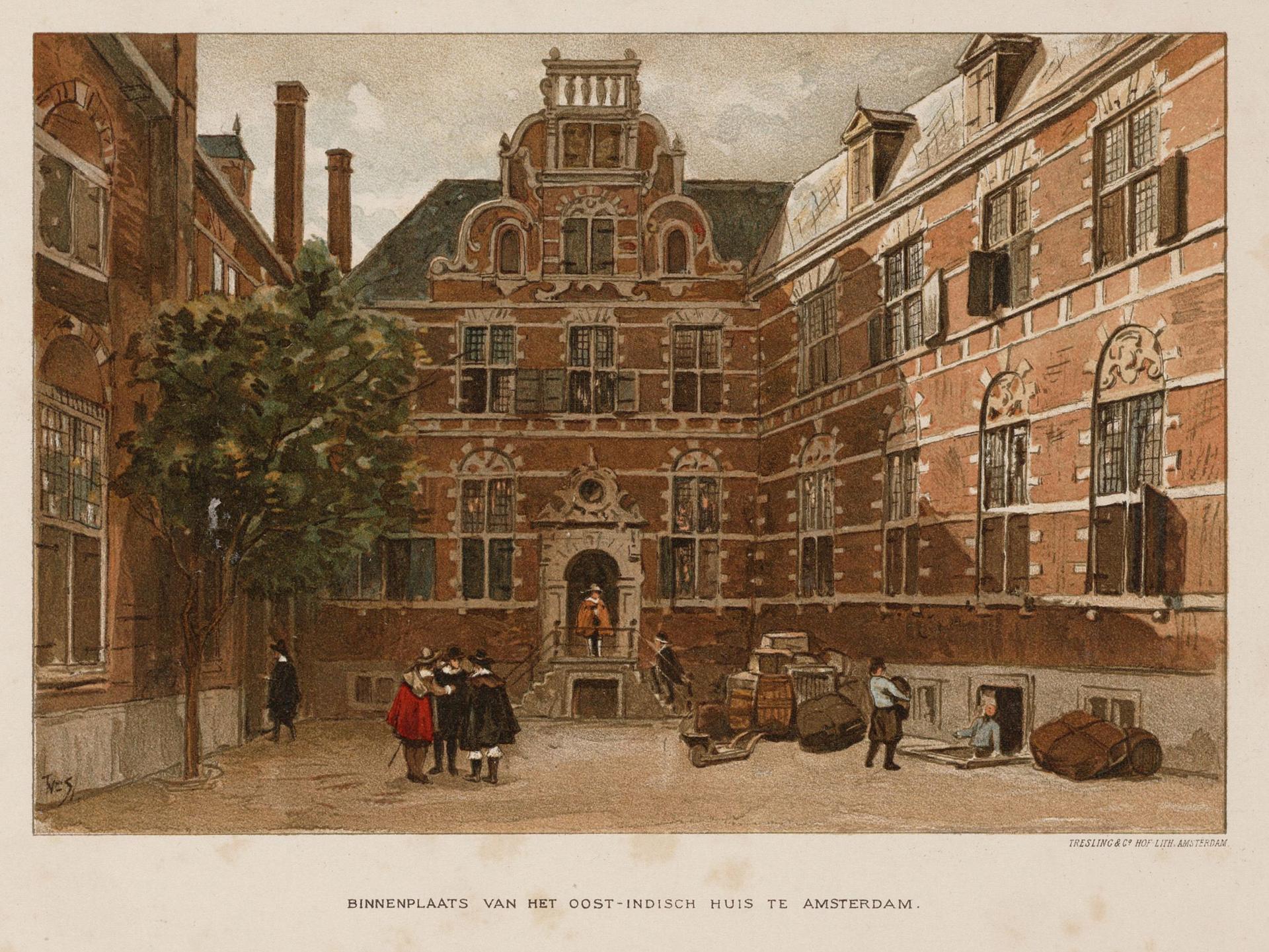
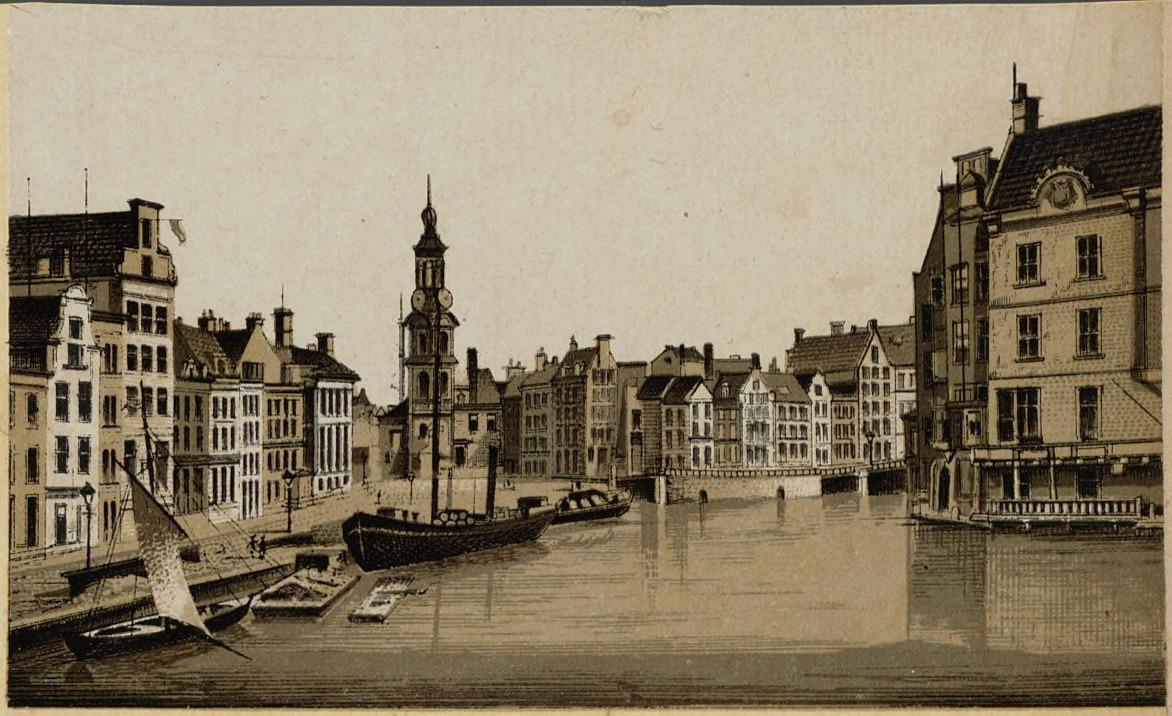
In 1602 the Dutch trading houses sailing to Asia joined forces into a single company, the VOC, and built it on something the world had barely seen: shares you could buy and sell on. Carpenters and widows joined in for small sums, and anyone who wanted out sold their paper at the exchange on the Rokin. The office of the Amsterdam chamber sat behind this façade.
Orders went from this building to , and , and pepper, nutmeg and textiles came back. That profit carried a price rarely written down here. The monopolies were enforced with violence, whole island populations were driven out or killed, and the company traded people as property.
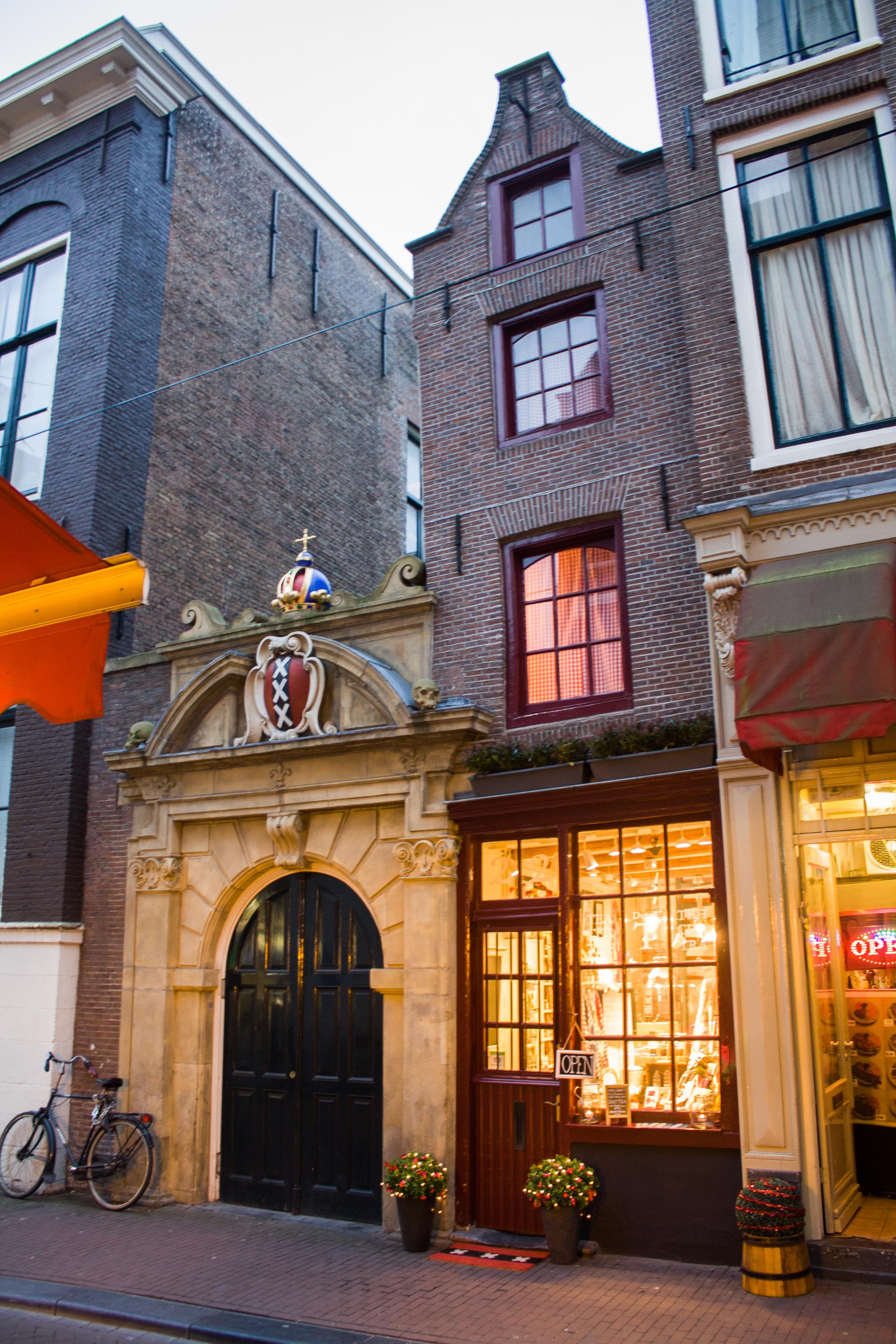
Turn around and across the water you see the , home of the , who grew rich on weapons. Their chimneys are shaped like mortars, in case anyone wondered where the money came from. Just beside it stands the Kleine Trippenhuis, barely two metres wide, built after their coachman said he would be happy with a house as wide as his masters' front door.
The longest stretch of the walk starts here. We follow the canals north, straight through the old town, back to Warmoesstraat.
Sources. Story: Nationaal Archief (VOC archive) and the Rijksmuseum on the founding in 1602, the Amsterdam chamber and the Trippenhuis Photos: Met dank aan het Stadsarchief Amsterdam voor het beschikbaar stellen van de afbeeldingen. 2. Door Reinier Vinkeles - Stadsarchief Gemeente Amsterdam, Publiek domein, https://commons.wikimedia.org/w/index.php?curid=3857392 3. Stadsarchief Amsterdam