What to Do in Leiden
4 min read · October 2026 · Leiden
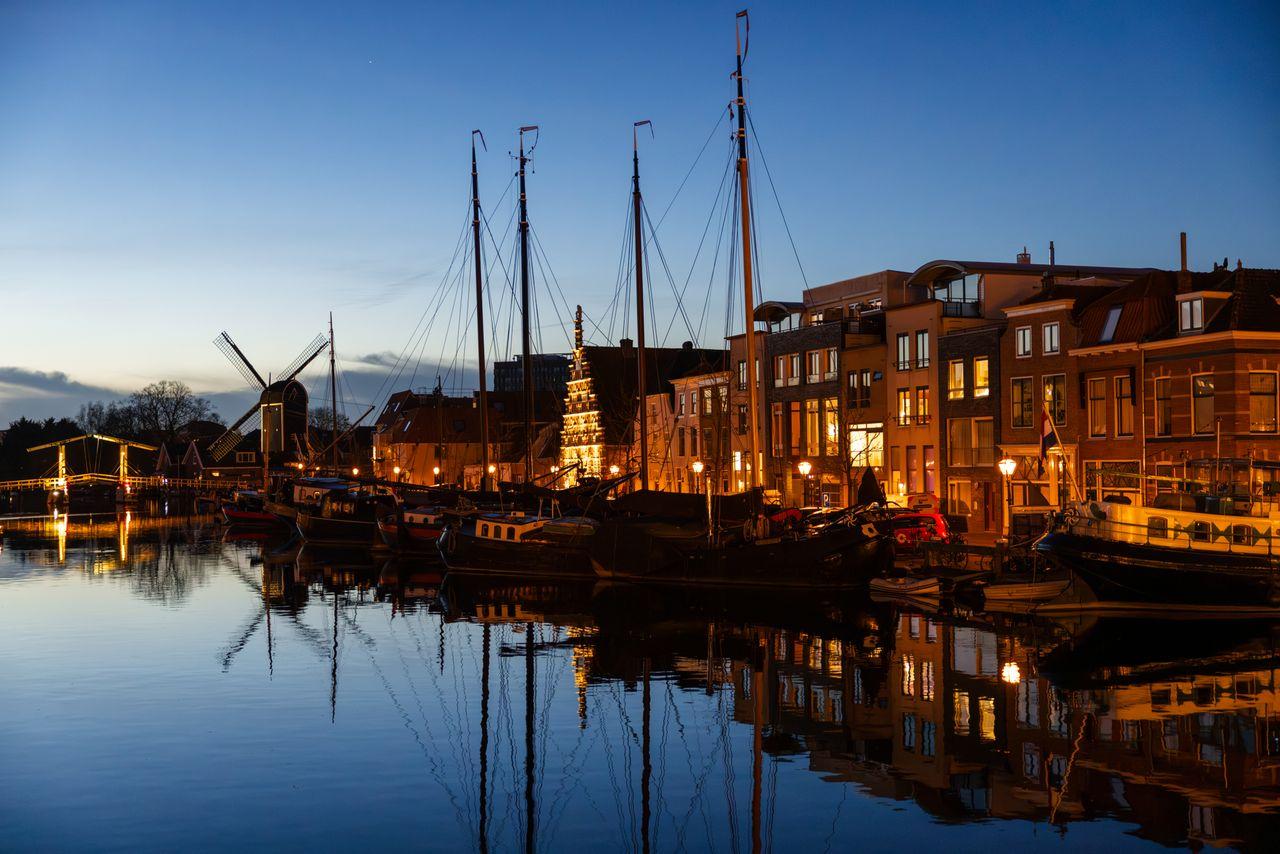
Leiden sits twenty minutes from Amsterdam and ten from The Hague, which is roughly why most visitors drive past it. The old centre is small enough to cross on foot in half an hour, and in that half hour you pass the oldest university in the country, the oldest botanical garden, more than a hundred poems painted on house walls, and the street where Rembrandt was born. Here is what to do with a day in Leiden.
Start where the university started
Leiden University was founded in 1575, a year after the city survived a Spanish siege that killed thousands of its people. The story goes that William of Orange offered Leiden a reward for holding out: years without taxes, or a university. The city chose the university. The Academy Building still stands on the Rapenburg, the canal that gets called the most beautiful in the Netherlands often enough that it has stopped being an argument.
Walk into the oldest botanical garden in the country
Behind the Academy Building lies the Hortus botanicus, laid out in 1590 for medical students and still growing. Its first keeper was Carolus Clusius, who raised the first large tulip collections in Europe here. Two centuries later Philipp Franz von Siebold sent back around seven hundred plants that nobody in Europe had seen, straight from Japan and China. A reconstruction of Clusius' original garden sits near the entrance, roughly thirty-five by forty metres, which is all the space the whole thing once needed.
Read the walls
In 1992 a poem by Marina Tsvetaeva appeared on a Leiden wall, in Russian. The plan was to paint a hundred and one of them, and that was finished by 2005. People kept going anyway, and there are now well over a hundred and ten poems across the city, each in its own language and script: Arabic, Buginese, Hebrew, Chinese, Latin. Nothing marks them and nothing costs anything. You can download a map, or you can just look up more often than usual. Physicists at the university were jealous enough to start painting formulas on walls too.
Look for Rembrandt where nothing is left
Rembrandt was born in the Weddesteeg in 1606, in a miller's house that has been gone for a very long time. What remains is a small square, a view of the water, and the knowledge that this is the spot. He learned the trade a few streets away, near the Langebrug, grinding pigments in another painter's workshop before he had a name. Museum De Lakenhal, in the old cloth hall, keeps the paintings he made before Amsterdam took him.
Step into a hofje
Leiden is full of almshouse courtyards hidden behind street doors, and most of them are still lived in. The Jan Pesijnshof on the Kloksteeg stands on the plot where John Robinson lived, the preacher whose congregation sailed for America without him. He is buried in the Pieterskerk across the lane. The Speckhofje nearby is smaller and quieter still. The rule in all of them is the same: come during the day, say nothing, and leave the way you came in.
Pick a museum, any museum
For a city this size the choice is unreasonable. The Rijksmuseum van Oudheden has an entire Egyptian temple standing in its lobby, a gift from Egypt. Naturalis has a tyrannosaurus. Rijksmuseum Boerhaave tells the history of science from a former hospital, complete with the anatomical theatre where Leiden students once watched dissections from the gallery. The SieboldHuis holds what Siebold brought back from Japan. If you have time for one, choose by what you would rather argue about afterwards.
Climb the Burcht, then a windmill
The Burcht is a round fort on an artificial hill where the two branches of the Rhine meet. It is free, it takes four minutes to climb, and the view over the rooftops explains the shape of the whole city. Then there is Molen de Valk on the edge of the old centre, a tower mill from 1743 that still works, with the miller's living quarters furnished downstairs. It is the last of the nineteen mills that once stood on Leiden's ramparts.
Come on 3 October if you can
On the night of 2 October 1574 the Spanish broke camp, and the Sea Beggars came in with herring and white bread for a starving city. Legend adds an orphan boy who found a pot of stew left behind in the abandoned camp, which is why Leiden eats hutspot the night before. The city has celebrated it every year since. The reveille sounds at seven in the morning on the Stadhuisplein, the herring and white bread are handed out free, the university closes, and some two hundred thousand people fill the streets. It is the largest local festival in the Netherlands, and on that day everyone counts as a local.
If you would rather have someone show you around, Luuk made his own version of Leiden for ROODS. Thirteen stops over three and a half kilometres, from the Morspoort to Molen de Valk, with his videos playing on the spot where he filmed them. Start at the station and follow him.