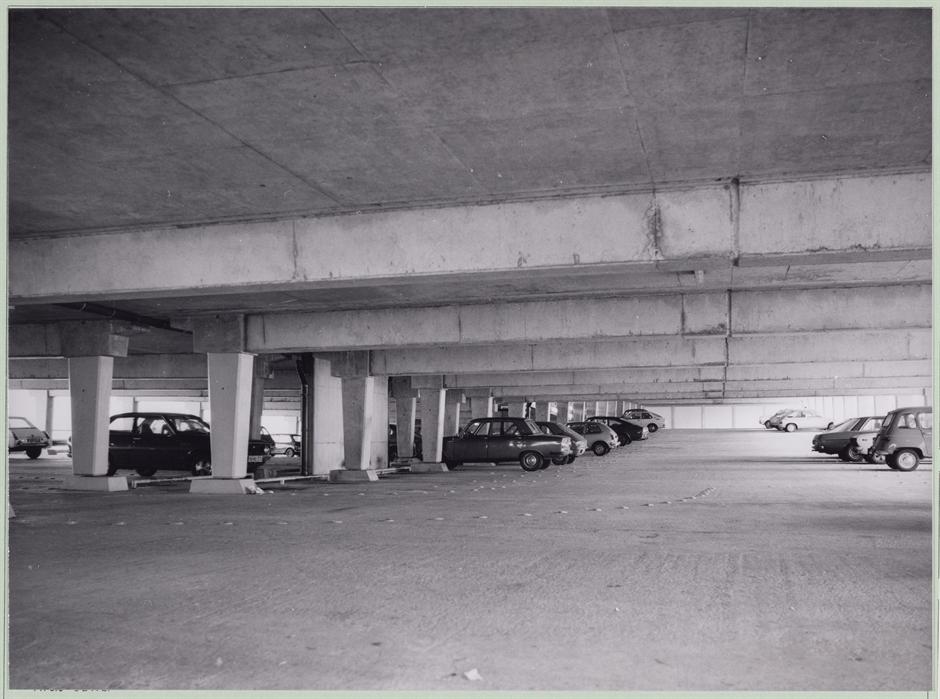
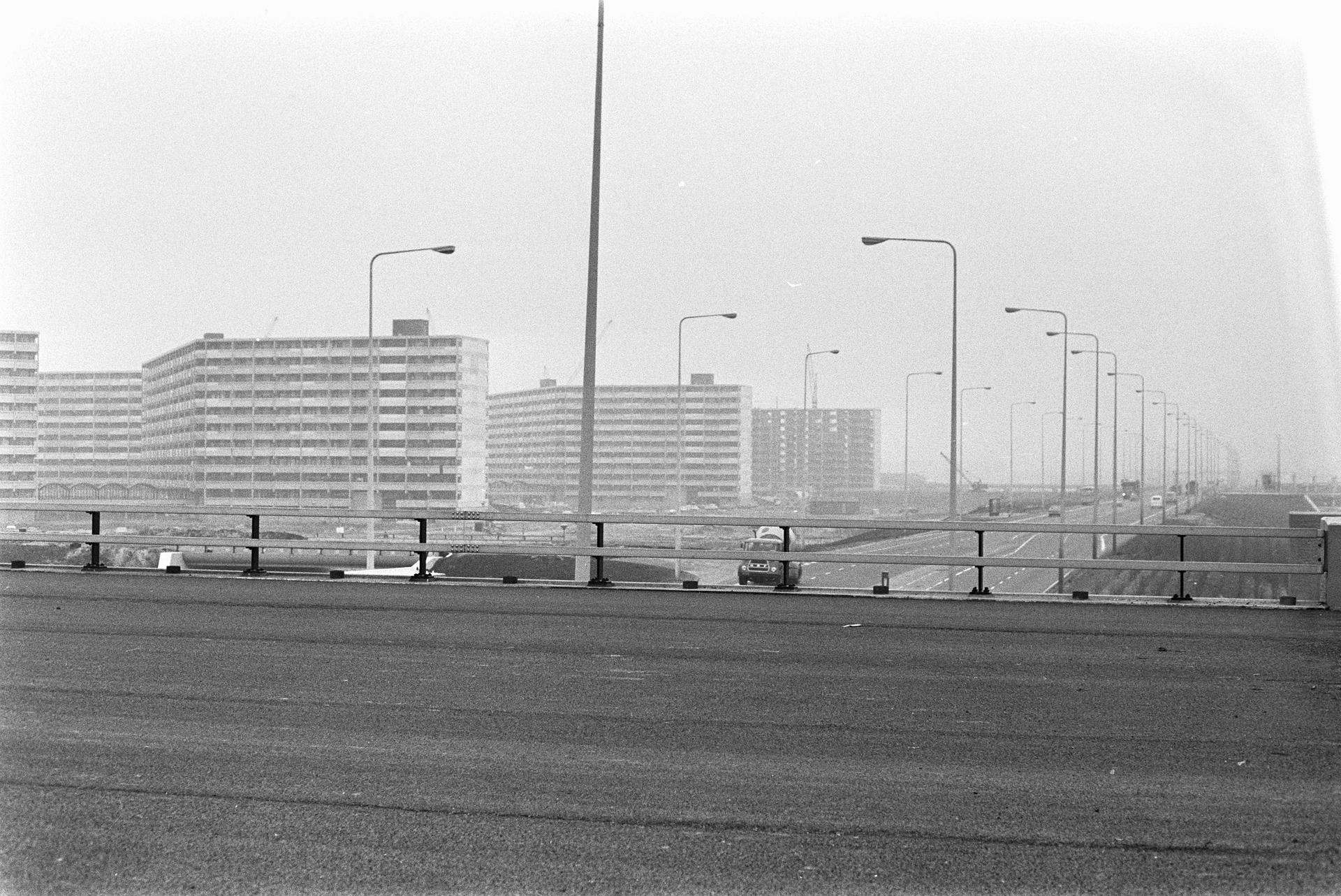
Every apartment block came with its own parking garage, huge concrete giants linked to the elevated roads. When the neighbourhood stood half empty, so did those garages, and they earned the reputation you'd expect: dark, abandoned, the kind of place you'd rather avoid.
And then something happened that nobody had planned for. The new residents brought their faith with them, and there was nowhere for all those communities to gather. So the shared spaces, the apartments, the community centres and above all those empty garages were turned into places of worship. The Pentecost Revival Church of Emmanuel Koney held its services in the Klieverink parking garage before moving on, and garage De Kempering hosted church services and neighbourhood activities too.
That turned into one of the most churchgoing corners of the Netherlands. Estimates vary, but people speak of well over a hundred faith communities in the district, the vast majority of them migrant churches with Ghanaian, Surinamese and Antillean roots. Services that ran three hours, with music you could catch from out on the street.
Proper buildings came later. De Kandelaar on the Bijlmerdreef gave fifteen churches a shared home, with five halls and room for nine hundred people. But it started here, under the concrete, in a place that was really meant for cars.
De Kempering itself was demolished in March 2020. Because so many people had lived through something there, Imagine IC, the City Archives and the Amsterdam Museum worked with residents to record what the garage had meant. In that collection there's a wooden board reading Vluchthuis Juliana, or Juliana Shelter, made by Amellah Kaddour, who found a home there while he was homeless. So a demolished building lives on after all.
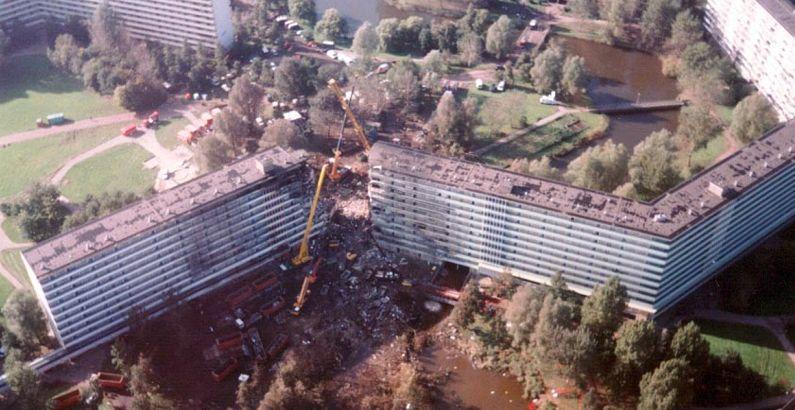
We walk on to the spot where Zuidoost changed forever on the .
Sources. Story: Rijksdienst voor het Cultureel Erfgoed, Reformatorisch Dagblad, Wikipedia