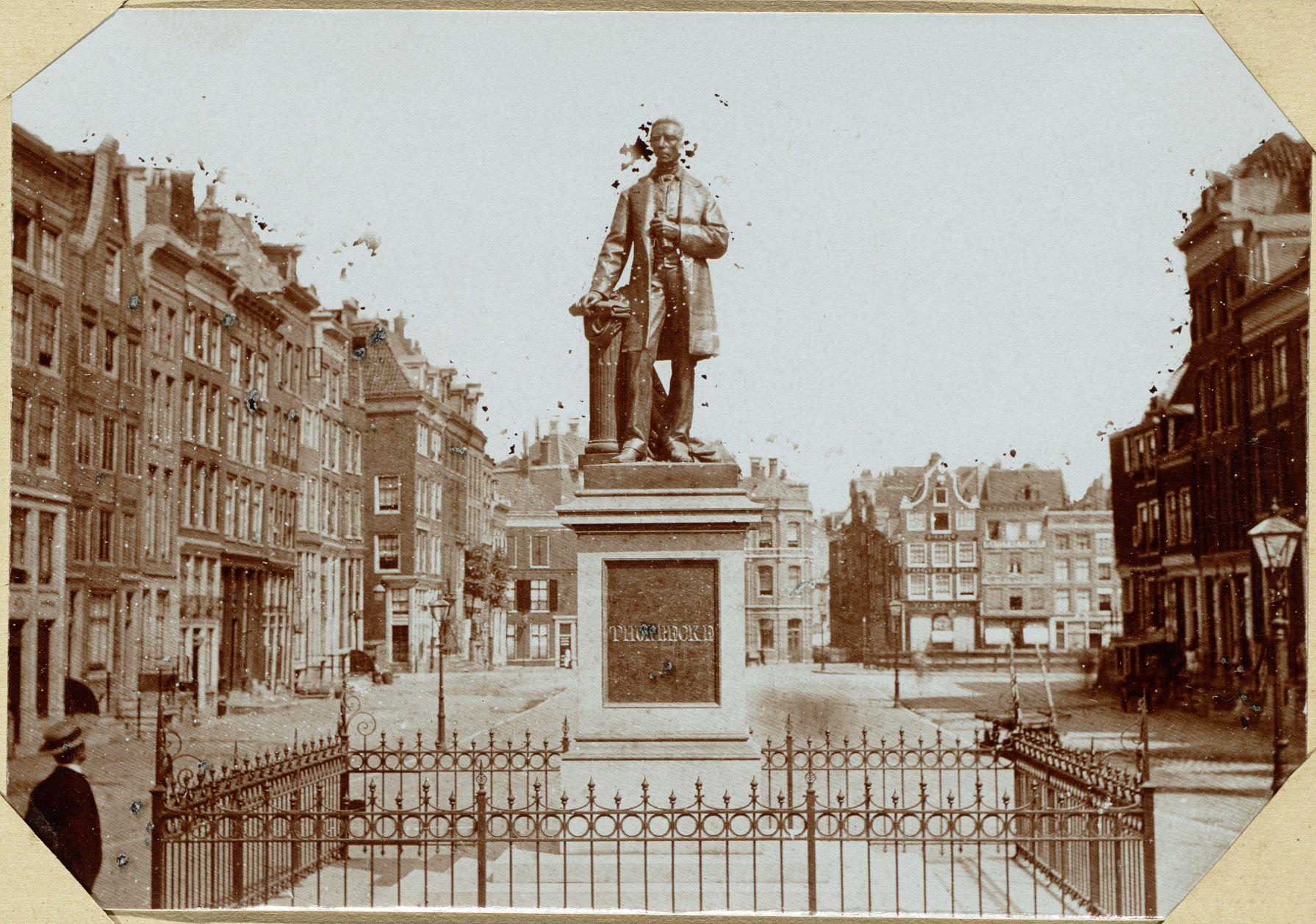
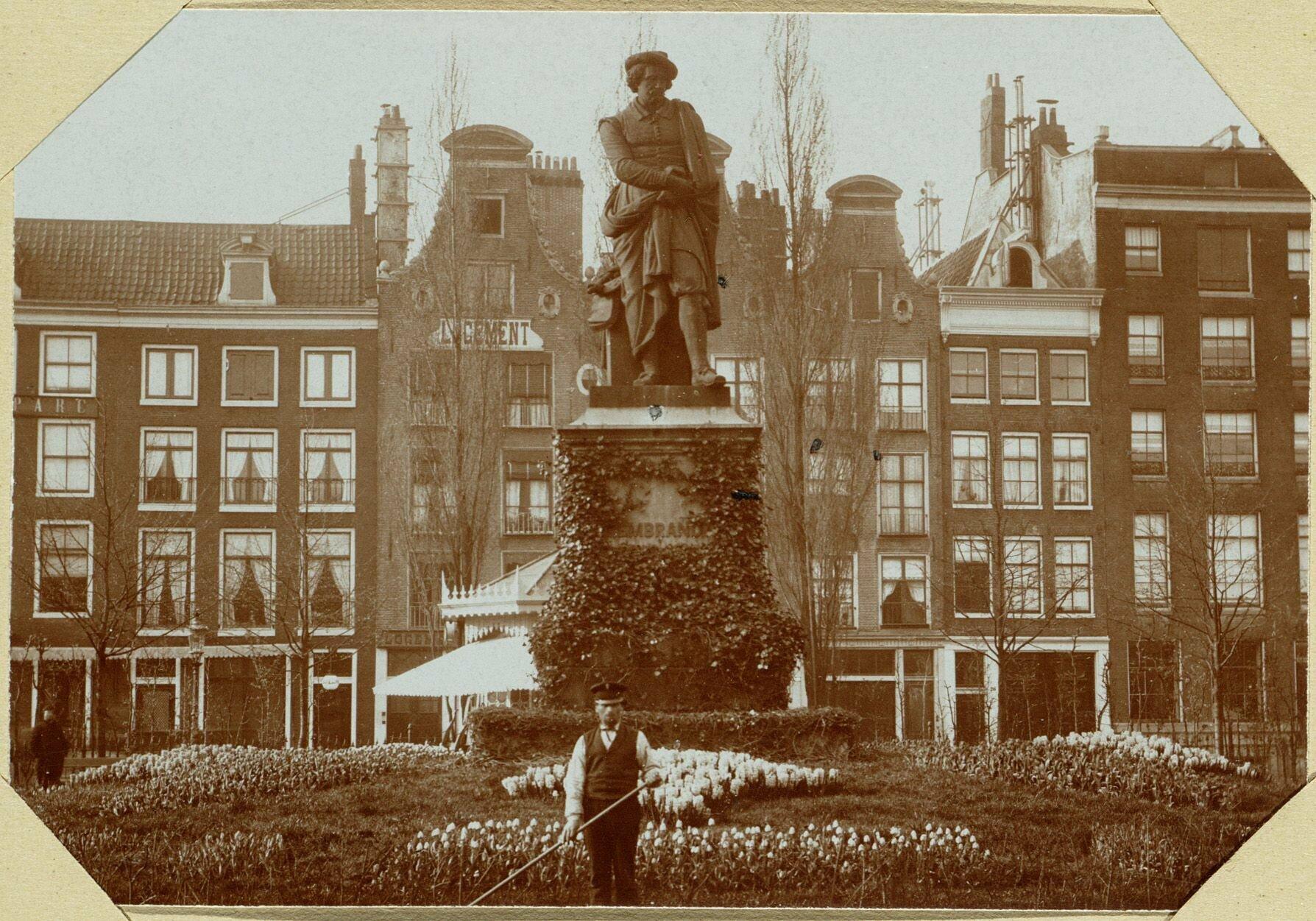
The square you are standing on has carried this name only since the nineteenth century, and the two names before it both point to the trade that once filled it. In 1655 Amster built a city gate here, which became redundant within thirteen years as the city pushed its defences further out. The gate was given a second life as a weigh house, and the open space around it became known as Reguliersplein.
A year later the Monday dairy market moved here from Dam Square, and the place became the Botermarkt, the butter market. One corner was set aside for poultry that traders were forbidden to hawk door to door, and Amsterdammers simply called it the chicken corner.
The cast-iron statue in the middle is the oldest one the city still has. King William III unveiled it on 27 May 1852, designed by , a sculptor from Mechelen, and cast in a single piece. Rembrandt first stood at the edge of the square by the entrance of the , moving to the centre only once the old weigh house came down.
The change of name happened behind closed doors. In a secret council session on 17 May 1876 the city council decided that the Botermarkt would be called Rembrandtplein, and the painter has looked out ever since over the terraces and cafés that turned this into one of the busiest night-time squares in Amsterdam.
Sources. Story: Amsterdam Museum, Rembrandtbeeld: het oudste standbeeld van Amsterdam. https://hart.amsterdam/nl/page/1057686/rembrandtbeeld Rijksmonumentenregister, Rembrandtmonument. https://rijksmonumenten.nl/monument/518357/rembrandtmonument/amsterdam/ Wikipedia, Rembrandtplein (Amsterdam). https://nl.wikipedia.org/wiki/Rembrandtplein_(Amsterdam) Photos: Stadsarchief Amsterdam