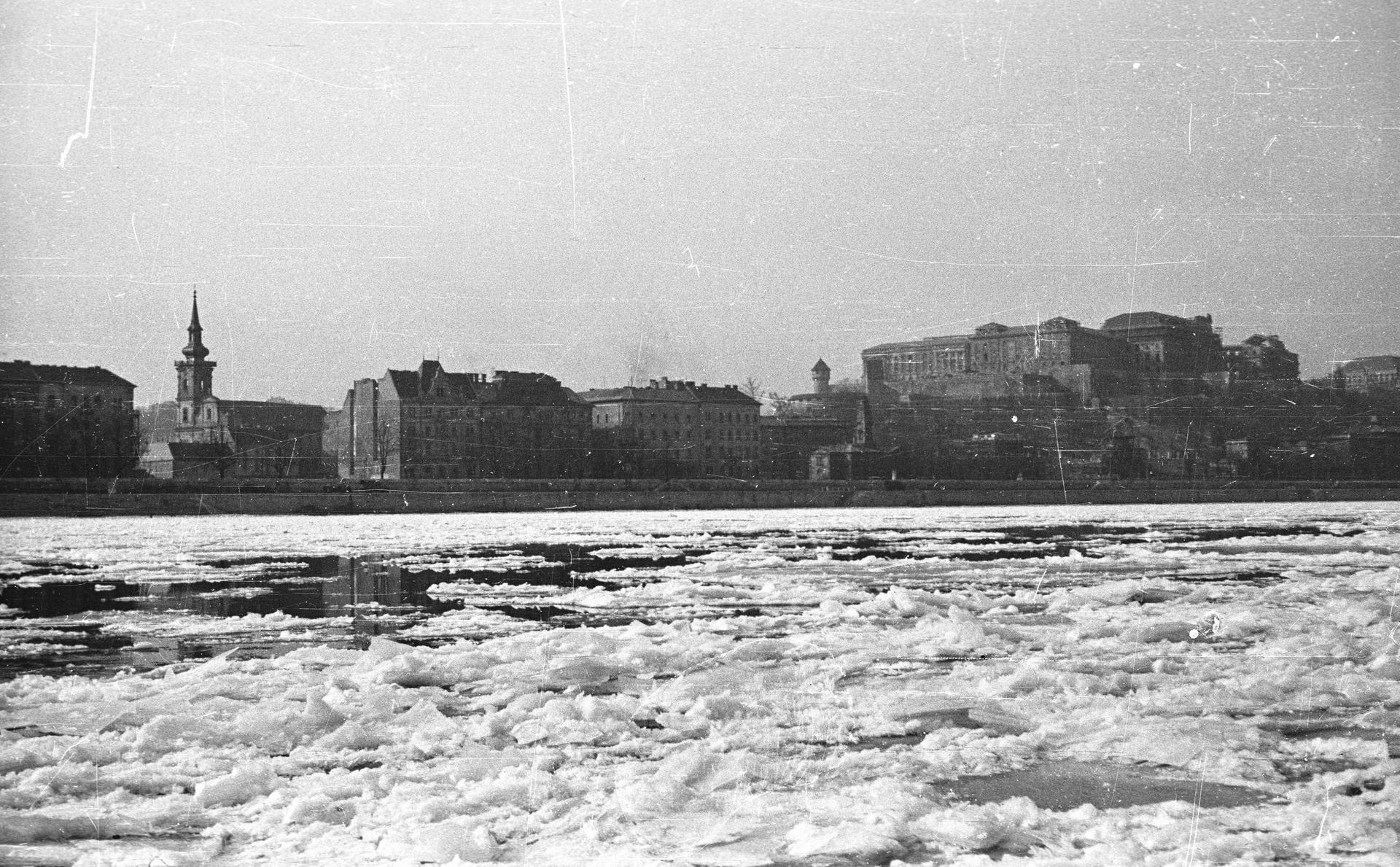
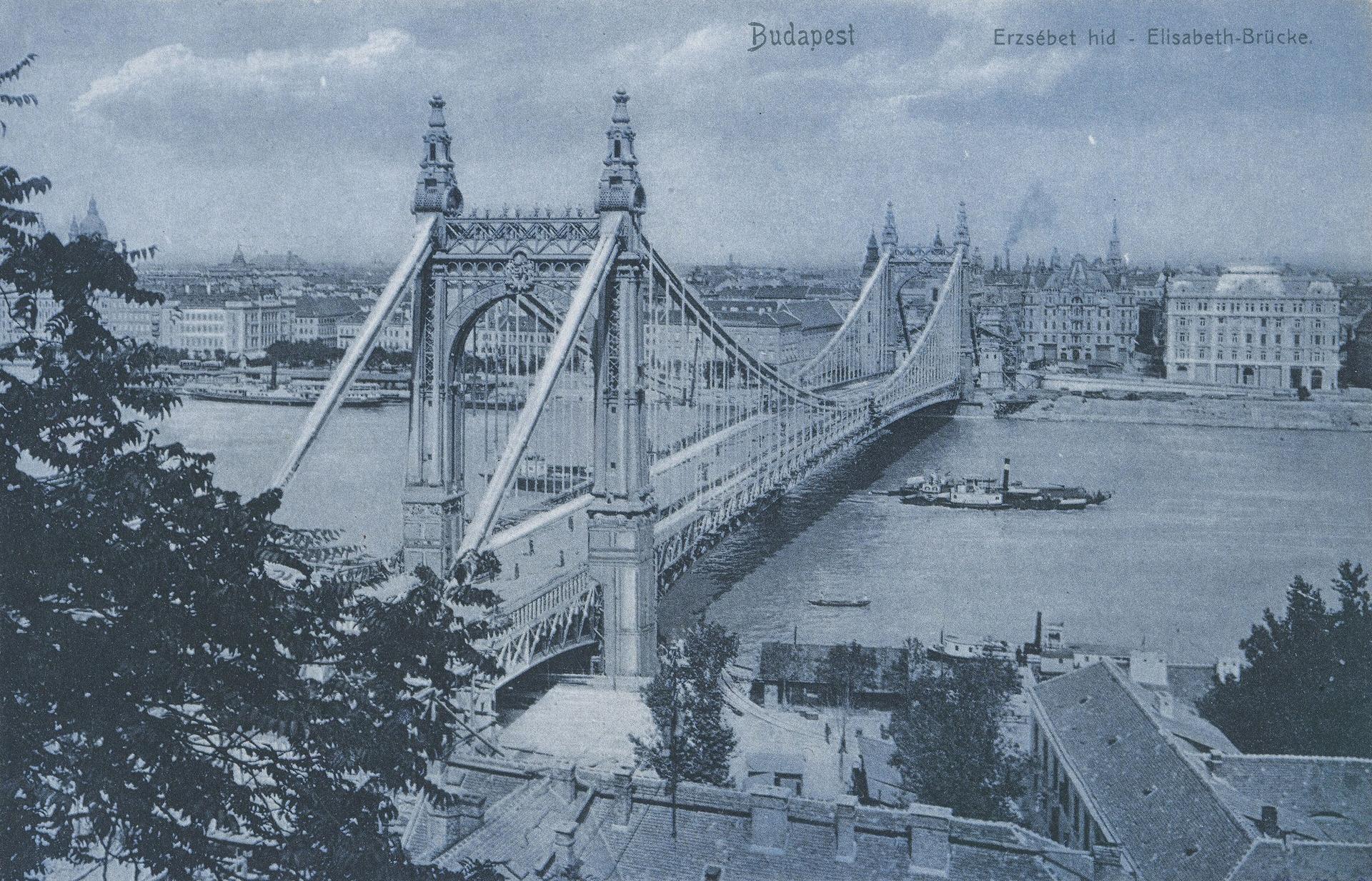
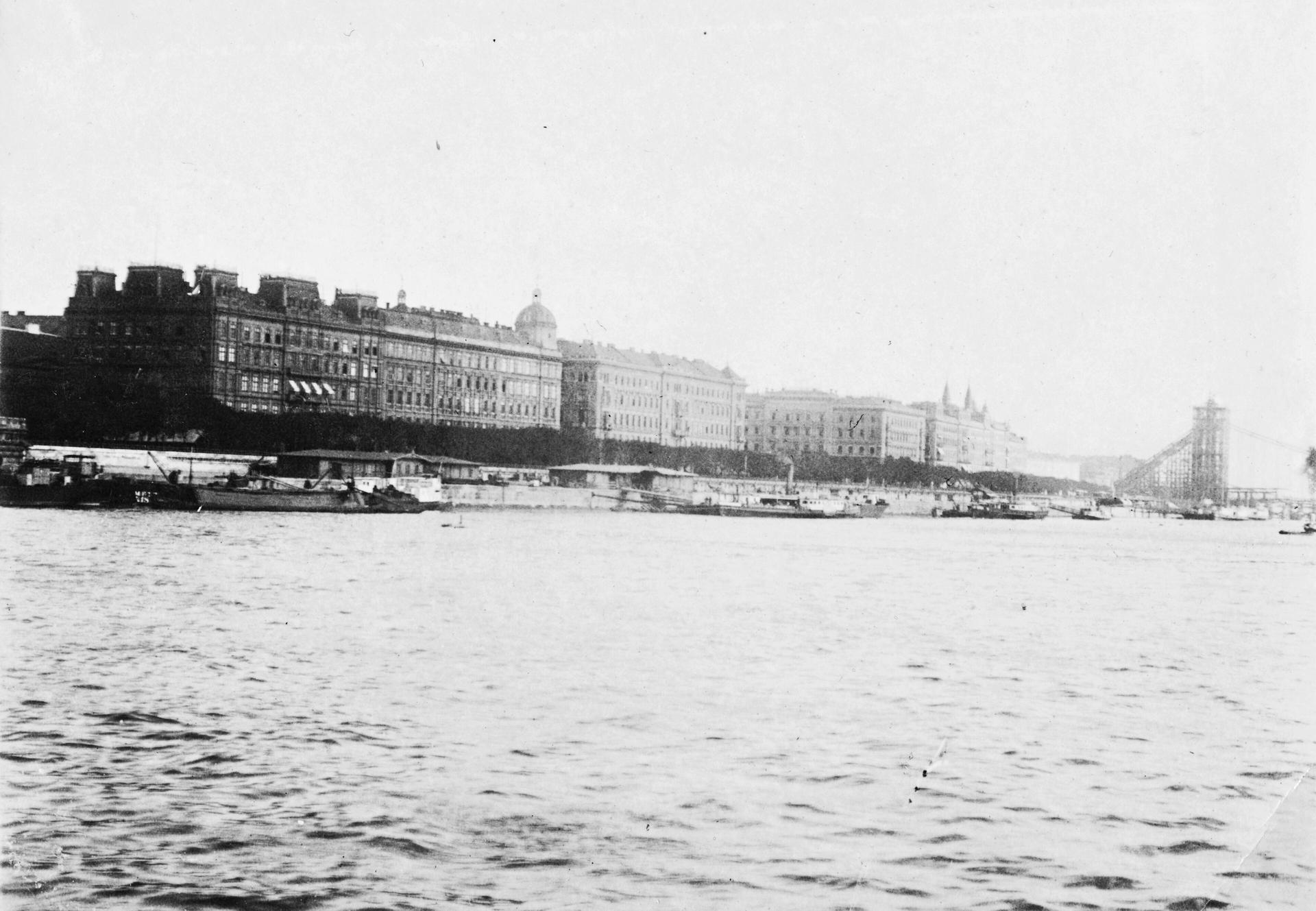
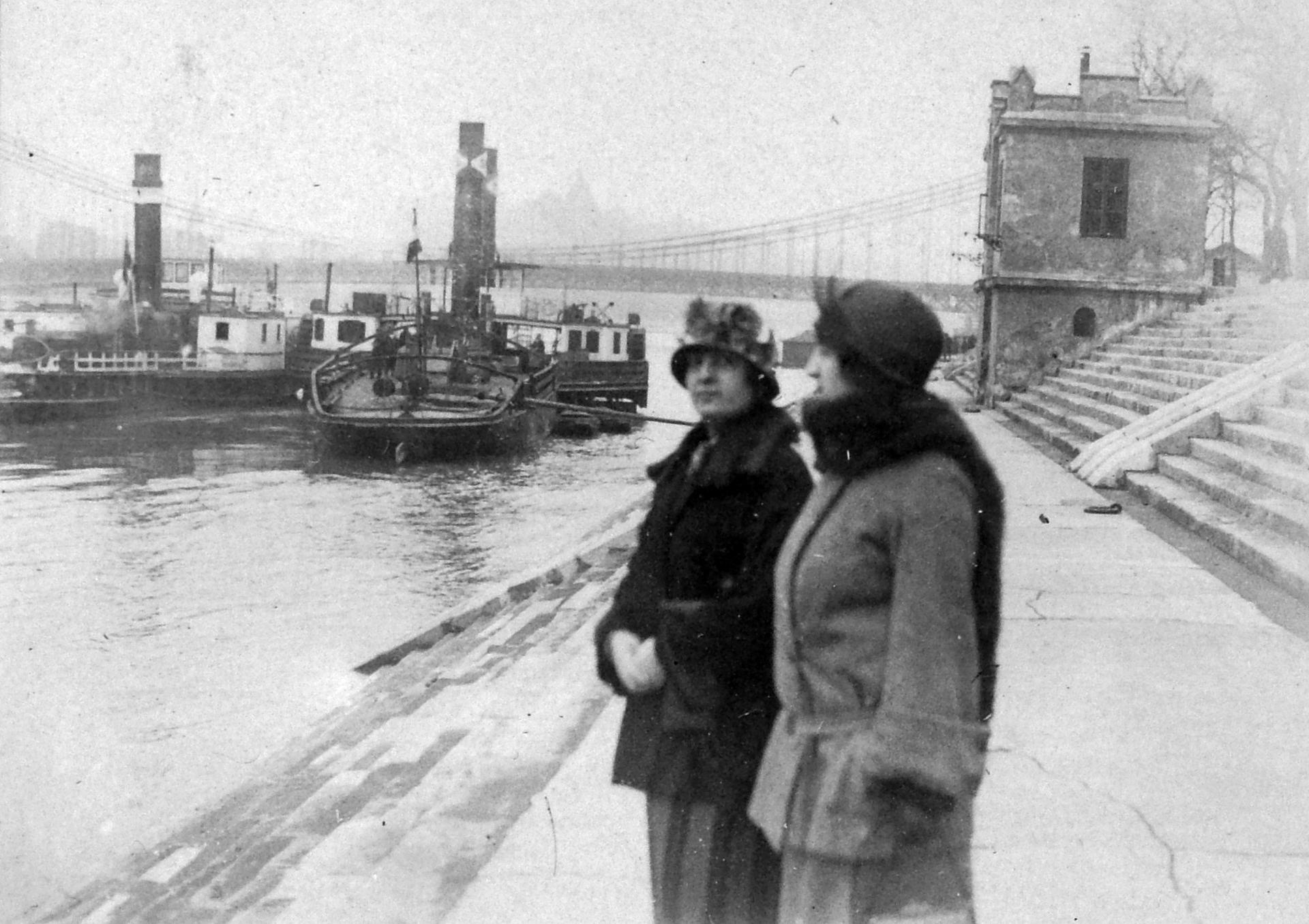
The white bridge above you is the second to stand in this spot, and anyone who saw the first one thought the replacement never quite measured up. That first bridge opened in October 1903 and took its name from , the wife of , who had been murdered in Geneva five years earlier. It was a chain bridge that crossed the river in a single leap, two hundred and ninety metres without a single pier in the water, which made it the chain bridge with the longest span anywhere in the world until 1926.
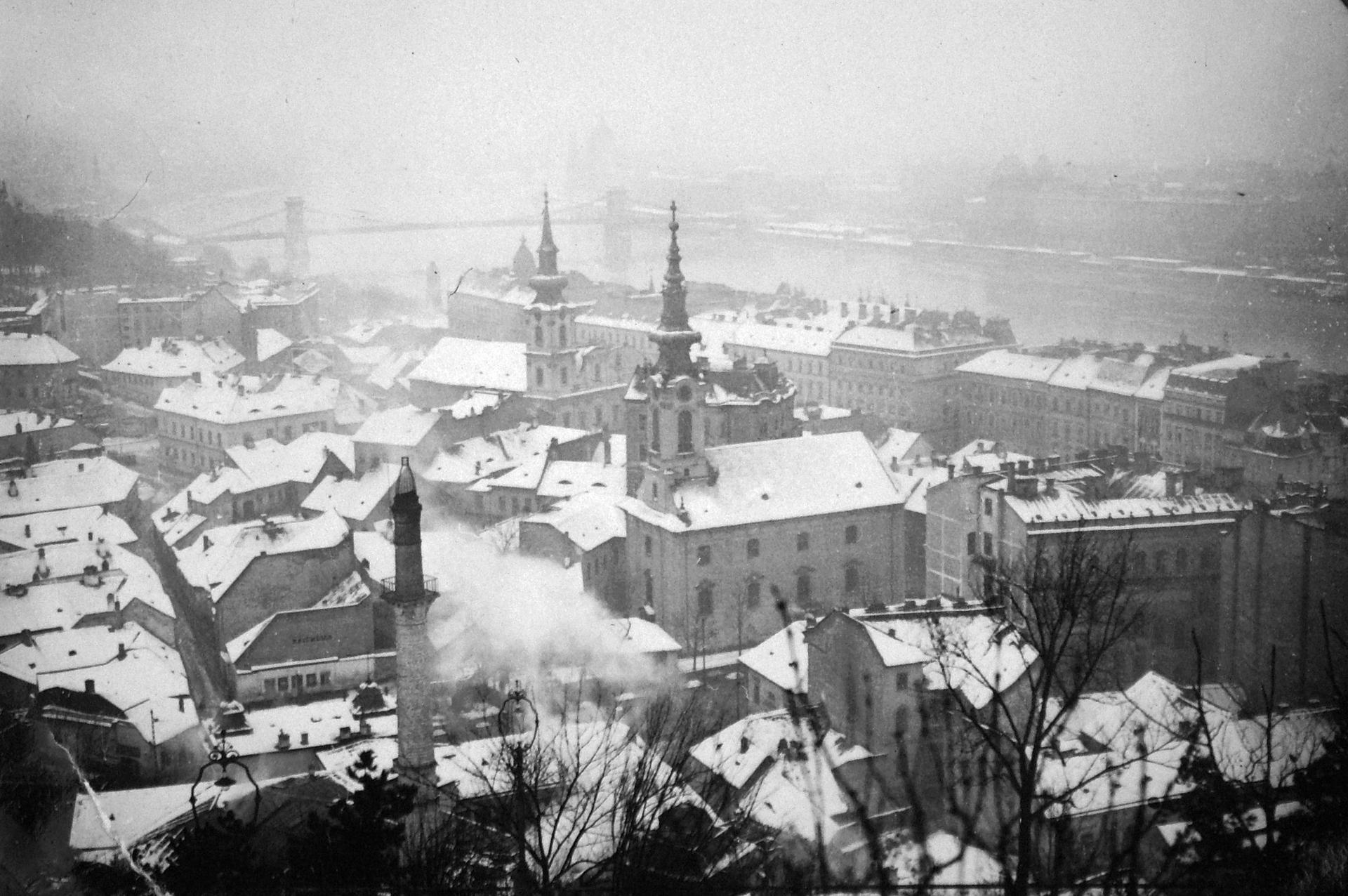
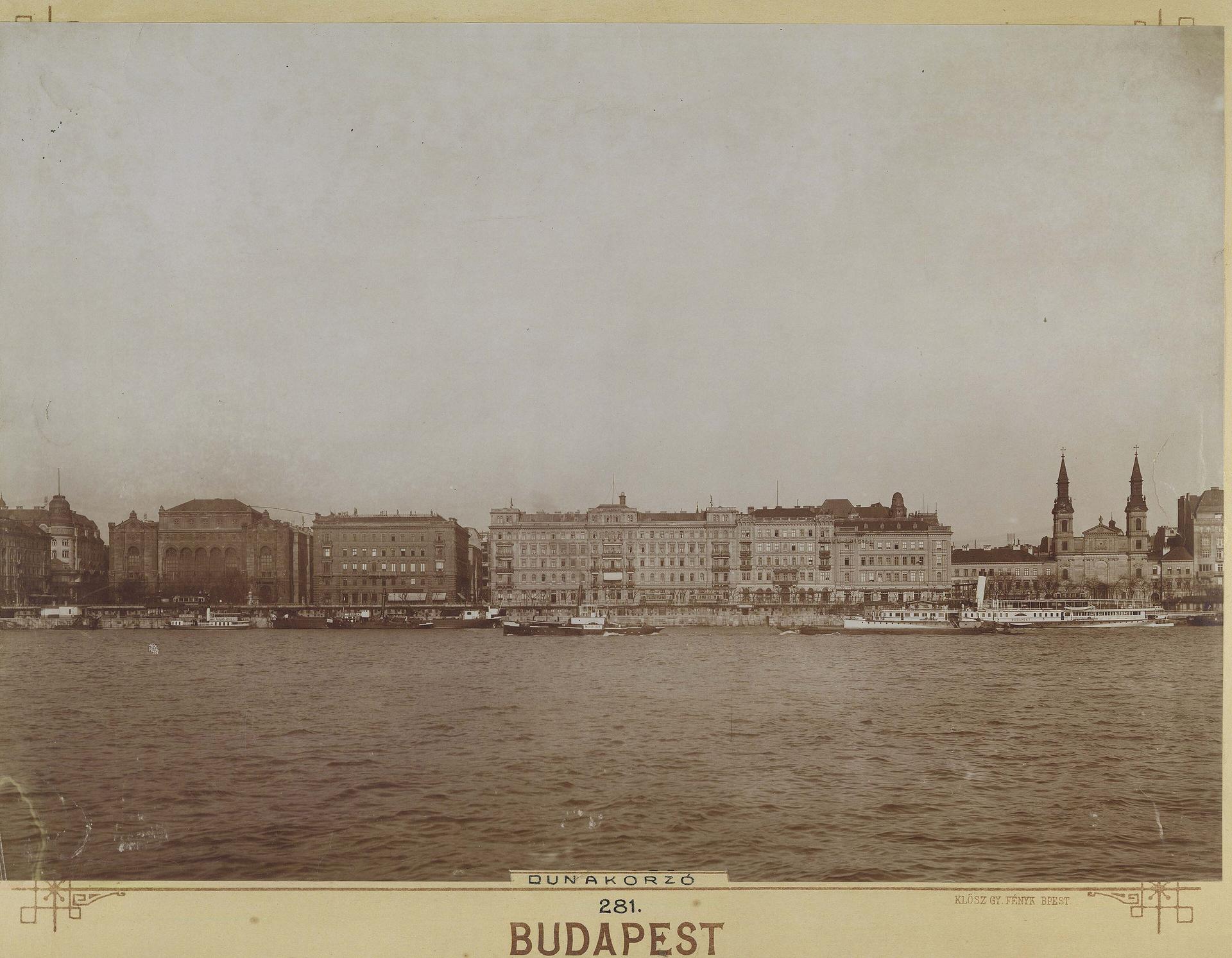
Before it could be built, a wide street had to be carved through the oldest district of , because not a single road reached the water here. The first route was so awkward that the would have had to come down, and that church is still standing today.
On the eighteenth of January 1945, the retreating German troops blew the bridge up. Of the four charges placed in the chain chambers only one went off, and that single blast twisted the gateway so badly that the whole structure sank into the Danube. Of all the city's bridges that were blown up, this one came back last, in November 1964, as a cable bridge resting on the old piers.
We walk under the bridge and follow the embankment south.
Sources. Story: Magyar Nemzeti Digitális Archívum (MaNDA), Erzsébet híd file; Sulinet Örökségtár, A budapesti Duna-hidak, chapter on the Elizabeth Bridge. Photos: Erzsébet híd, postcard between 1905 and 1914, ETH-Bibliothek Zürich, Hs 1360-0693-002, public domain.