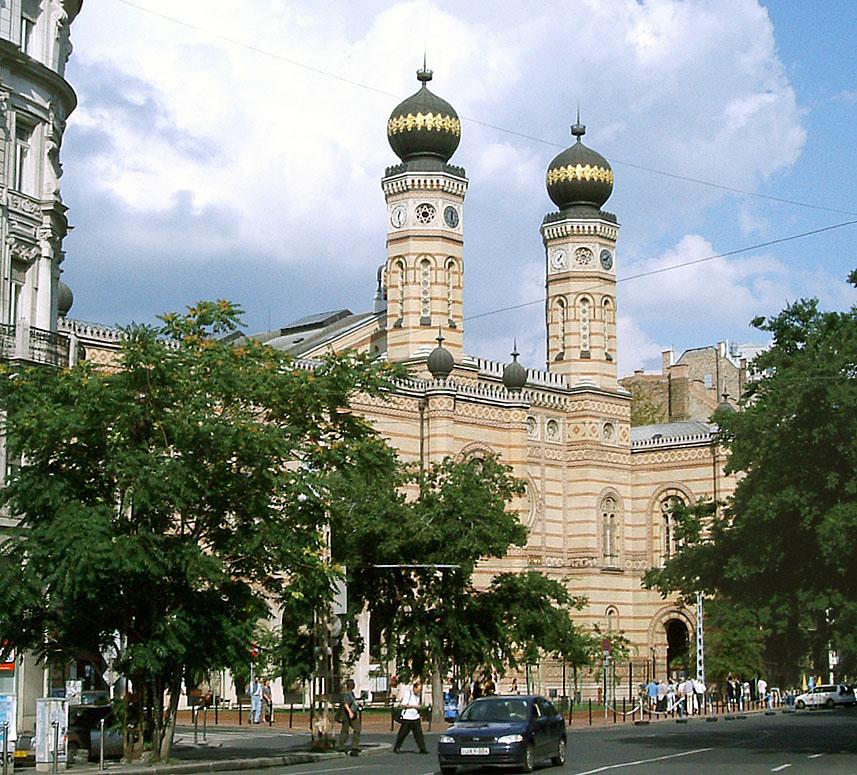
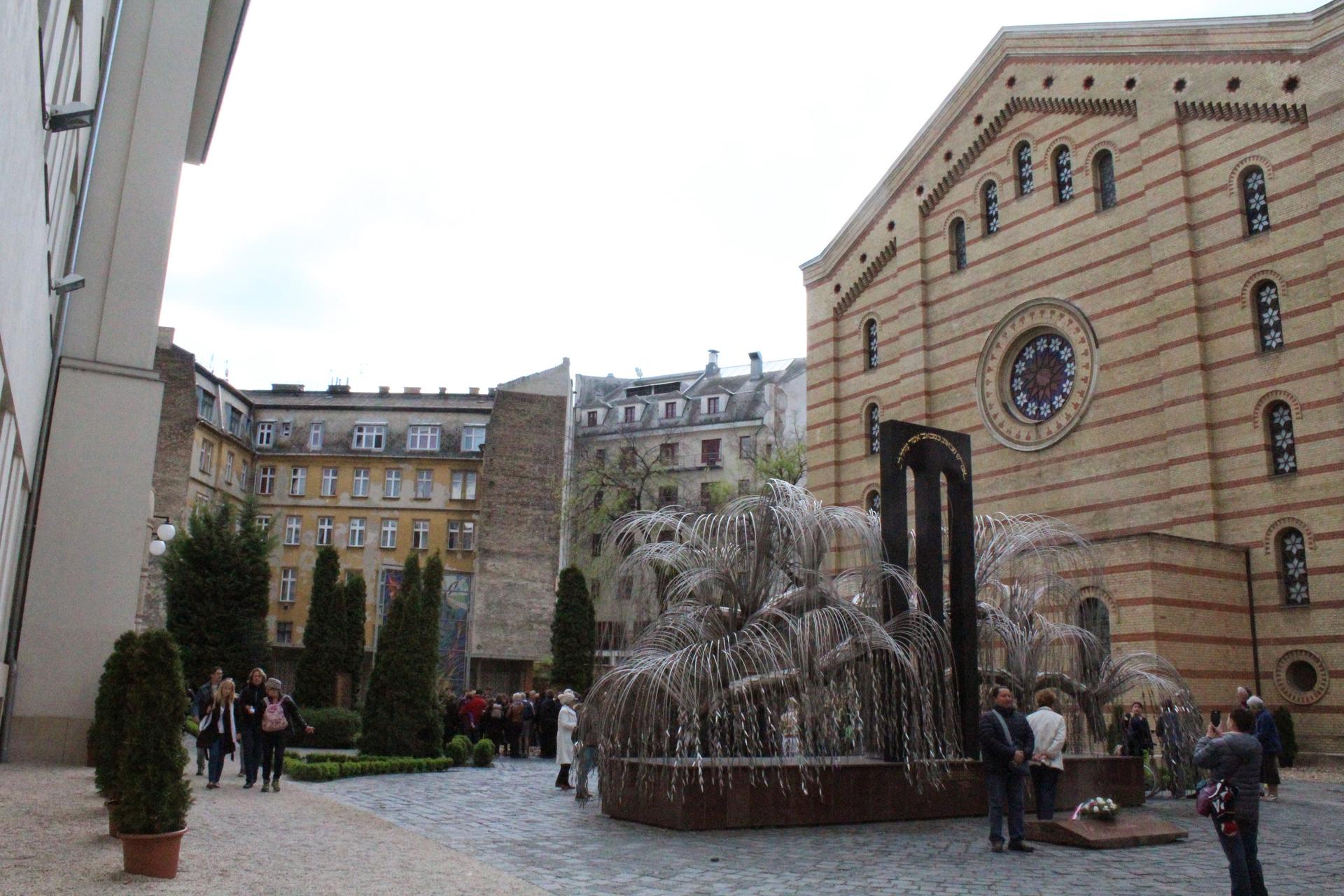
This garden behind the synagogue is a cemetery, and that isn't supposed to happen. Jewish dead are buried outside the city, far from the house of prayer, and this is the only synagogue in the world with graves in its garden. How that came to be is written in the winter of 1944 into 1945.
In the streets behind you lay the back then: not even half a square kilometre, two hundred and eighty-eight houses, fifty-five thousand people when it was set up and around seventy thousand by January. Hunger, cold, sickness and the militiamen claimed their share every day, and with the frozen ground and the there was no way to carry the dead to the cemetery. For weeks they lay along the synagogue wall, in piles. When the ghetto was liberated on 18 January 1945, twenty-four communal graves were dug here for eleven hundred and forty people whose names were known and eleven hundred and seventy whose names nobody knew.
Among the graves stands a weeping willow of chromed steel, here since 1990, made by and paid for by the Emanuel Foundation of the American actor , son of a Hungarian emigrant. The leaves carry names, around thirty thousand of them. Anyone who had a name engraved paid for it, and that money went into restoring the synagogue, so the building you just passed is still standing thanks to the dead who lie behind it.
This is where the walk ends. We leave the garden onto Wesselényi utca and follow it to the broad boulevard, the Károly körút. We cross over and we're back on Madách tér, where we started, about three hundred metres away.
Sources. Story: Holokauszt Archívum and Magyar Zsidó Levéltár on the name lists of the mass graves in the garden; pestbuda, Nyolcvan éve szabadult fel a pesti gettó (2025); Köztérkép on the Emanuel-emlékfa by Imre Varga Photos: Nelson Pérez, CC BY-SA 3.0, via Wikimedia Commons; August Dominus, CC BY-SA 4.0, via Wikimedia Commons