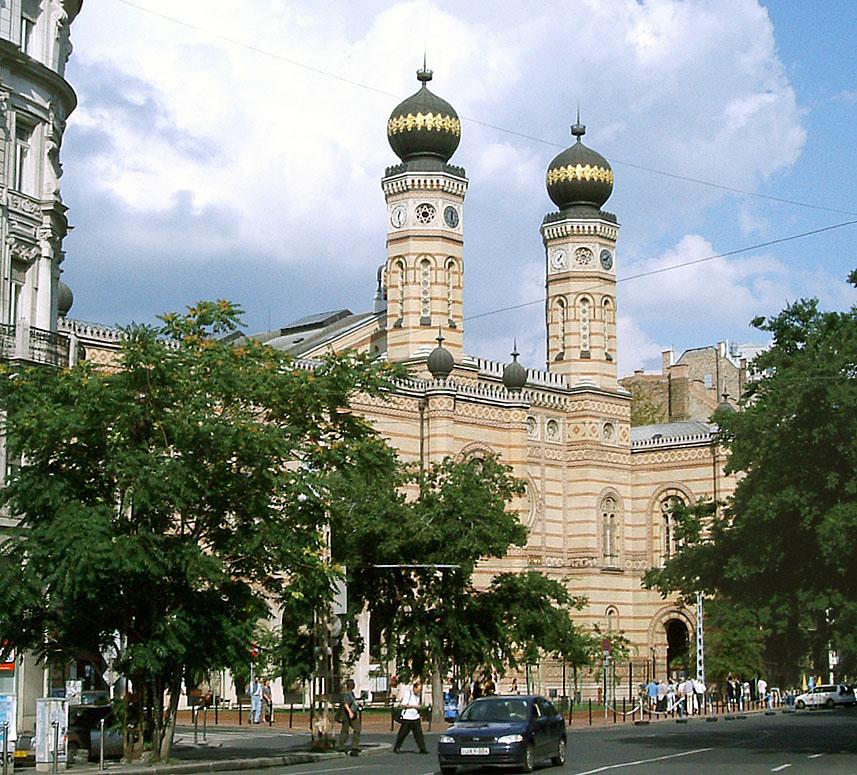
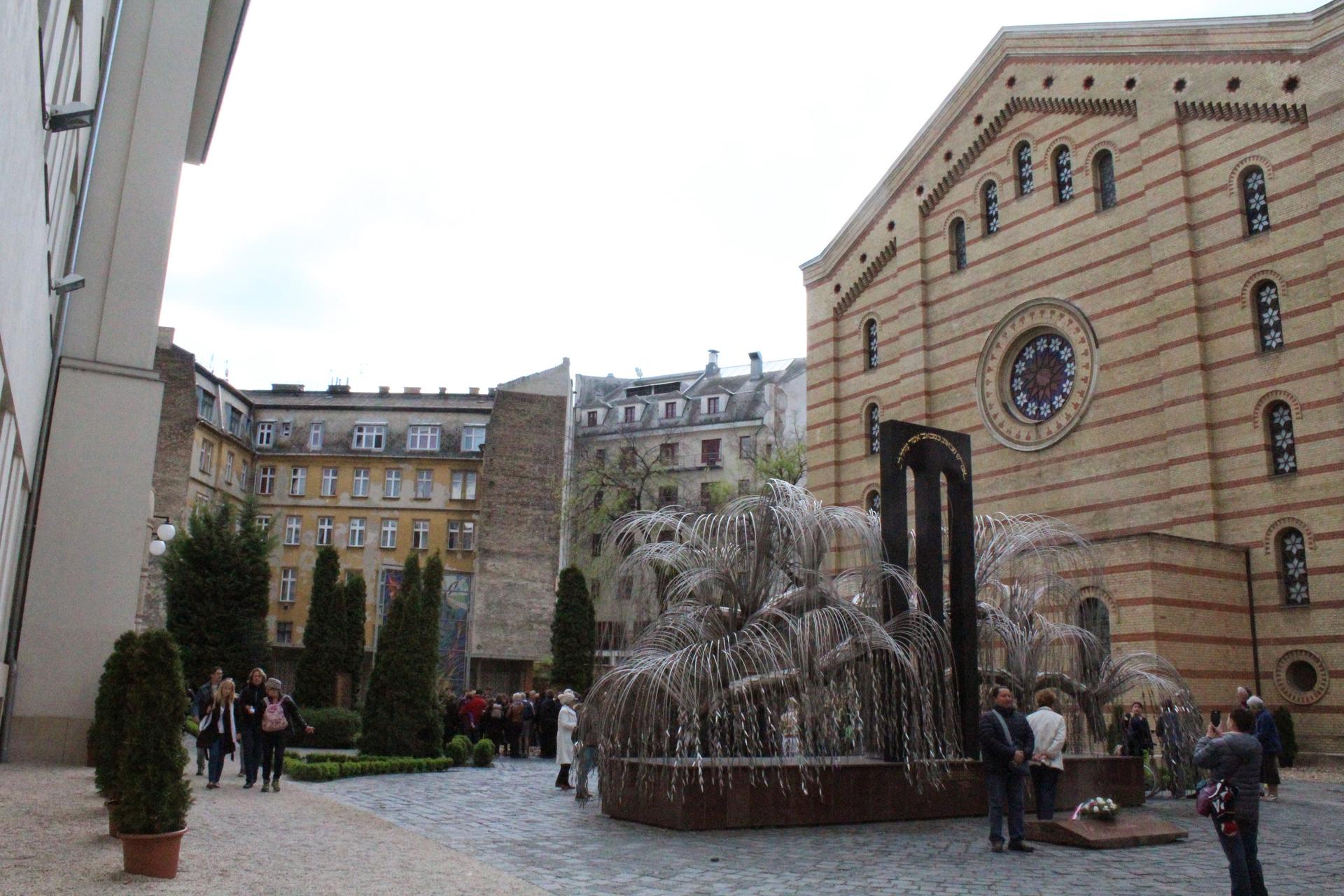
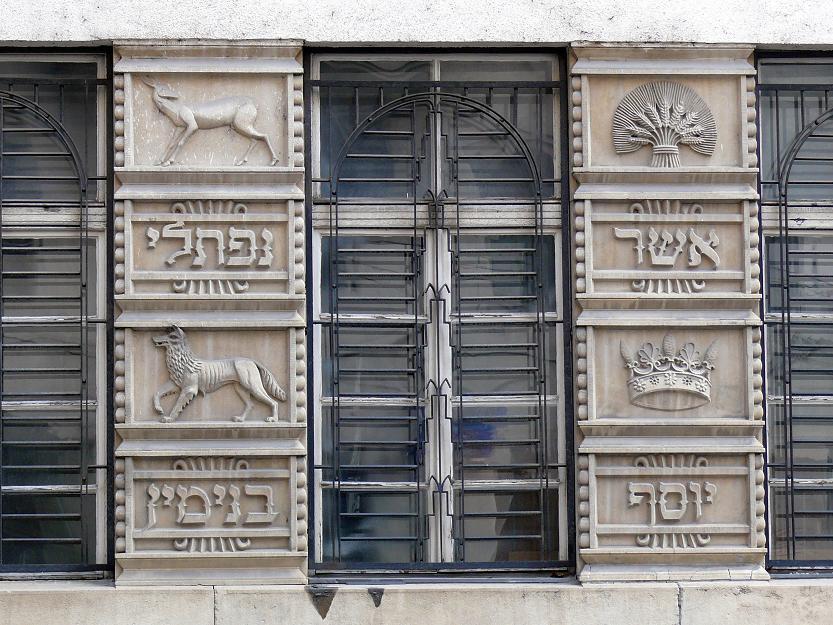
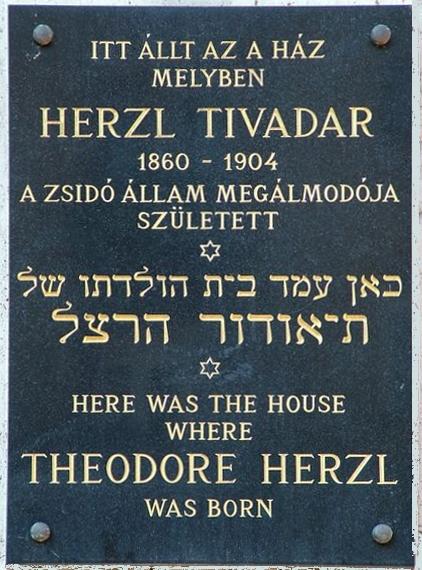
This is where the house stood in which, on 2 May 1860, a boy was born who was given the name Benjámin Zeév at his circumcision and was called Herzl Tivadar in : Theodor Herzl, who would go on to found . His father was a prosperous merchant, and the family belonged to the middle class, a reform-minded Jewish community that felt thoroughly Hungarian. The birthplace is gone, because since 1931 the spot has been home to the Jewish Museum, built in the style of the synagogue next door, with a memorial plaque in the facade.
He celebrated his bar mitzvah at thirteen in that synagogue beside you, in the year that Buda and Pest were merged into a single city. Five years later the family moved to Vienna, where he became a journalist and saw up close how deeply antisemitism ran in Europe, until in 1896 he published a slim book proposing a Jewish state of their own.
In his hometown this went down badly. In 1897 the newspaper of the Pest Jewish community wrote that Hungarian Zionism did not exist and never would, and called the idea a betrayal of the fatherland. Neologs and the Orthodox, who agreed on almost nothing else, found common ground here, and Herzl stayed wounded by it for the rest of his life.
After he noted in his diary that he had founded the Jewish state there, and that everyone would see it within fifty years. He died at forty-four, forty-four years before Israel was proclaimed.
The synagogue entrance is around the corner on Dohány utca, so we walk on until we are standing beneath the two towers.
Sources. Story: Magyar Zsidó Múzeum és Levéltár and the Budapesti Zsidó Hitközség on the birthplace and the memorial plaque; Schweitzer Gábor, Miért nem kellett Herzl a magyar zsidóknak? (Budapesti Negyed, 1994); the responses in Egyenlőség, 1897 Photos: Ian Pitchford, CC BY-SA 3.0, via Wikimedia Commons; Carl Pietzner 1897, public domain, via Wikimedia Commons