By the summer of 1686, had been for a hundred and forty-five years. This wasn't some occupied frontier but a provincial capital, with mosques, bathhouses, its own administration and a population born and raised there, and every earlier attempt to take the city back had failed.
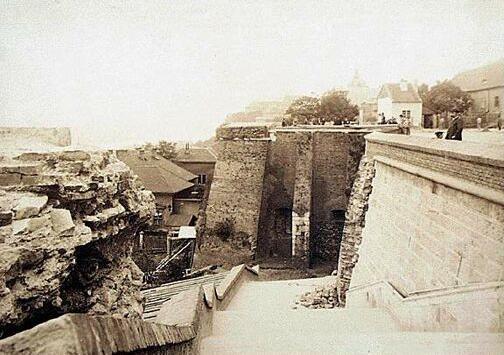
The army that arrived that summer was made up of Austrians, Hungarians, Germans, Italians, Spaniards and Swedes, tens of thousands of men together, and it dug itself in around the walls. The bombardment lasted well over two months. In early September the wall gave way at the very spot you're walking through now, and what came next was days of looting and fire, leaving a few hundred inhabitants in a city that no longer stood.
had refused every offer to surrender. He was past seventy, and he fell near here with his sword in his hand, while the city around him was already lost.
Two hundred and fifty years later, the descendants of a Hungarian soldier who died on that same day in that same place laid a stone for him. It says he was a heroic enemy, and that he may rest in peace.
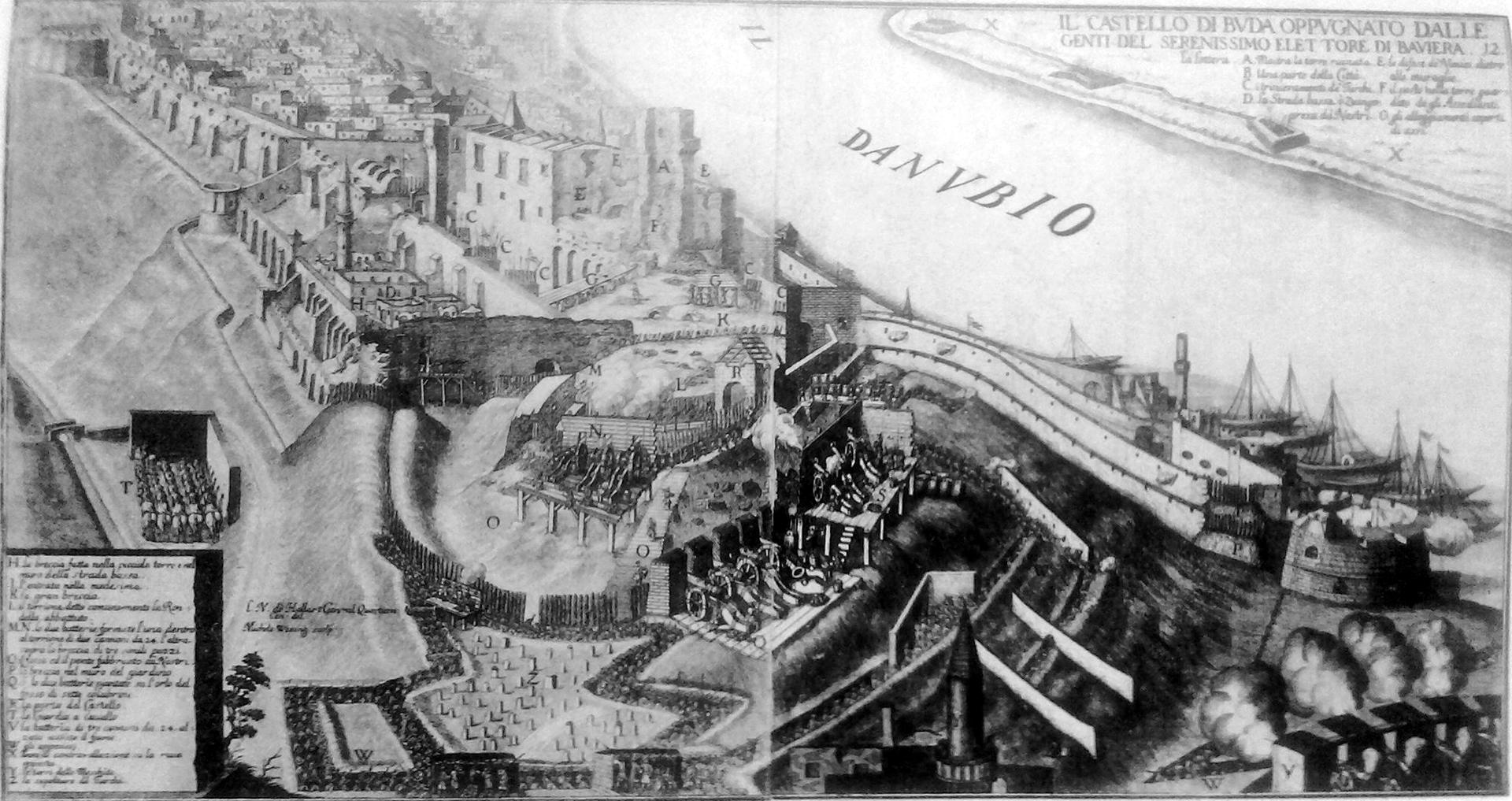
The engraving we have of this siege wasn't dreamed up afterwards. An adjutant general who was there in the trenches himself drew the , the batteries and the breach in the wall, with a letter marking each part.
We head into the long residential street that runs back to the south.
Sources. Story: Memorial stone for Abdurrahman Abdi Arnavut Pasha on the Anjou Bastion, Budapest, inscription from 1932 Photos: Michael Wening, after a drawing by L. N. von Hallart, public domain, via Wikimedia Commons