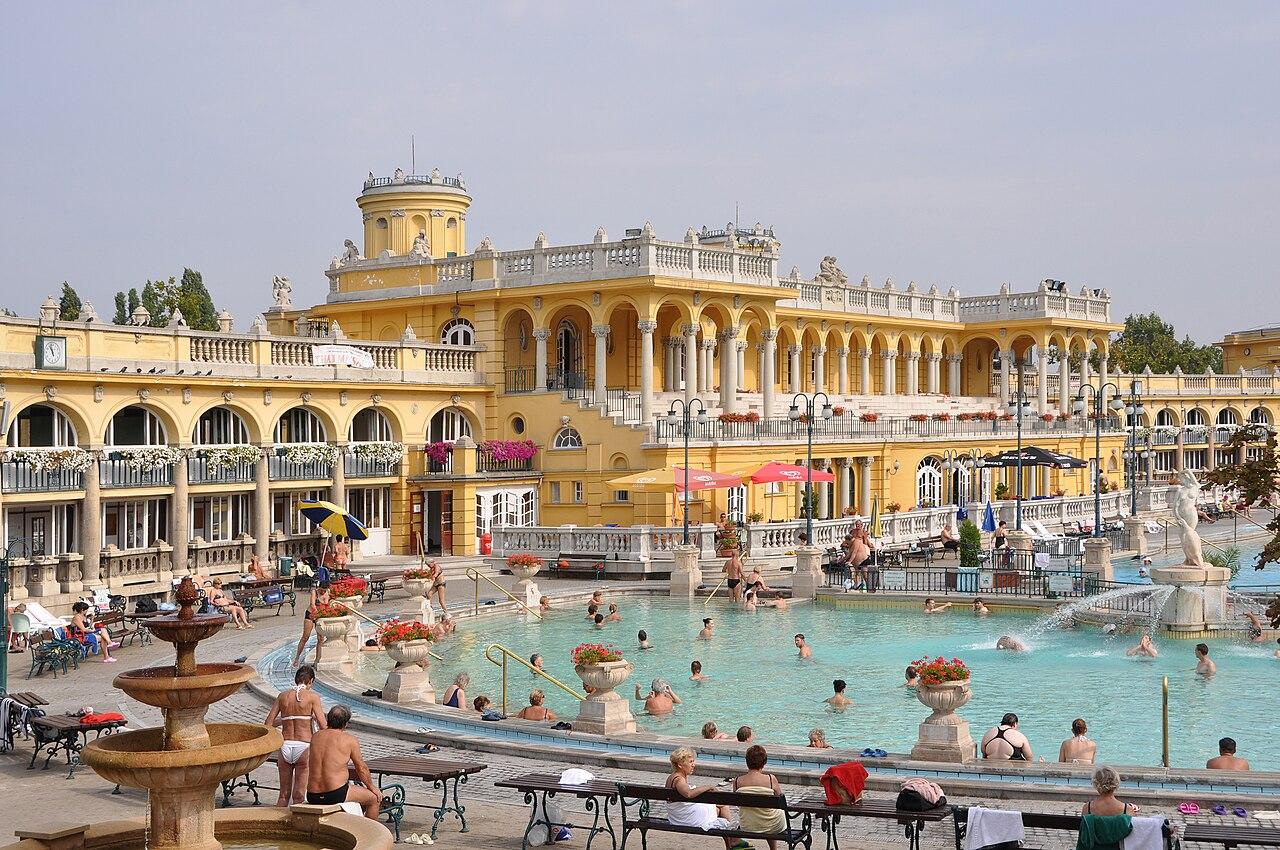
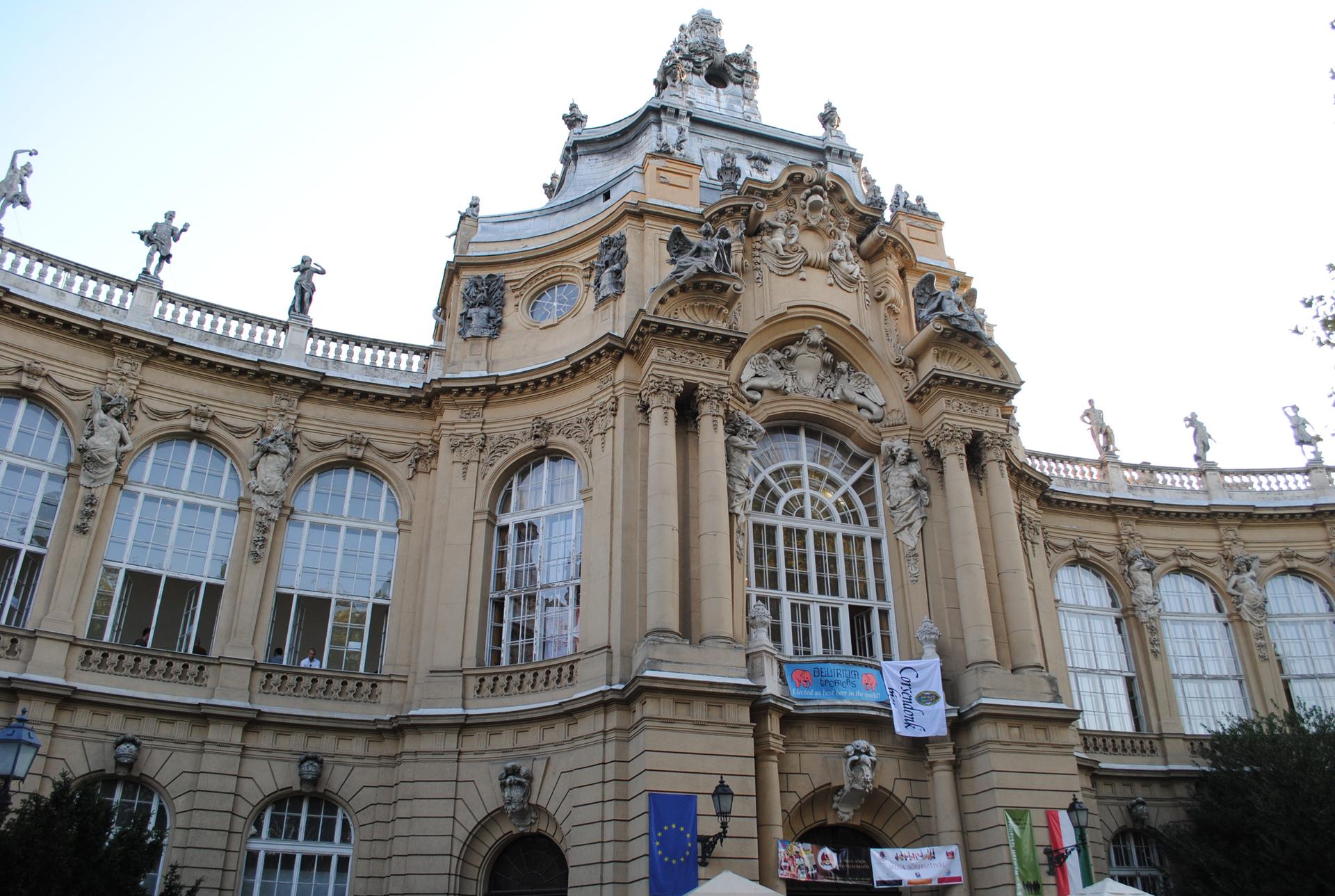
This ochre-yellow palace with its domes is a bathhouse, and the water underneath it is the whole reason it stands here. The mining engineer Zsigmondy Vilmos started drilling in the park back in 1868, and only ten years later, at a depth of 1,246 metres, did he strike what he was after. In May 1878 he brought up water at seventy-four degrees, the hottest spring water anywhere in Europe at that moment.
That well wasn't here, but over at the edge of the park, right in front of where stands today. When the went up, the little fountain marking the well had to make way, and it moved across the Danube to the Széchenyi hill.
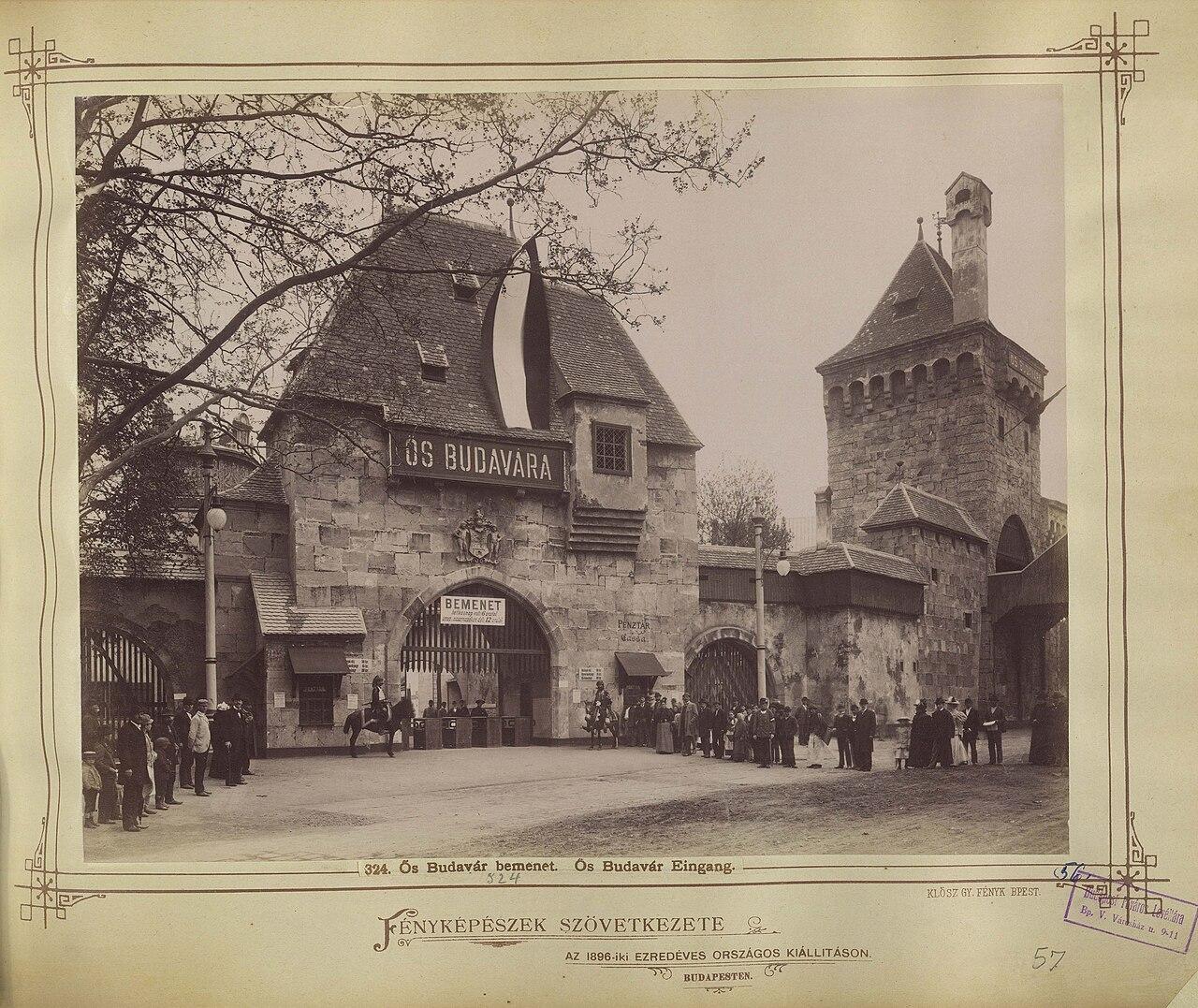
During the anniversary year there was nothing of this palace to see yet. If you wanted a bath after a day at the exhibition, you went to the Artézi fürdő, a modest little bathhouse that had stood by the well since 1881. In 1903 drew up something far grander, construction began in May 1909, and he died before anyone had so much as soaked in it; two of his colleagues finished the job. It opened in June 1913, and in that first year alone more than two hundred thousand bathers turned up. The outdoor pools you see steaming in winter only came along in 1927.
We follow the Állatkerti körút along the fence of the zoo, until we're almost at the entrance.
Sources. Story: Duna Múzeum, Magyar Környezetvédelmi és Vízügyi Múzeum, on Zsigmondy Vilmos's drilling between 1868 and 1878, the depth of 1246 metres and the spring tapping of May 1878; szechenyibath.hu on the Artézi fürdő of 1881, the construction to Czigler Győző's design and the 1927 expansion; We Love Budapest on the location of the well near the later millennium monument and on Dvorák Ede and Gerster Kálmán, who finished the construction Photos: Marc Ryckaert (MJJR), CC BY 3.0, via Wikimedia Commons