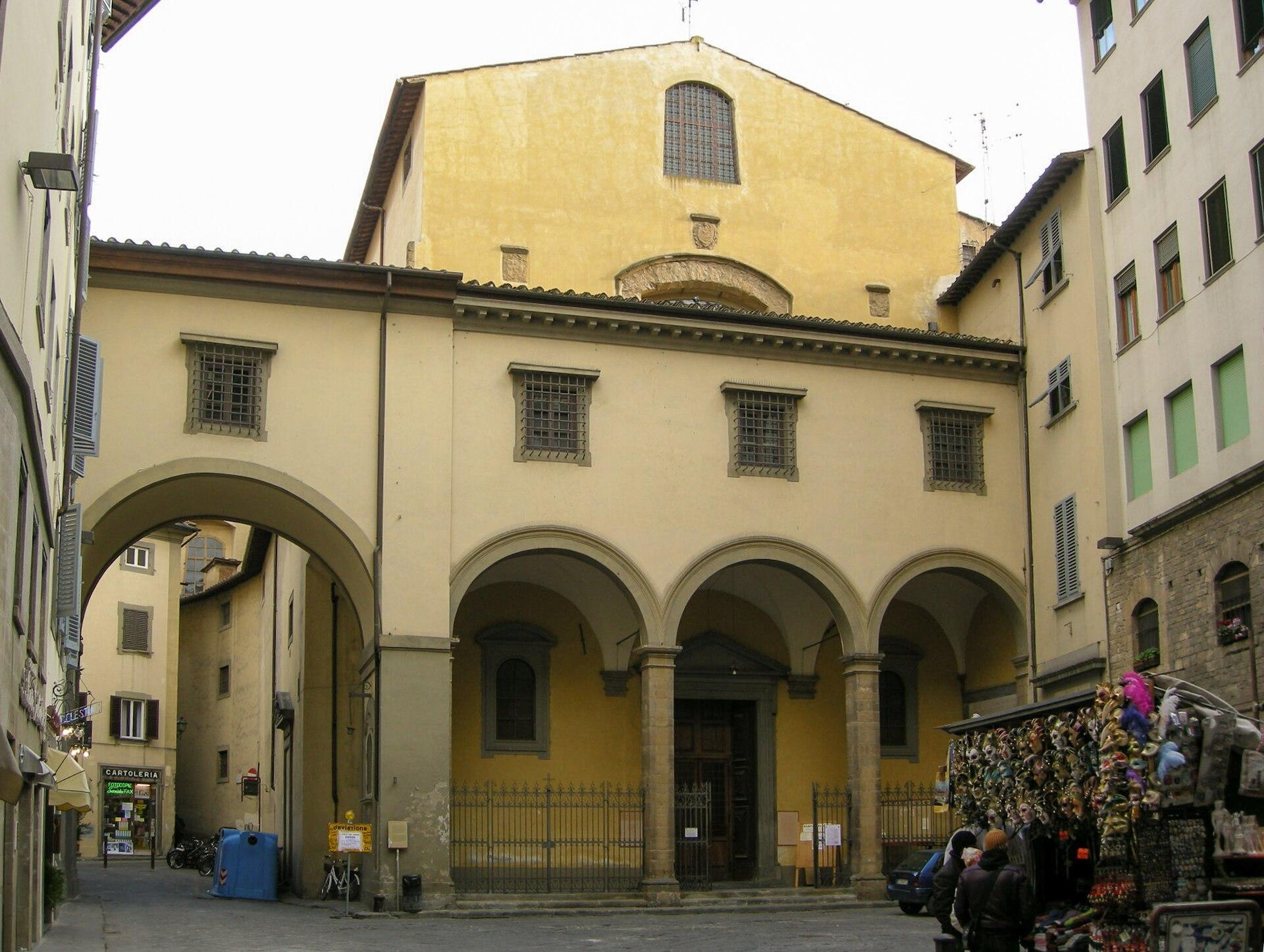
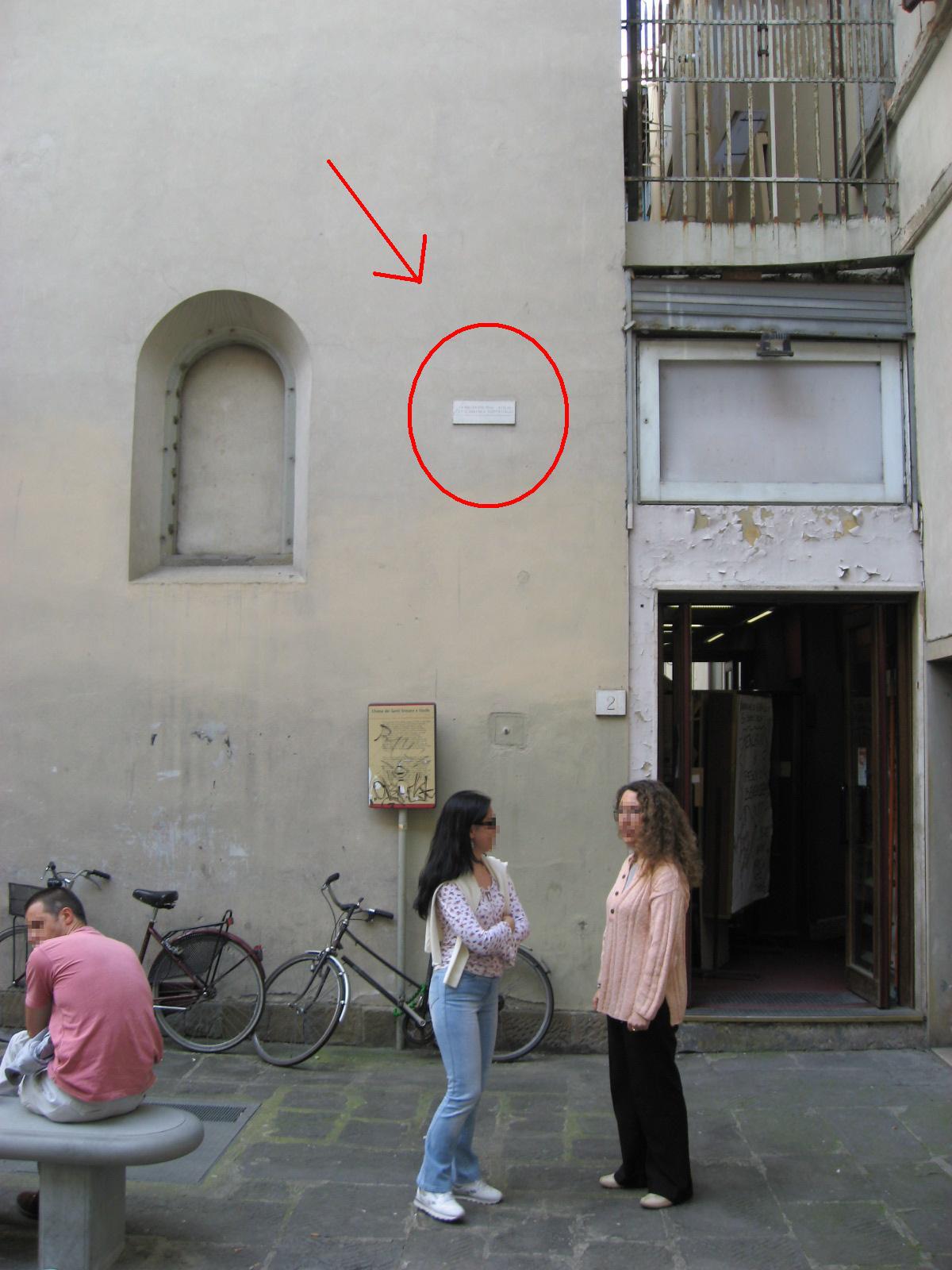
Turn around the moment you step inside and look back at the wall above the entrance. There hangs the balcony, a small behind a grille, with the door to behind it. The family came in without ever touching the street, followed the service from above, and left again, while the people in the church saw at most a flicker of movement behind the bars.
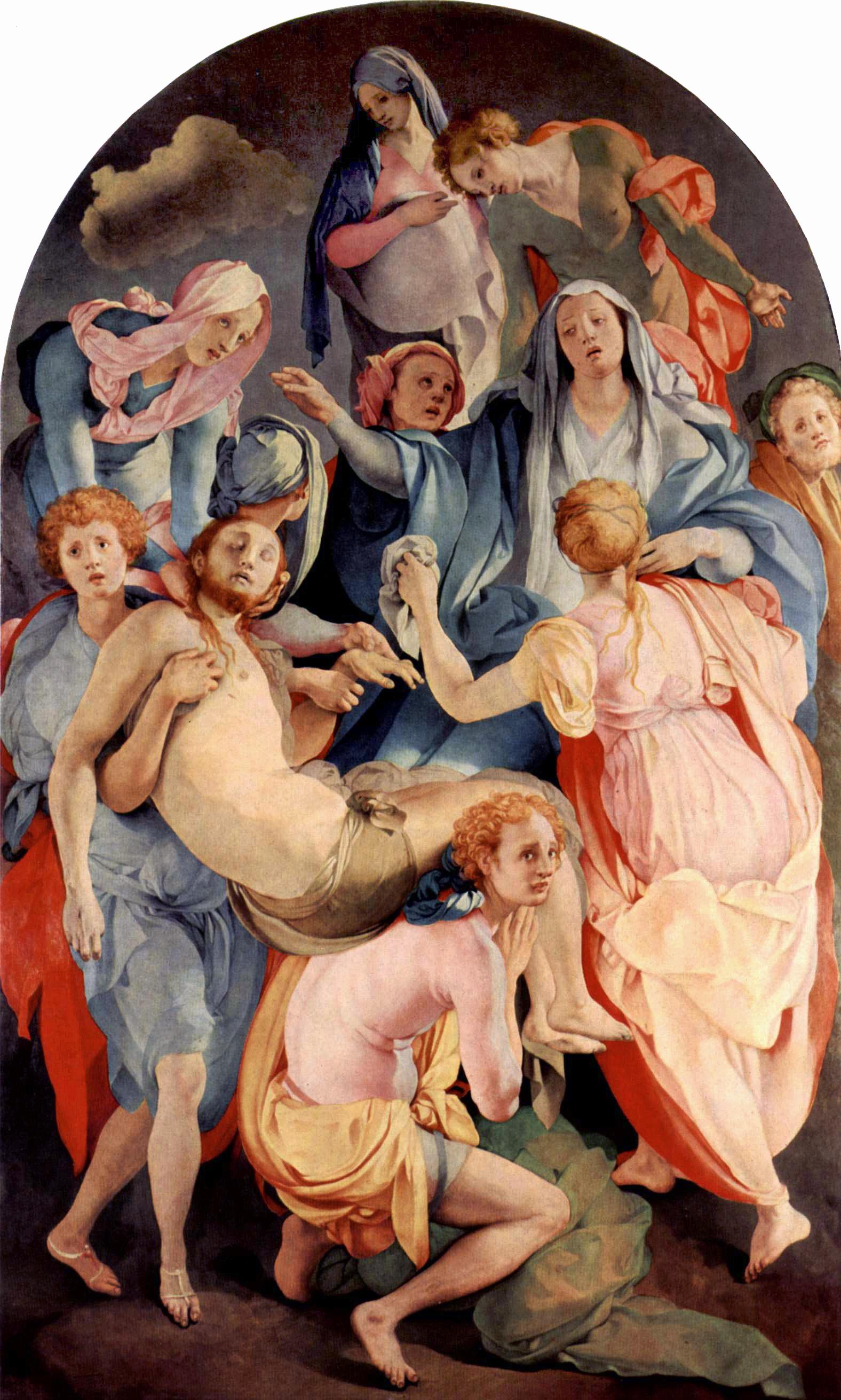
The first chapel on the right of the entrance holds what the church is best known for. Around 1527 painted an here in pink, pale blue and coral red, colours that belong more to a morning sky than to a burial. The figures carry the body in a ring that never touches the ground, and in the right corner a man gazes out into the church, thought to be the painter's self-portrait.
It's no accident that this chapel sits right beneath the balcony. The same family that watched mass here unseen also paid for the art that the rest of the church was allowed to see up close.
Outside, Via de' Guicciardini carries on to the south, where the street opens onto a sloping square with .
Sources. Story: Gallerie degli Uffizi (Corridoio Vasariano, coretto di Santa Felicita); Treccani (Jacopo Carucci known as il Pontormo, Deposizione) Photos: Pontormo, Deposizione (1525-1528), Santa Felicita, via Wikimedia Commons, public domain; interior of Santa Felicita, via Wikimedia Commons, photo Luca Aless, CC BY-SA 4.0