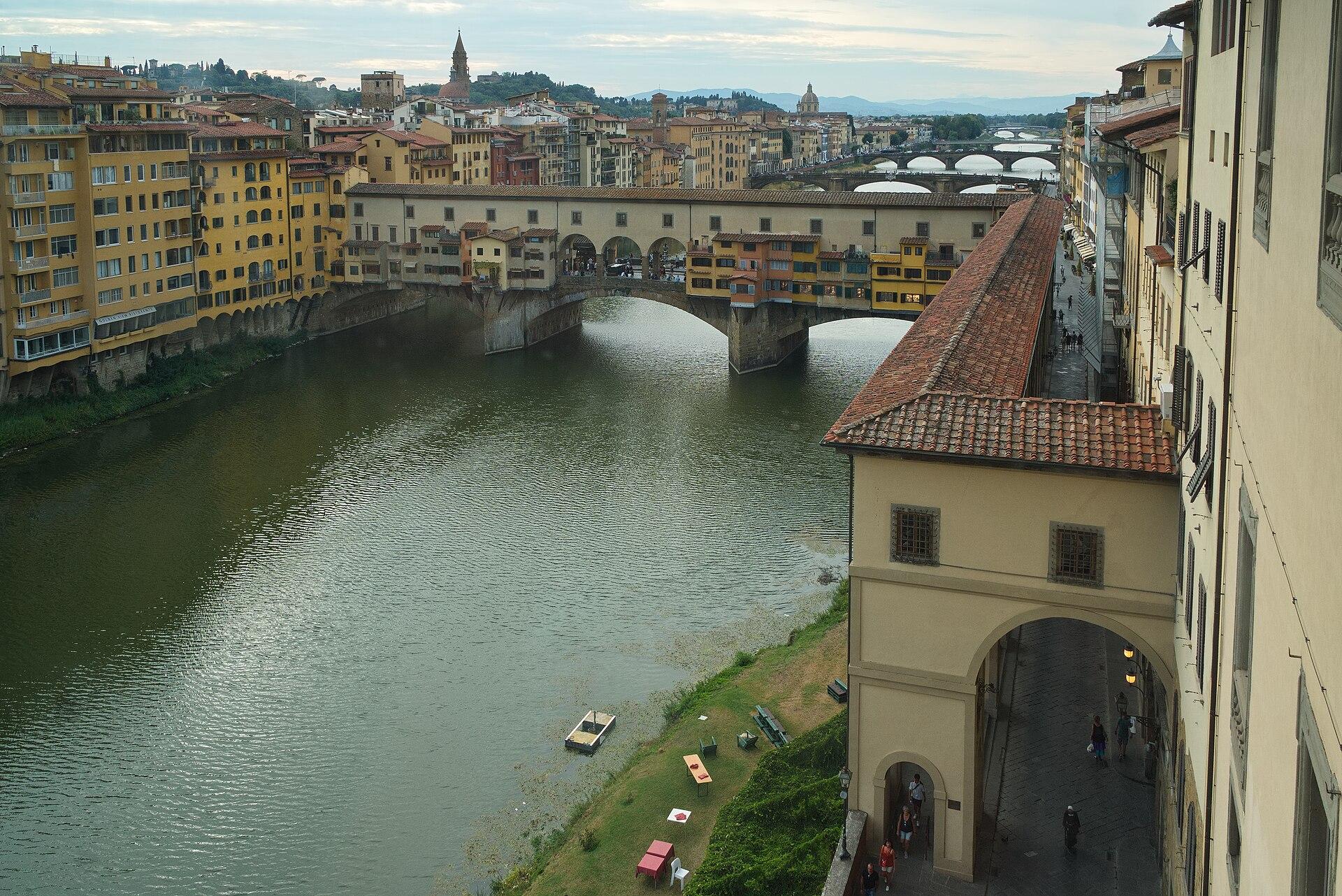
The man keeping watch here that night saw the water pushing through between the shops and started making calls. One by one the climbed out of bed, drove through a city already under water to reach the bridge, and cleared their stock from the display cases.
A lot was saved that way. What stayed behind went into , and in the days that followed people pulled gold and silver from the mud downstream, sometimes residents and sometimes people who came especially for it. The shops themselves, the ones that hang on the outside with their wooden shutters, burst open as if they were made of cardboard.
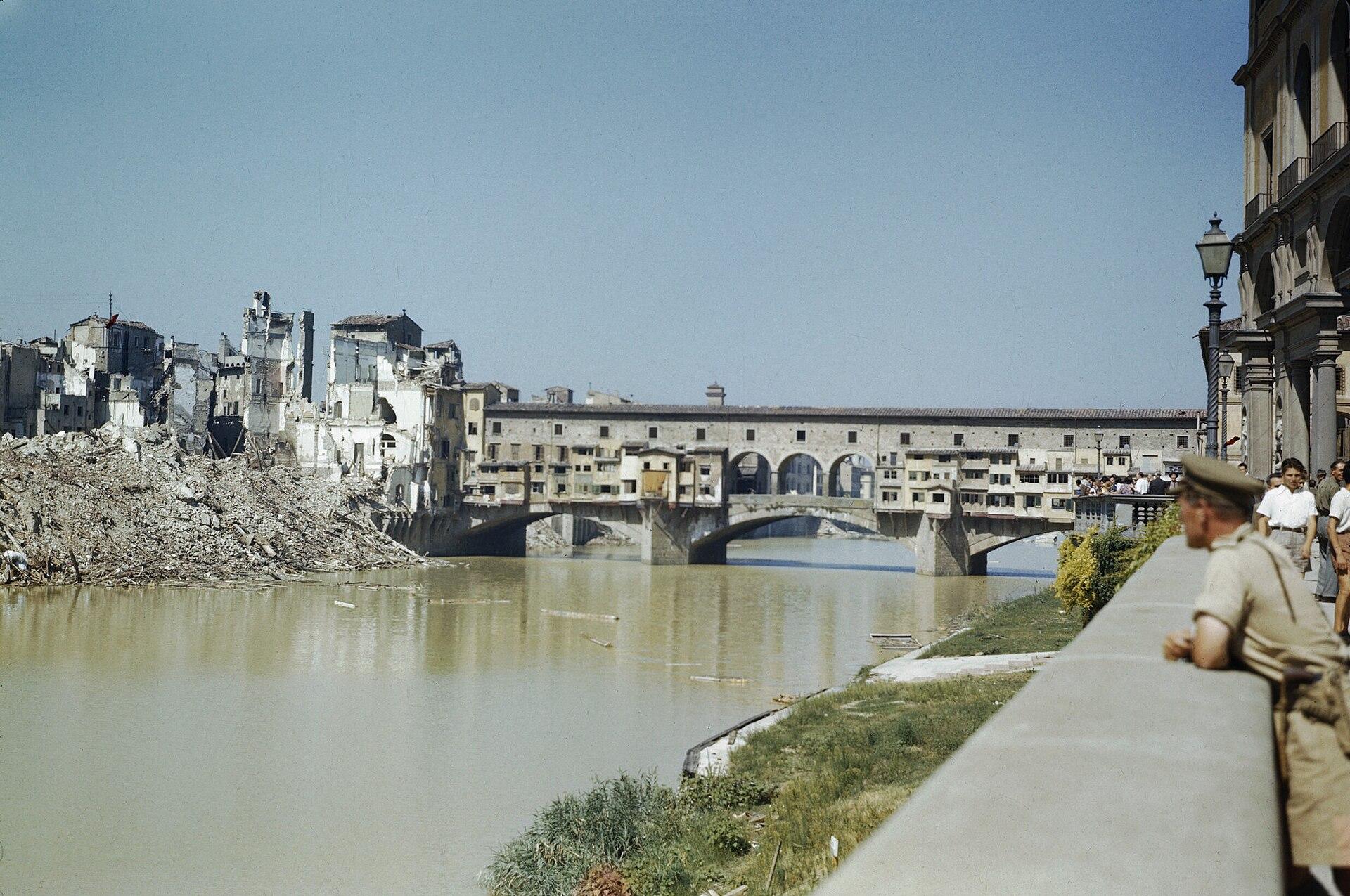
The bridge held, as it did in 1333 and in 1944, even with the water standing far above the shop floors. If you walk across it now, you can still see the hooks and shutters on the outside that have closed up those shops for centuries.
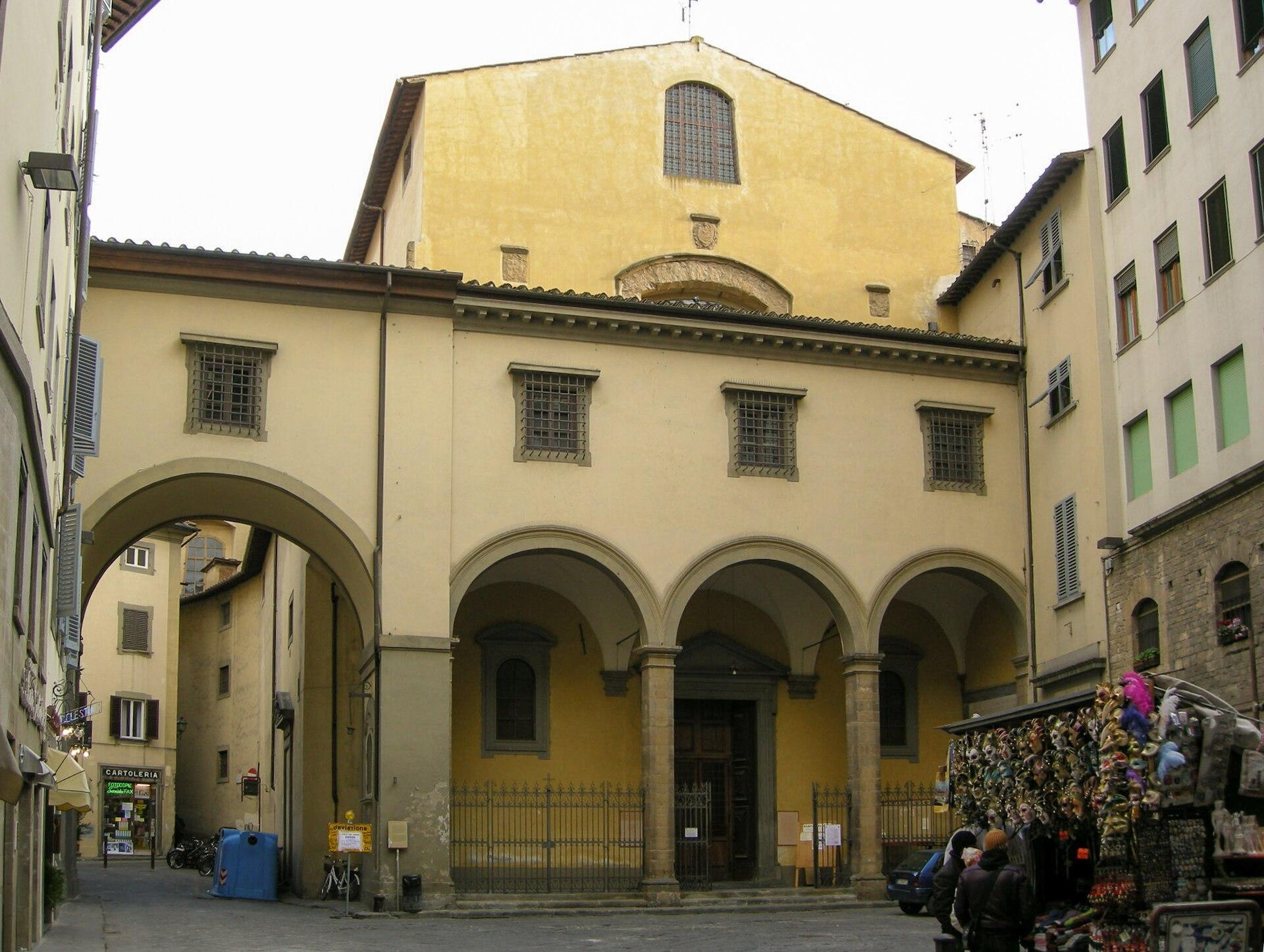
Following the quay back east, you reach .
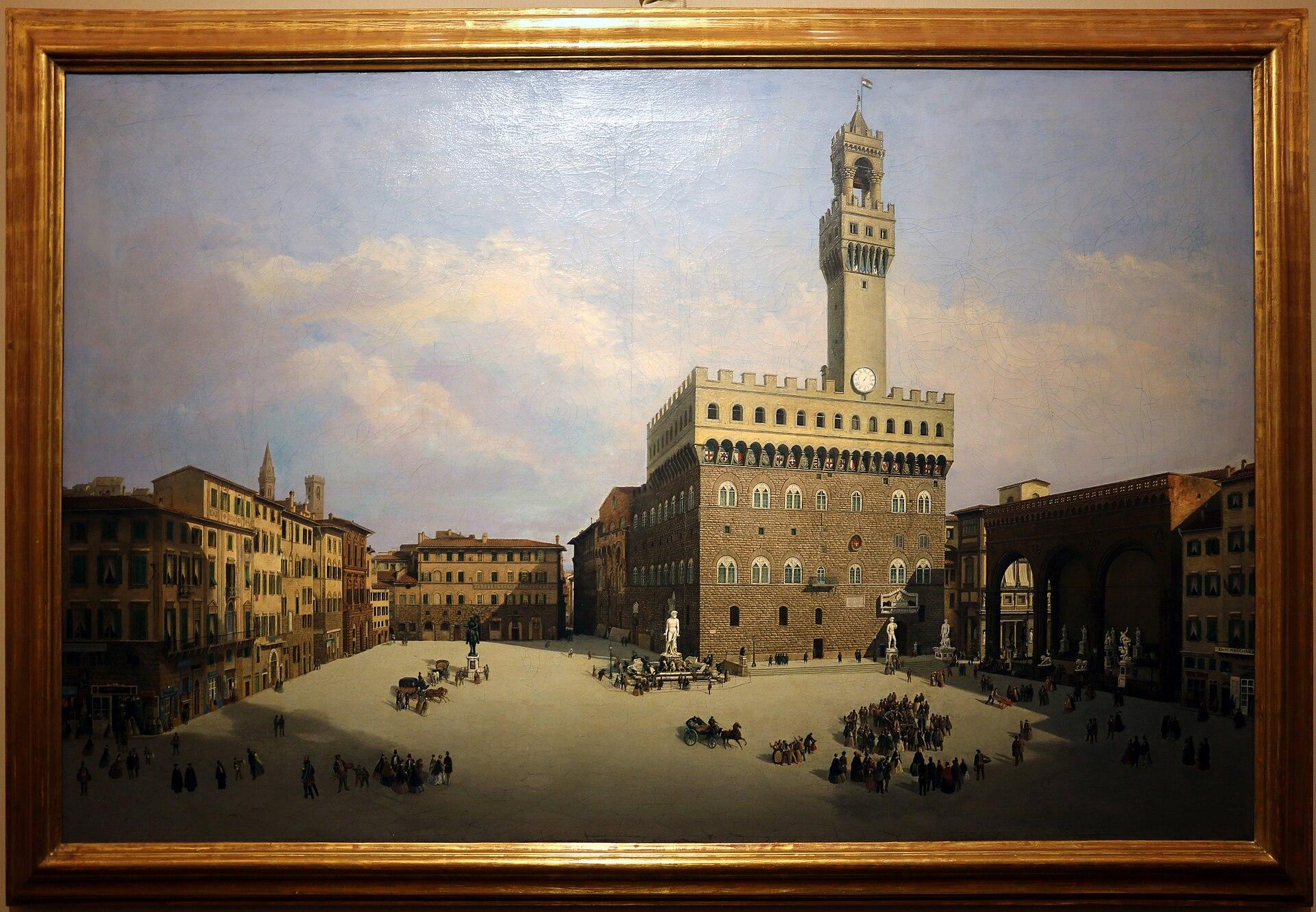
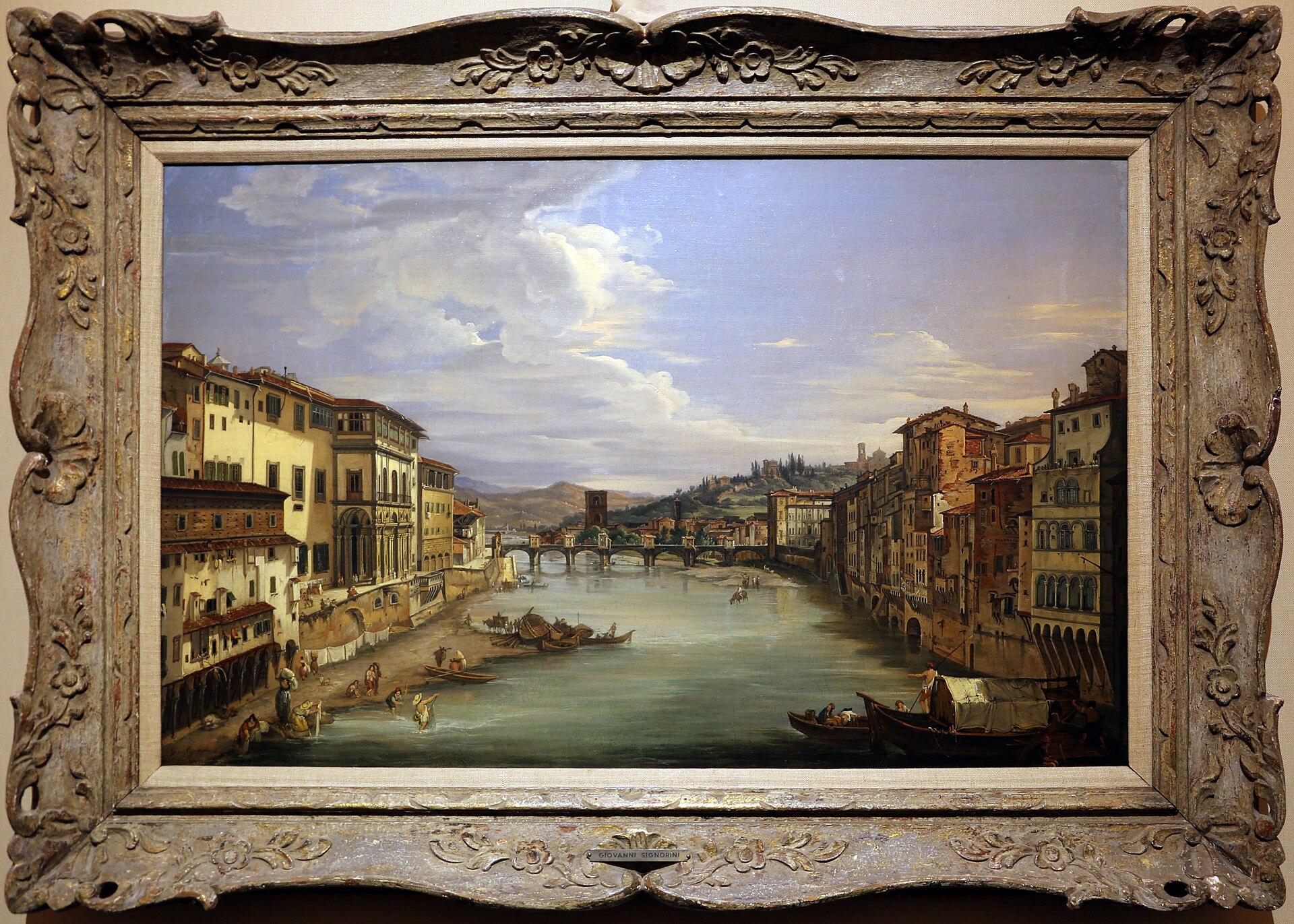
Sources. Story: Comune di Firenze (alluvione del 1966, cronaca della notte sul Ponte Vecchio); Archivio Storico del Comune di Firenze (testimonianze degli orafi) Photos: Giovanni Signorini, view of the Arno from the Ponte Vecchio (ca. 1850), via Wikimedia Commons, photo Sailko, CC BY 3.0