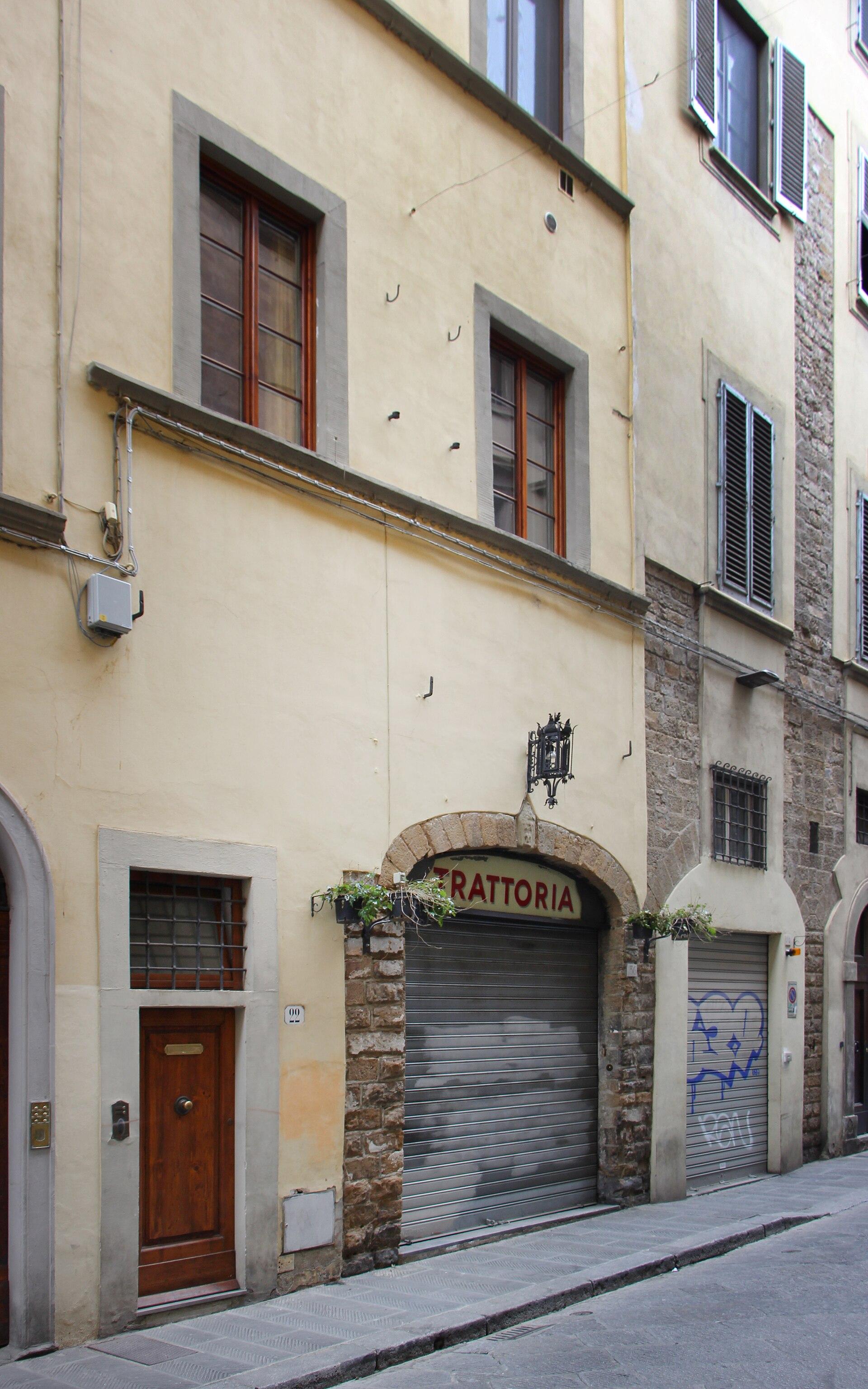
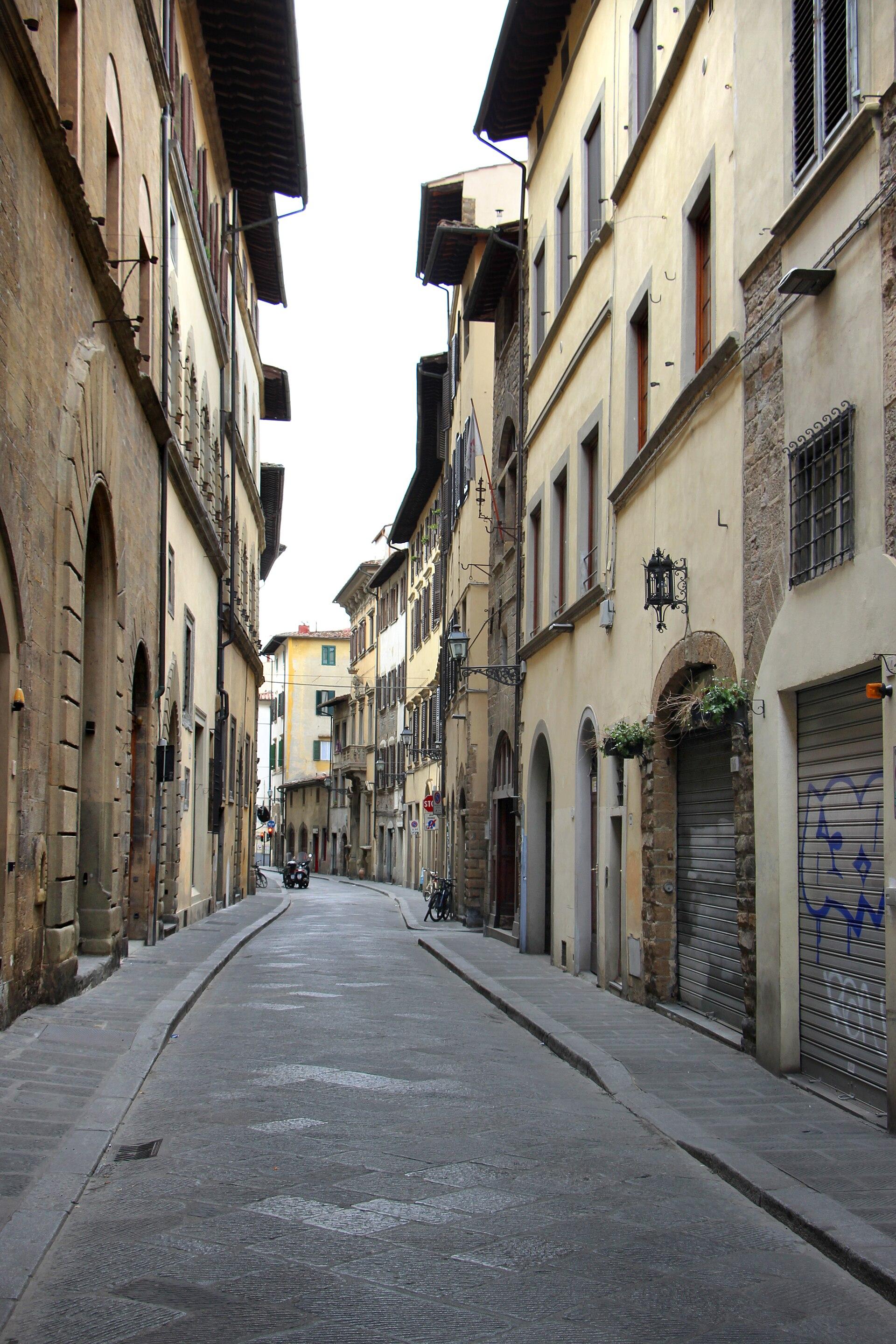
This street is wider than everything around it, and that's no accident. When the court moved to this side of the river in the sixteenth century, the families who mattered wanted to live close by, and Via Maggio became the address where you had to be seen. Since the nineteenth century the antique dealers have been here, their windows full of mirrors, maps and furniture that came out of those very palaces.
The house in front of you stands out for its decoration: grey curls, masks and shells scratched into the plaster, . built it, designed the ornament, and the commission came from Grand Duke .
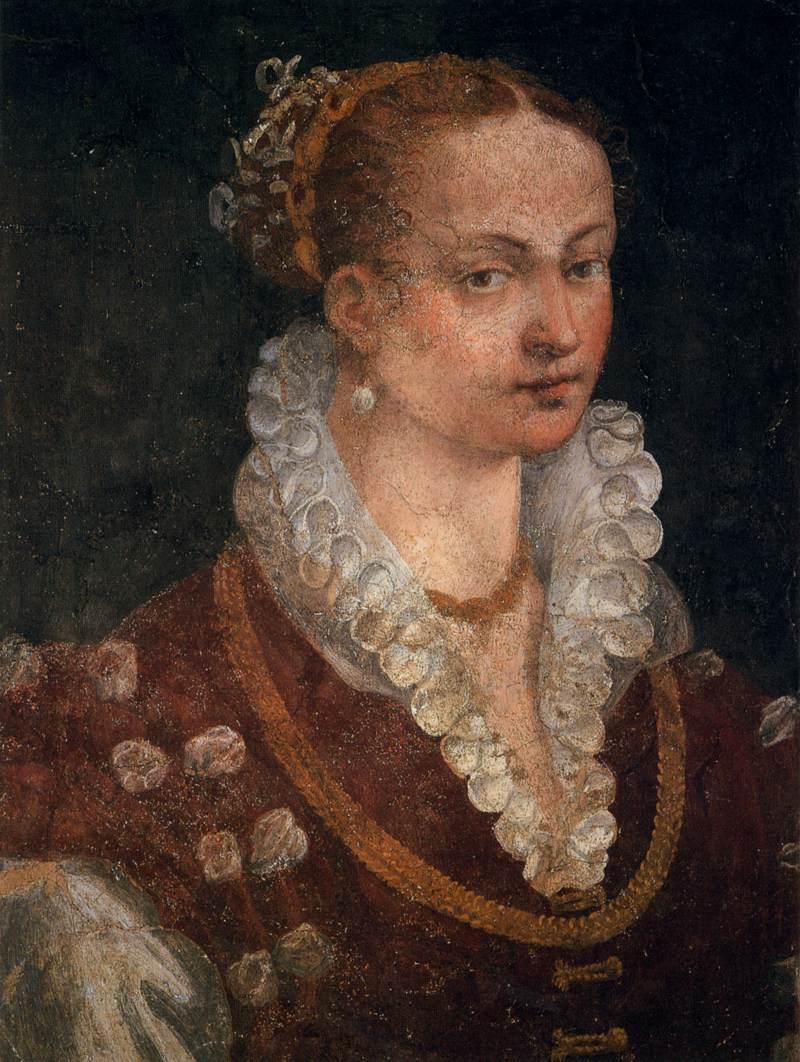
It was meant for , a Venetian woman who fled the city at fifteen with a bank clerk and became the mistress of the heir to the throne in Florence. After his first wife died, Francesco married her, to the fury of his family and half of Europe.
In October 1587 the two of them died within a day of each other at the country estate of . Poisoning seemed the obvious answer, and Florence still talks about it, though modern research points to the malaria that went around those marshes.
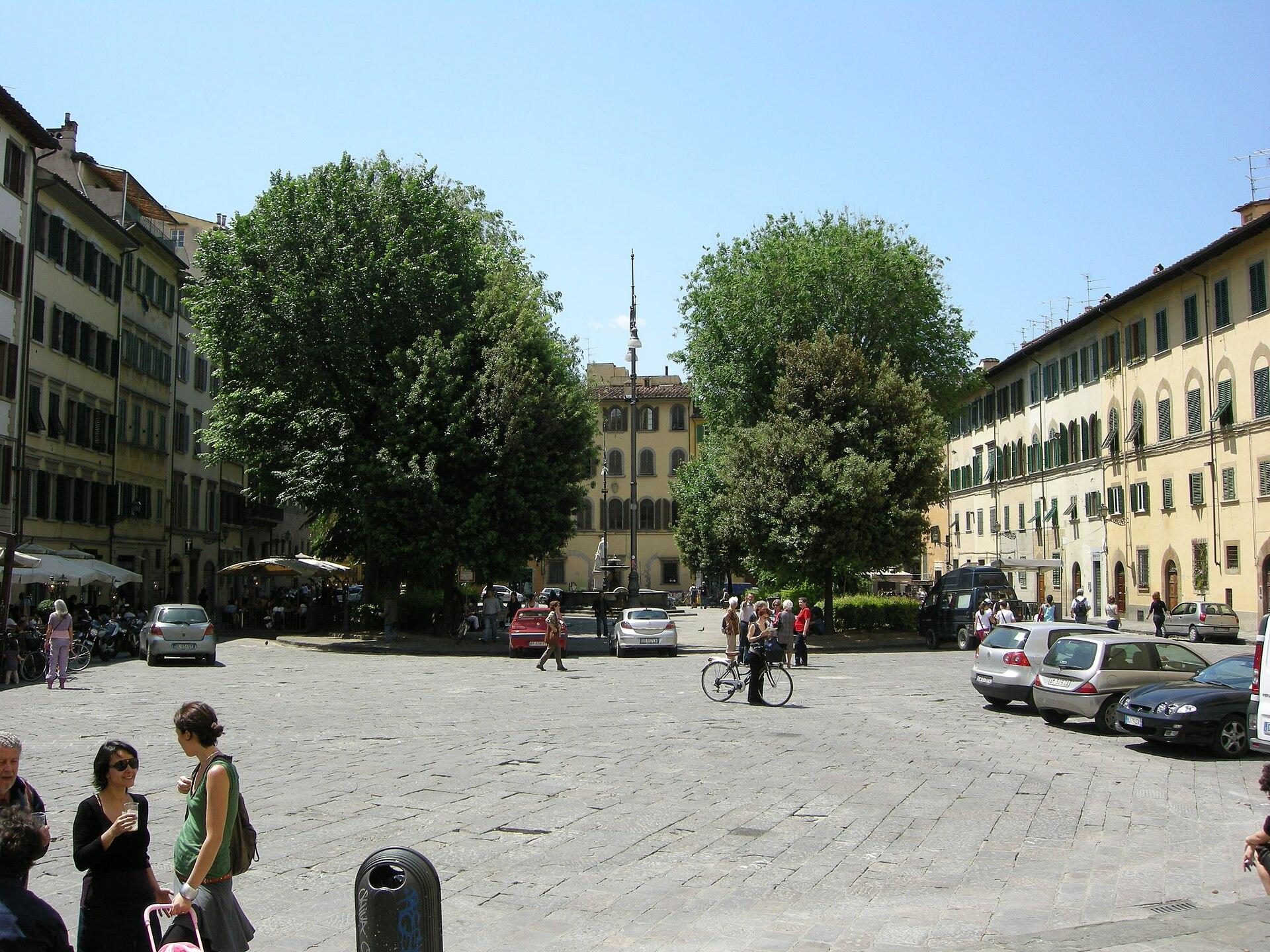
At the end of this street there's a square with a fountain and trees, where the morning air smells of vegetables.
Sources. Story: Comune di Firenze (Palazzo di Bianca Cappello, Via Maggio); Treccani (Bianca Cappello, Bernardo Buontalenti) Photos: Workshop of Alessandro Allori, portrait of Bianca Cappello (between 1560 and 1585), via Wikimedia Commons, public domain