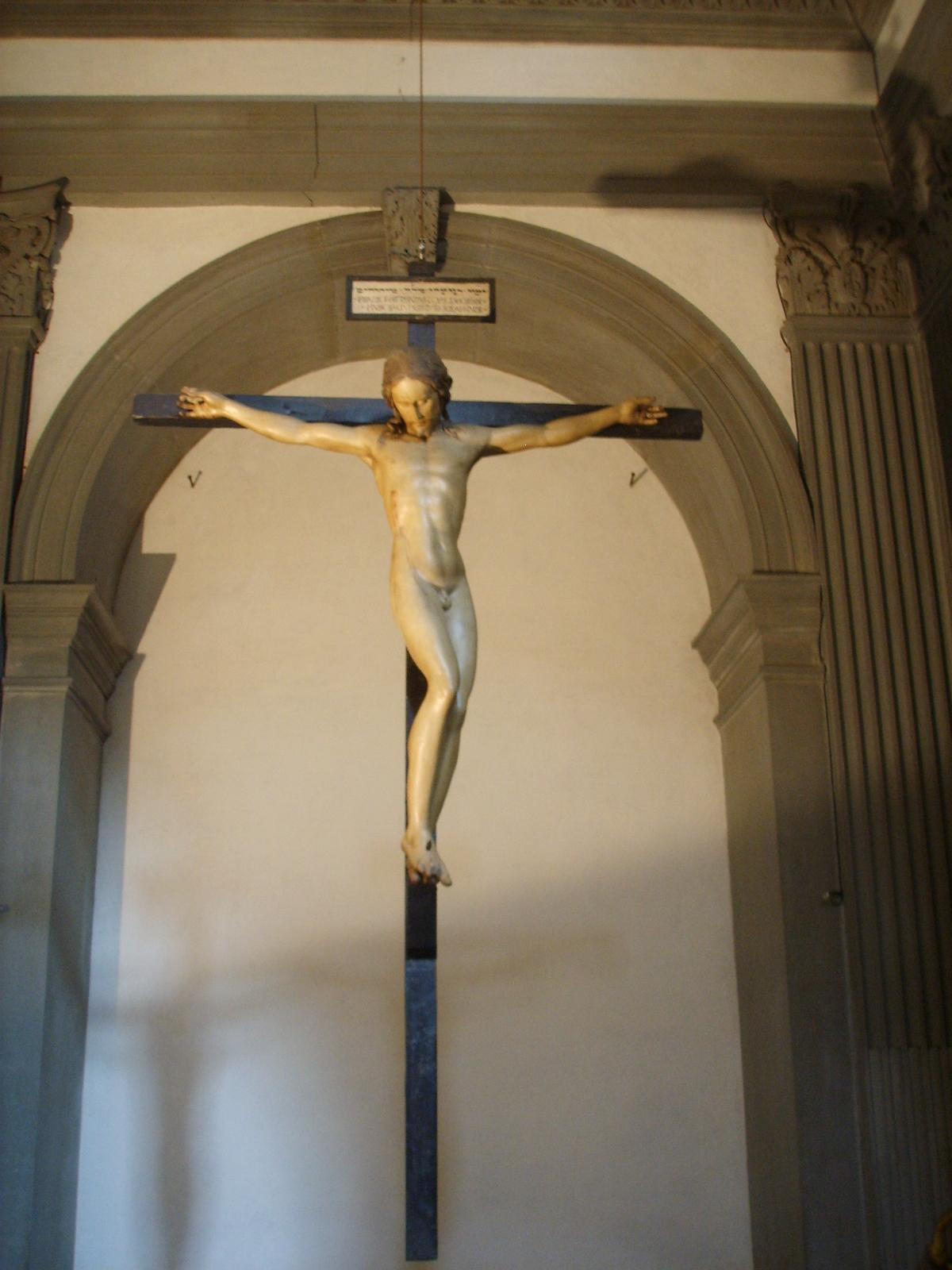
A boy of seventeen carved this crucifix, and in return he got something no one else in Florence could touch.
It hangs on its own in the church, over a metre and a half tall, pale in colour and carved with an unusual softness, the body looking more asleep than suffering. It's attributed to , who found shelter with the around 1492 after the death of , the powerful ruler of Florence who had been his patron.
In the monastery's infirmary, the prior let him dissect bodies, something forbidden almost everywhere else, and there he learned how muscles run beneath the skin and how a ribcage settles at rest. You can see it in the chest, the knees and the neck, which feel alive in a way other crucifixes from those years simply don't. The sculpture was his side of the bargain.
The space around it is part of the story. The columns run in two clean rows all the way behind the altar, everything grey stone against white wall, and in that calm a single wooden body stands out all the more.
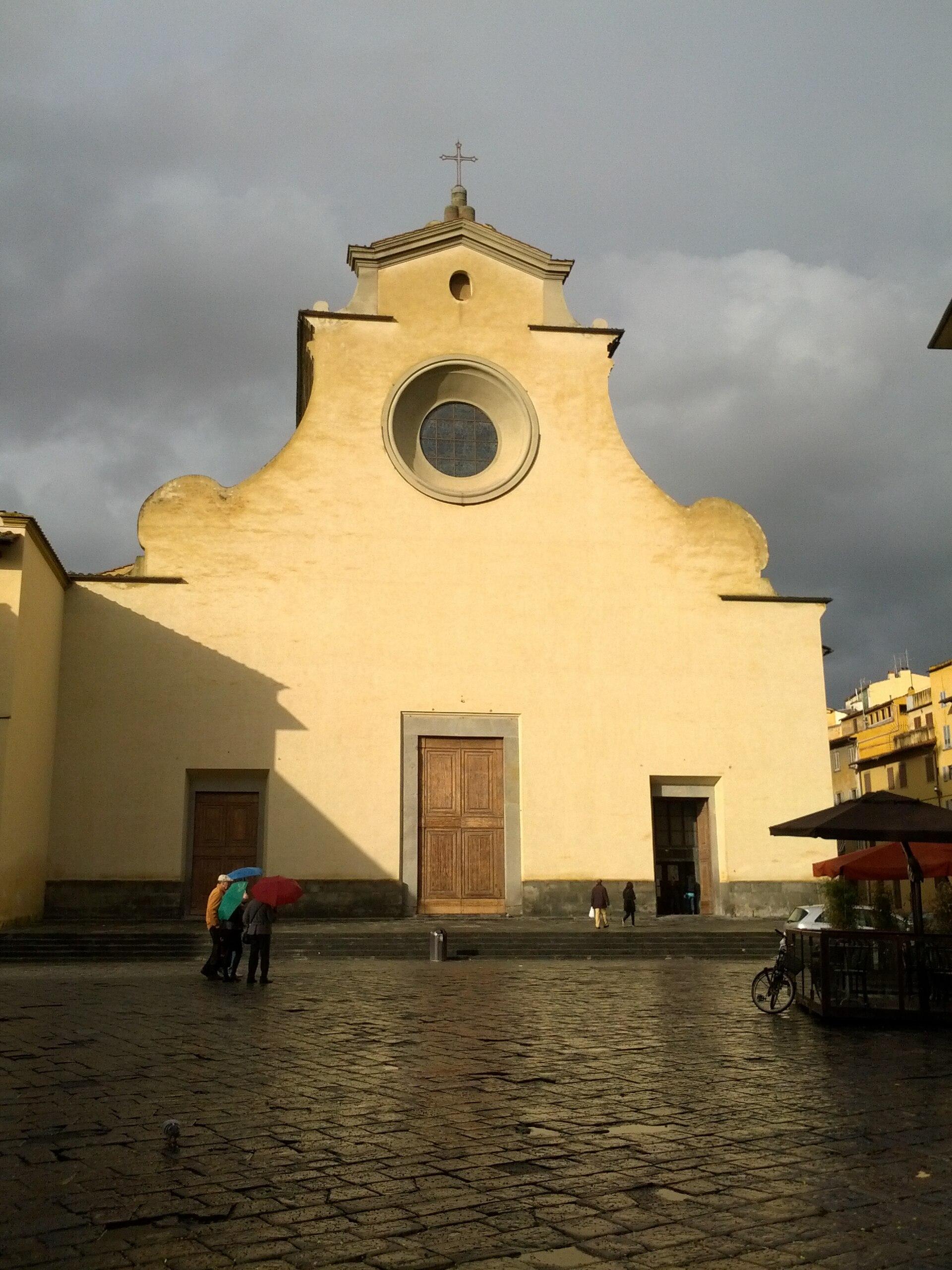
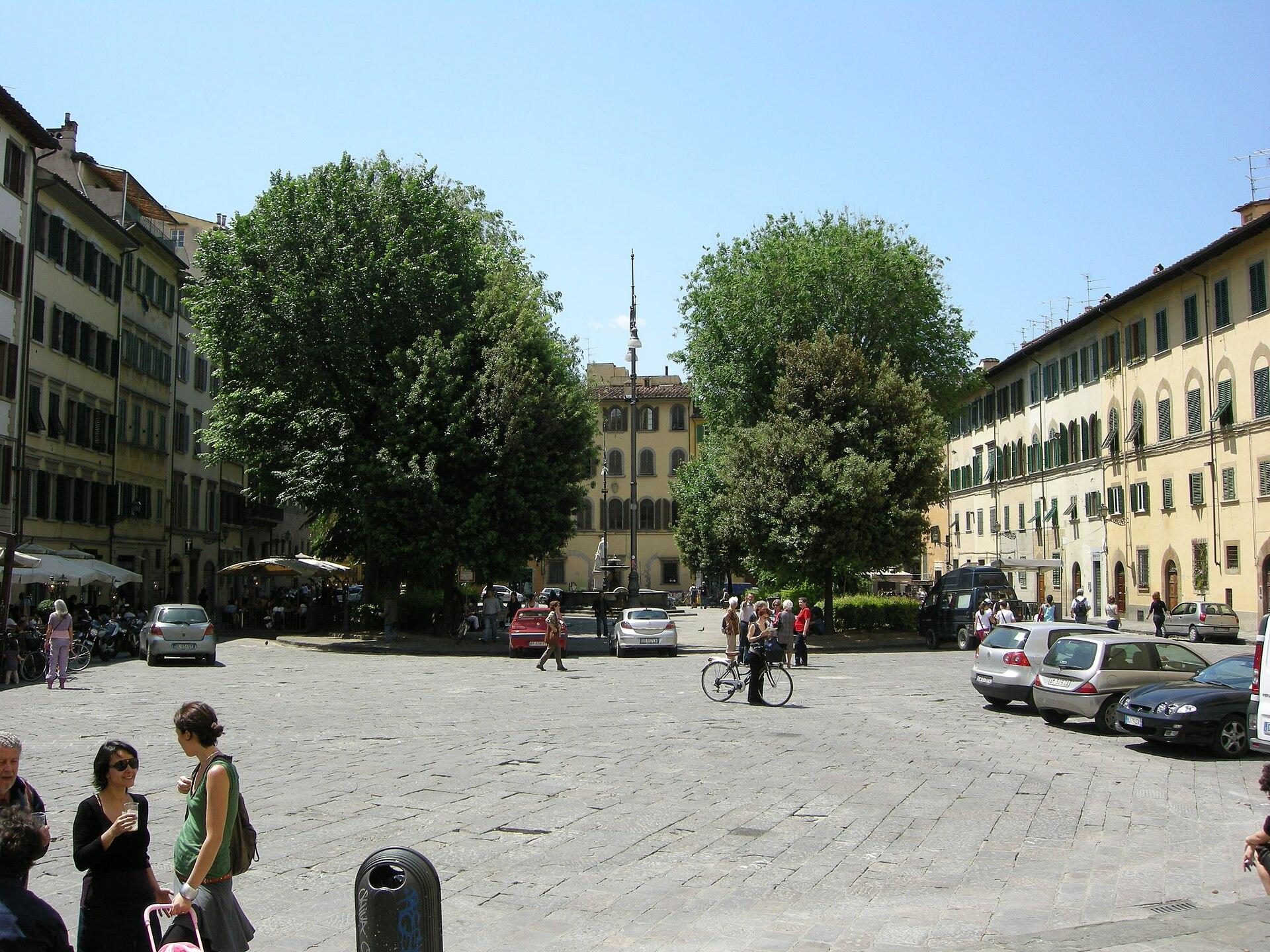
Outside, we head southwest across the square, where the streets grow narrower and the first workshops have their doors propped open.
Sources. Story: Basilica di Santo Spirito, Agostiniani (Crocifisso ligneo attributed to Michelangelo); Treccani (Michelangelo Buonarroti, early years) Photos: Crocifisso ligneo, Santo Spirito, Florence, via Wikimedia Commons, photo Sailko, CC BY 2.5