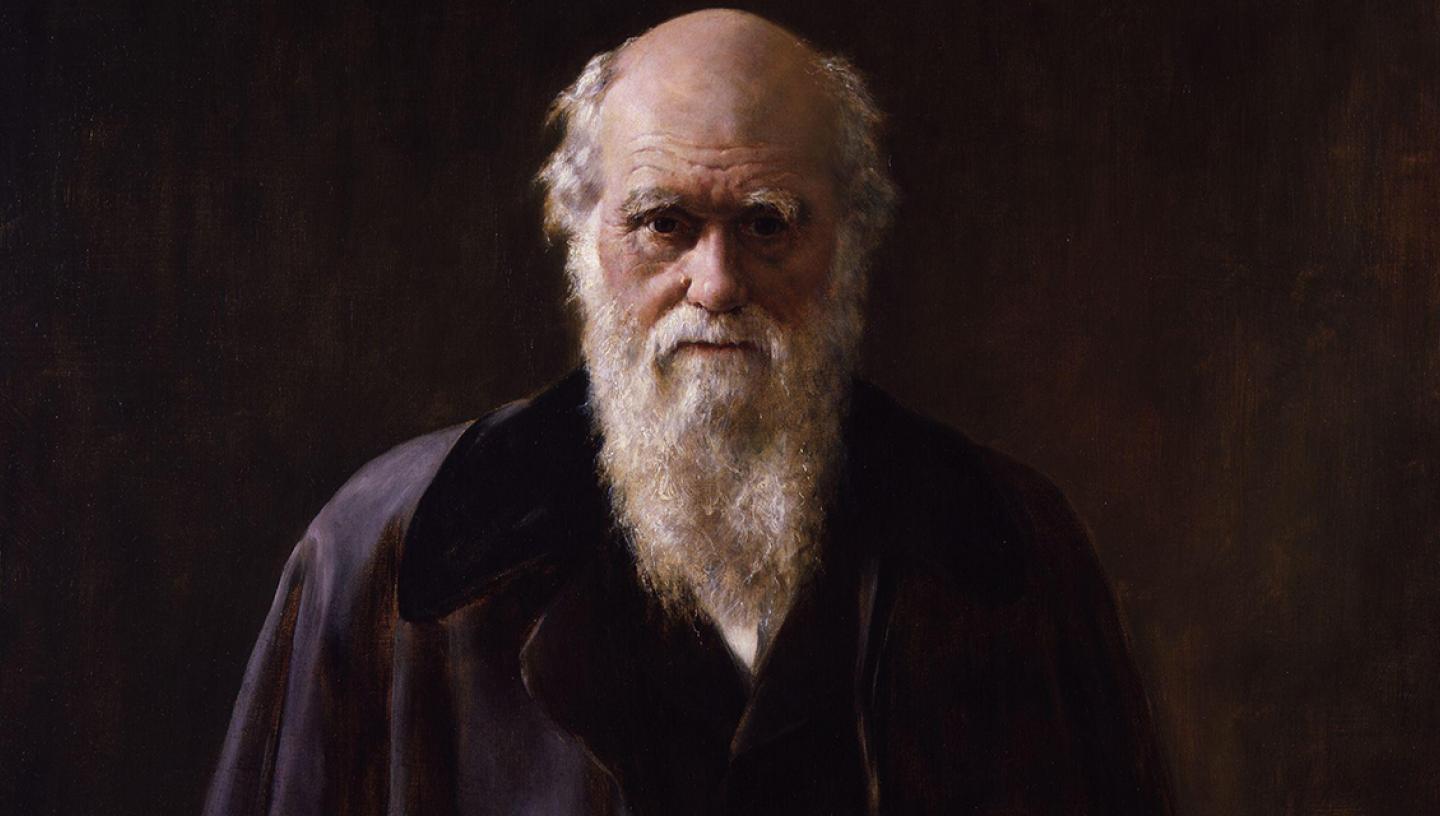
Charles Darwin, renowned as the father of evolutionary theory, was born on February 12, 1809, in Shrewsbury, England. From an early age, Darwin showed a keen interest in nature and the natural sciences, though his academic journey was not straightforward. Initially, he pursued studies in medicine at the University of Edinburgh, but his aversion to surgery led him to Christ’s College, Cambridge, where he studied theology. It was at Cambridge that Darwin’s passion for natural history flourished, particularly under the mentorship of botanist John Stevens Henslow. Darwin's life took a transformative turn in 1831 when he embarked on a five-year voyage aboard HMS Beagle as a naturalist.
This journey was pivotal, allowing him to explore diverse ecosystems across South America and the Galápagos Islands. His observations of species variations on these islands, especially among finches and tortoises, sparked the development of his theory of natural selection. Darwin concluded that species were not fixed but evolved over time through a process where individuals with advantageous traits were more likely to survive and reproduce. Despite formulating his ideas in the late 1830s, Darwin hesitated to publish due to potential backlash from the scientific and religious communities. It wasn't until 1859 that he published On the Origin of Species, which presented extensive evidence for evolution and introduced natural selection as the mechanism driving the diversity of life.
The book was both groundbreaking and controversial, challenging established beliefs and laying the foundation for modern evolutionary biology. In his personal life, Darwin married his cousin Emma Wedgwood, and they had ten children. His health was often poor, with frequent bouts of illness that some speculate were exacerbated by the stress of his work. Darwin continued to refine his theories throughout his life, corresponding with numerous scientists. His later work, The Descent of Man (1871), expanded on his evolutionary ideas, exploring human evolution and the role of sexual selection. Darwin passed away on April 19, 1882, and was buried in Westminster Abbey. His legacy endures as one of history's most influential scientific minds, with his work continuing to inspire and shape our understanding of biology and evolution.
Sources. Story: Source Story: https://en.wikipedia.org/wiki/Charles_Darwin https://www.britannica.com/biography/Charles-Darwin https://www.nhm.ac.uk/discover/charles-darwin-most-famous-biologist.html Photos: Source Photo: John Collier, Public domain, via Wikimedia Commons