The street you are standing in curves along with Madrid's , because a cava was a ditch and this one ran along the outside of it, so the bend you feel beneath your feet follows the old line of defence.
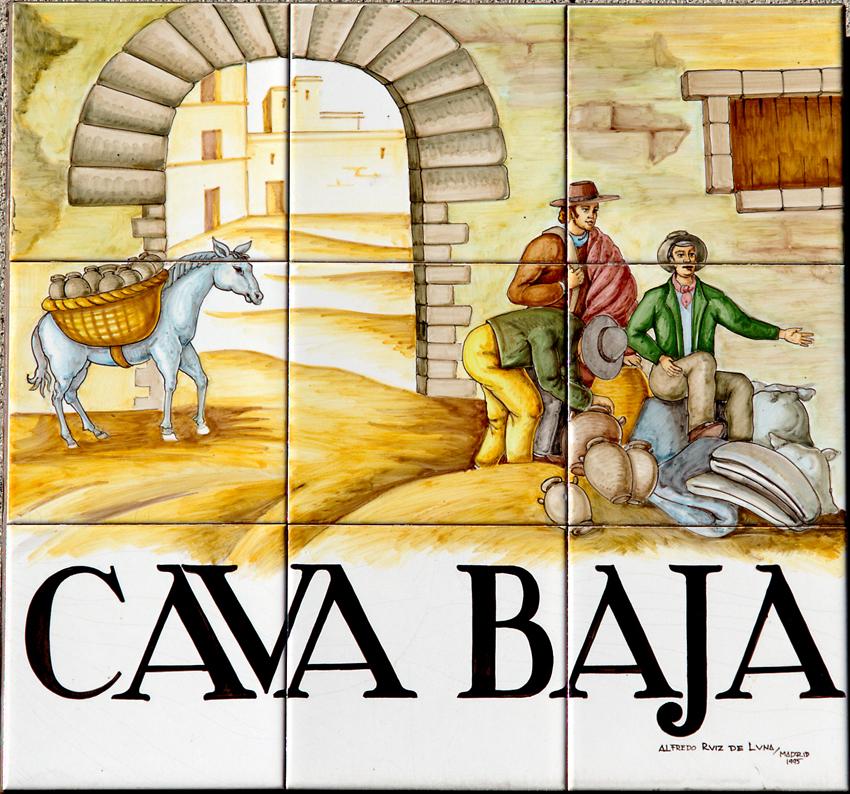
When the city grew beyond its walls, the ditch was filled in and built over, and what rose here were inns. This was the street where the carts from and the south came in, where carters stabled their mules and travellers rented a bed for the night. A city with plenty of people passing through also has plenty of people nobody misses, and so this street shows up in the court records of the seventeenth century more often than its size would suggest.
These days the Cava Baja is packed with tabernas and ranks among the busiest eating streets in the city, but its shape has stayed the same: narrow, curved, and with deep cellars beneath the houses, because when you build on a filled-in ditch you have more room below ground than above it.
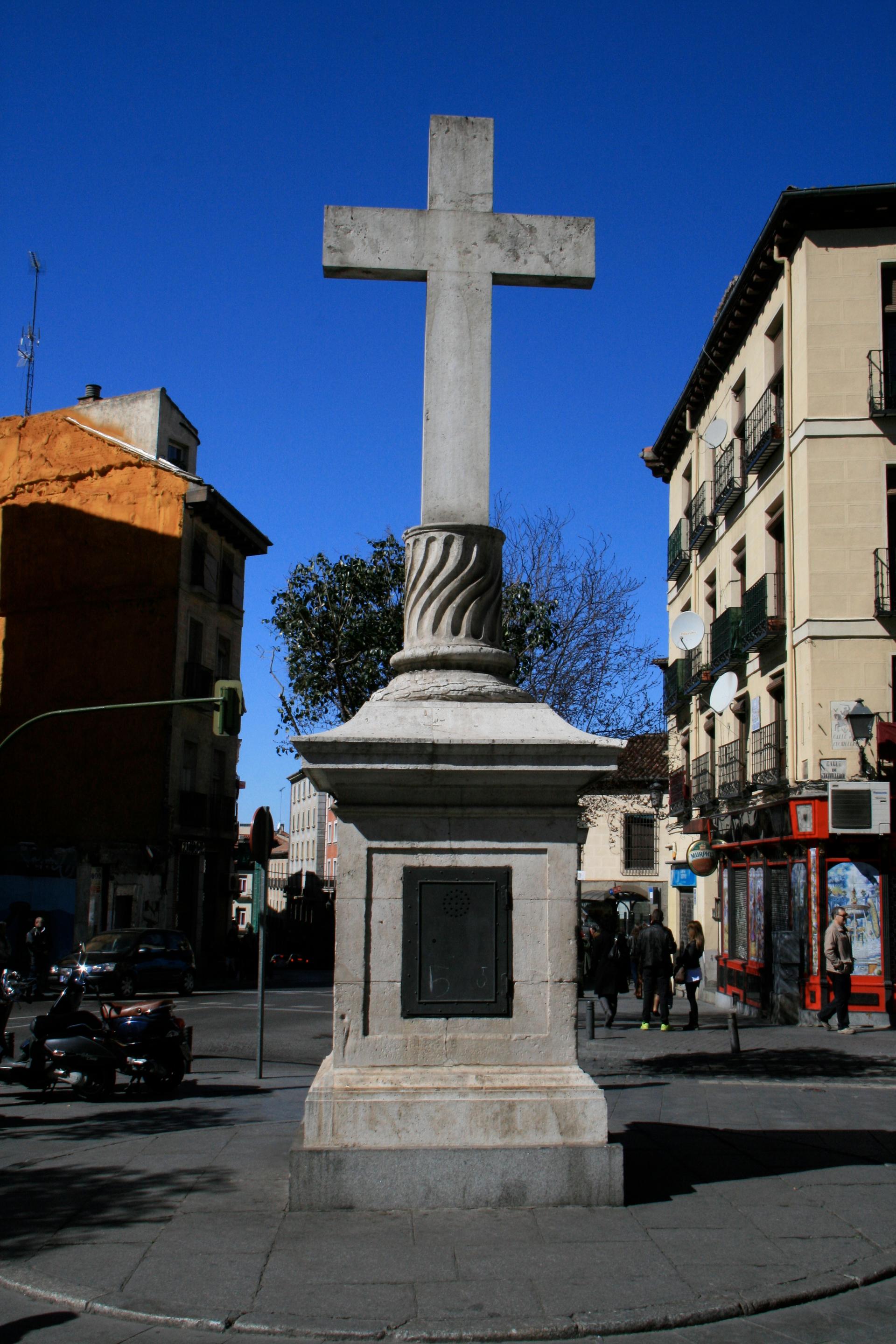
At the top the street opens onto a crossing with a stone cross on a plinth.
Sources. Story: Hispanopedia, Cava Baja en Puerta Cerrada (Madrid); Pedro de Répide, Las calles de Madrid, 1921; Ayuntamiento de Madrid, esMadrid. Photos: Photo of the Cava Baja: Pedro Reina, CC BY-SA 3.0 via Wikimedia Commons. Francisco Sancha, Interior de la posada del Segoviano, in La Esfera of 29 March 1924, public domain via Wikimedia Commons.