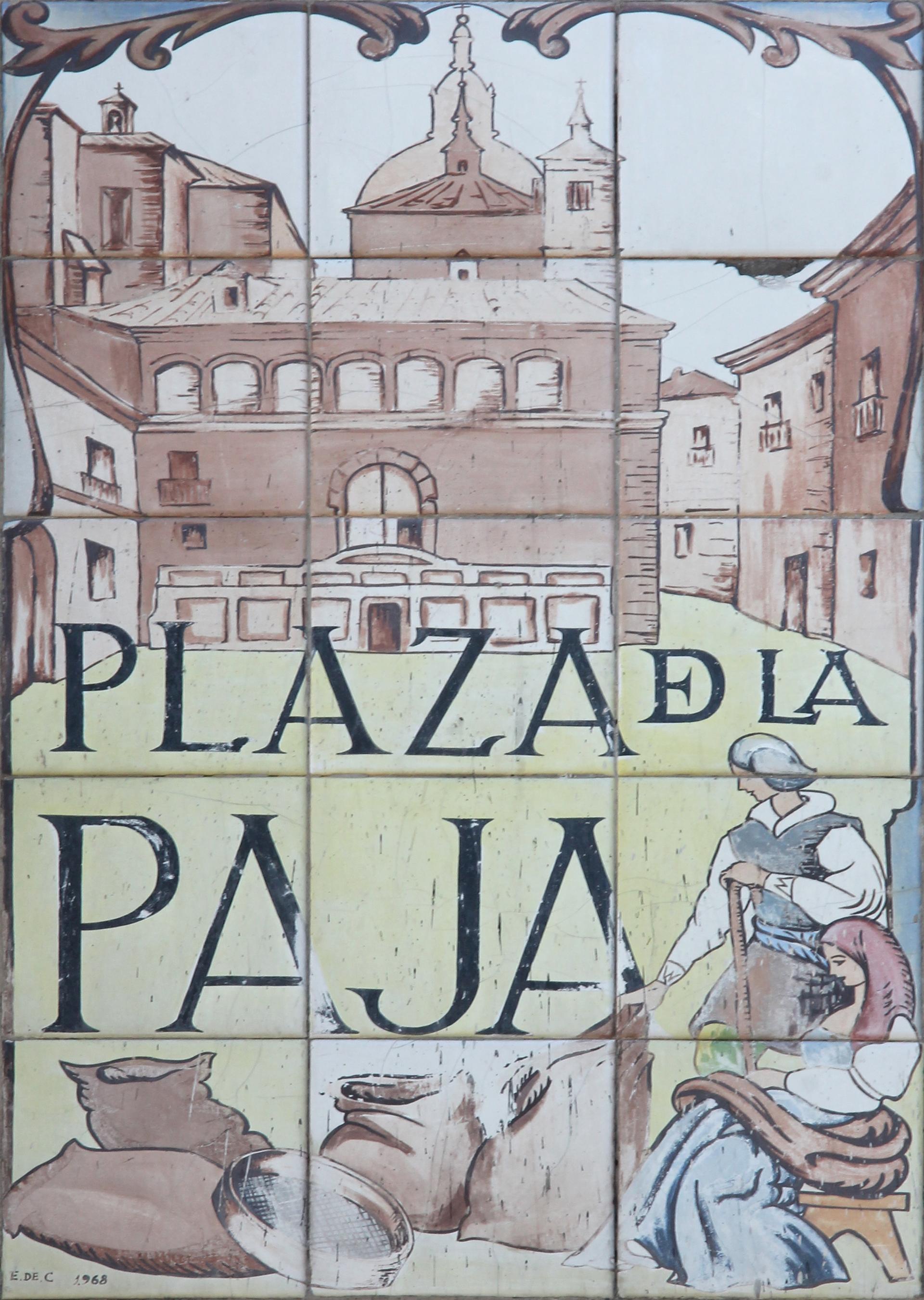
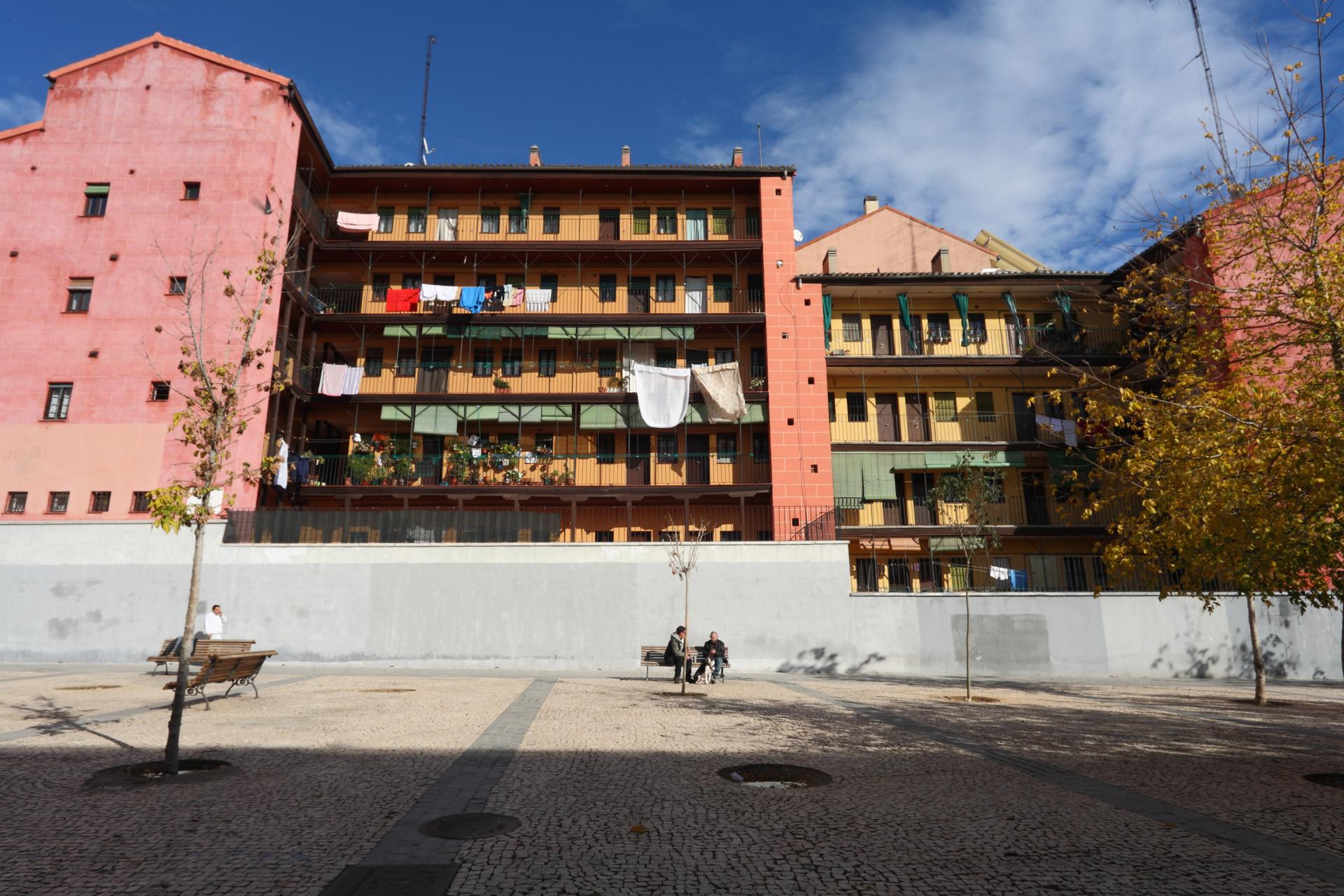
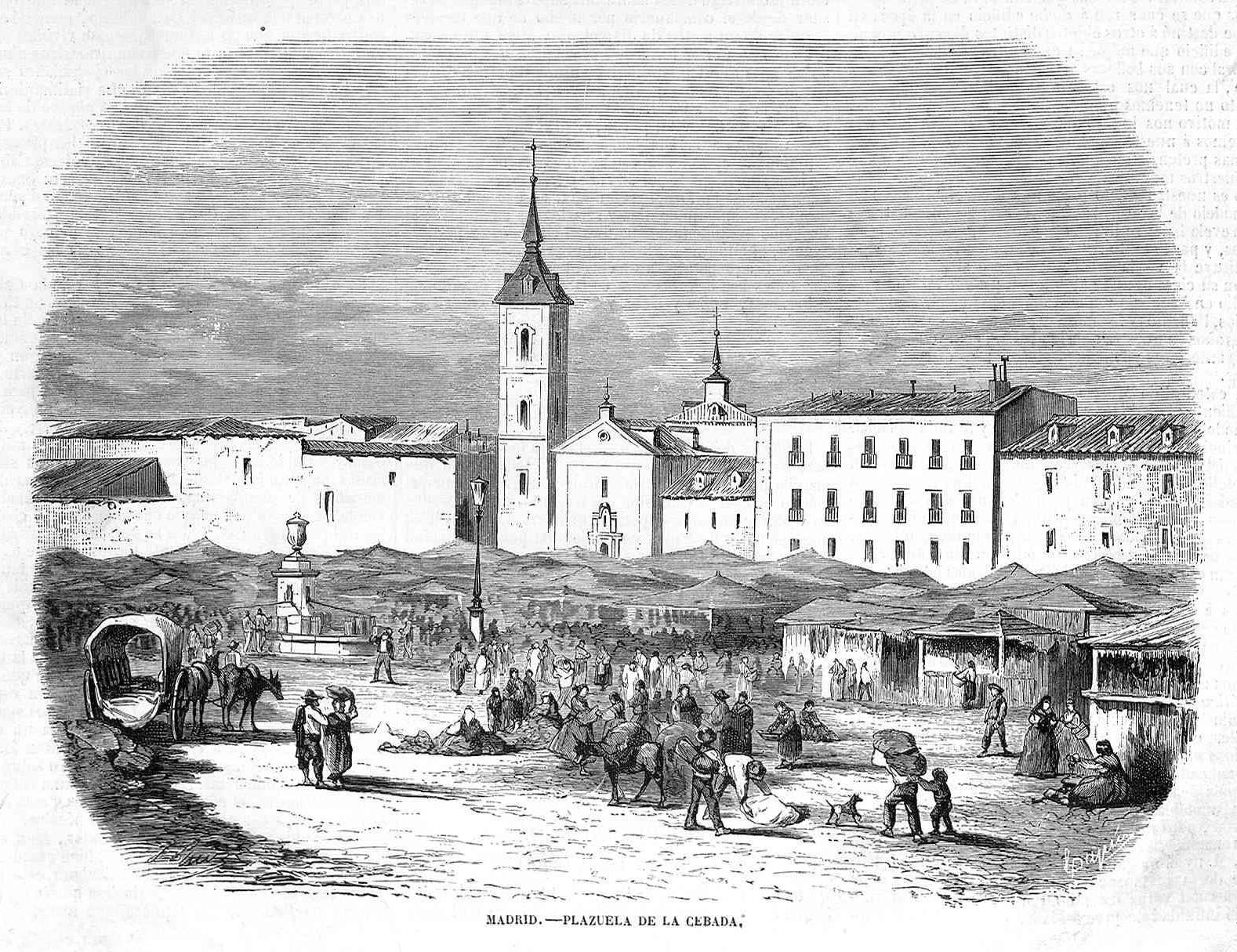
The square where you're standing takes its name from the barley that was once traded here, because farmers brought their grain, vegetables and salted pork to this spot, and the crown bought the feed for the cavalry horses here too. On the map that drew of Madrid in 1656 it's almost as large as the .
This was also the place of the scaffold. While the Plaza Mayor was reserved for the solemn spectacles the court attended, ordinary criminal justice played out right here, in among the stalls, and it carried on well into the nineteenth century.
The most famous man to die here was Luis Candelas, born in the neighbourhood across the Calle de Toledo. He robbed carriages and wealthy houses, and he did it with a flair that made him popular in Madrid, until he was caught in January 1837 after his description was pasted up all over the city. That November he was put to death here by the , an iron collar that is tightened by hand and works more slowly than the rope, which was precisely the point.
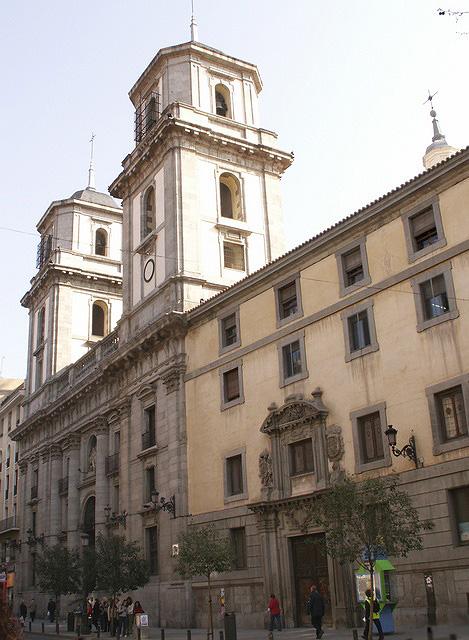
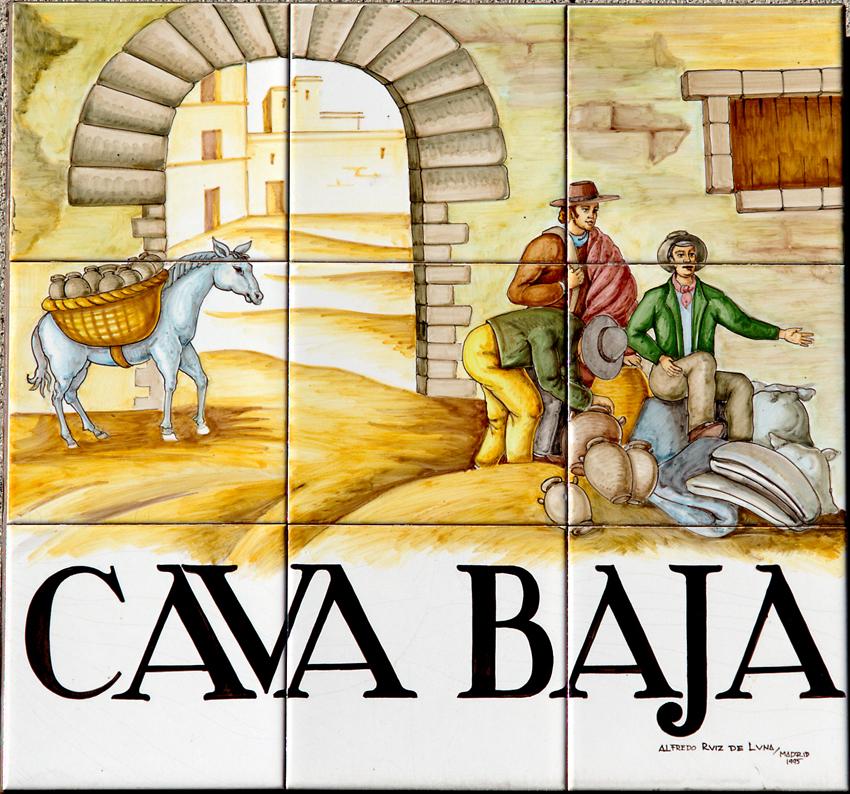
We cross the square to its northwestern corner, where at the Puerta de Moros the Cava Baja climbs away between low houses.
Sources. Story: Hispanopedia, Plaza de la Cebada and Luis Candelas; Pedro Teixeira, Topographia de la Villa de Madrid, 1656; Ayuntamiento de Madrid, esMadrid. Photos: Federico Ruiz and Tomás Carlos Capuz, Plazuela de la Cebada, in El Museo Universal of 17 May 1863, public domain via Wikimedia Commons.