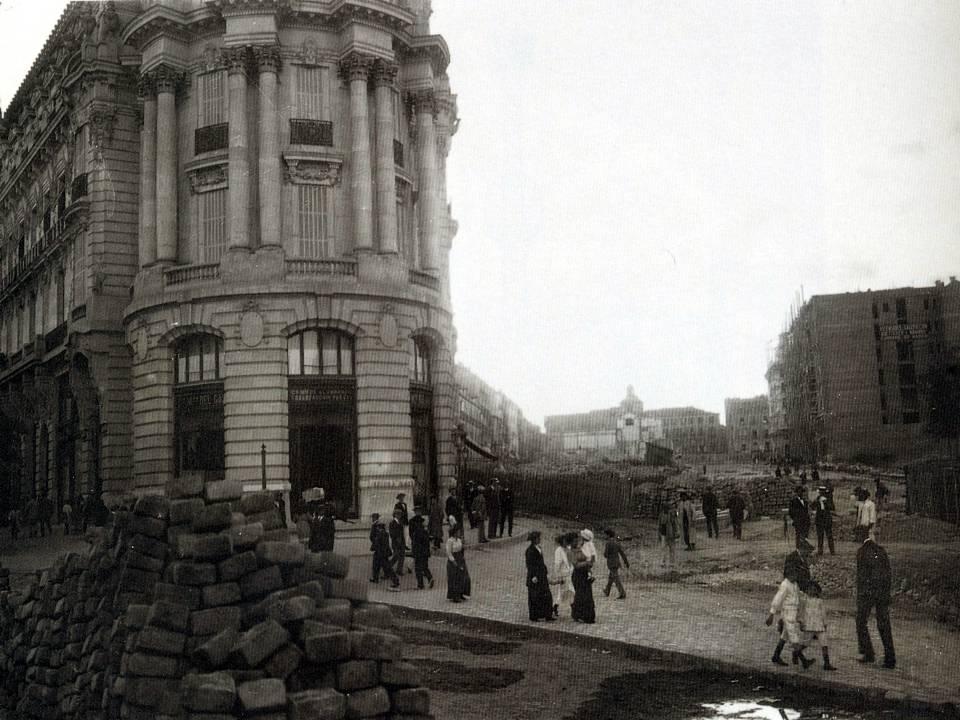
Fourteen streets vanished for good to make room for this boulevard, and more than three hundred houses were flattened in the process. On the fourth of April 1910, King struck the first blow with a silver pickaxe, and it took another twenty years before the whole line was finished, in three stages that you can still read in the facades. The building went on so long and so noisily that the nineteen twenties produced a , a kind of Spanish musical comedy, in which the demolished neighbourhoods lodged their complaints.
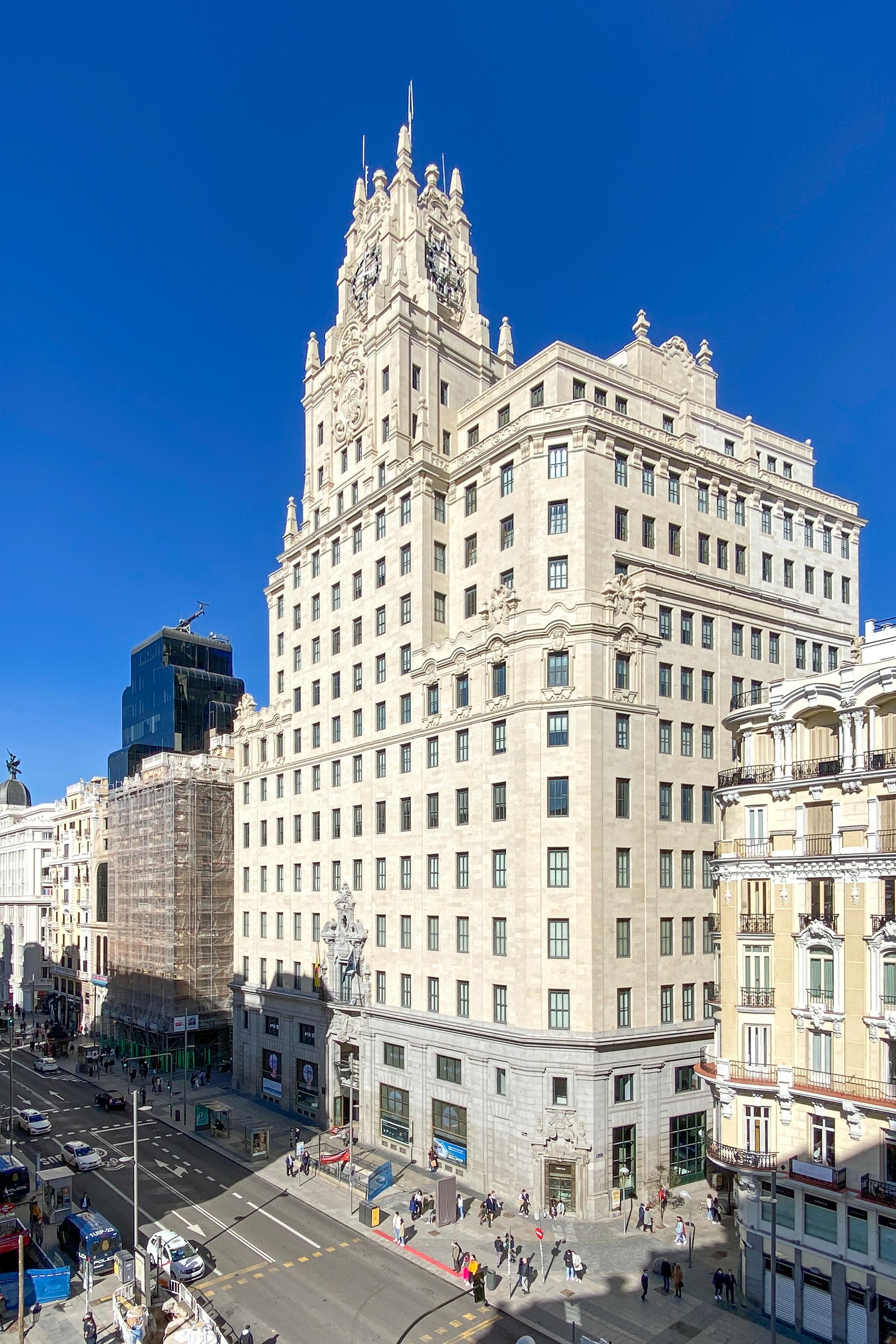
What came back in their place was the first street in Spain that could measure itself against New York. The , a bit further along on your right, stood eighty-nine metres tall when it opened in 1929, making it the highest skyscraper in Europe outside the Soviet Union. The cinema palace on the corner above you dates from 1933, and the advertising sign on its roof has been there since the nineteen seventies, by now so much a part of the place that it was protected during a restoration.
Here the walk comes to a stop, in the middle of the busiest street in the city.
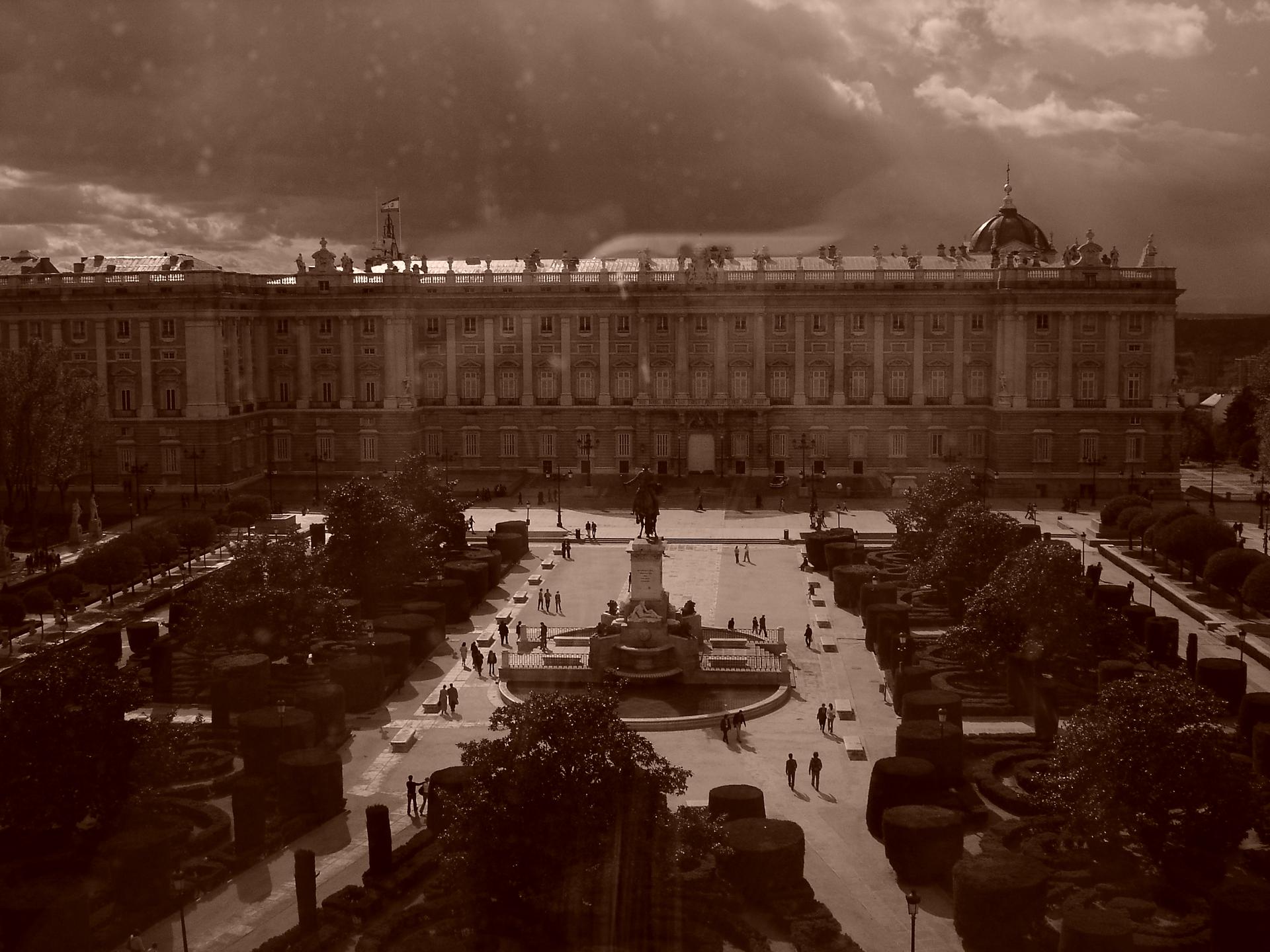
That same Telefónica tower served as a lookout during the and the artillery on the far side of the city as an aiming point, and another of our walks follows that story. The , where you'll be standing again in a few minutes, is the starting point of our walk about the day Madrid rose up against Napoleon.
The way back is short. Across from you we take the Calle Preciados, the shopping street that leads straight to the Puerta del Sol, and within five minutes you are back at .
Sources. Story: Ayuntamiento de Madrid, Memoria de Madrid; esMadrid, Ayuntamiento de Madrid. Photos: Demolition for the construction of the Gran Via, 1912, public domain via Wikimedia Commons.