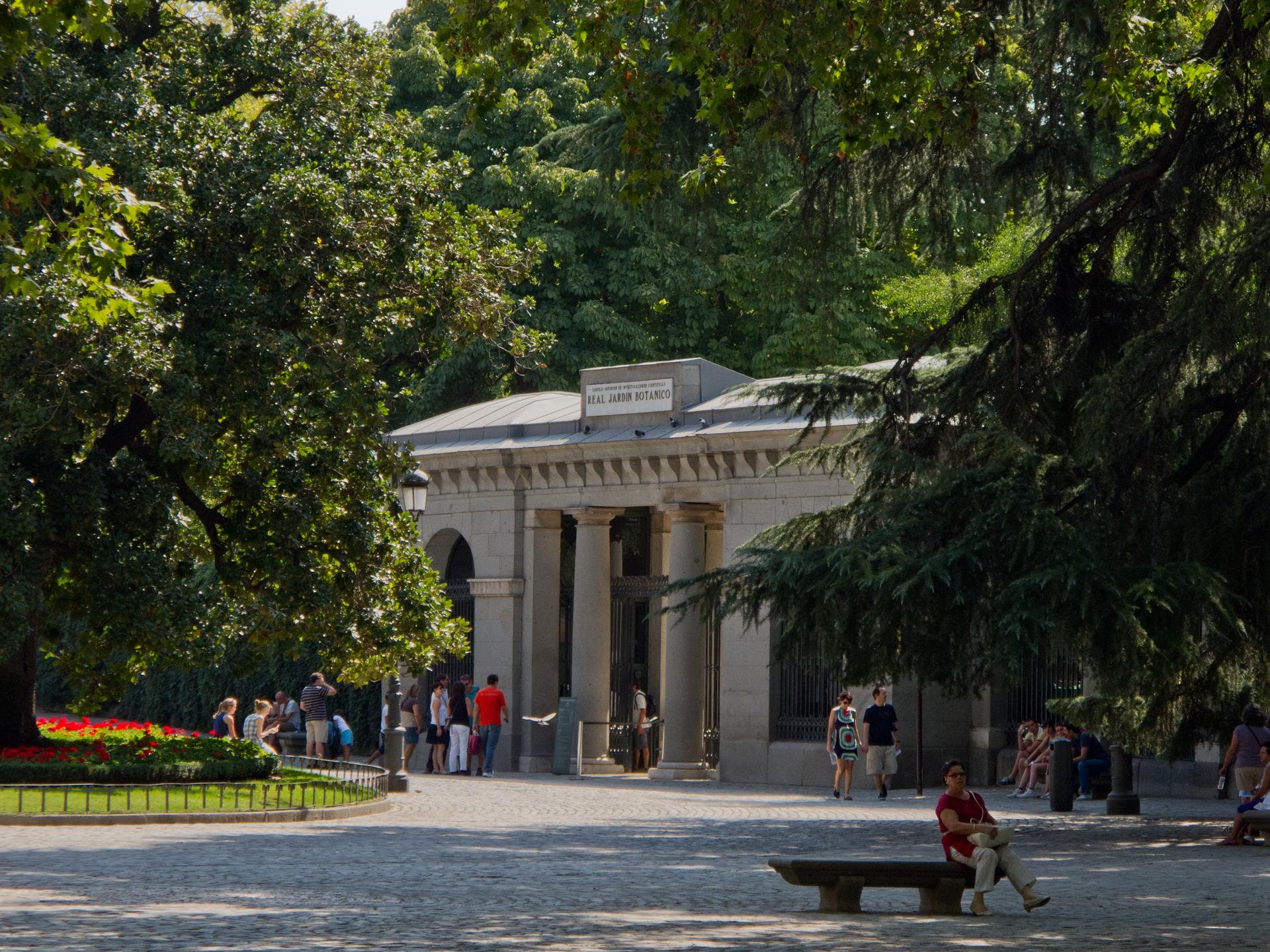
Behind this gate lie ten hectares where everything the Spanish expeditions brought back ended up: seeds, fruit, timber, living plants, and above all dried from , Peru, , and the Pacific, described and drawn here by people who would never see the plants in the wild themselves.
The garden moved to this spot in 1781, relocated from the bank of the Manzanares on the orders of , precisely because it fitted his plan for the area. laid out three terraces, and a few years later gave it its final design and drew the gate you're standing in front of now, directly across from the museum.
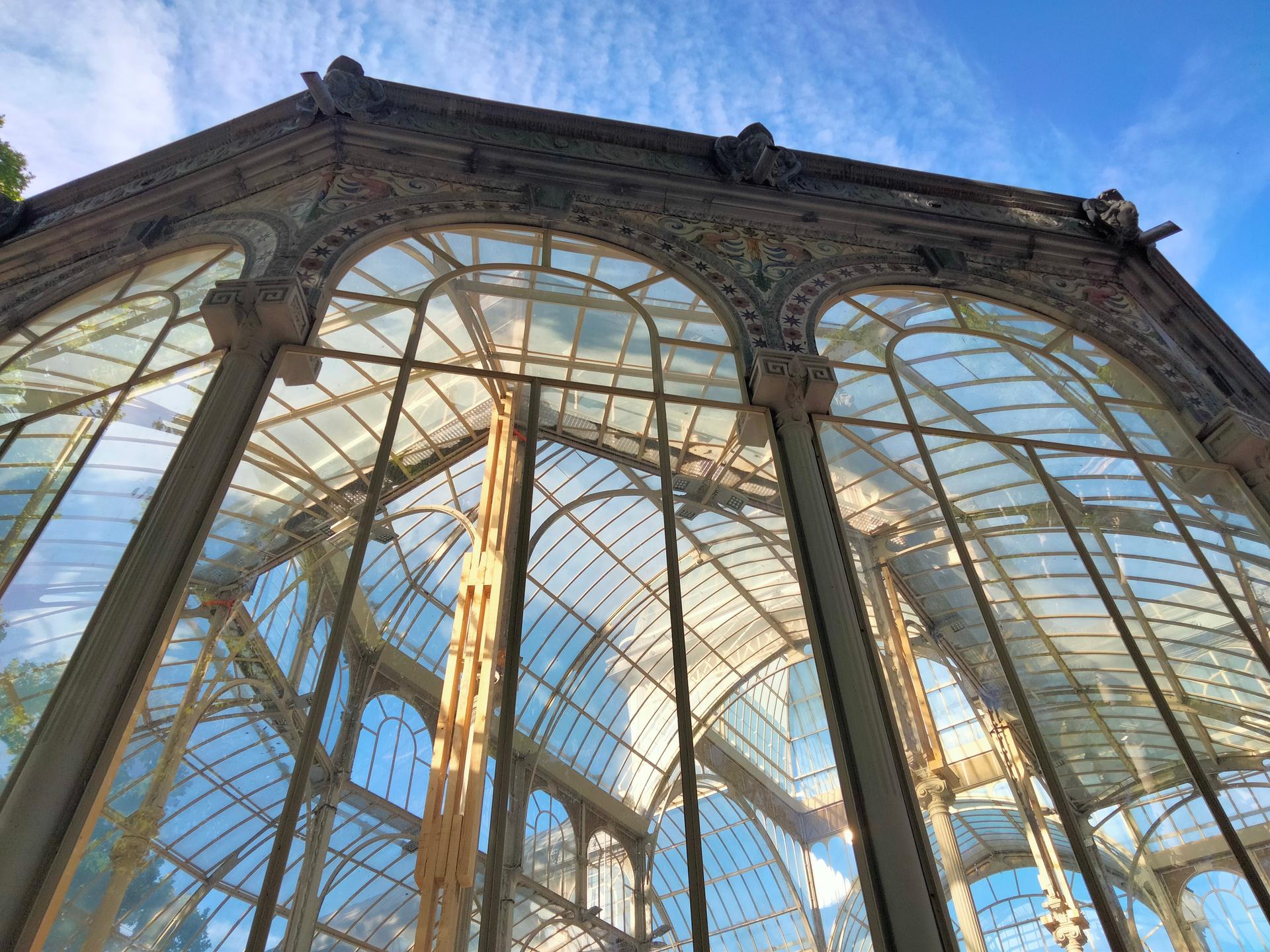
Inside, the two lower terraces still look the way they were laid out, in square beds with round fountains at the corners, and the old greenhouse pavilion holds the library and the herbaria, in a hush that feels improbable a hundred metres from the .
Entry costs a few euros, the garden opens every day from ten in the morning and closes somewhere between six and nine in the evening depending on the season.
We follow the gate south on the outside and head down to the slope with the book stalls.
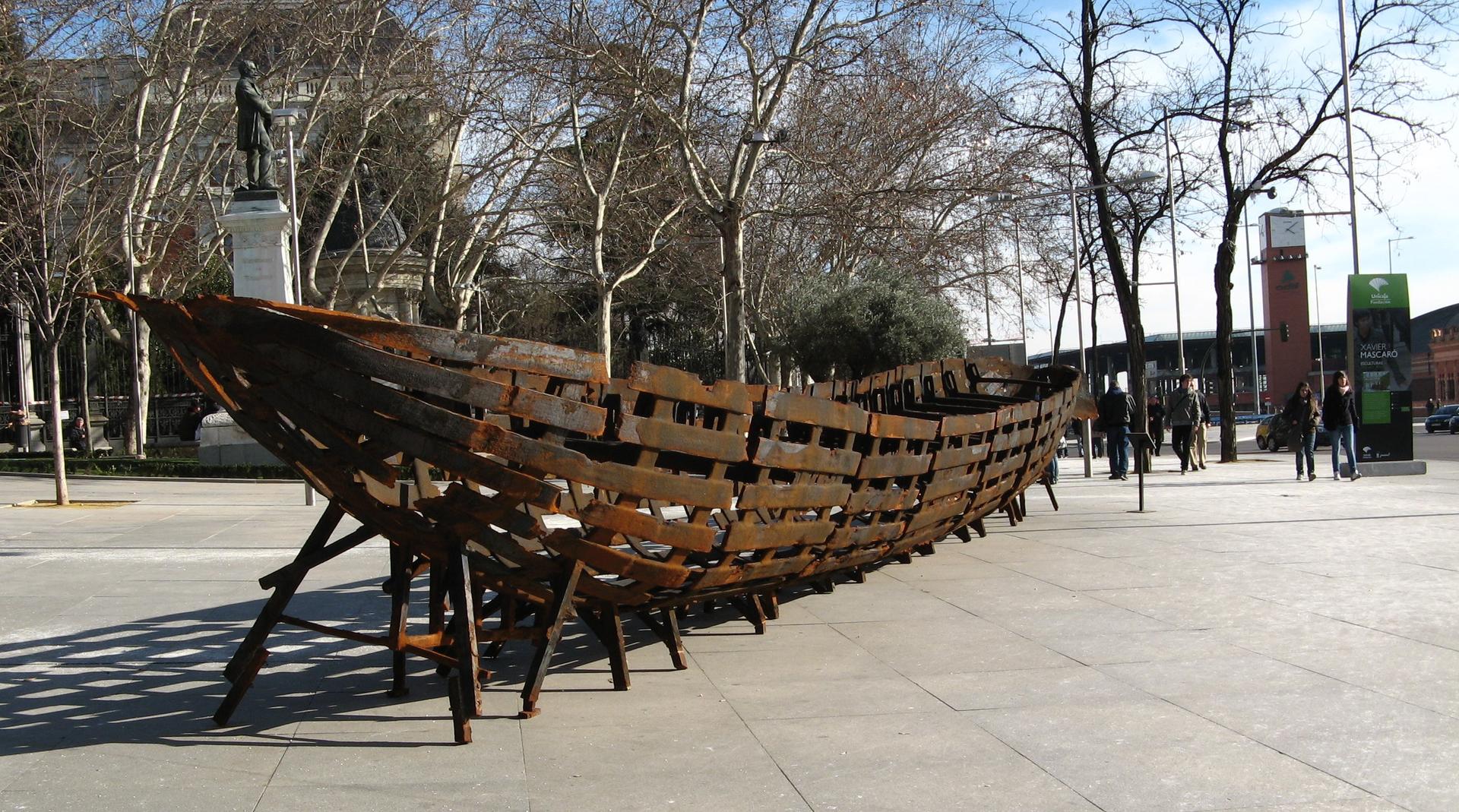
Sources. Story: Real Jardín Botánico, CSIC, history of the garden and the scientific expeditions; Hispanopedia, Real Jardín Botánico de Madrid. Photos: Photo of the Puerta de Murillo: Kadellar, CC BY-SA 3.0 ES via Wikimedia Commons.