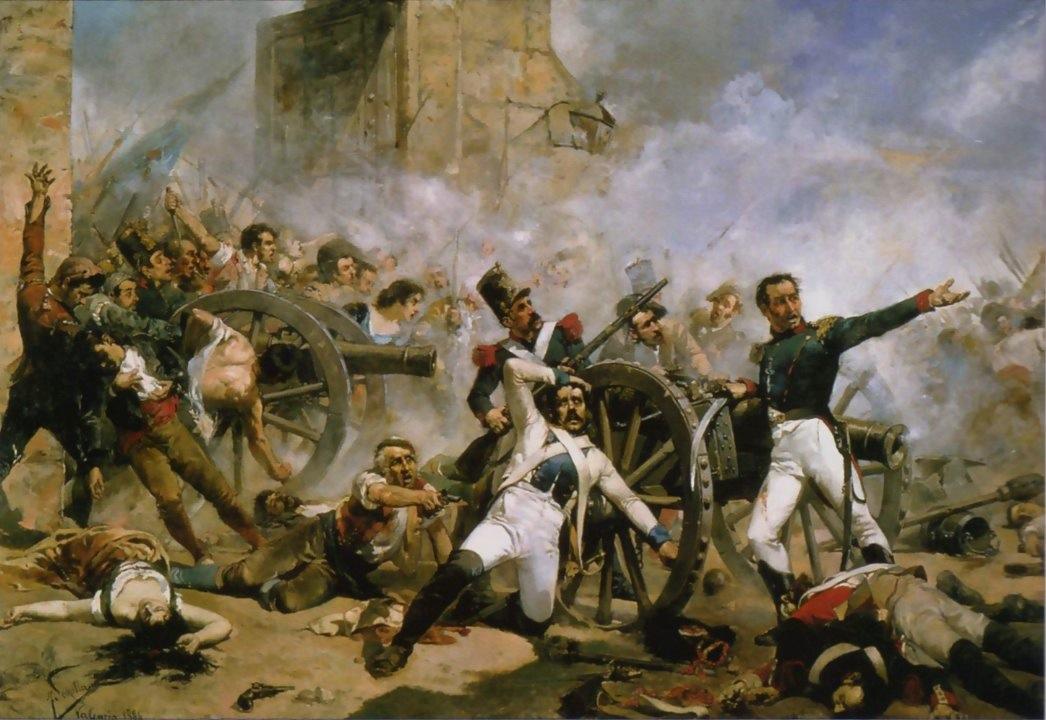
On the , a hill just over a kilometre west of where you're standing, the volleys that half of Madrid heard rang out in the early hours of 3 May. Twenty-four people were shot there, and another twelve elsewhere in the city, condemned by the commission of , the French general in charge, often on nothing more than being caught carrying a knife.
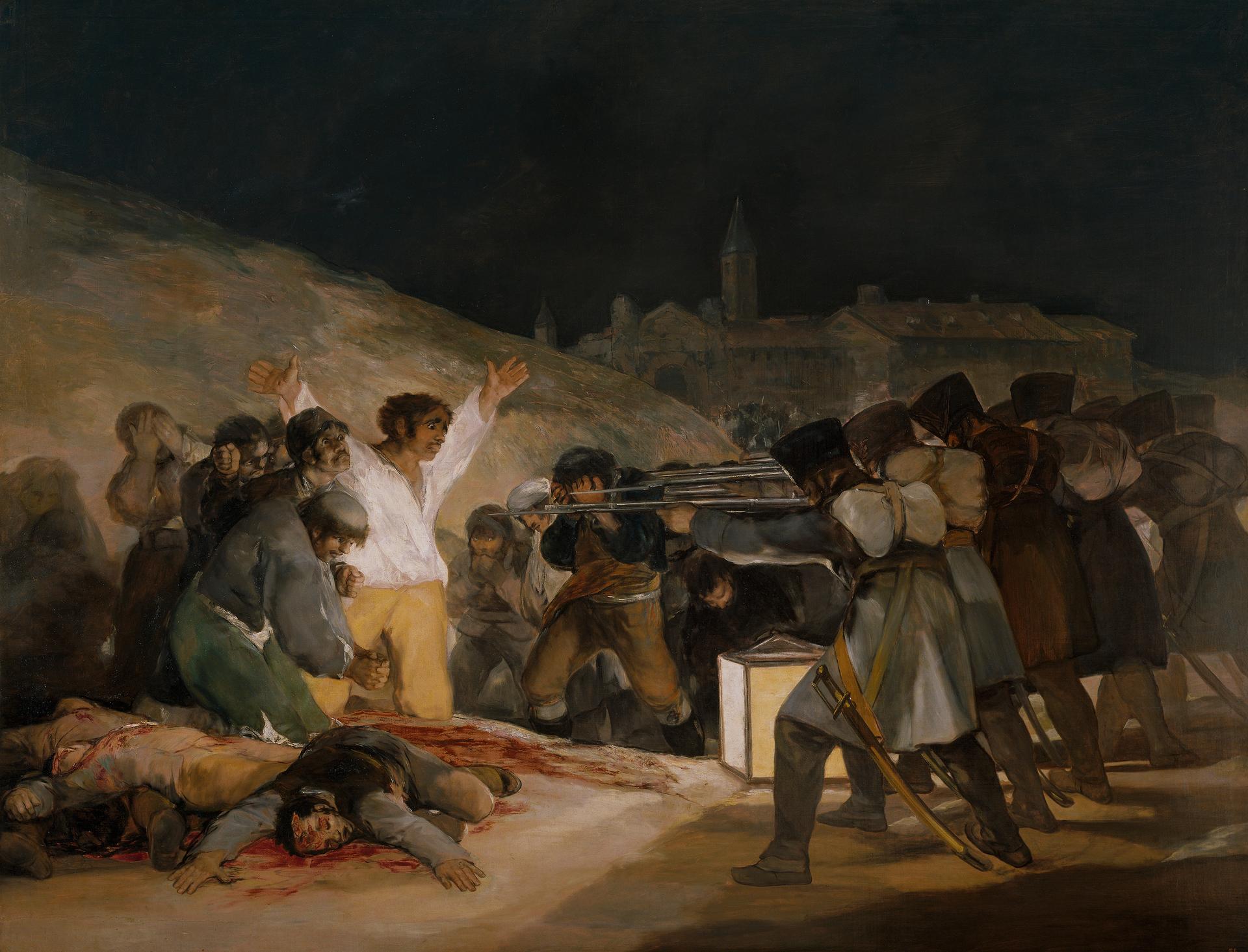
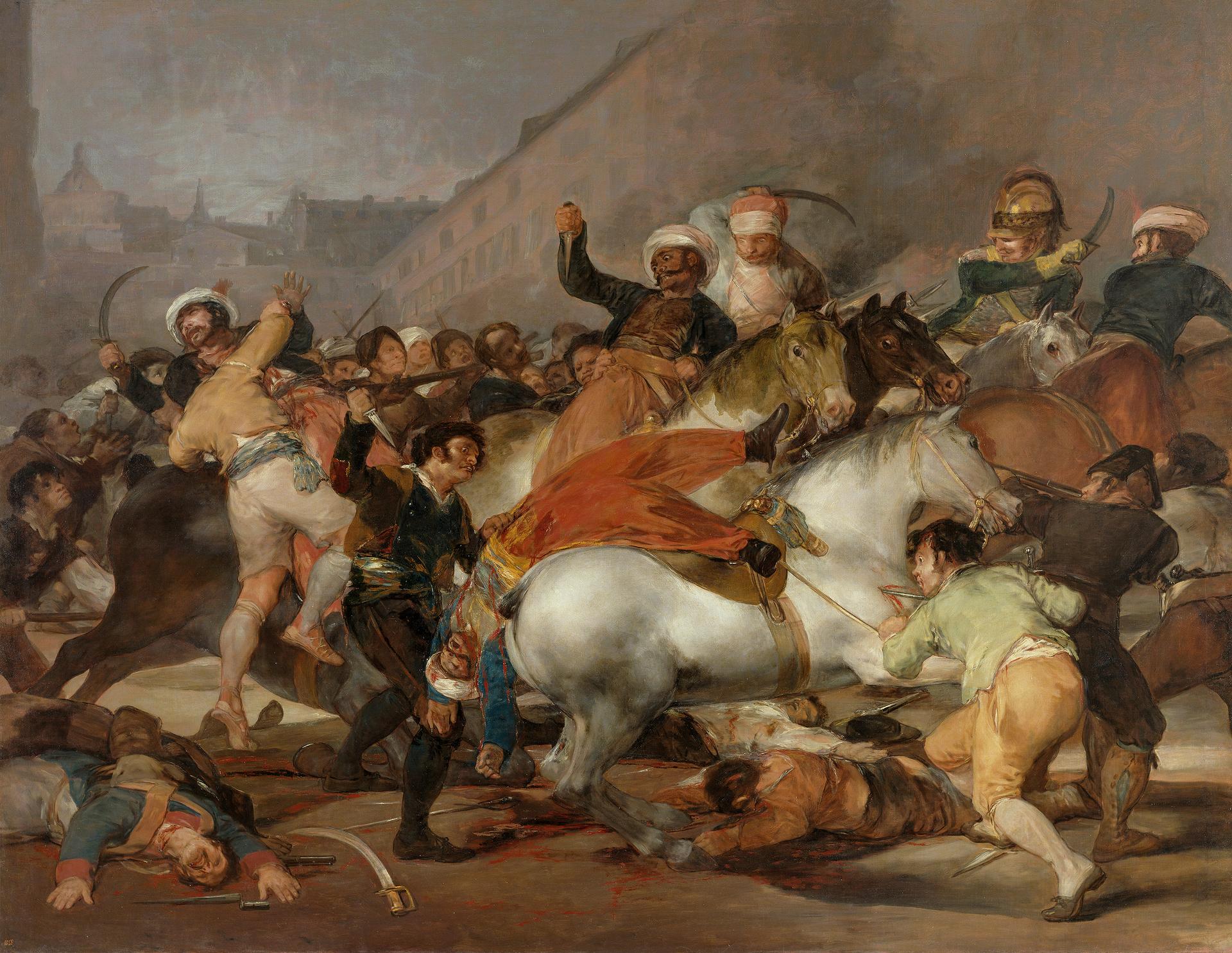
turned it into the painting that has shaped how the world imagines that night ever since. In , a man in a white shirt kneels with his arms thrown wide before a row of faceless soldiers, lit by a lantern set on the ground. The canvas hangs in the beside the one of the , where this walk began, and together they form a question and its answer.
The hill is still there, close to the , the chapel where Goya himself lies buried.
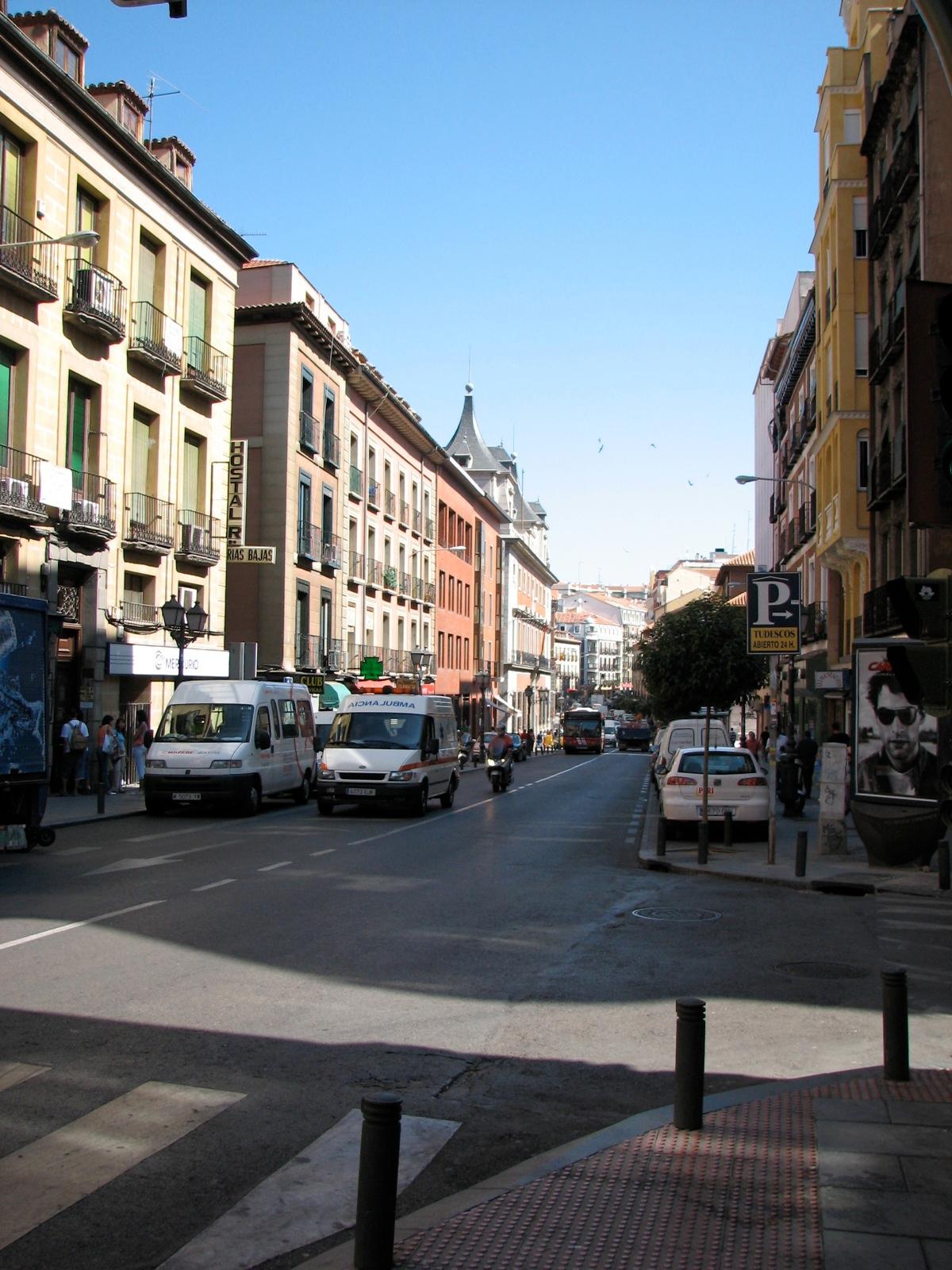
We follow the Calle de San Bernardo almost to the Gran Vía, then turn left into the Calle de Silva.
Sources. Story: Museo Nacional del Prado, catalogue record P00749, El 3 de mayo de 1808 en Madrid o Los fusilamientos; Hispanopedia, Levantamiento del 2 de Mayo. Photos: Francisco de Goya, El 3 de mayo de 1808 en Madrid o Los fusilamientos, 1814, Museo Nacional del Prado, public domain via Wikimedia Commons.