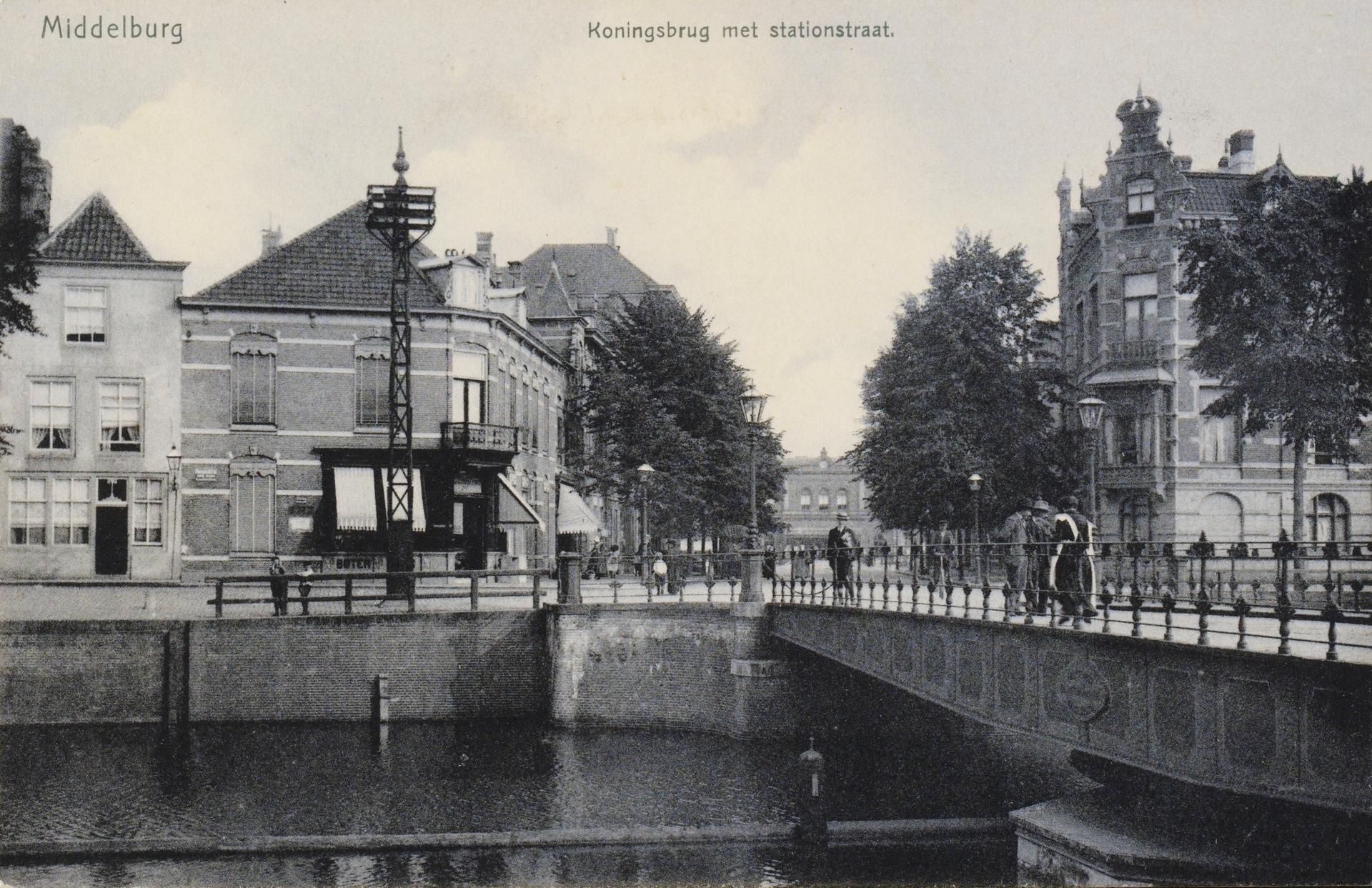
We're standing here by the water, and the buildings you see all date from the last century and a half. Whatever stood here before them vanished when the was dug.
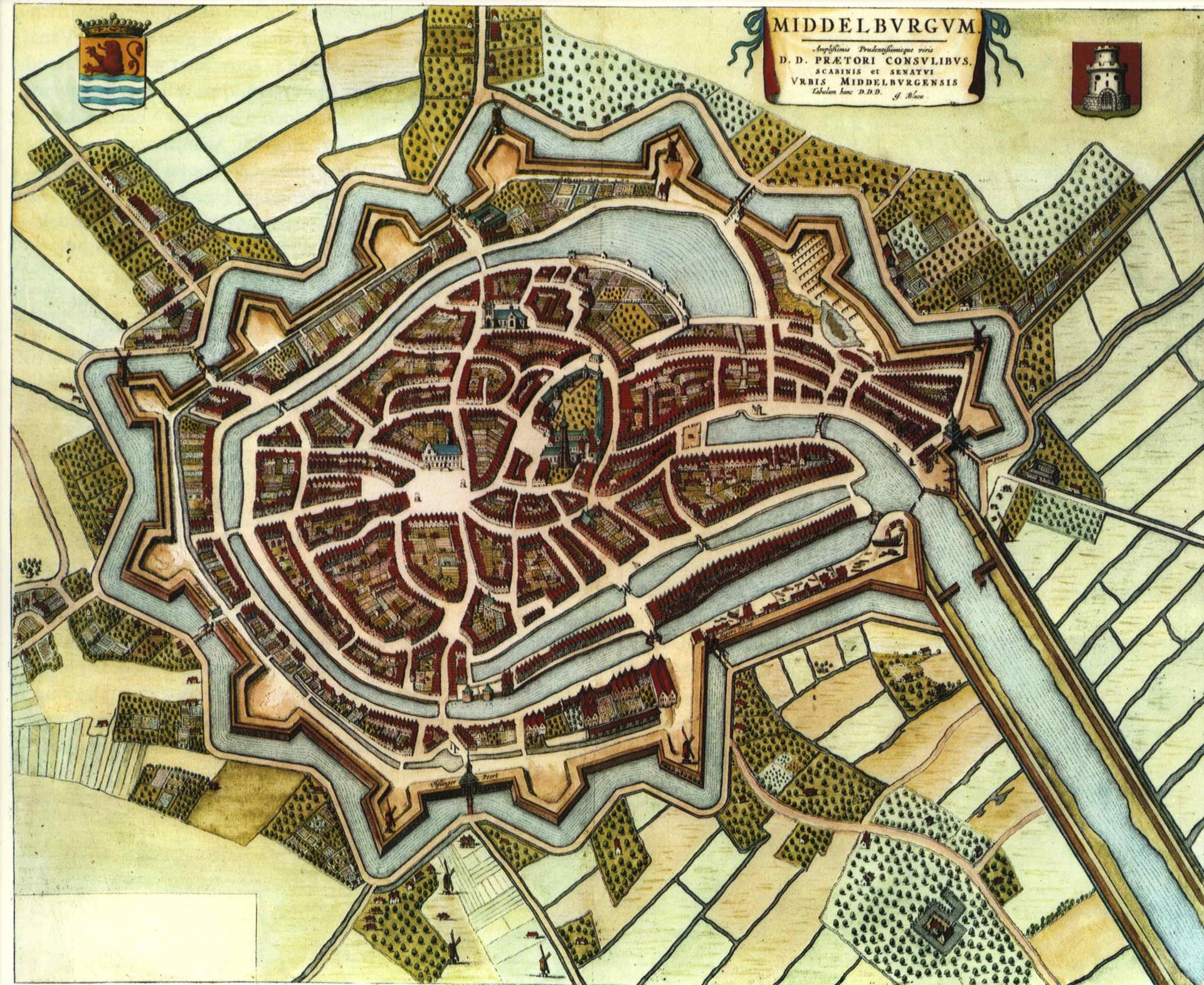
From 1630 onwards, the built a large warehouse complex on this spot, right behind the city ramparts. This is where they stored the goods brought in from Africa and the West Indies. Later the took over part of it. In 1867 the whole complex was flattened to make room for the canal.
Roughly on this spot stood Middelburg's house of correction too, already in use here by 1642. A place like this was also called a or a spin house, and those names point to the work the prisoners were forced to do. The men rasped into powder. That's a South American timber that yielded a red dye for the textile industry. The women sat behind a spinning wheel.
That detail is telling, because the red dye came from the same colonial trade you'll meet further along this route, and it went into fabrics that were shipped to Africa as goods for barter.
The library that stands here now holds letters written by David Henri Gallandat, a ship's surgeon who sailed on the vessels of the Middelburg Commerce Company. What he witnessed there comes up a little later.
We follow the water to the northeast, about a hundred and eighty metres, until we reach the Korendijk.
Sources. Story: Based on the city walk Suiker, cacao en mensen by Viatours and de Drvkkery, supplemented with the Zeeuwse Ankers and the series Het leven in Middelburg edited by Jeanine Dekker. Photos: Gemeente Middelburg / Uit in Middelburg