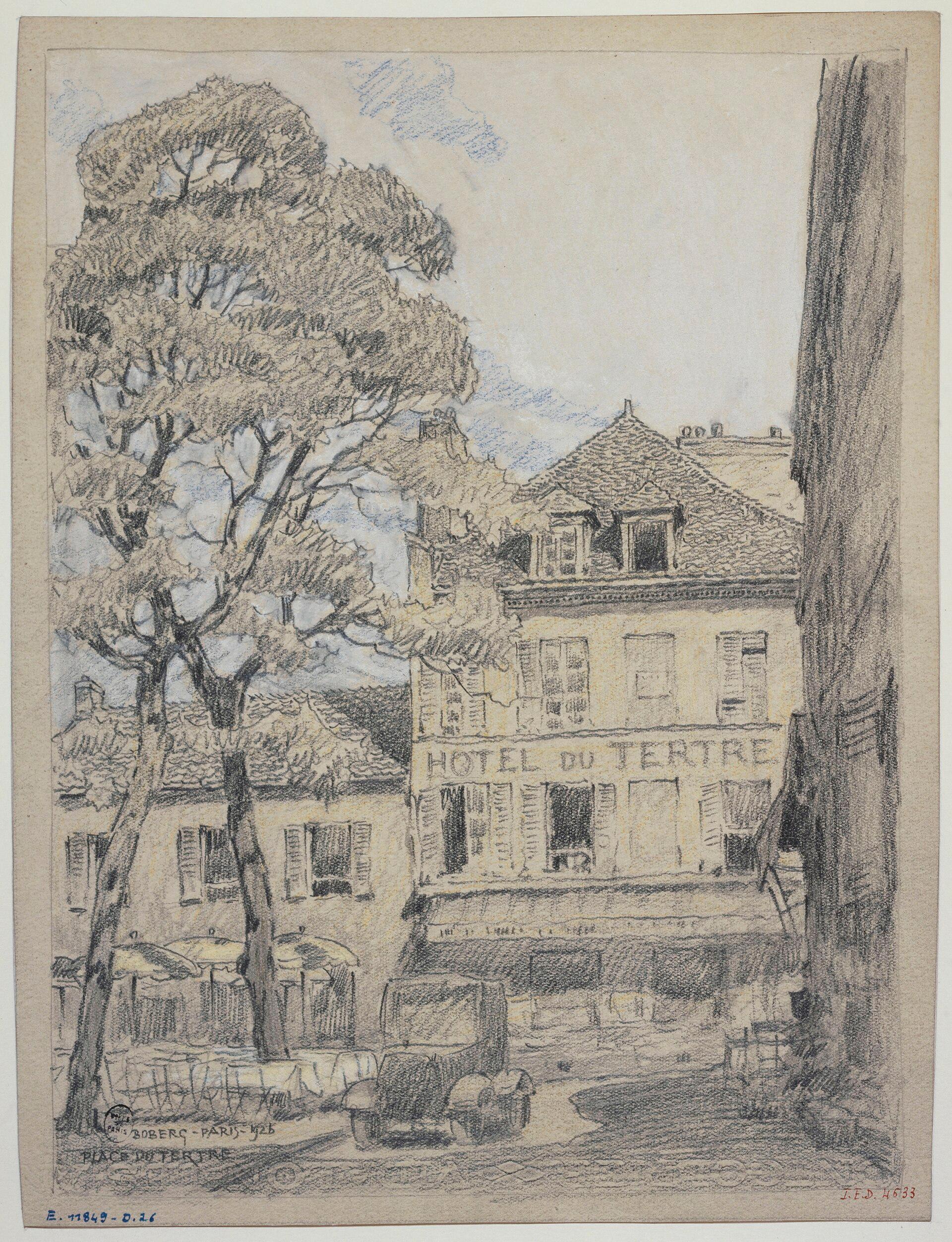
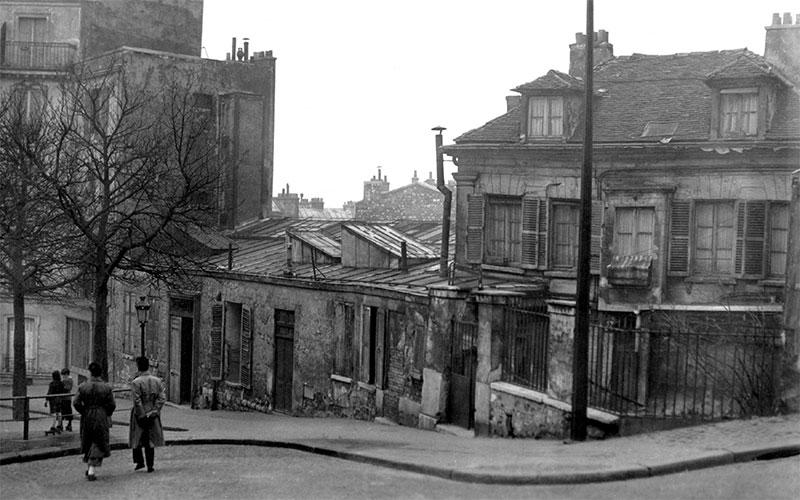
On the Place Émile Goudeau there's a cast-iron fountain, and behind it stands the entrance to what was for a long time the poorest studio building in Paris. The name came from the poet , who thought that with its wooden planks and its clattering in the wind it resembled the floating laundry boats moored in the Seine.
There was a single tap for the whole building and no heating, and the stories say that in winter the tea froze in the cups. Picasso rented a space here in 1904 and stayed for five years. In that room, in 1907, he painted , the canvas with the angular faces that so unsettled his friends that some of them thought he had lost his mind.
Only the front facade of the original building still stands. In 1970, five years after it was declared a monument, the rest burned down in a matter of hours.
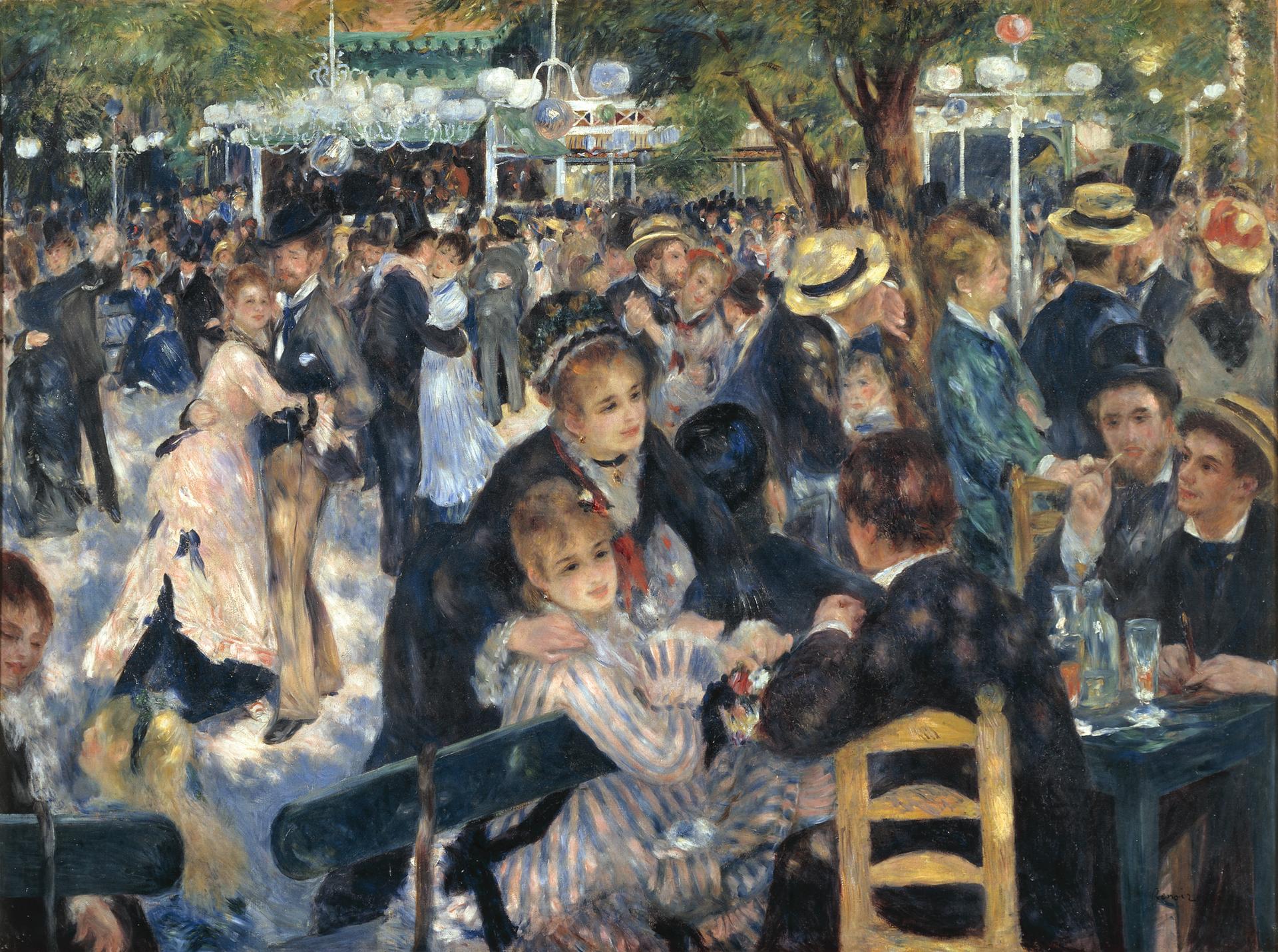
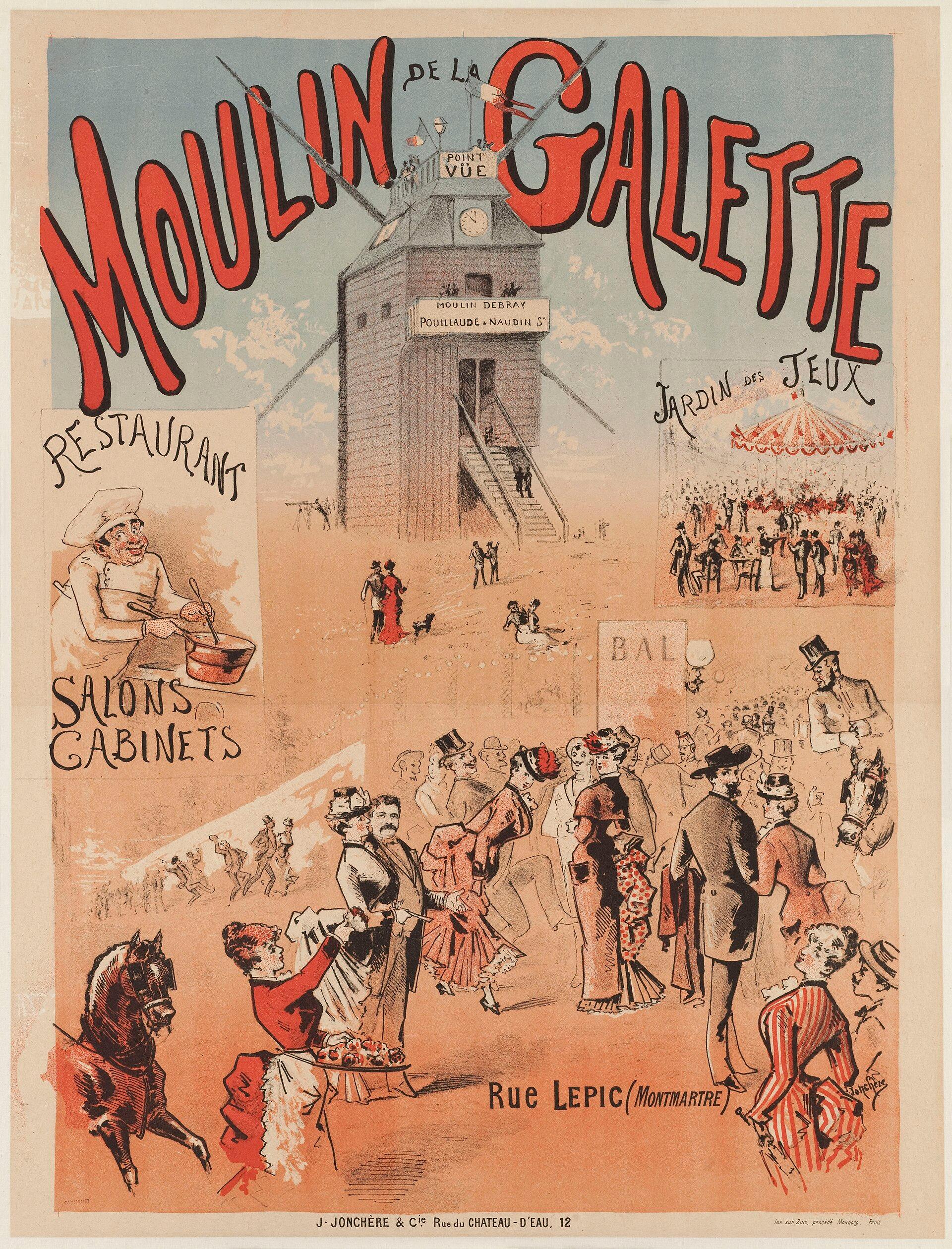
From the little square we turn left and keep climbing until the Rue Lepic delivers us to the windmill at the top.
Sources. Story: Musée national Picasso-Paris; Ville de Paris; Base Mérimée, Ministère de la Culture Photos: Source Photo: www.hartl-meyer.com, CC BY-SA 3.0 <https://creativecommons.org/licenses/by-sa/3.0>, via Wikimedia Commons | By Anonymous - Christies, Public Domain, https://commons.wikimedia.org/w/index.php?curid=63419332