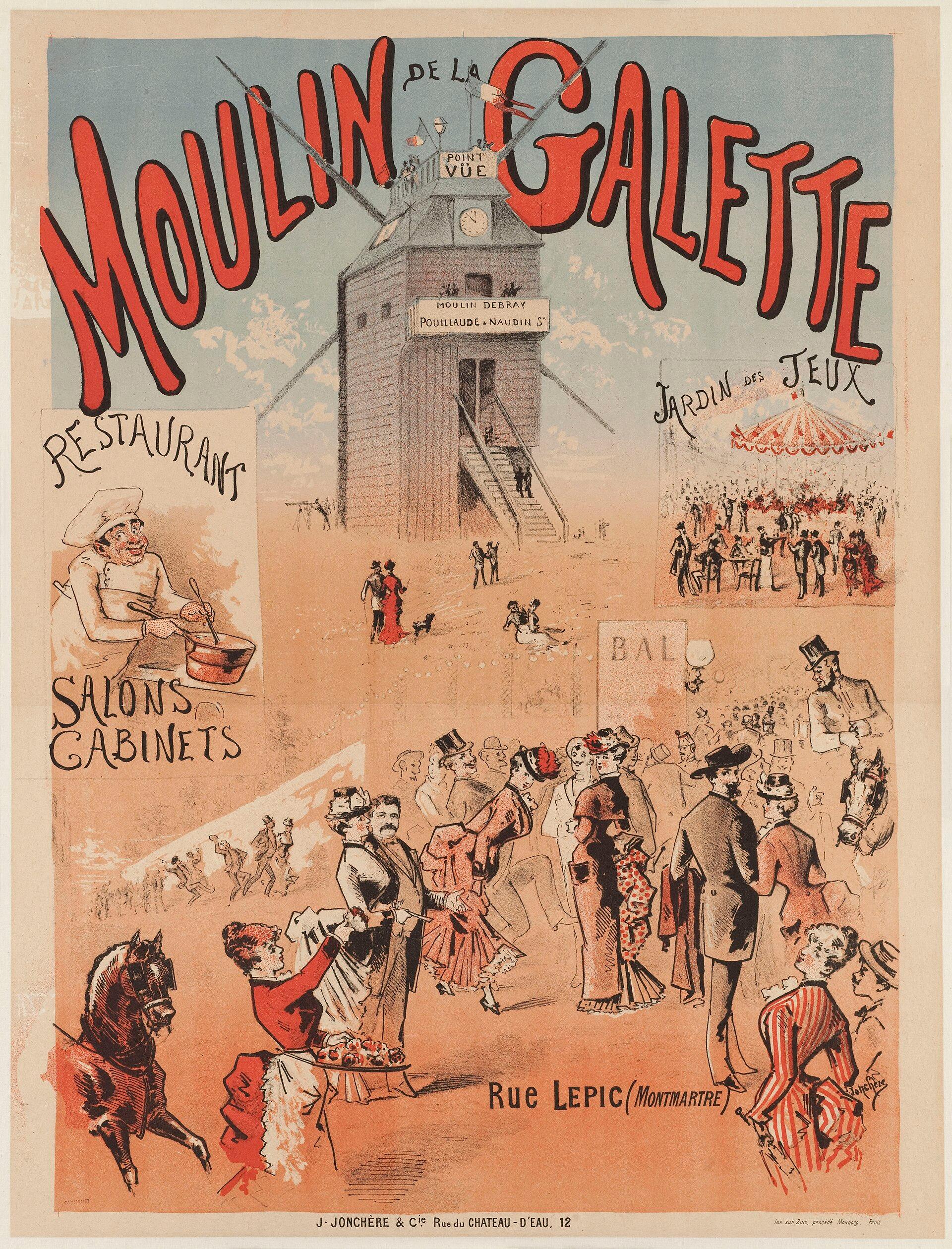
The mill you see rising above the restaurant is called the Radet, and originally it didn't stand here at all. In 1924 the owner shifted it to this corner to draw in customers. The real , built in 1622, stands a good way off behind the wall on the Rue Lepic, at the very top of the hill.
The family milled grain here and baked a brown roll, the , which they sold with a glass of milk and later with a glass of wine. It went down so well that in 1833 they opened a dance hall alongside it.
There's a grim story attached to the mill too. During the defence of Paris several of the Debrays were killed, and as the tale goes one of the millers was nailed by the attackers to the sails of his own mill.
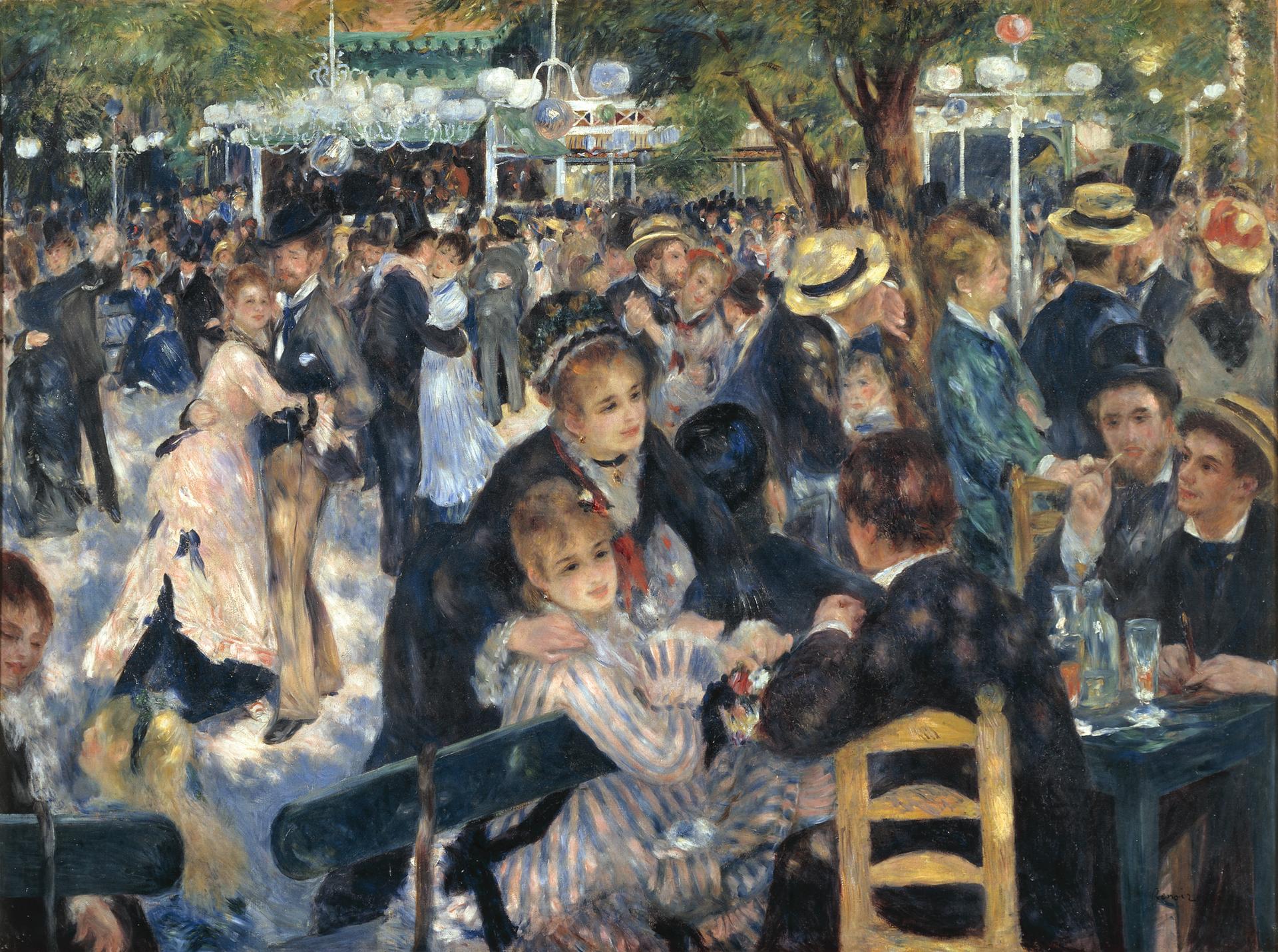
Half a century later, painted the Parisians dancing here on a Sunday afternoon under the lanterns, in the canvas that now hangs in the , the city's great museum of nineteenth-century art, and which gives this walk its image.
We walk past the mill into the Rue Girardon and then follow the Rue des Saules downhill, onto the northern slope of the hill.
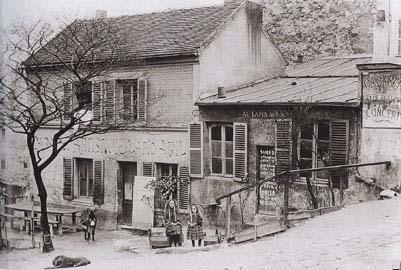
Sources. Story: Base Mérimée PA00086755, Ministère de la Culture; Musée d'Orsay, notice Bal du moulin de la Galette Photos: J. Jonchère, poster Moulin de la Galette, Musée Carnavalet, Paris Musées (CC0), via Wikimedia Commons