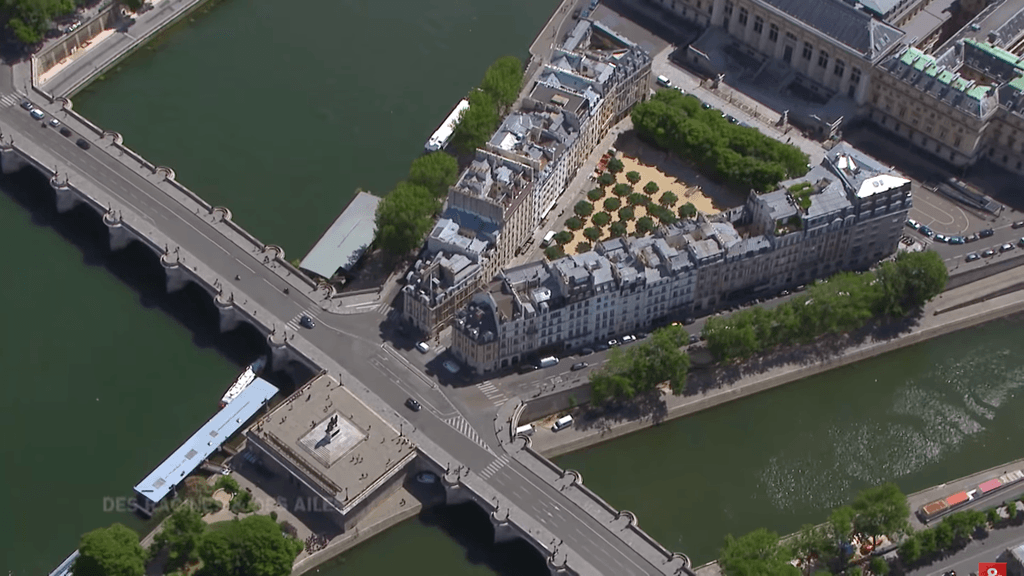
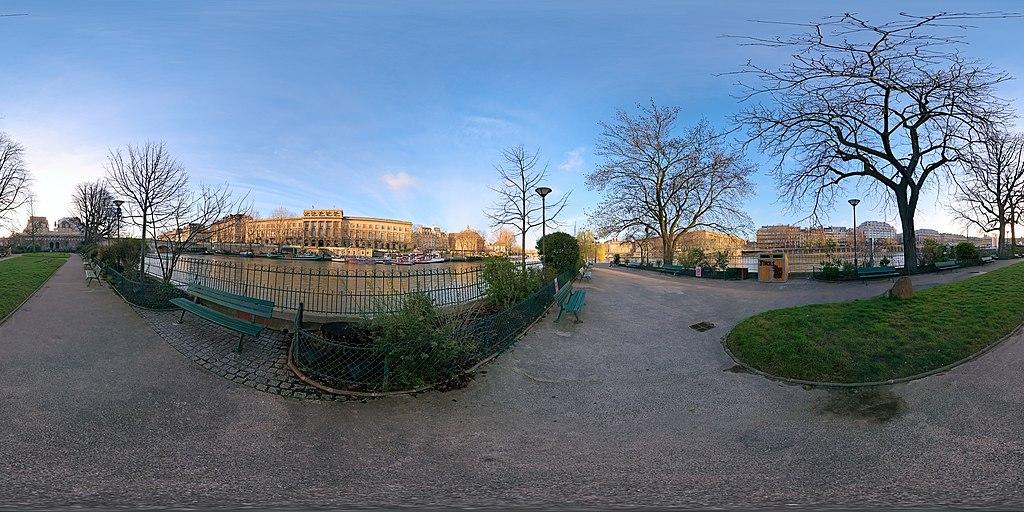
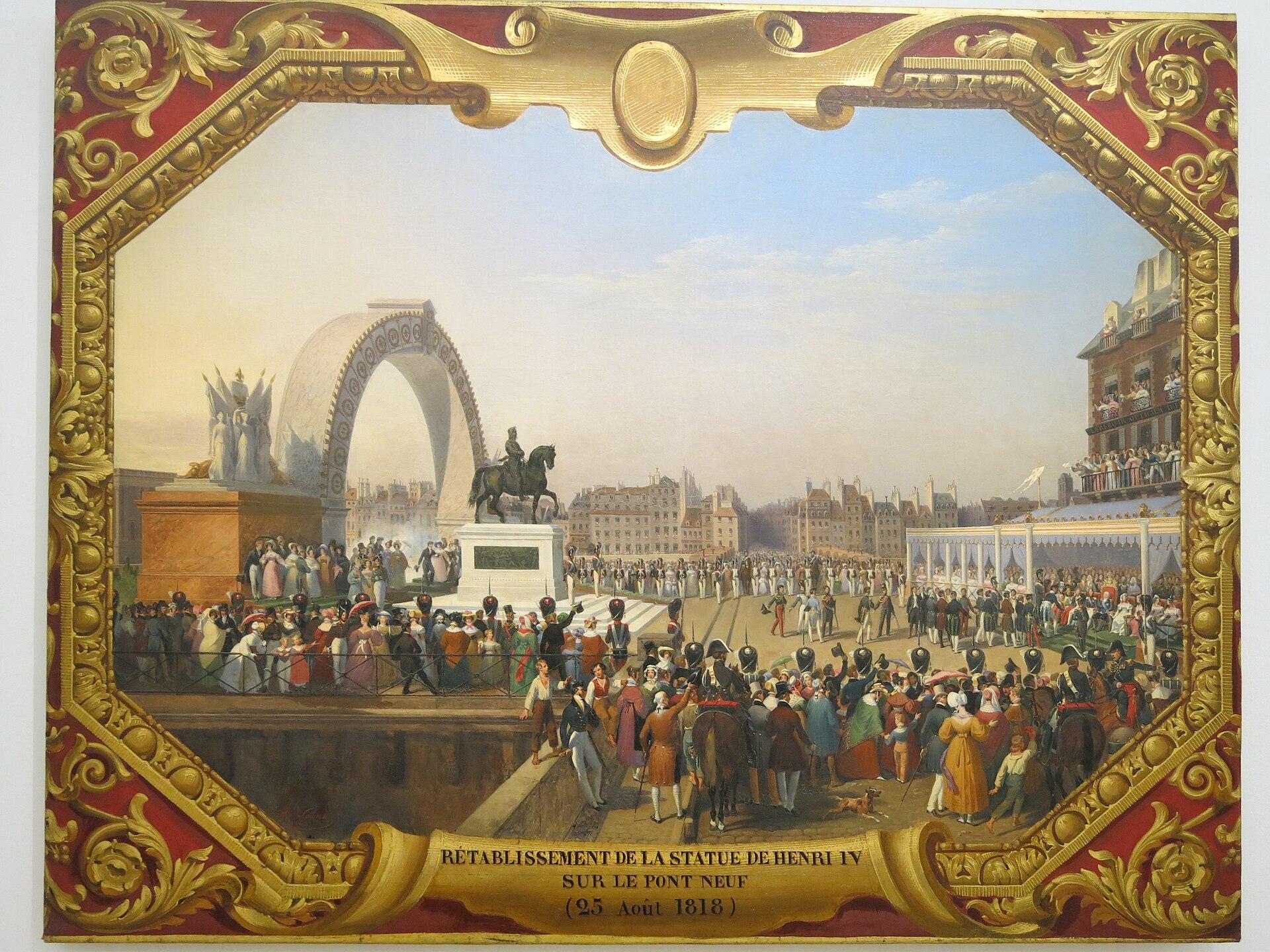
Where the bridge meets the island, sits on his horse. He was the king who brought the to an end, and who was stabbed to death in the street in 1610, and his statue has stood here since 1614 as the very first public equestrian statue in Paris.
In 1792 tore it down and melted it into cannons, along with almost every royal statue in the city. After fell, people wanted it back, and this time the bronze came from a statue of Napoleon himself that had been taken down from the column on the . So one ruler was quite literally cast into another.
The man who did the casting was a , and when the statue was restored in 2004 it became clear what he had done. Hidden inside the king's right arm were boxes with texts praising Napoleon, and tucked in the horse's belly lay a small figurine of the emperor, unnoticed for more than a century and a half.
The bridge is called the Pont Neuf, the new bridge, even though it is the oldest in Paris.
From the bridge we cross to the right bank and follow the long facade of the Louvre until we reach the square courtyard.
Sources. Story: Ville de Paris; Base Mérimée, Ministère de la Culture; Musée Carnavalet Photos: Inauguration de la statue équestre d'Henri IV, 1818, Musée du Louvre, public domain, via Wikimedia Commons