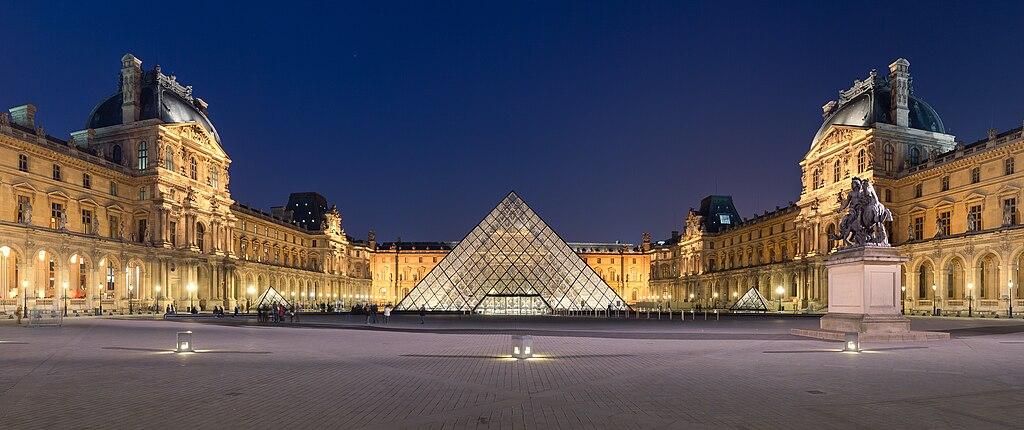
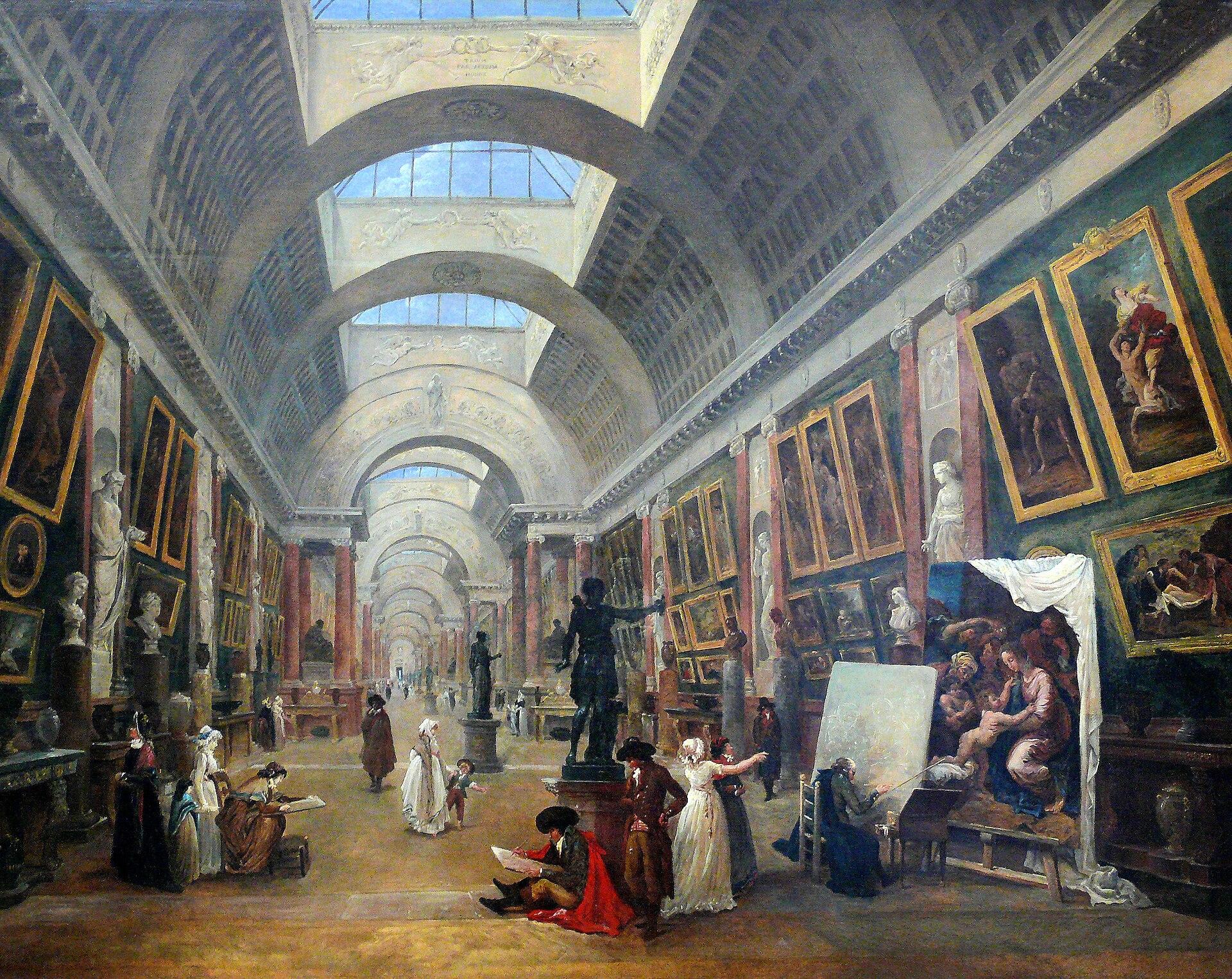
On 10 August 1793 the Louvre opened to everyone, exactly one year after . What hung on its walls was the king's collection, rounded out with works taken from churches and from the homes of nobles who had fled, and for the first time in history a carpenter could stand in front of the same paintings as a prince.
The thinking behind it was new and radical: art belongs to the people who paid for it. Three days a week the museum was open to the public, and on the other days artists were allowed in to make copies. Almost every museum in the world would later adopt that model.
The start was messy. Paintings hung in rows all the way up to the ceiling, the roof leaked, and by 1796 the museum had already closed for two years of repairs. Under it filled up with loot from Italy and Egypt, much of which had to be sent back again after 1815.
The building itself and its collection come up at length in our walk through the first .
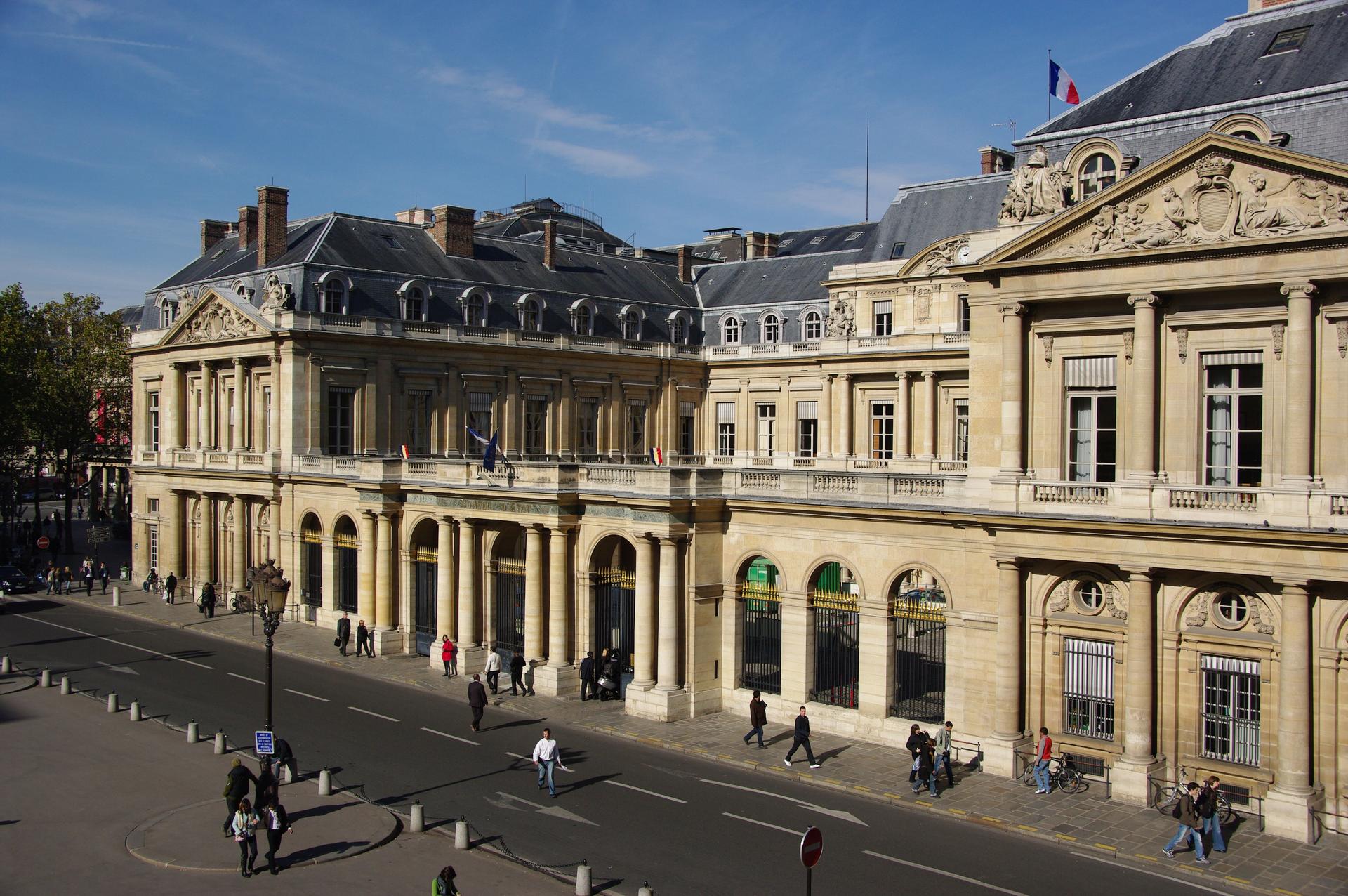
We pass under the archway, cross the Rue de Rivoli, and step into the quiet courtyard that sits behind the colonnade.
Sources. Story: Musée du Louvre, museum history; Archives nationales, France; Ville de Paris Photos: Hubert Robert, Projet d'aménagement de la Grande Galerie du Louvre (1796), Musée du Louvre, public domain, via Wikimedia Commons