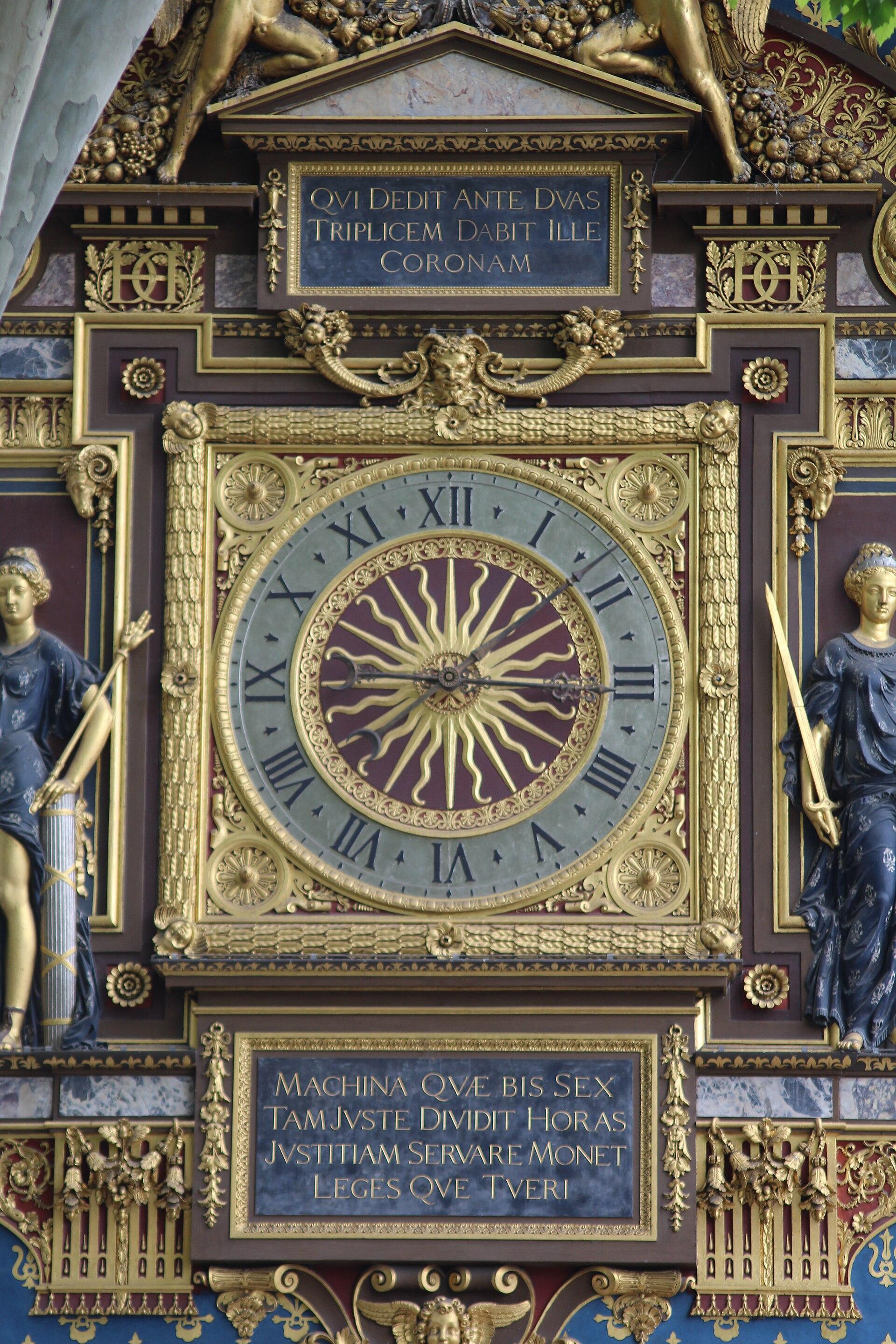
In 1371 , king of France, hung a clock on this tower and in doing so took over timekeeping from the church. Until then it was church bells that decided when the day began and ended, so a clock on a palace tower meant the hours now came from the king himself. He had it built by , a clockmaker from Lorraine who spent years on the mechanism and then went on living on the palace grounds to keep it adjusted.
It is the oldest public clock in Paris, and it still runs. The frame around it, with the two female figures representing Law and Justice, was made in 1585 by the sculptor , and the blue and gold were restored in the nineteenth century.
Behind the tower lie the cellars of the , where the prisoners of spent their last night. Our walk about the Revolution passes by there.
This is the end of this walk, a few steps from the bridge where you stepped onto this morning. Enjoy the rest of your day on the sandbank where Paris began!
Sources. Story: Centre des monuments nationaux, Conciergerie; Ville de Paris, patrimoine Photos: Chabe01, horloge de Charles V, Palais de la Cité, 2019 (CC BY-SA 4.0), via Wikimedia Commons