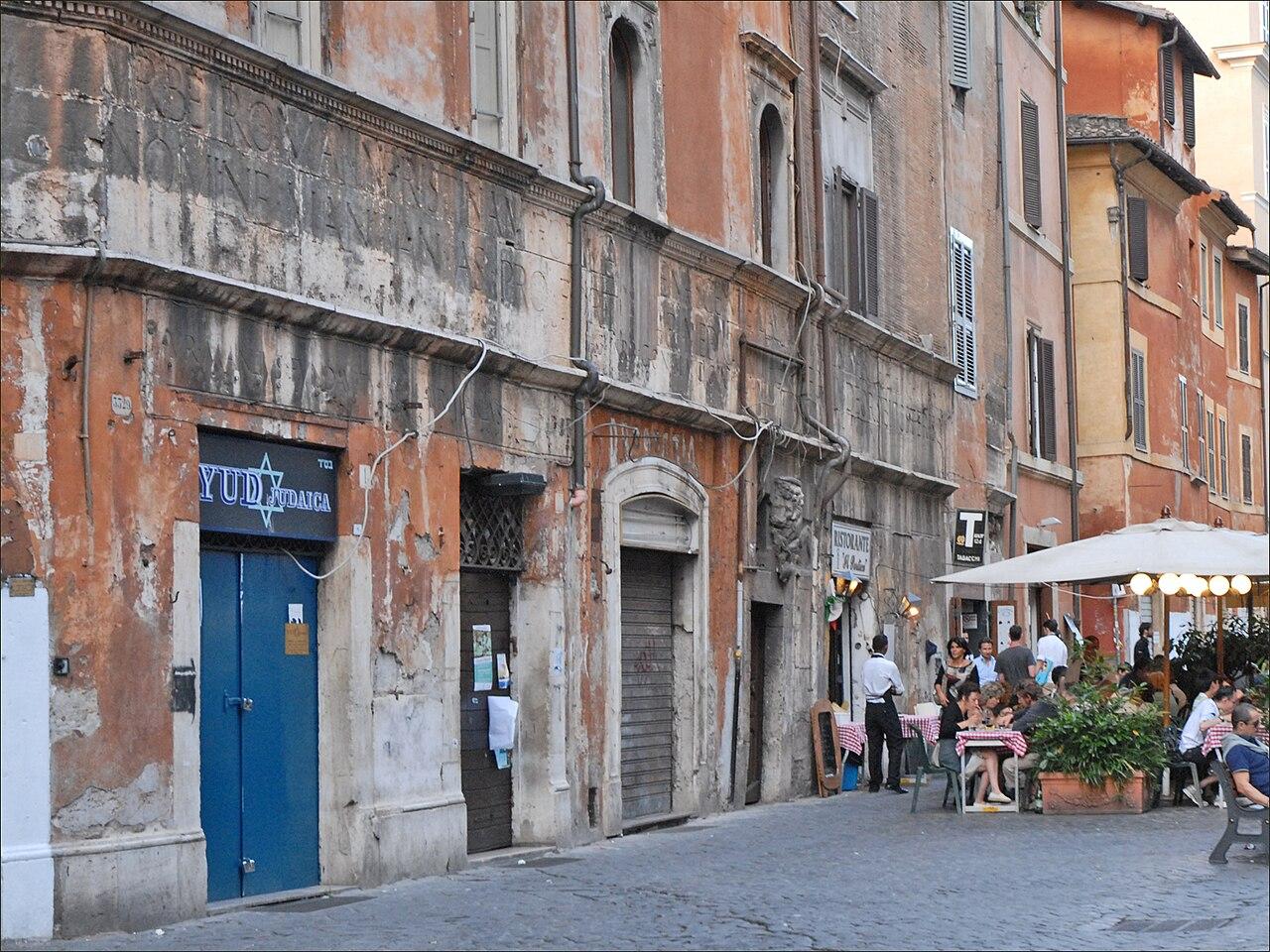
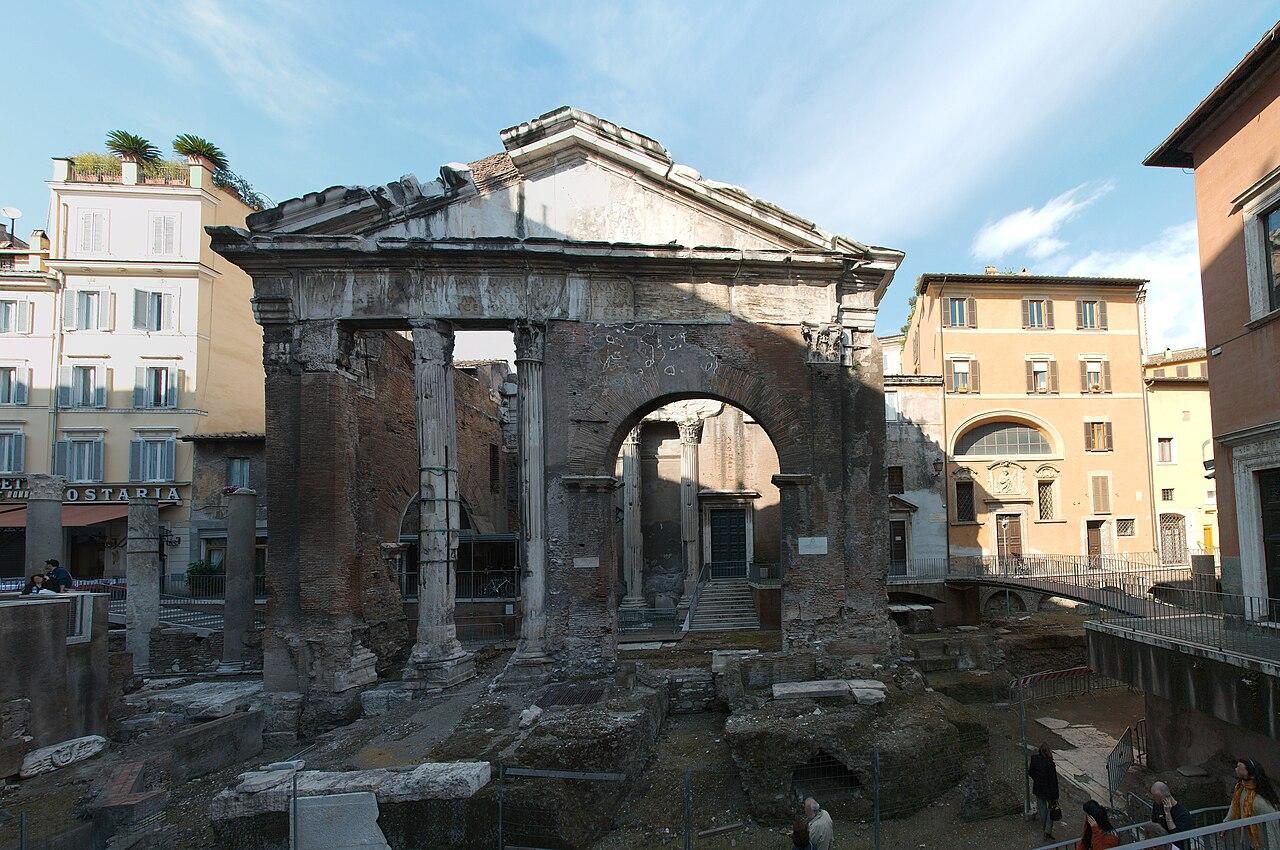
This gate with its broken columns belonged to a complex that the emperor had built around 27 BC and named after his sister : a rectangle of colonnades enclosing two temples, a library and hundreds of Greek statues.
What survived of it served for centuries as a covered market. From the Middle Ages onward the fish market of Rome stood under these arches, and you can still read it in the stone. A marble slab on the left carries a Latin line declaring that for any fish longer than the slab, the head went to the city magistrates, because that was exactly where the flesh for the soup lay.
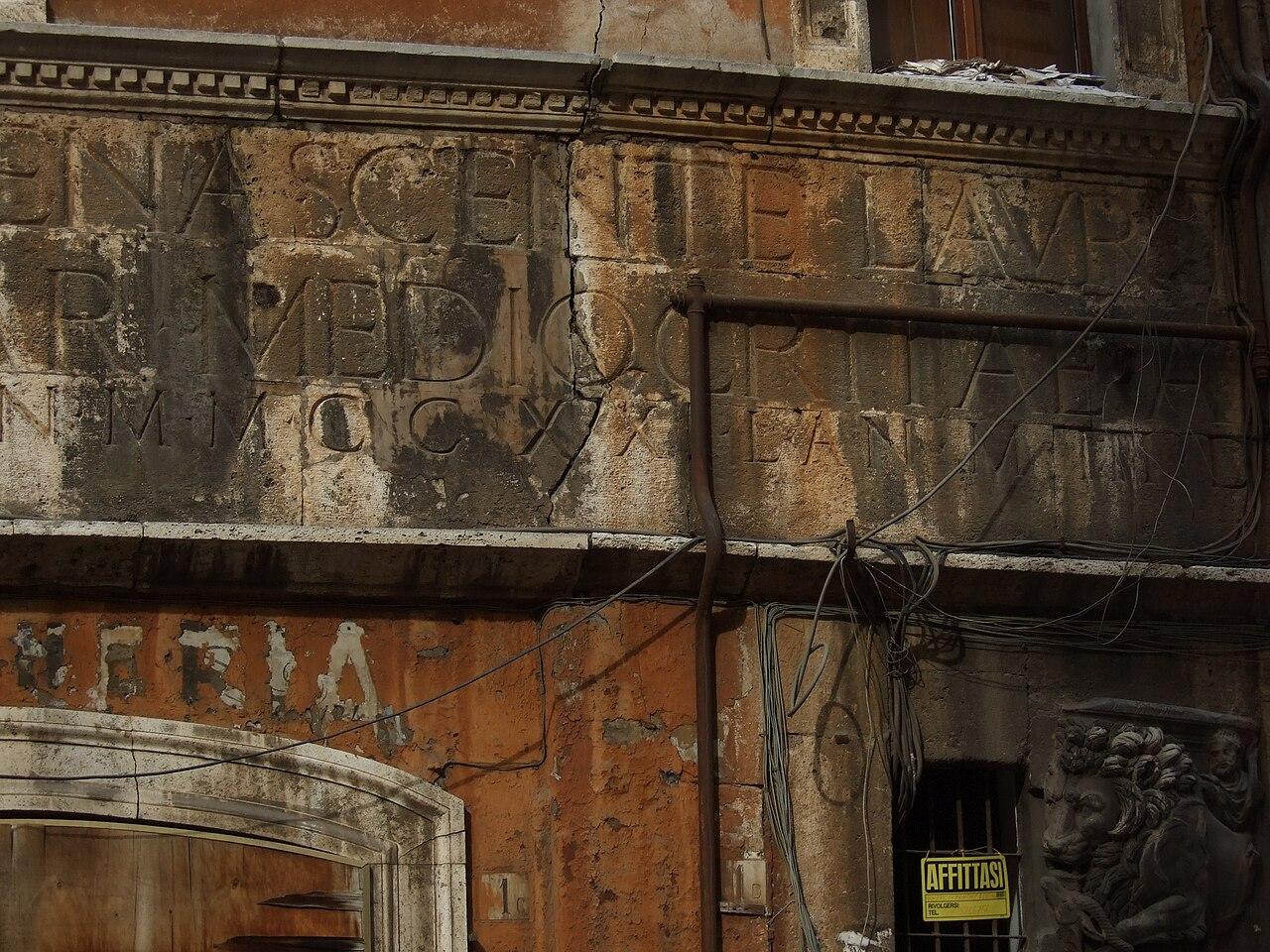
Beside it stands the church of , literally in the fish market. For centuries its facade bore the notice of the compulsory sermon: residents of the were made to come and listen to a Christian preaching on Saturdays, an obligation that only vanished halfway through the nineteenth century.
Of the two temples a few single columns still stand in the open ground behind, where a film festival takes over in summer.
We carry on to the corner and turn right toward the river, toward the white building with the square dome.
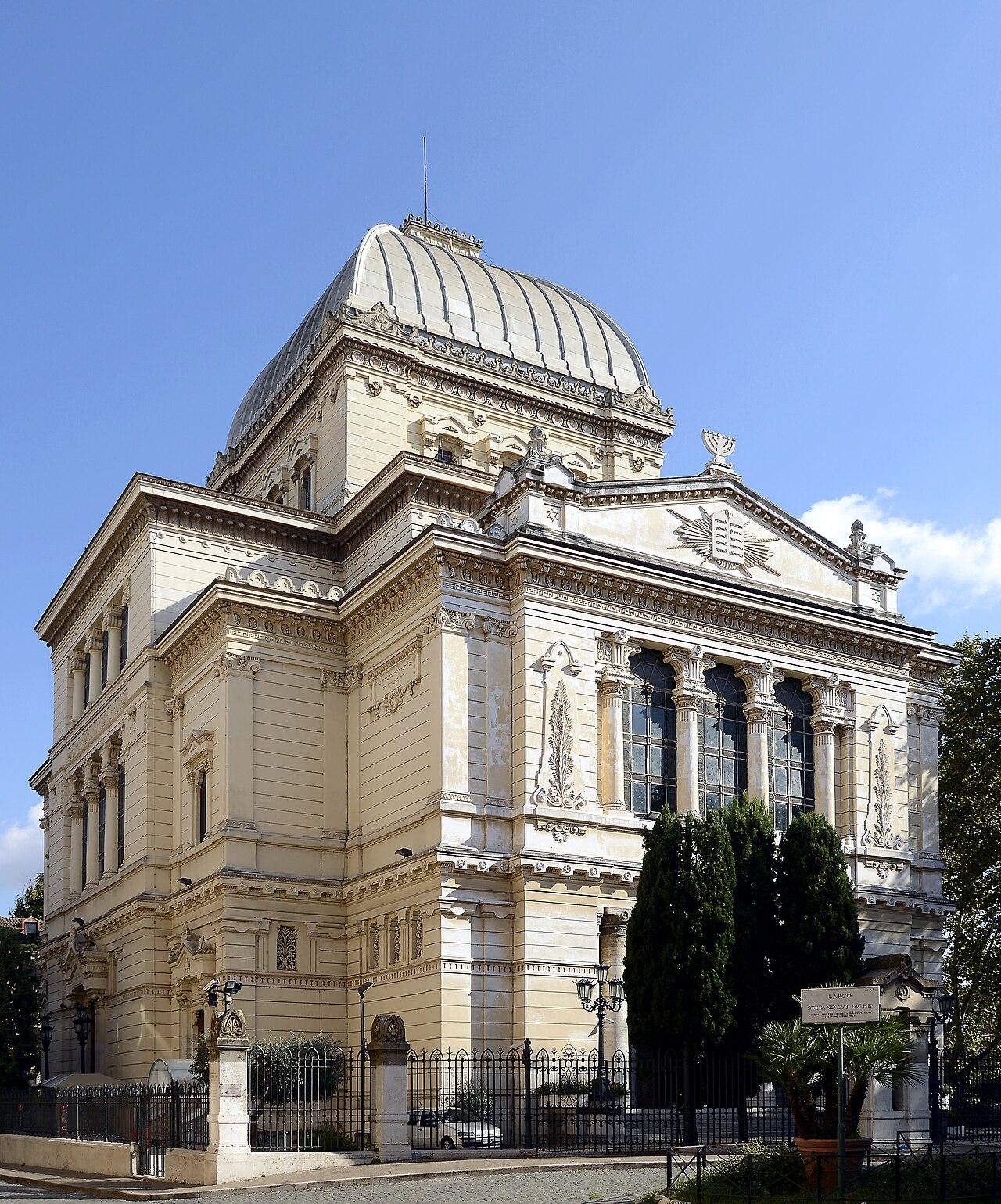
Sources. Story: Sovrintendenza Capitolina ai Beni Culturali (Portico d'Ottavia); Museo Ebraico di Roma (prediche forzate) Photos: Photo: Matthias Kabel (Wikimedia Commons, CC BY-SA 3.0)