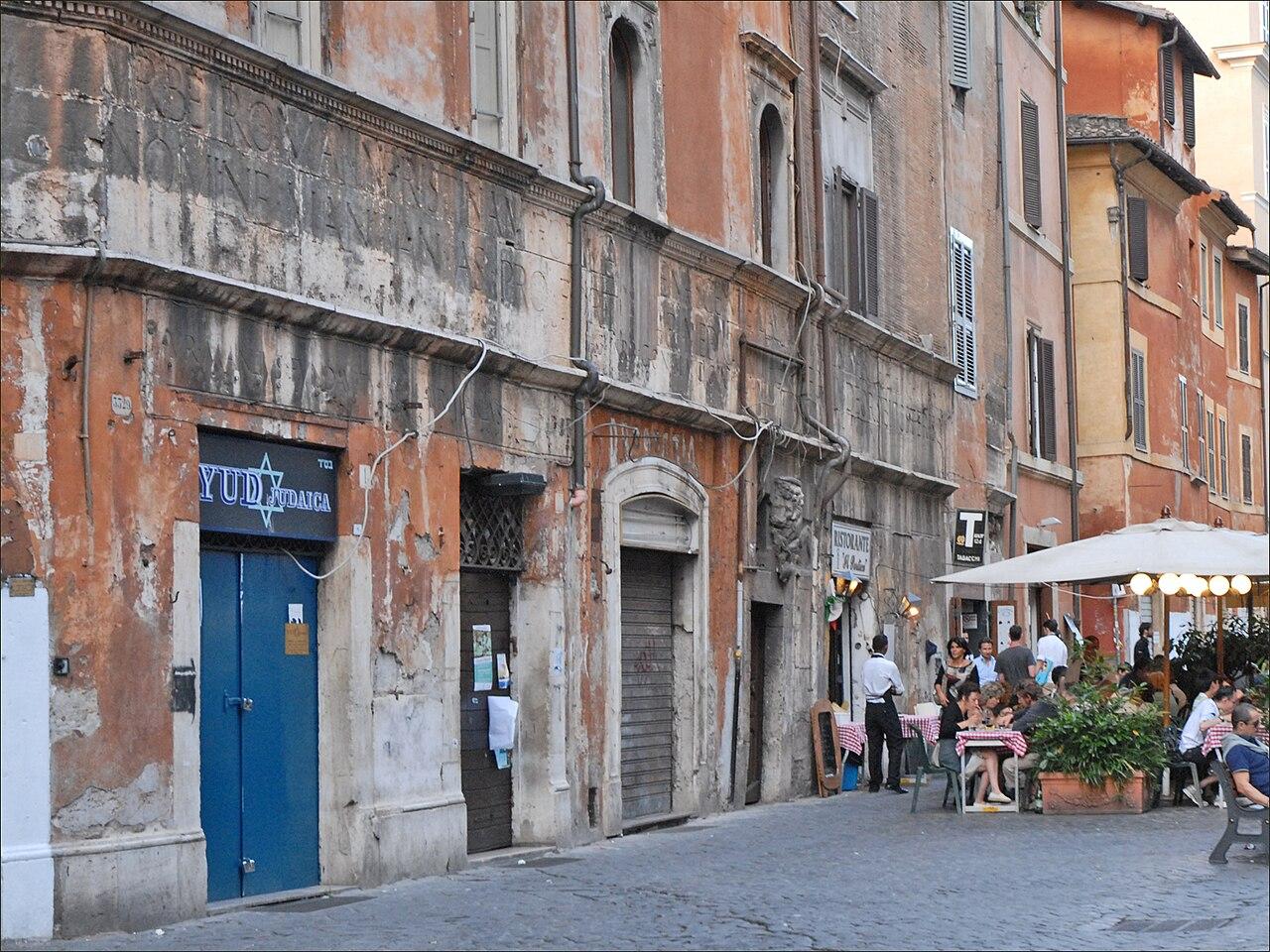
This wide street cuts straight through what was once a sealed-off district. In July 1555 issued a that opened with the words , meaning it is too absurd, and in it he ruled that from then on the Jews of Rome had to live in one enclosed quarter.
The rules that followed were exact. A wall went up with two gates at first, later five, which were locked at sunset and opened again at sunrise, with guards the residents themselves had to pay for. Jews were allowed only one trade, dealing in old clothes and rags, and had to wear a recognisable mark whenever they left the quarter.
The ground they were given was the lowest part of the city, right on the river, which flooded every time the water rose. On the facades nearby you can still find plaques marking how high the water reached at different moments.
This lasted until 1870. When and the ceased to exist, the gates came down, and in the years that followed the walls were torn away.
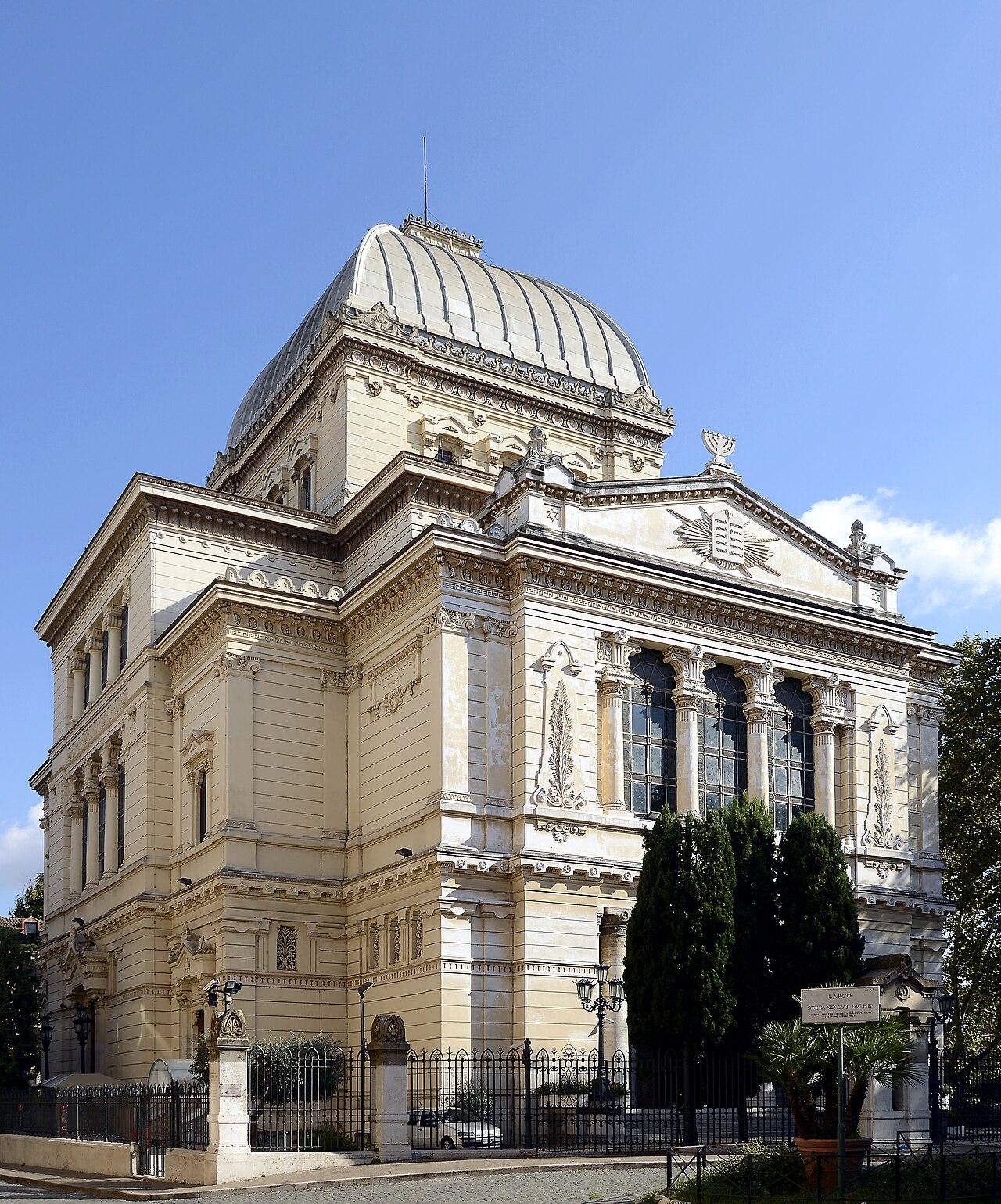
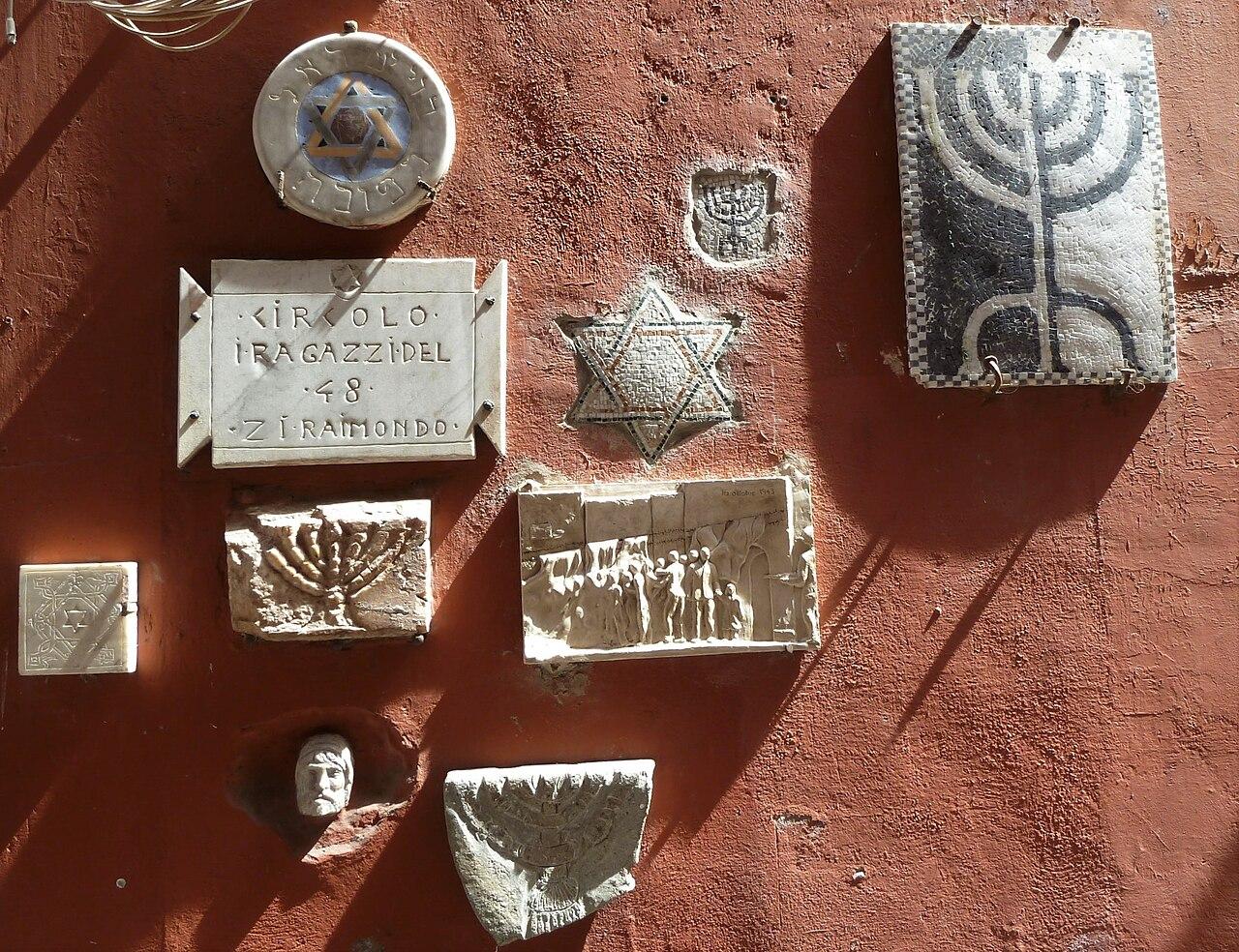
What makes it all the more bitter is that the Jewish community was here before the first emperors. It is the oldest in Europe, older than the city's conversion to Christianity, and it outlived the ghetto by more than three centuries.
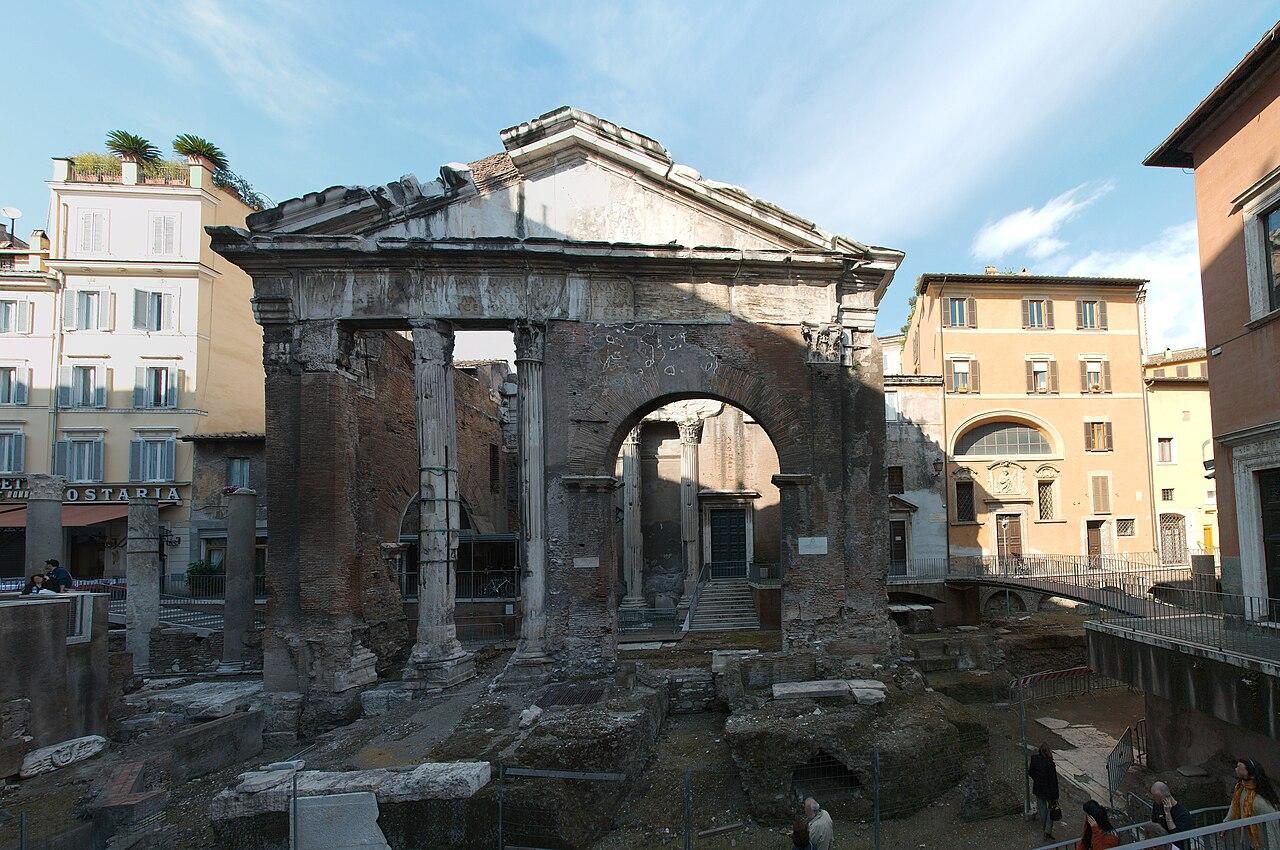
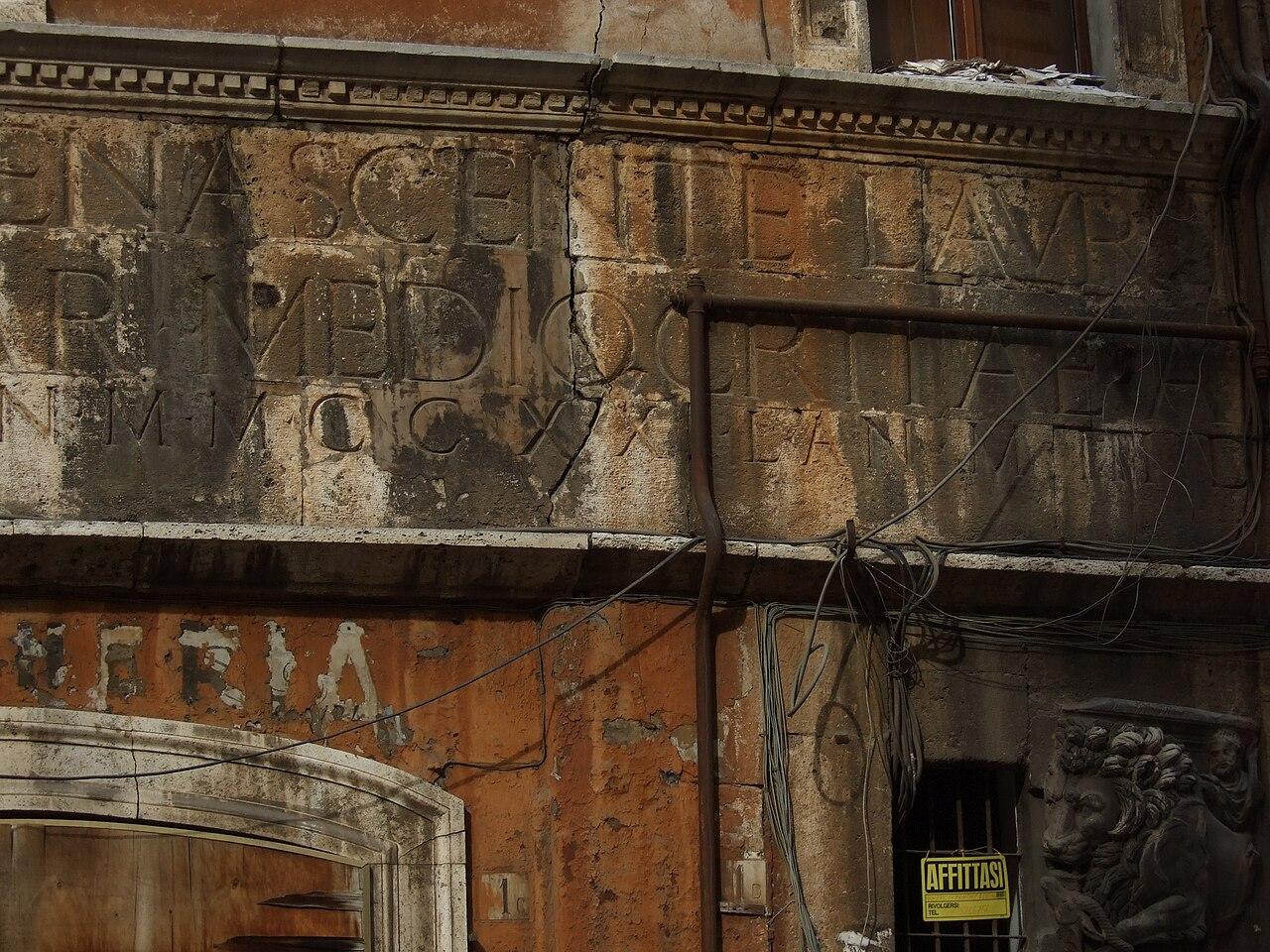
We keep following the street eastward and stop at the old house with the ancient stones set into its facade.
Sources. Story: Museo Ebraico di Roma; Treccani (papal bull Cum nimis absurdum, 1555; ghetto di Roma) Photos: Photo 1: Jean-Pierre Dalbéra (Wikimedia Commons, CC BY 2.0) | Photo 2: Giuseppe Vasi (Wikimedia Commons, public domain)