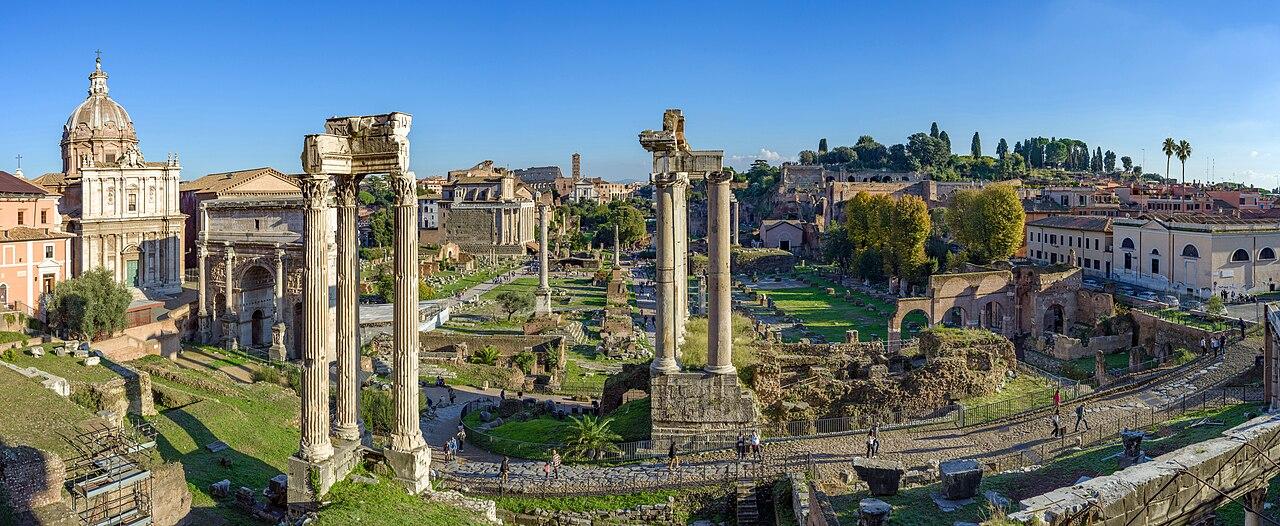
From this balustrade the spreads out in a single glance, eight metres lower than the city you're standing in. That difference in height is history itself: centuries of rubble, floods from the Tiber and new construction have lifted Rome upwards while the valley stayed exactly where it was.
This was marshland to begin with. The early city ran a drainage channel through it, the , and once the ground was dry a square took shape here, a place where justice was spoken and emperors were cremated.
What you see has only been visible again for the past century and a half. Until the nineteenth century the Forum lay buried under a layer of earth where cows grazed, and the spot was called , the cow field. In old prints only the top few metres of the columns poke above the ground, with farmers and carts moving between them.
The three slender columns on the right in the middle are the easiest to pick out: they belonged to the , and for a long time they were the only part of that entire building to rise above the earth.
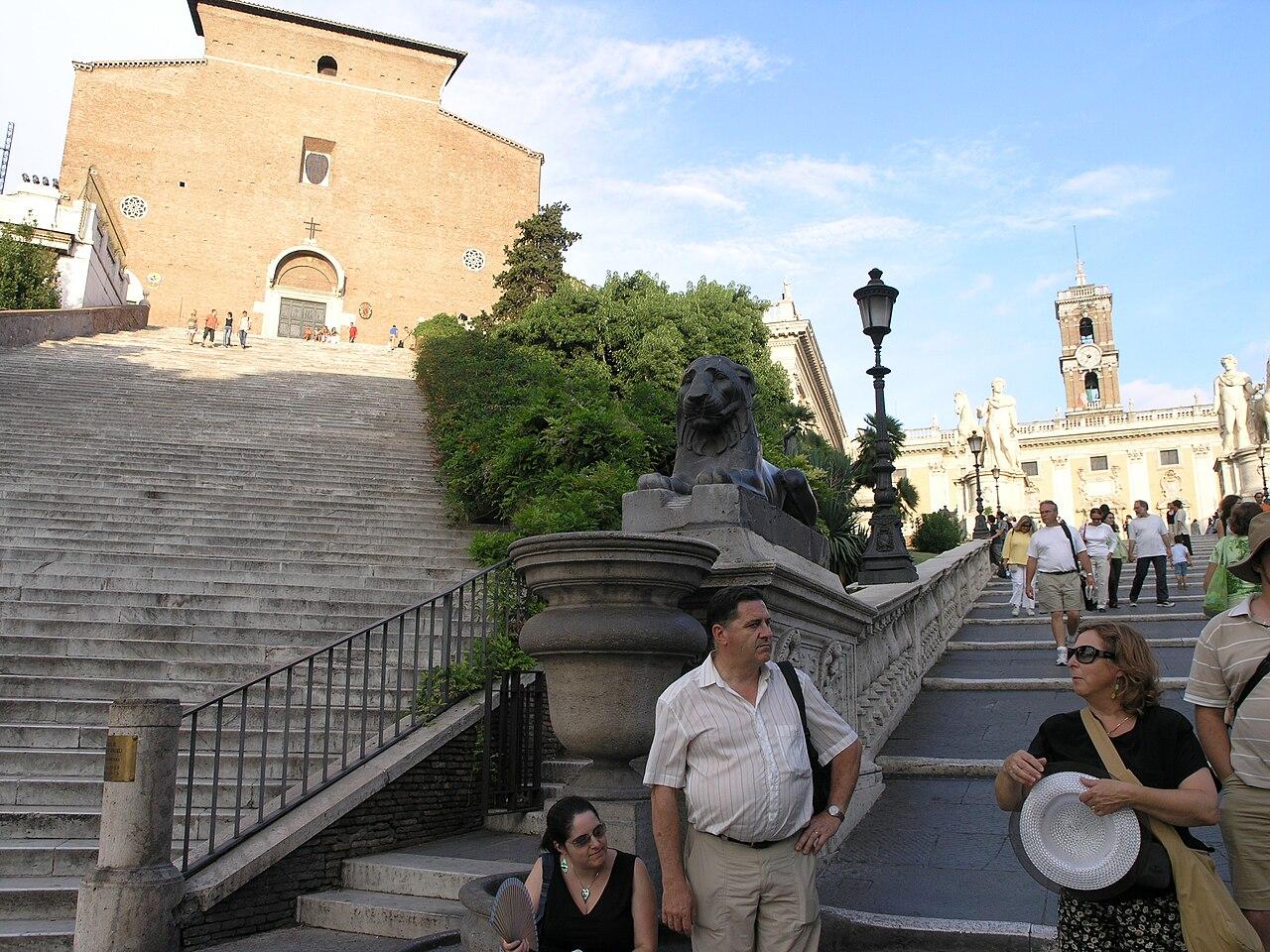
We follow the street further down to the church on your left with the double staircase.
Sources. Story: Parco archeologico del Colosseo (Foro Romano, Campo Vaccino); Treccani (Cloaca Maxima) Photos: Photo 1: Wolfgang Moroder (Wikimedia Commons, CC BY-SA 3.0) | Photo 2: Giovanni Battista Piranesi (Wikimedia Commons, public domain)