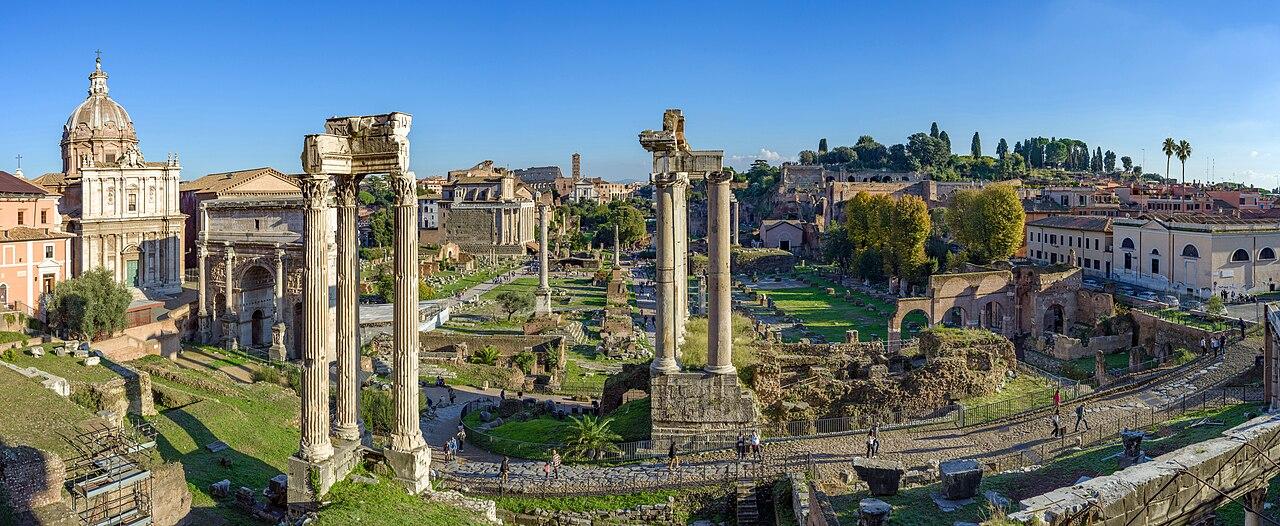
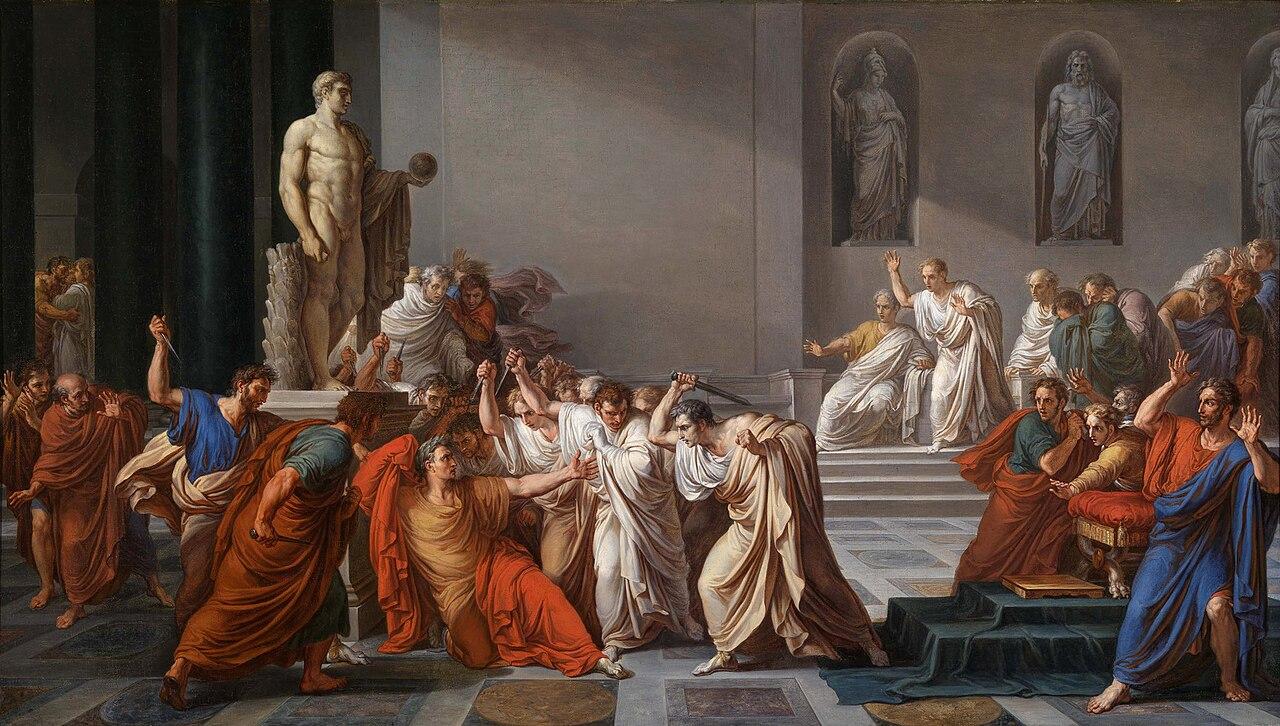
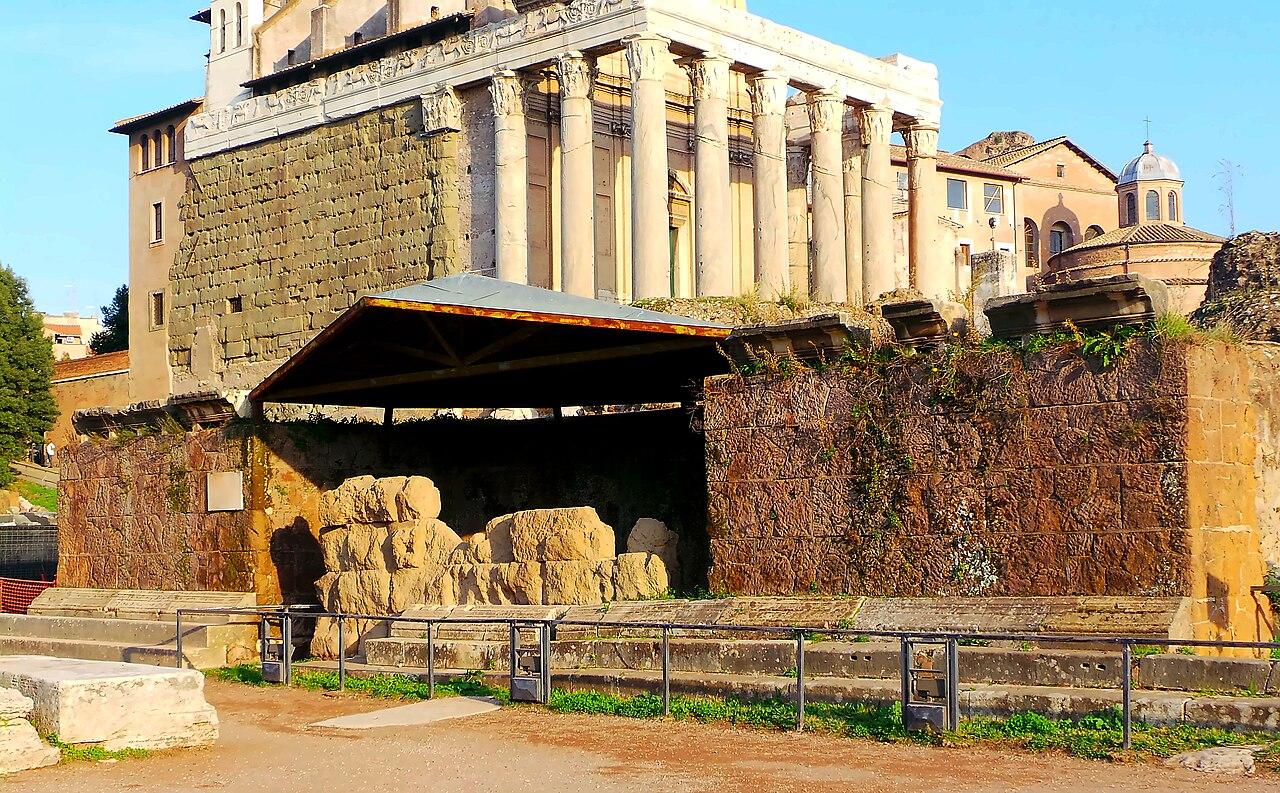
From here you look out over the Forum, and this is a fitting place to end, because this is where the story of the assassins came to a close.
In the months after the murder, Brutus and Cassius fled east and raised an army there. In the autumn of 42 BC they met Mark Antony and at in Macedonia. After losing the first battle, Cassius had a freedman kill him, convinced that Brutus had lost too, which wasn't true. Three weeks later Brutus did lose, and he took his own life.
Of the sixty-odd conspirators, almost none died a natural death within three years. , the man who came to collect Caesar that morning, was killed while fleeing by a Gallic chieftain.
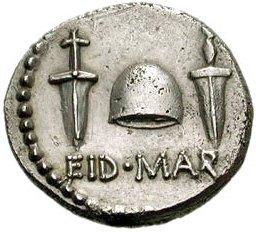
In those years Brutus even struck a coin with his own portrait on the front and two daggers on the back, along with the words , for the Ides of March. He was openly advertising the murder. After his defeat the winners had those coins melted down, and the few that survived are now among the most expensive ancient coins in the world.
The victors then turned on each other. Octavian defeated Antony and Cleopatra at , and in 27 BC he took the name Augustus and with it the power Caesar had never held. So the thing the liberators wanted to prevent, they actually hastened.
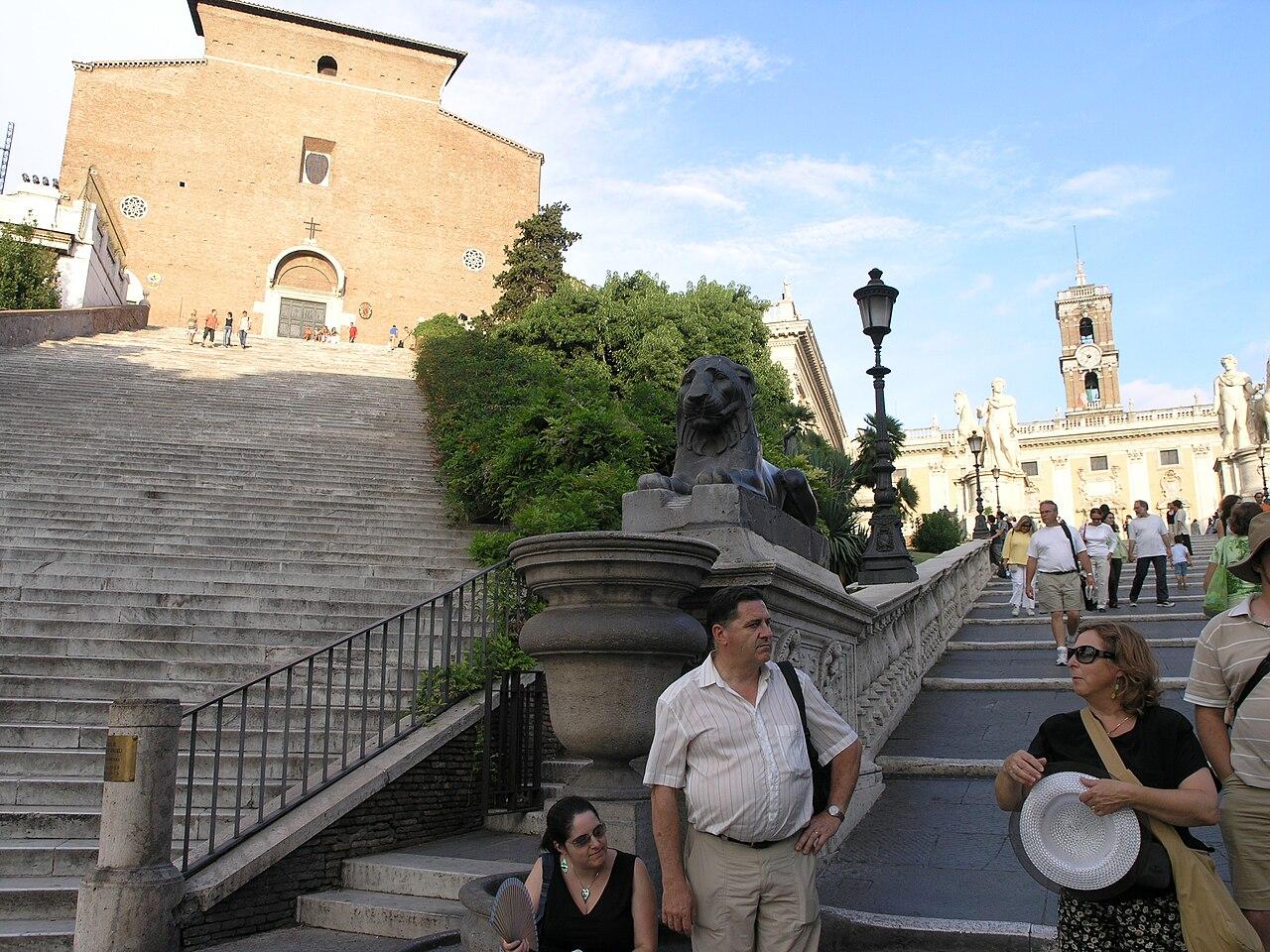
And that brings you to the end. The stairs beside you climb up to the Capitol, and , where you started, lies about ten minutes' walk to the northwest.
Sources. Story: Treccani (battaglia di Filippi, Bruto, Cassio, Augusto); British Museum (EID MAR denarius) Photos: Photo: unknown author (Wikimedia Commons, public domain)