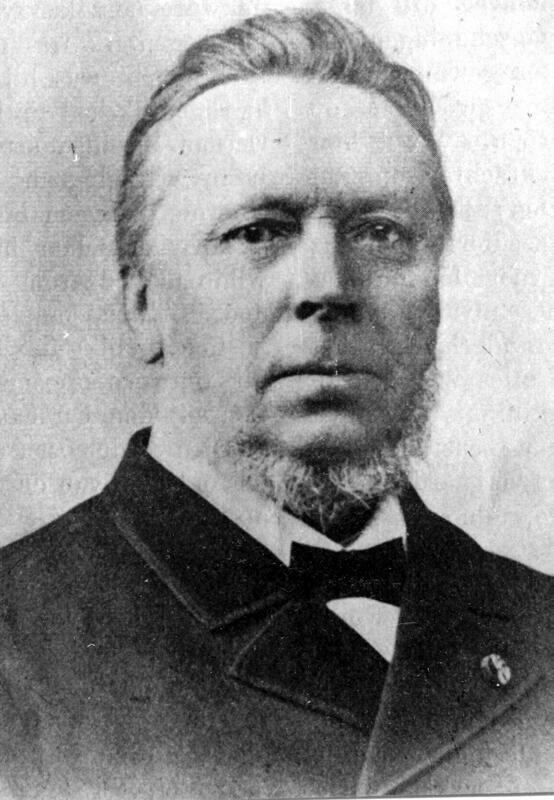
Back in 1863 there was a plan on the table that almost everyone thought was far too expensive and far too risky: digging a brand new channel straight across the land near , out to the North Sea. The man behind that plan stands here on the Veerkade cast in bronze, and his name is Pieter Caland.
Rotterdam needed the sea, and reaching it was becoming harder and harder. The mouth of the river kept silting up, ships could only get through with real effort, and the port was slowly in danger of losing its own water. Caland, born in 1826 in Zierikzee and trained at the Royal Military Academy in Breda, stood out early in his career at , the national agency responsible for Dutch waterways and infrastructure, for his technical sharpness and his nerve. His proposal was approved in 1863, construction began a year later, and by 1872 the was finished. That gave Rotterdam the direct link to the sea that the entire later world port still rests on.
He saw little of that himself, because the recognition only came after his death. and Arend Odé designed this monument, which was unveiled in 1907 on the Van Hogendorpsplein. In 1939 it moved to the Veerkade, and that move is exactly what saved it, because a year later .
Sources. Story: https://www.portofrotterdam.com/nl/online-beleven/havenkrant/overzicht/op-de-schouders-van-pieter-caland, https://www.bkor.nl/beeld/calandmonument/, https://maritiemmuseum.nl/verhalen/topstukken/aktetas-van-pieter-caland Photos: Johannes (Bob) (J.) van Rhijn, Public domain, via Wikimedia Commons