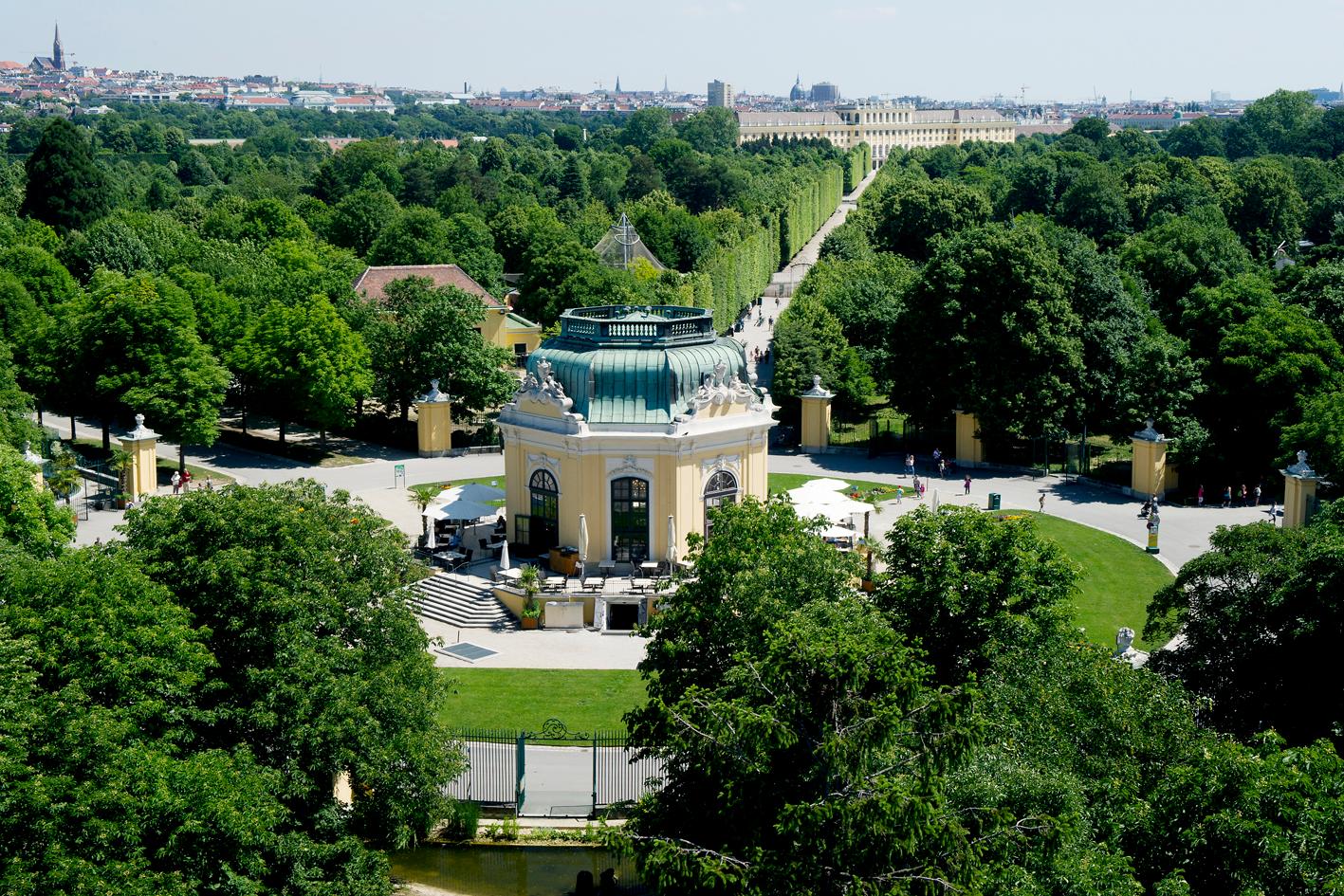
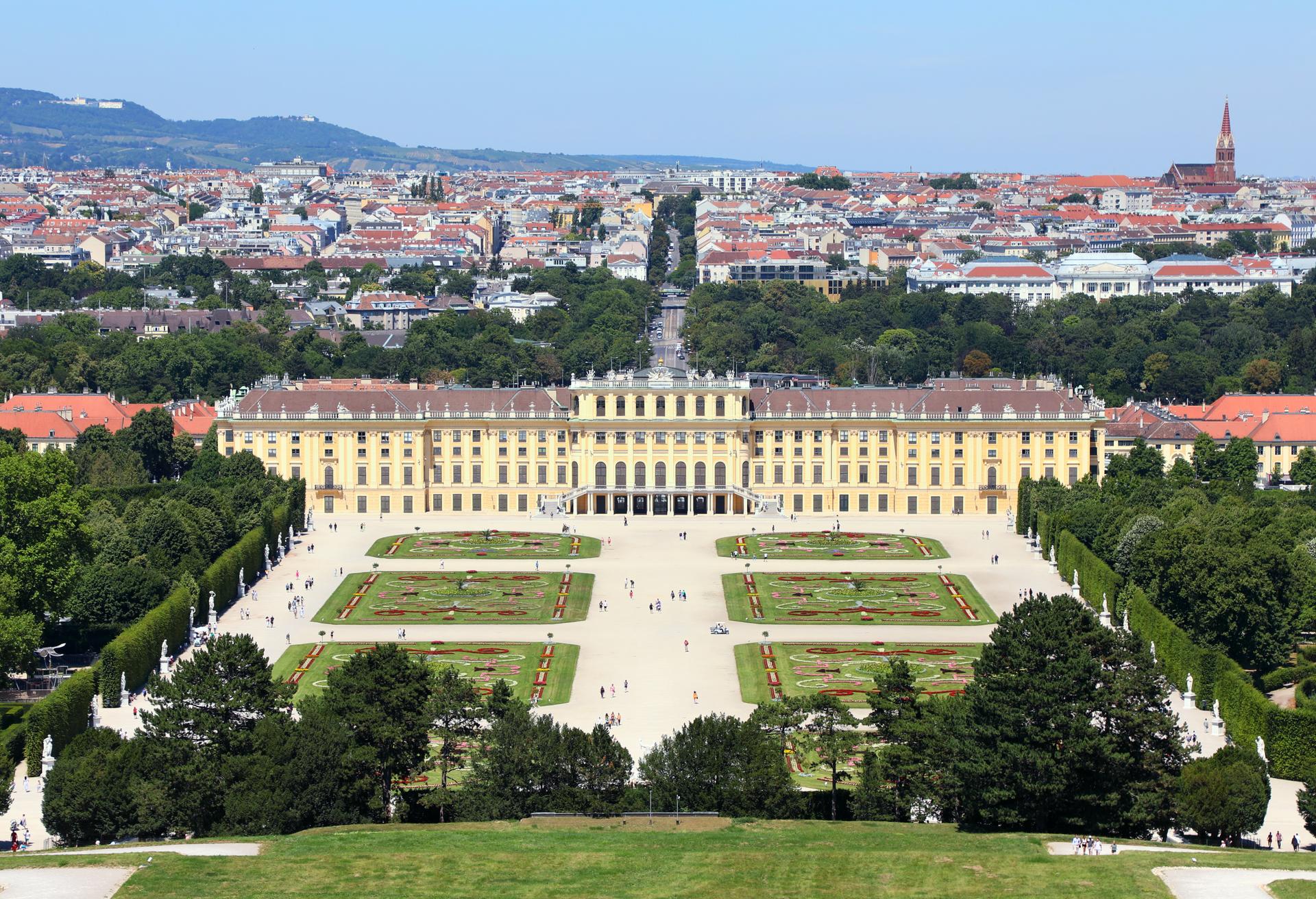
Beyond this gate lies a garden that once no one was allowed to enter, and that now draws millions of visitors every year.
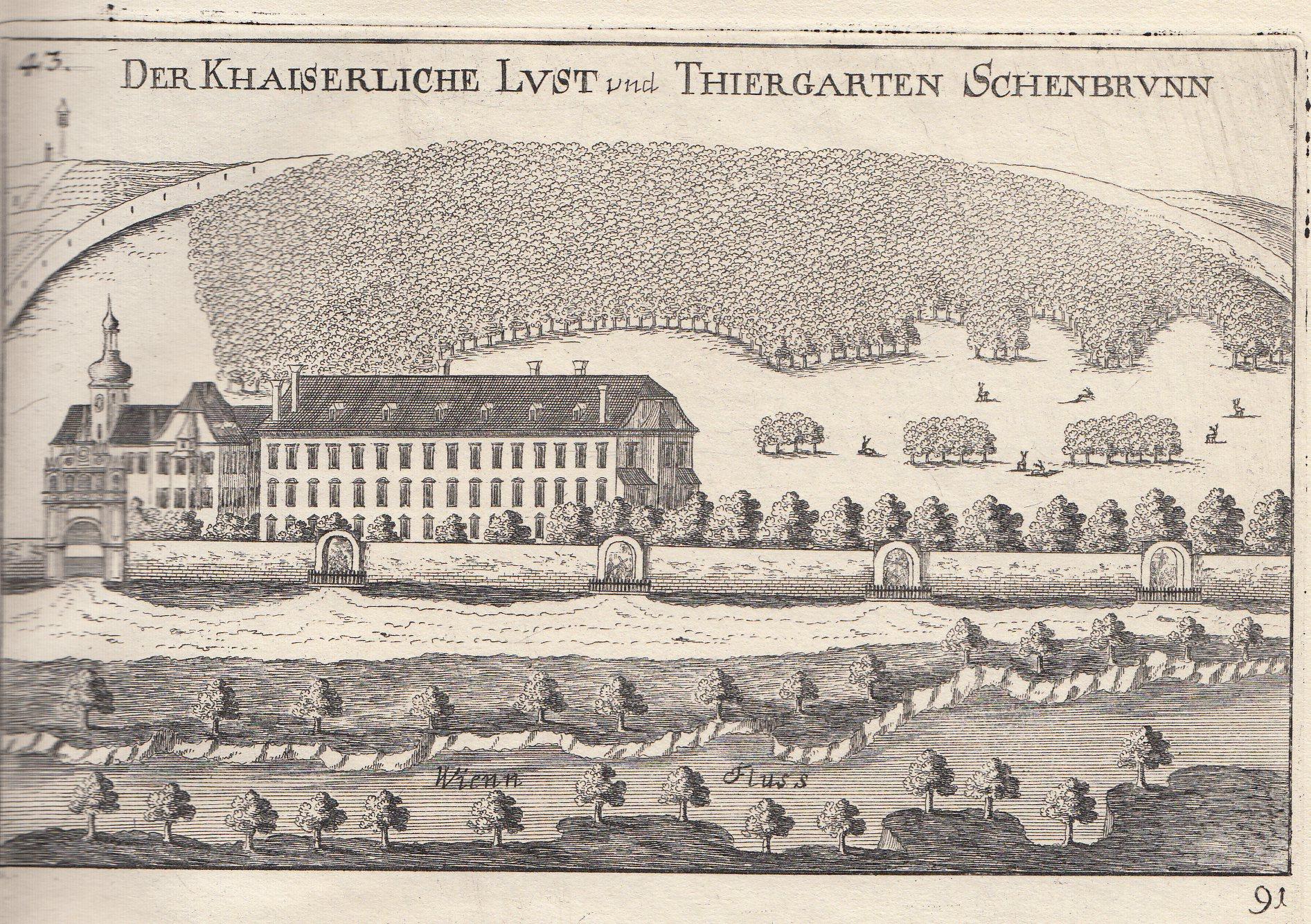
For centuries the grounds were the court's hunting territory, with a mill and a country house on the spot where the palace would later rise. The name goes back to a spring that is said to have discovered here at the start of the seventeenth century, which he called the , the beautiful spring, a name that would come to cover the whole estate.
In 1683 this too went up in flames when burned the land around Vienna to the ground, and what you see today was built in the century that followed, under , who turned the hunting lodge into a summer residence.
In 1779 her son did something monarchs rarely did and opened the garden to the public. Ever since, the Viennese have strolled here among the hedges where the court used to hunt, which is why this park fills up at weekends mostly with people from the neighbourhood.
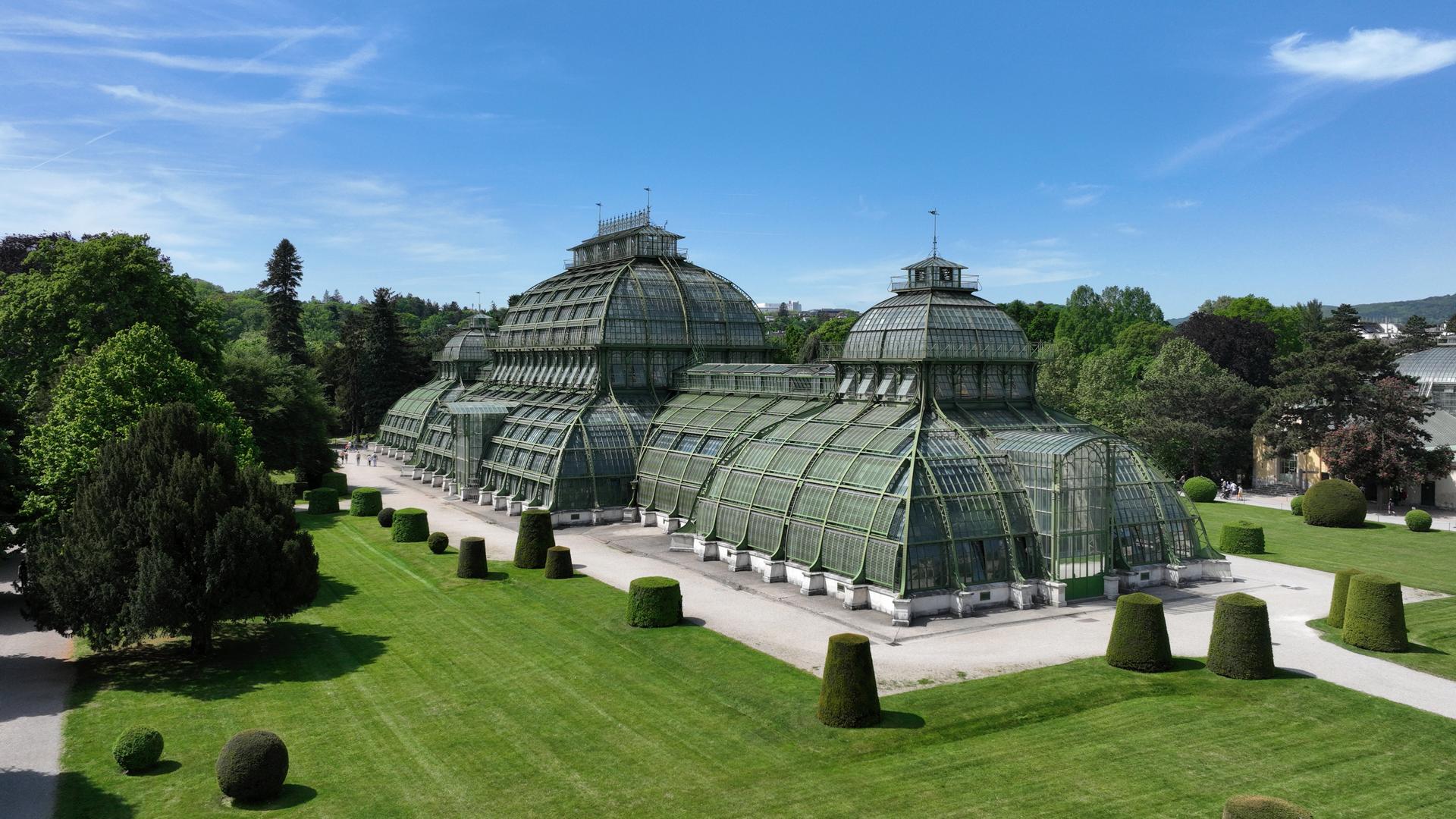
We follow the path to the left, toward the long glass building among the trees.
Sources. Story: Wien Geschichte Wiki, Stadt Wien; Schloss Schönbrunn Kultur- und Betriebsgesellschaft, historical documentation Photos: Schoenbrunn Palace precursor 1672, public domain, via Wikimedia Commons