Four years before , Vienna was already nearly empty, and the cause was something nobody saw coming. In 1679 swept through the city and killed tens of thousands, after which anyone who could flee left town, leading the way.
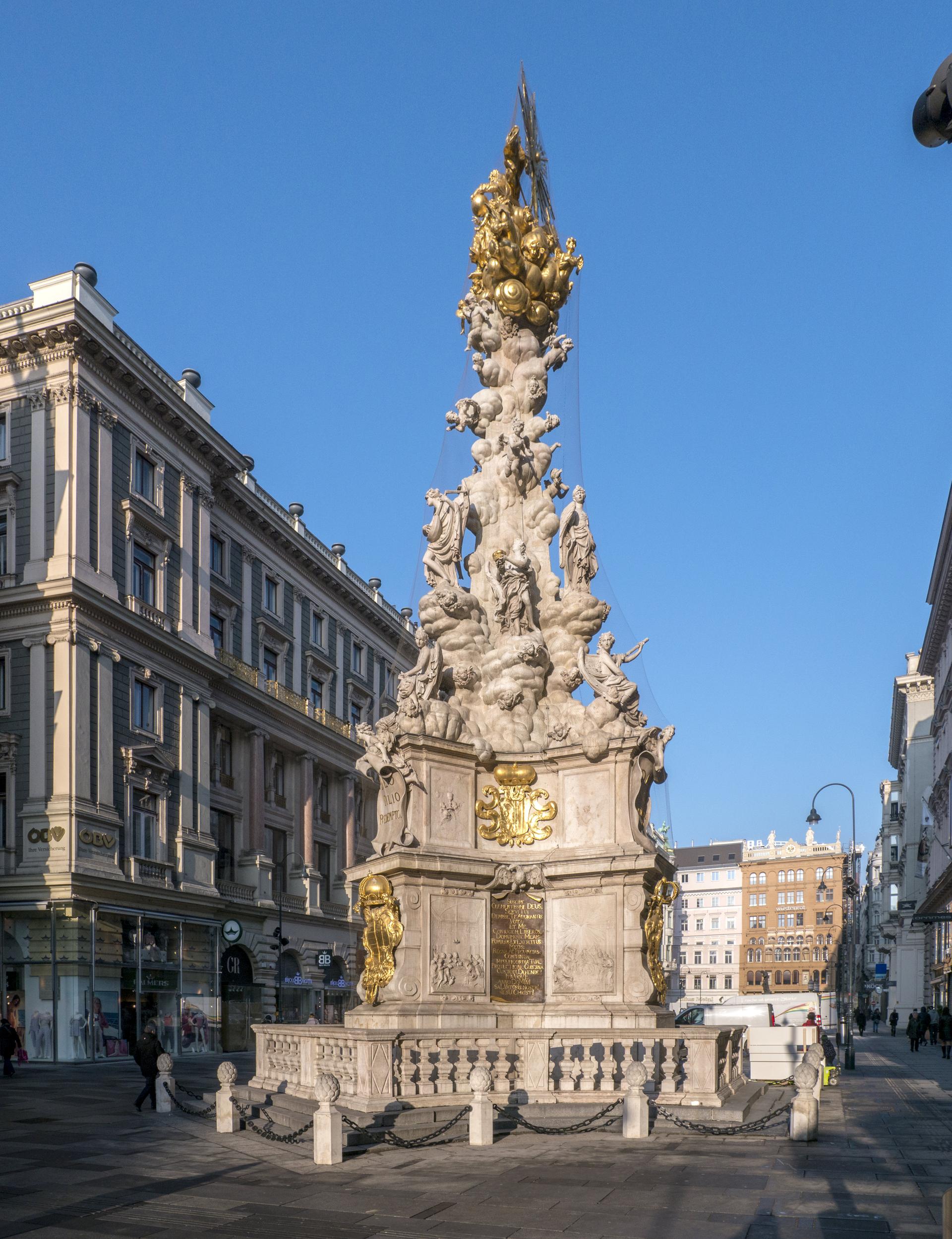
The column standing here in the middle of the is his thank-you for the end of that epidemic. You can see an emperor kneeling on it, a strikingly humble pose for a man who considered himself appointed by God, so the Viennese promptly gave the statue a nickname you'd best not translate in company.
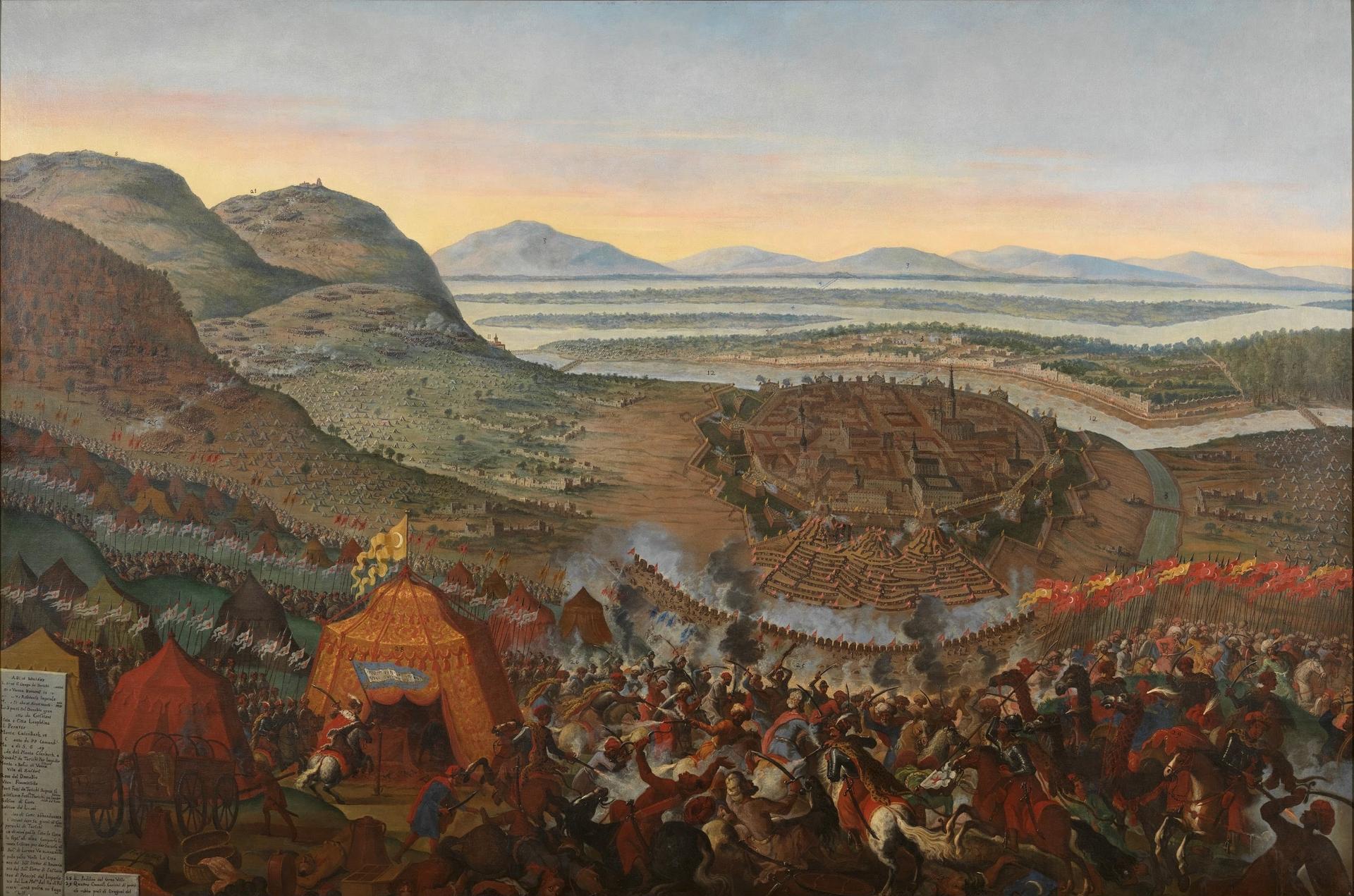
For the story of 1683, that plague matters more than it seems. A city that has just lost a large share of its people has few hands left for the walls, little money for repairs and little stock in its cellars. In exactly that state, Vienna learned that an army was on its way.
The Graben itself is, by the way, just what the name says, which means ditch. This is where the moat of the once ran, later filled in and turned into a market street, so you're walking along a trench two thousand years old.
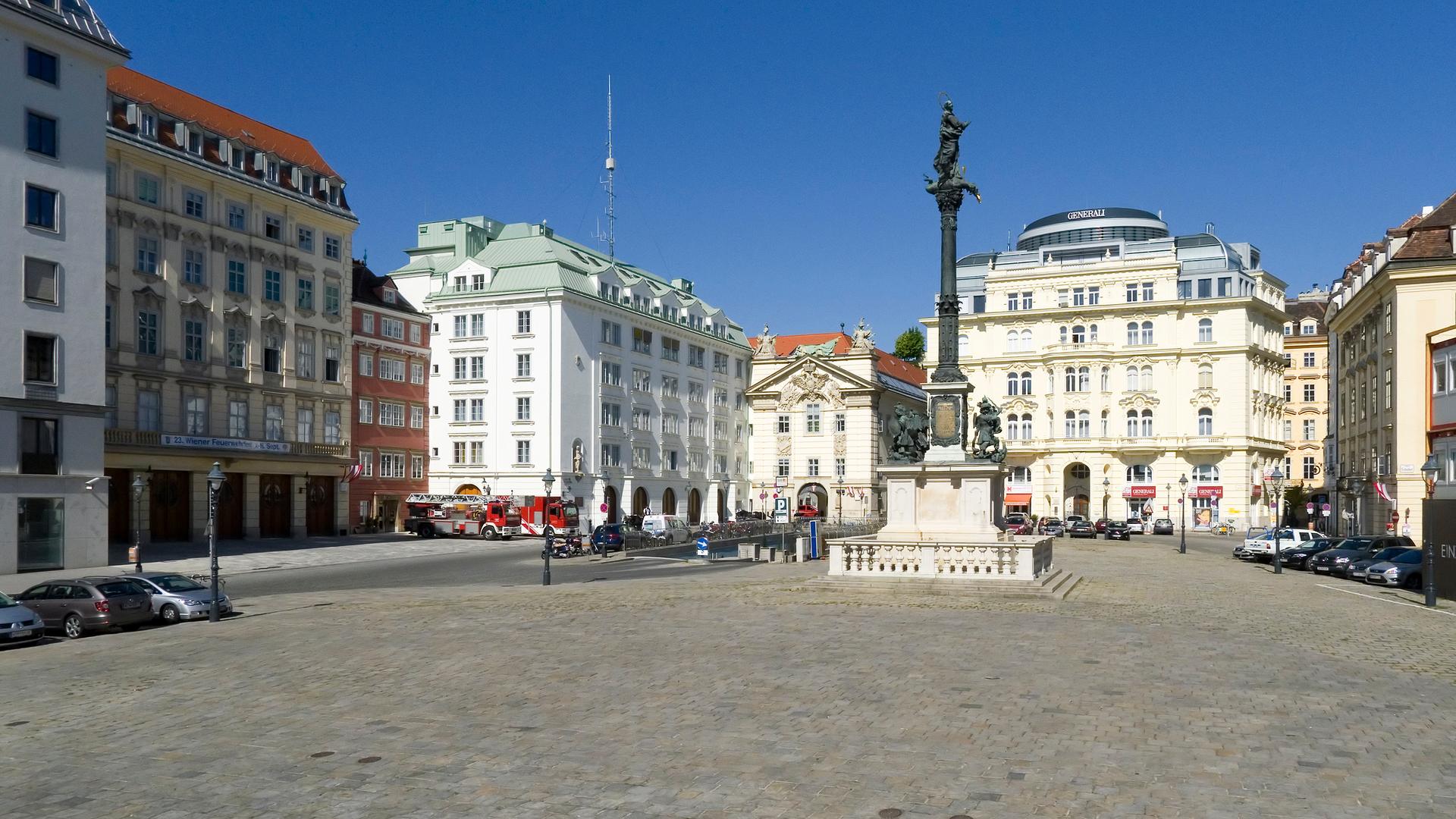
Along the Bognergasse we come out onto Am Hof, the largest square in the old city.
Sources. Story: Wien Geschichte Wiki, Stadt Wien; Wienbibliothek im Rathaus, digital collections Photos: Wien Graben Pestsaeule Ostseite, Bwag, CC BY-SA 4.0, via Wikimedia Commons