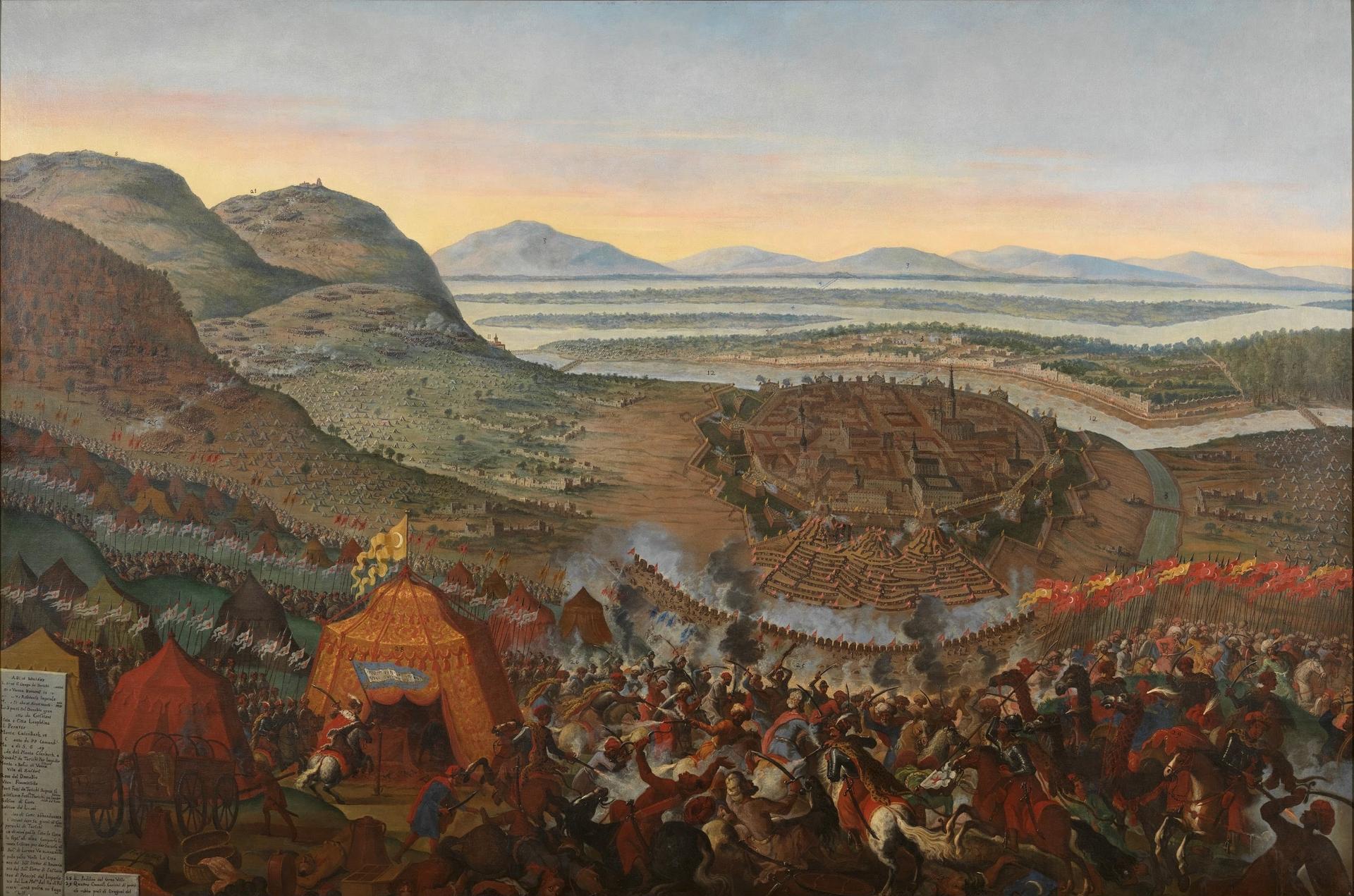
Two small pavilions with golden sunflowers on a white facade, built as the entrance to a train station: that's the heart of what , one of Vienna's leading architects, had in mind for this city.
At the end of the nineteenth century he designed the whole , from the bridges and the retaining walls to the railings and the lettering on the signs, and he treated every stop as a building that mattered. Here he went for an iron skeleton with thin marble panels set against it, a structure he chose to show rather than hide, which at the time went against every convention.
They no longer stand where they once did, by the way. When the metro was built here in the seventies, both pavilions were taken apart, put into storage and then rebuilt a little further along and higher up.
On the other side of the square stands the building the artists of the walked out of in 1897.
Sources. Story: Wien Geschichte Wiki, Stadt Wien; Wien Museum, Otto Wagner Pavillon Karlsplatz