The four white columns on this site mark the front of a building that stood here for eighty years and disappeared in a single night.
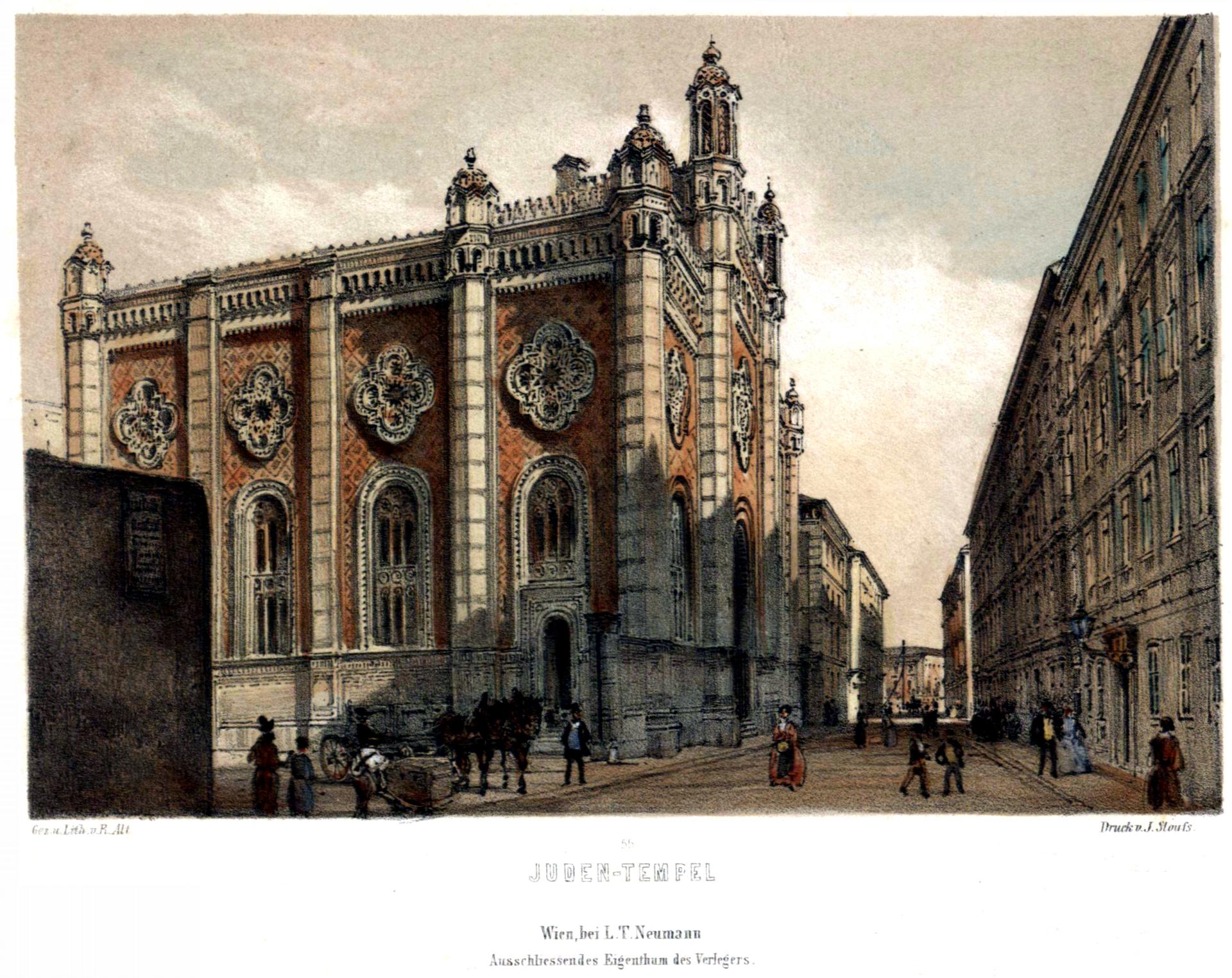
The Leopoldstädter Tempel went up from 1853, designed by , and seated two thousand people, which made it the largest synagogue in the city. Förster worked with horseshoe arches and striped brickwork, and the look made such an impression that congregations across half of Central Europe copied it. One of those copies still stands in Bucharest.
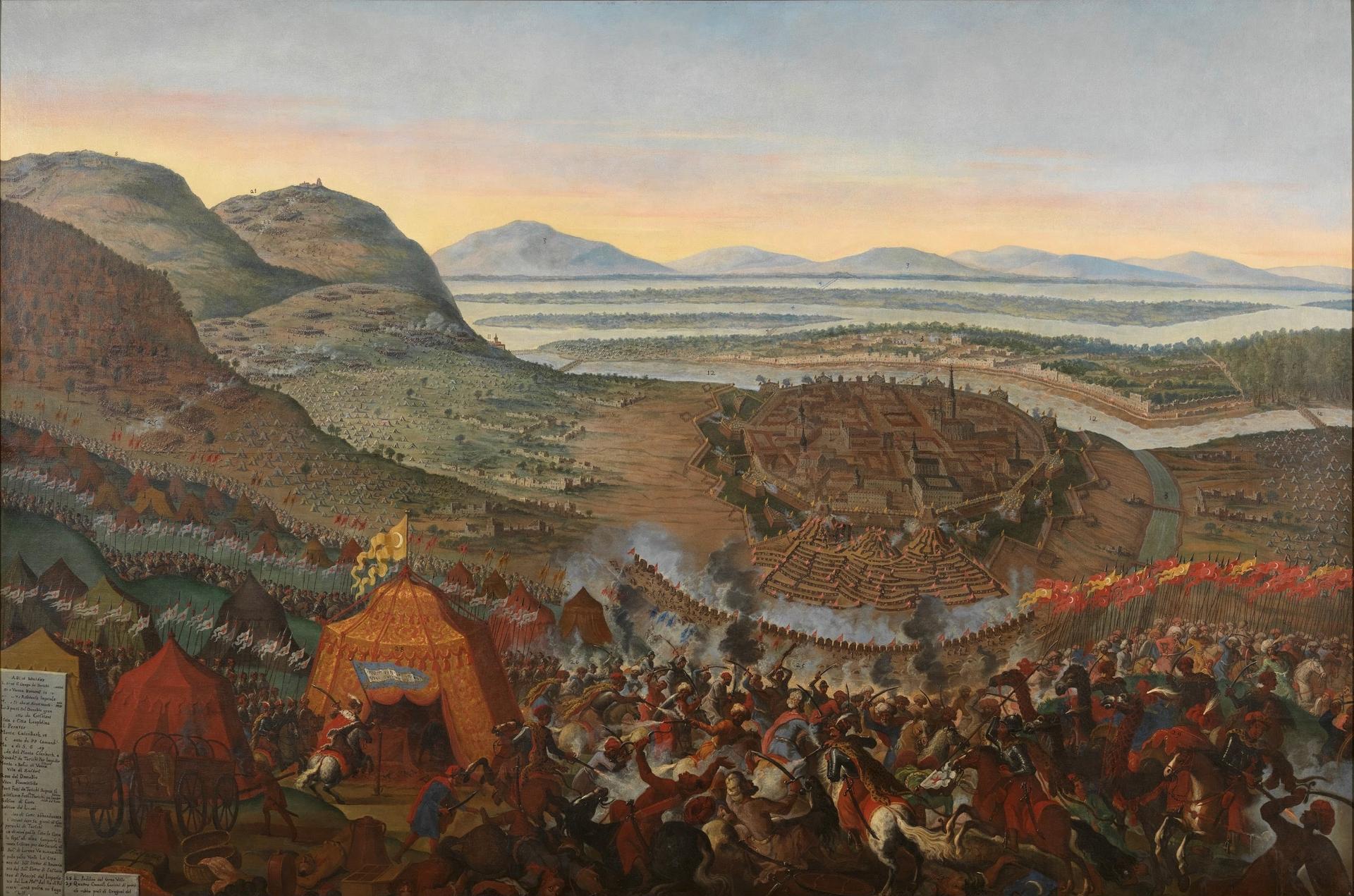
On , the building burned to the ground, along with nearly every other house of worship in Vienna. survived, and for a bitter reason. Back in the eighteenth century, that synagogue had been required to sit hidden inside a block of houses, because non-Catholic places of worship were not allowed to be visible from the street, and setting fire to it would have taken the whole block with it.
The display on the wall beside you shows, with photographs, just how big this building was. The rest you have to picture for yourself.
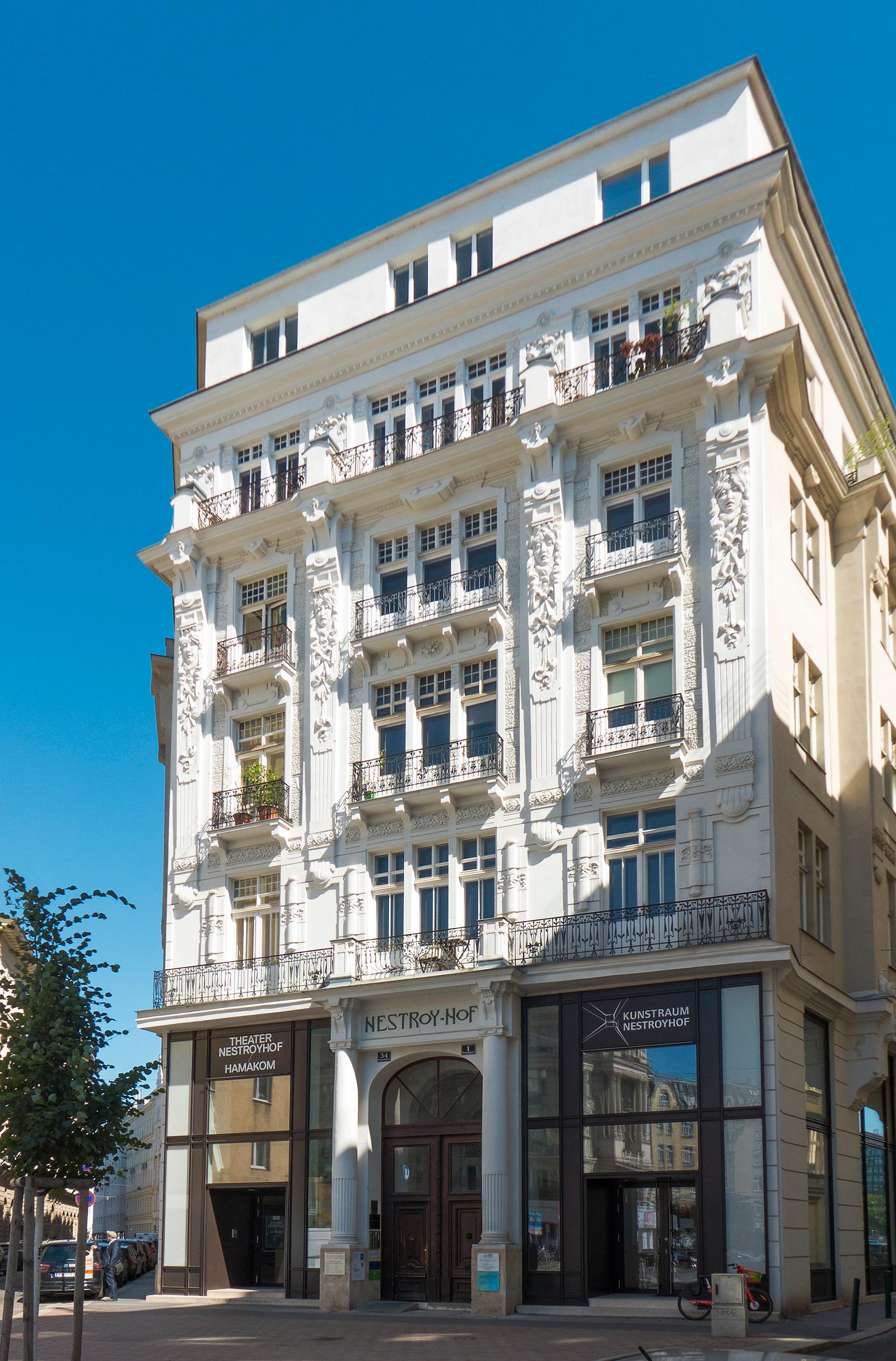
Just around the corner stands a theatre that did survive the war, though for decades nobody realised it.
Sources. Story: Wien Geschichte Wiki, Stadt Wien; Jüdisches Museum Wien, synagogue documentation Photos: Leopoldstädter Tempel after Rudolf von Alt, public domain, via Wikimedia Commons; Wien Tempelgasse Memorial, Bwag, CC BY-SA 4.0, via Wikimedia Commons