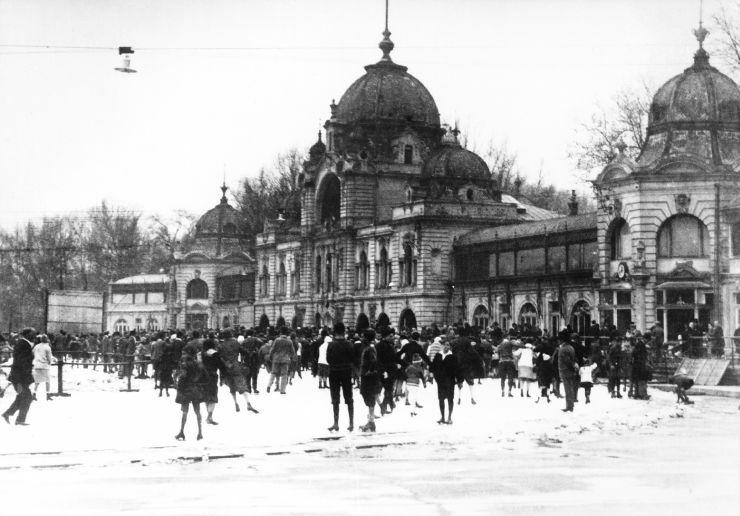
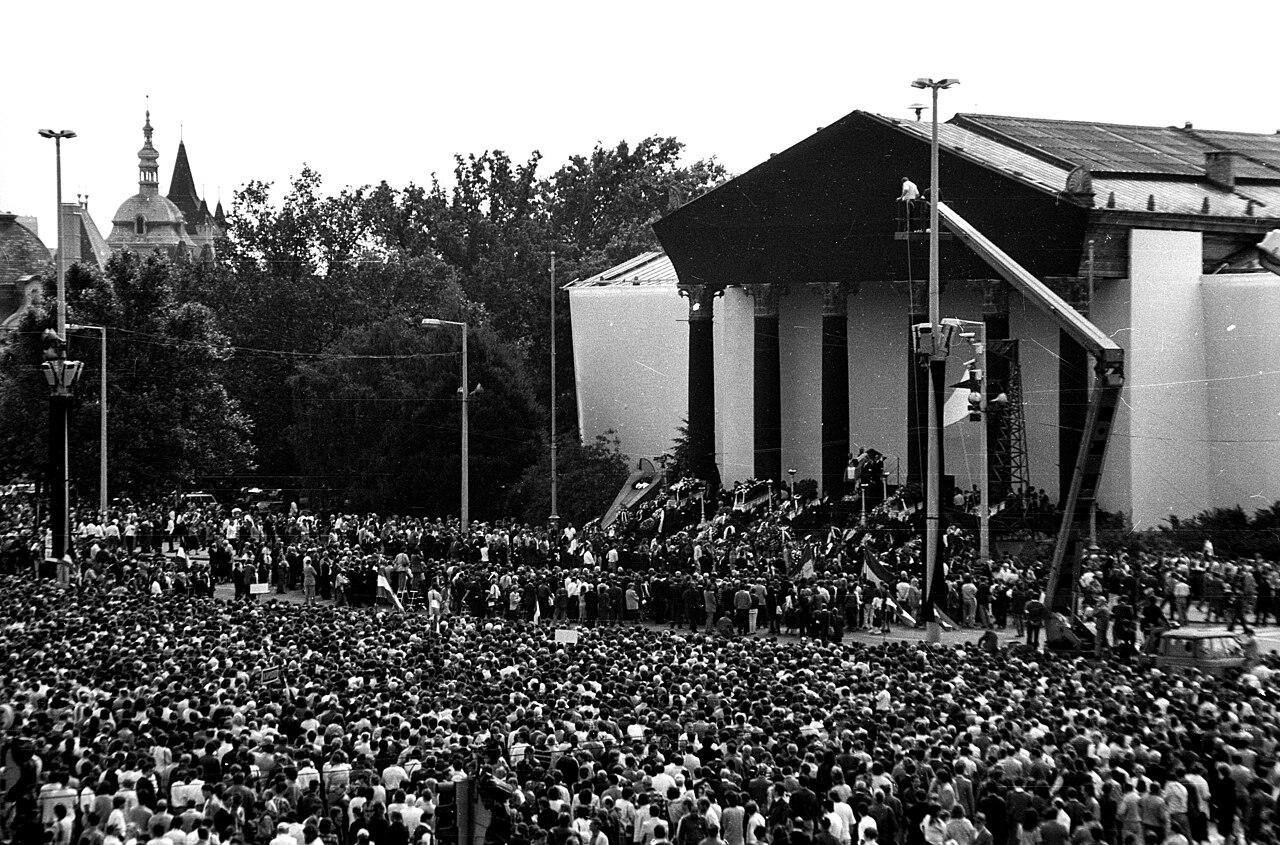
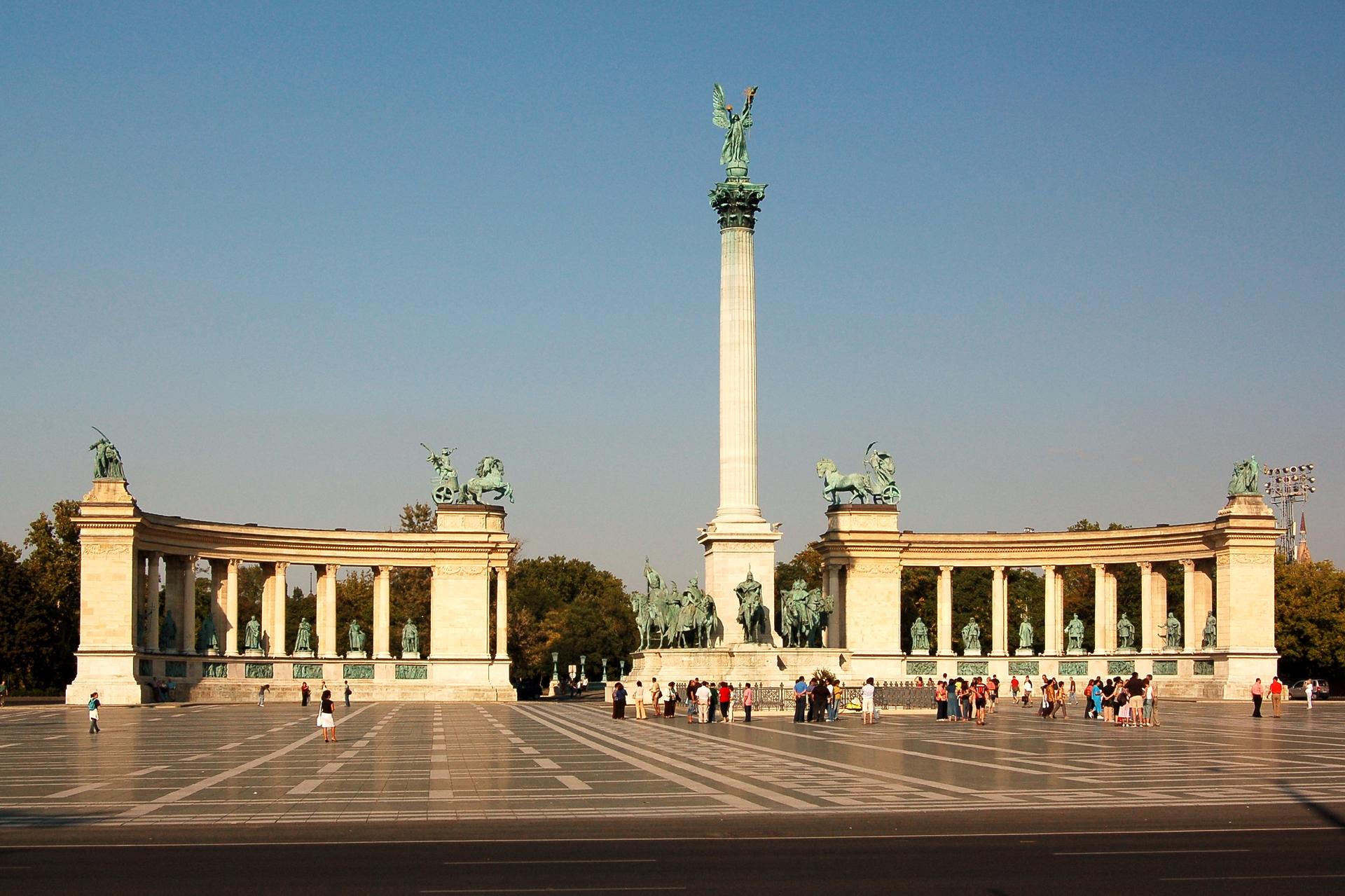
This building with its columns and colourful tiled frieze was finished right on schedule. On 2 May 1896, Emperor and King opened the Ezredéves Országos Kiállítás in the park behind here, the national exhibition marking the country's millennium celebrations, and two days later he came back to open the first show inside: more than three hundred Hungarian artists and over a thousand works.
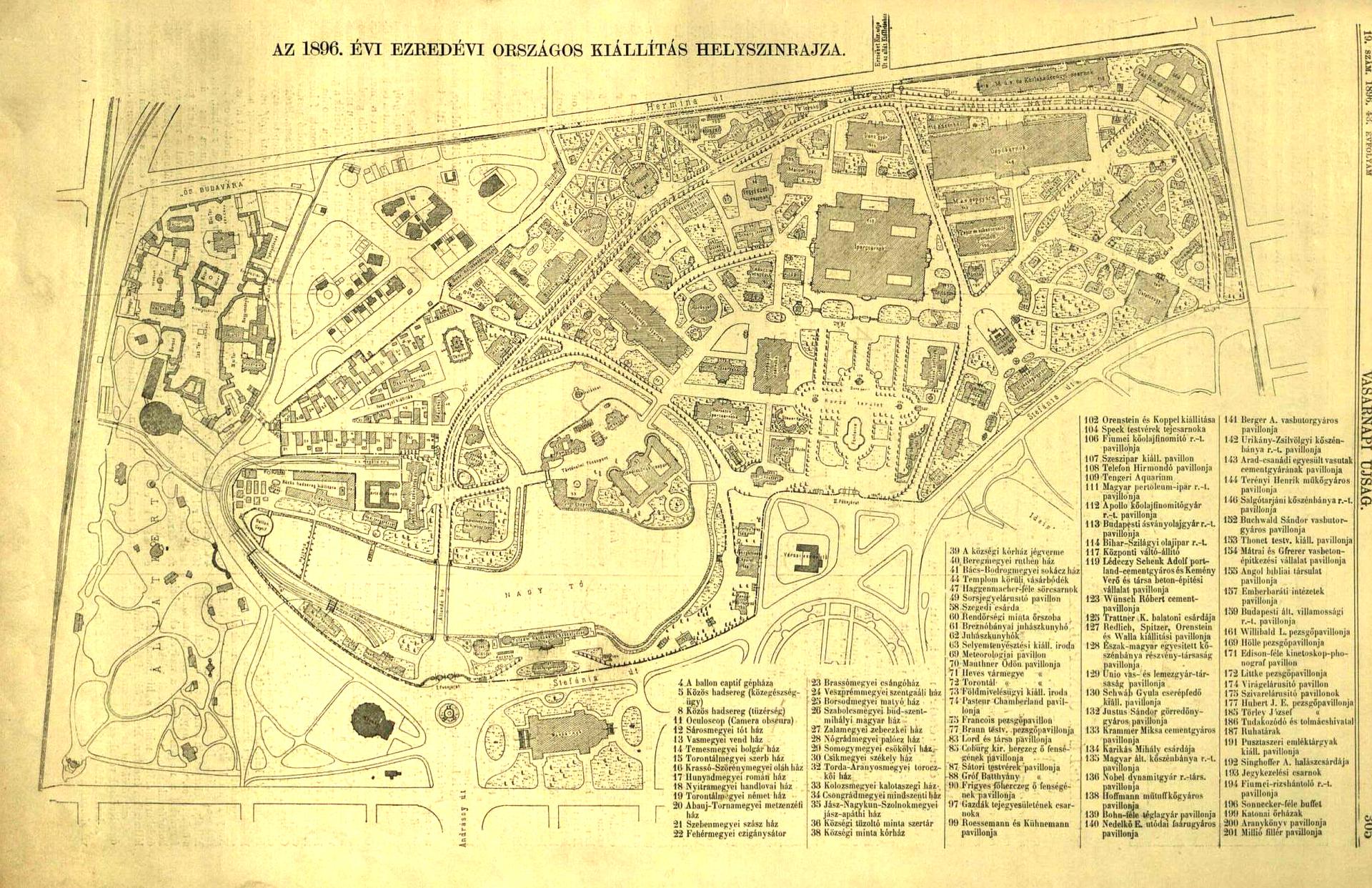
The scale of that exhibition is hard to picture. Five hundred and twenty thousand square metres of park, two hundred and forty pavilions, five main gates, and inside those gates nothing but Hungarian things: machines, livestock, wine, paintings, uniforms, a whole reconstructed history. This was never meant to be a world's fair, it was a country showing itself to itself. May stayed grey and drizzly and almost nobody turned up, then the crowds came pouring in, and by the time it closed in October nearly six million people had visited, roughly a third of the entire population of the country.
Of those two hundred and forty buildings, almost everything was torn down soon after it ended. A handful stayed, and this walk follows that handful. The Műcsarnok, which is still an art gallery today, is one of them, and it stands on exactly the same spot.
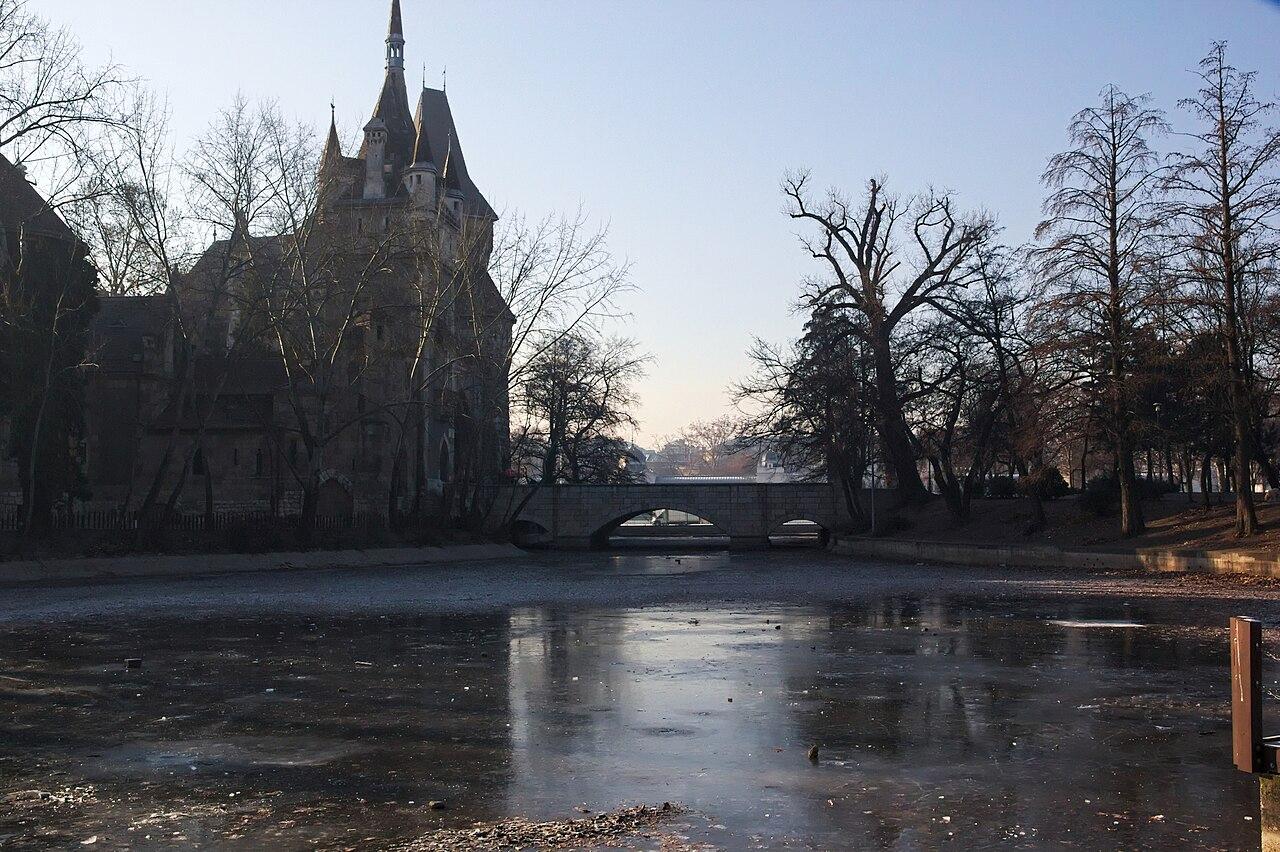
We head off the square towards the park, aiming for the low yellow station building of at its edge.
Sources. Story: Budapestcity.org and the Révai nagy lexikona for surface area, pavilions and visitor figures; Magyar Nemzeti Múzeum on the opening day of 2 May 1896; Ujkor.hu on the completion of the Műcsarnok on 4 May 1896 Photos: Map from 1896, public domain, via Wikimedia Commons