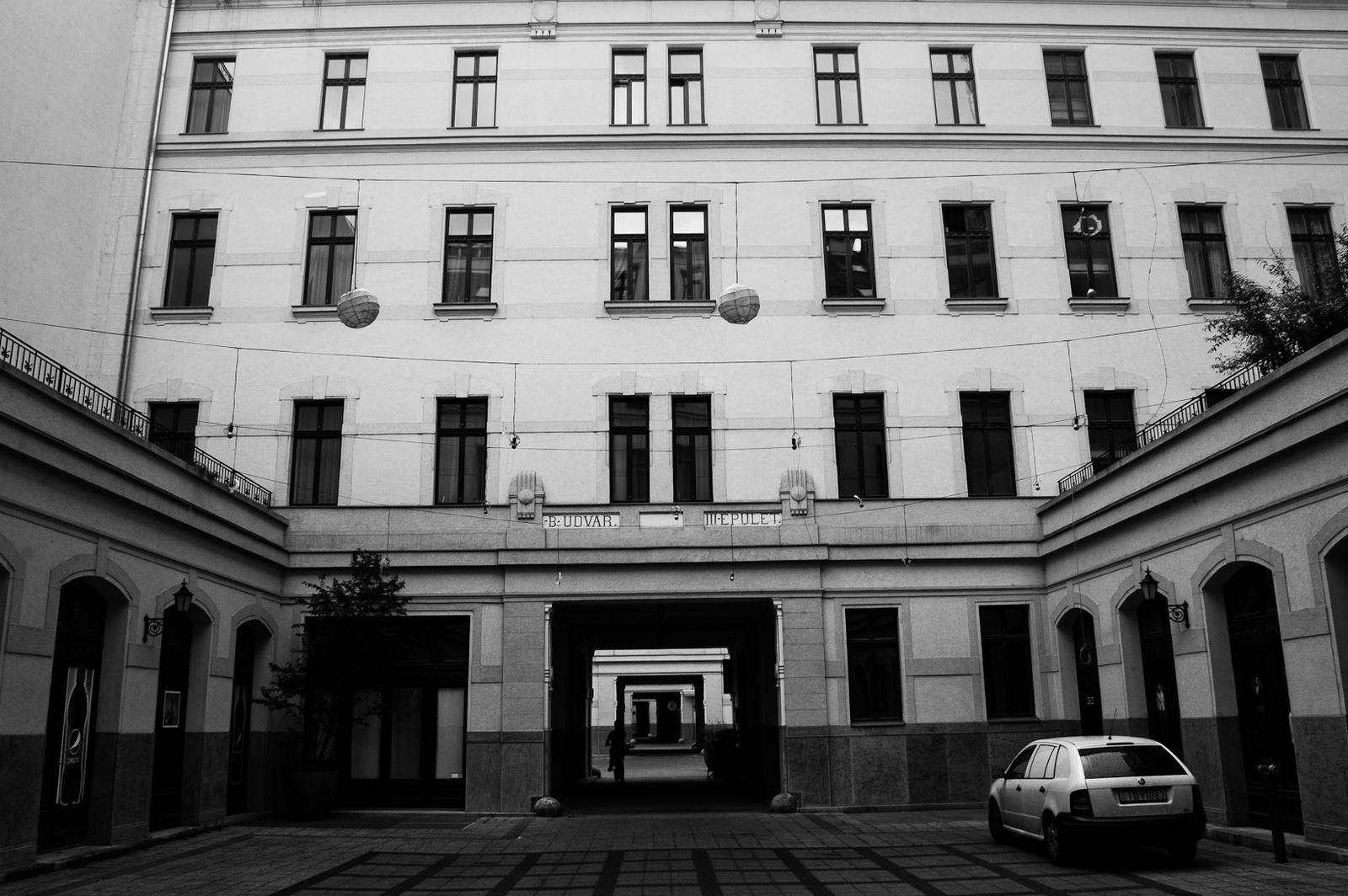
We're heading into a passage now that comes out two hundred metres further on, in a different street. Seven buildings, six courtyards one after another, the longest walk-through building in the city.
The money came from a Romanian lawyer. , known back in his home region as Emanoil Gojdu, built up a legal practice and a fortune in , and when he died in 1870 he left it all to a foundation for . From those earnings the foundation put up this complex starting in 1900, designed by , right in the middle of the Jewish quarter.
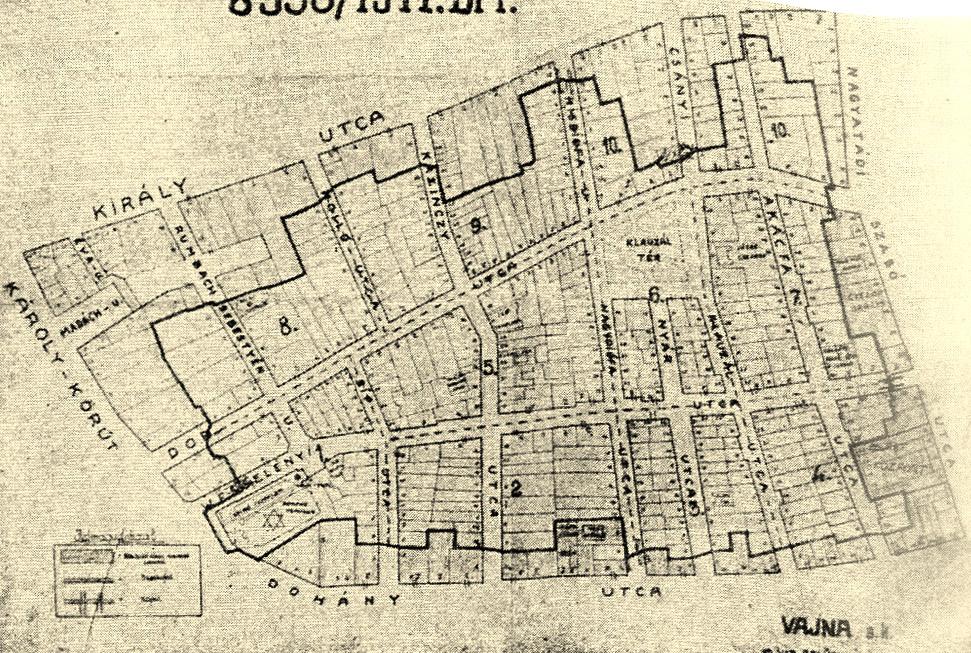
The courtyards held workshops and shops, textiles and jewellers. In the winter of 1944 all seven buildings fell inside the whose edge you just saw.
In 1952 the state took over the whole block, something Budapest and Bucharest confirmed in a treaty a year later. Only in 1999 did it pass to private investors, and after a renovation that took six years it became the busiest nightlife spot in the quarter. We carry on to Kazinczy utca.
Sources. Story: Humen Online and We Love Budapest, on the building history and the original function of the complex; Városvédő Egyesület (dr. Horváth Péterné), on Gozsdu Manó, the foundation and the nationalisation of 1952. Photos: Passage: torobala, CC BY-SA 2.5 HU, via Wikimedia Commons. Portrait: unknown photographer, circa 1865, public domain, via Wikimedia Commons.