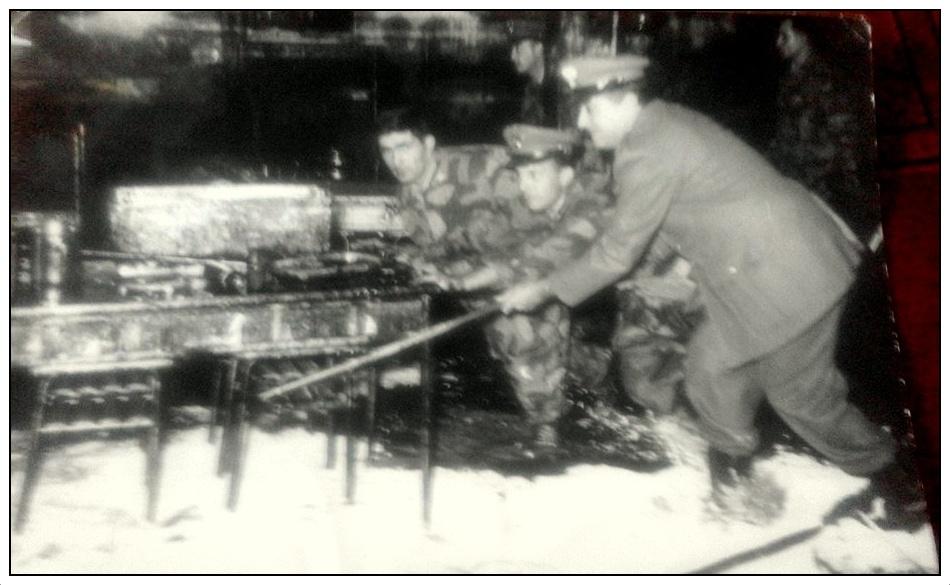
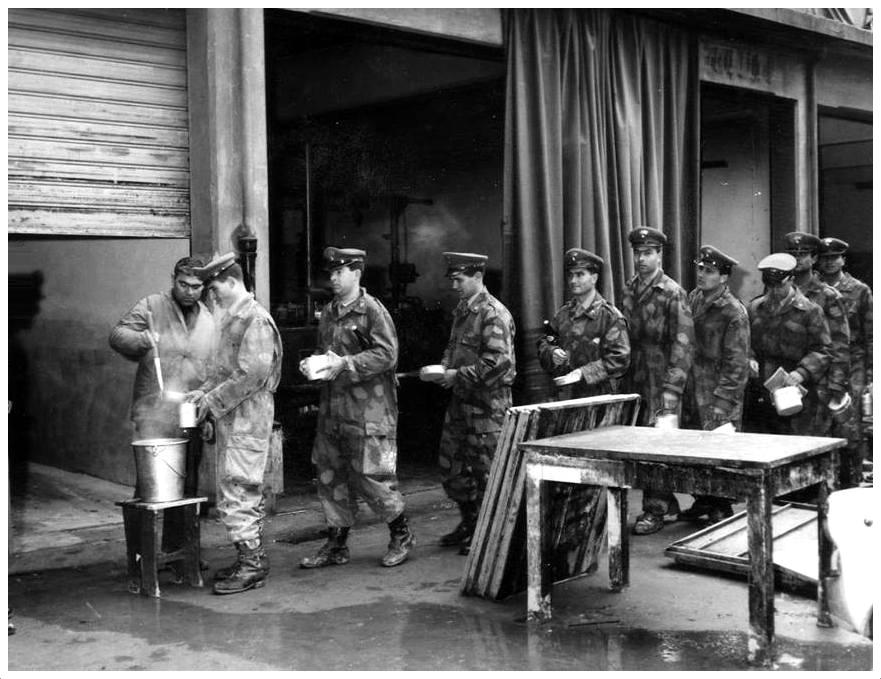
What made this flood so destructive was sitting in the cellars beneath your feet. Florence had switched en masse to central heating during the 1960s, and almost every building had a tank of heating oil down in its basement.
When the water broke in, those tanks floated loose and split open. The oil settled on top of the water and soaked into everything it touched: walls, furniture, book bindings, paint, and the panels of paintings that hung at eye level in the churches. That's why everything looks black in the photos from those days, and why the stench lingered in the streets for months afterwards.
For the restorers, that oil made the work far more complicated than mud alone. Paper and wood saturated with oil are hard to dry and even harder to clean, and in the methods for doing it simply didn't exist yet.
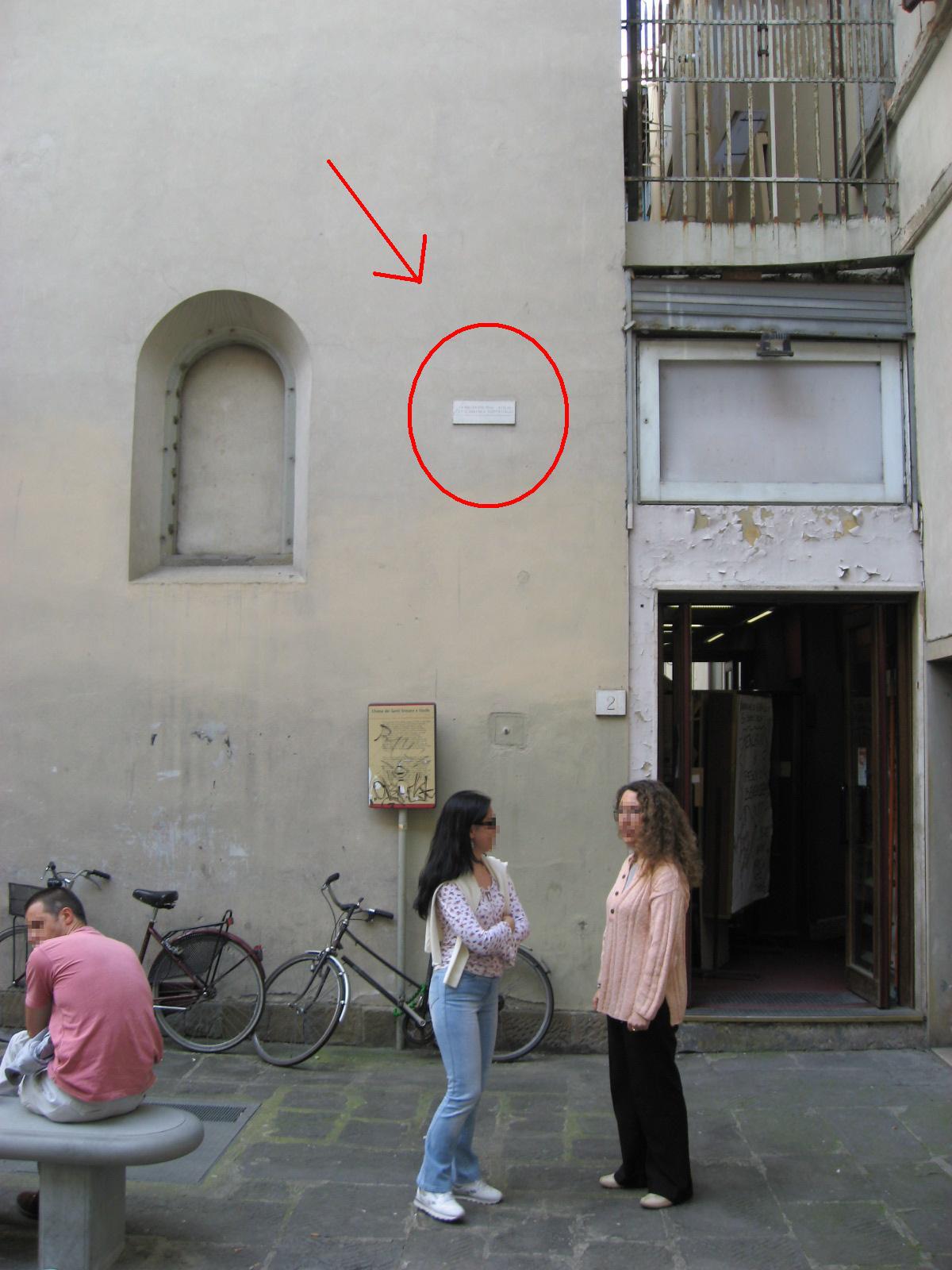
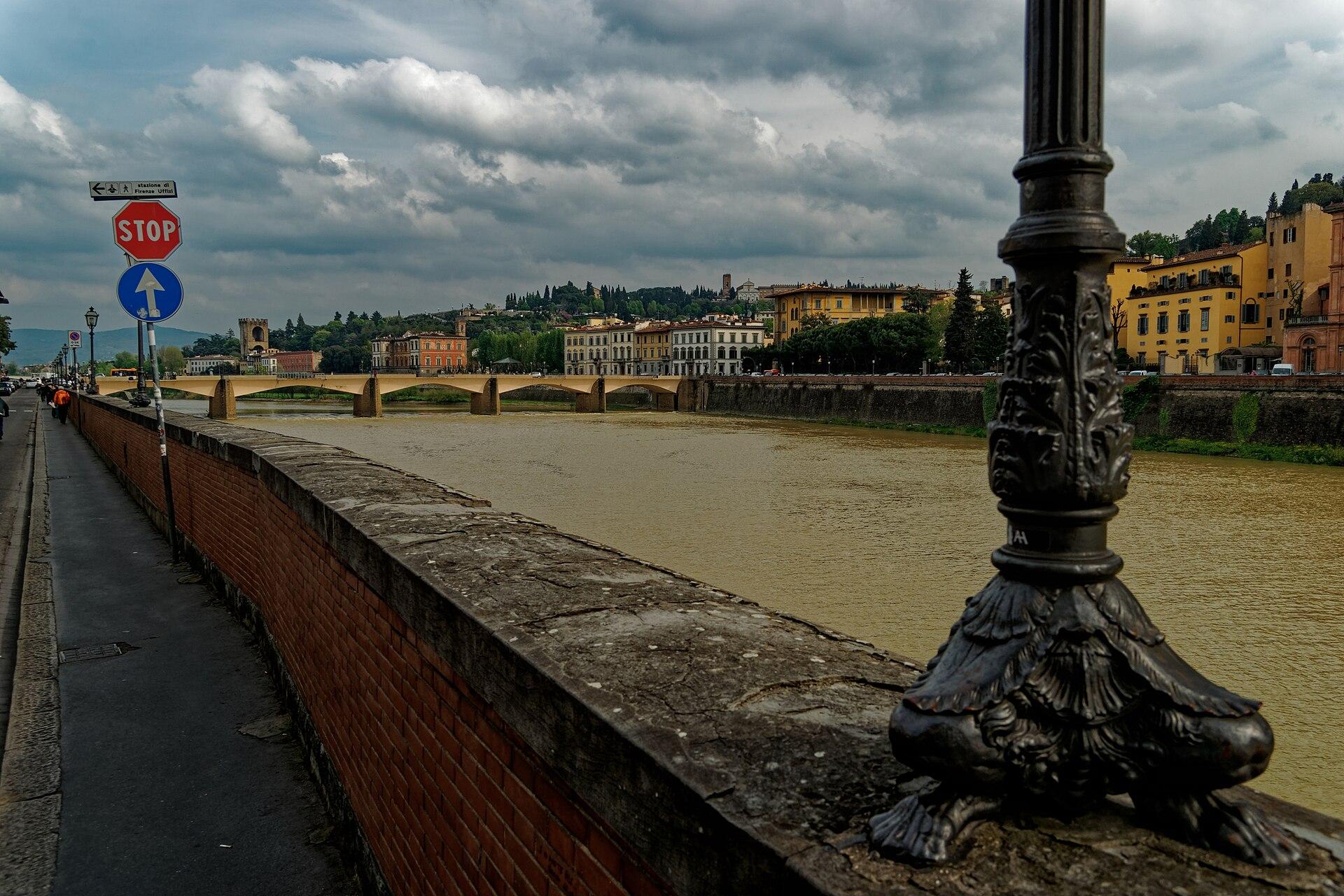
This street runs down to , and along the embankment to the west you'll find .
Sources. Story: Opificio delle Pietre Dure, Firenze (danni da nafta, restauro dopo il 1966); Comune di Firenze (alluvione del 1966, relazioni sui danni) Photos: Cleanup work in Florence, November 1966, via Wikimedia Commons, public domain