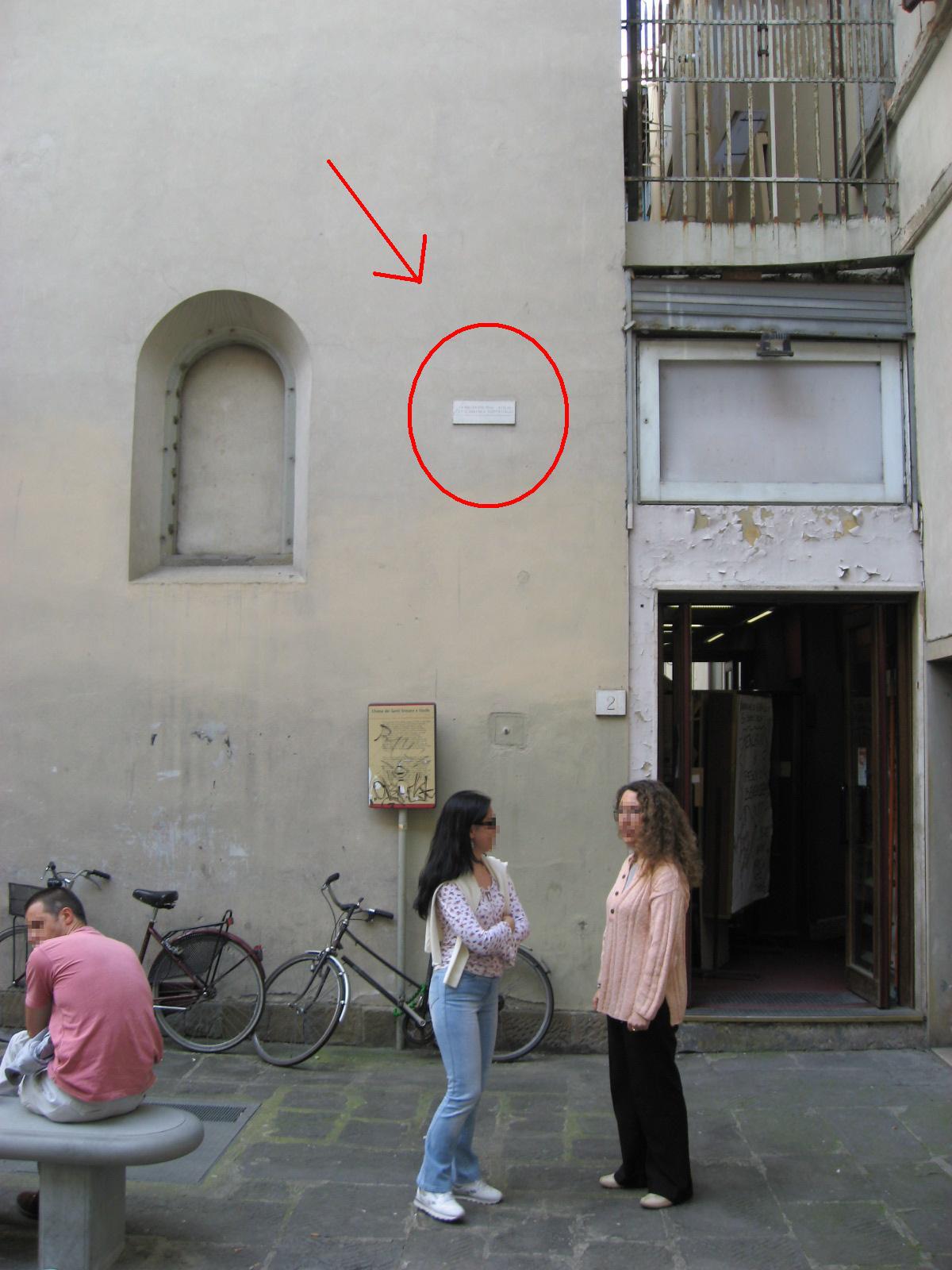
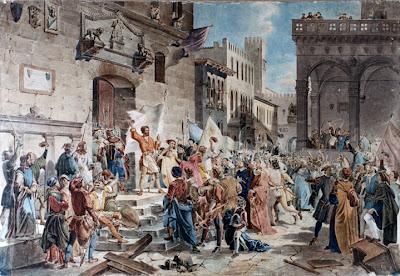
carded wool for a day's wage, and in the summer of 1378 he suddenly found himself running the city.
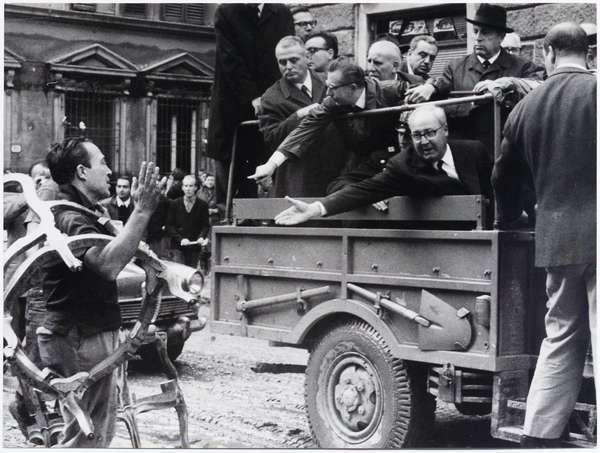
The wool trade that made Florence wealthy ran on people who belonged to no . They lived on this side of the river because this was where the water and the stench were, and they had no say over their own pay. In July 1378 they occupied the , demanded a guild of their own, and proclaimed Di Lando their , the figure at the head of the city government.
Their rule lasted a few weeks before the established guilds struck back, and within four years every gain had been undone. In San Frediano that summer is still remembered as the moment the neighbourhood governed the city.
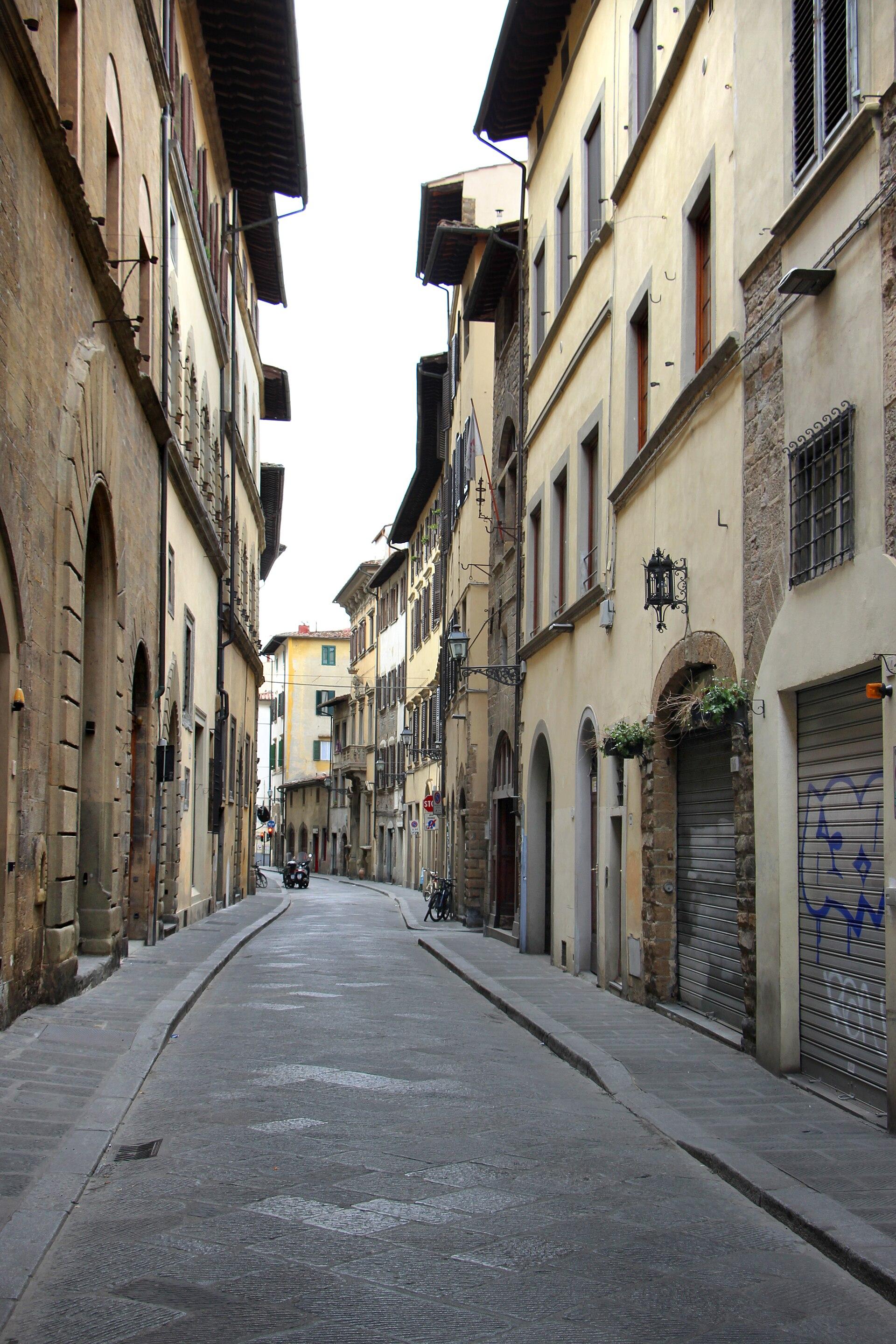
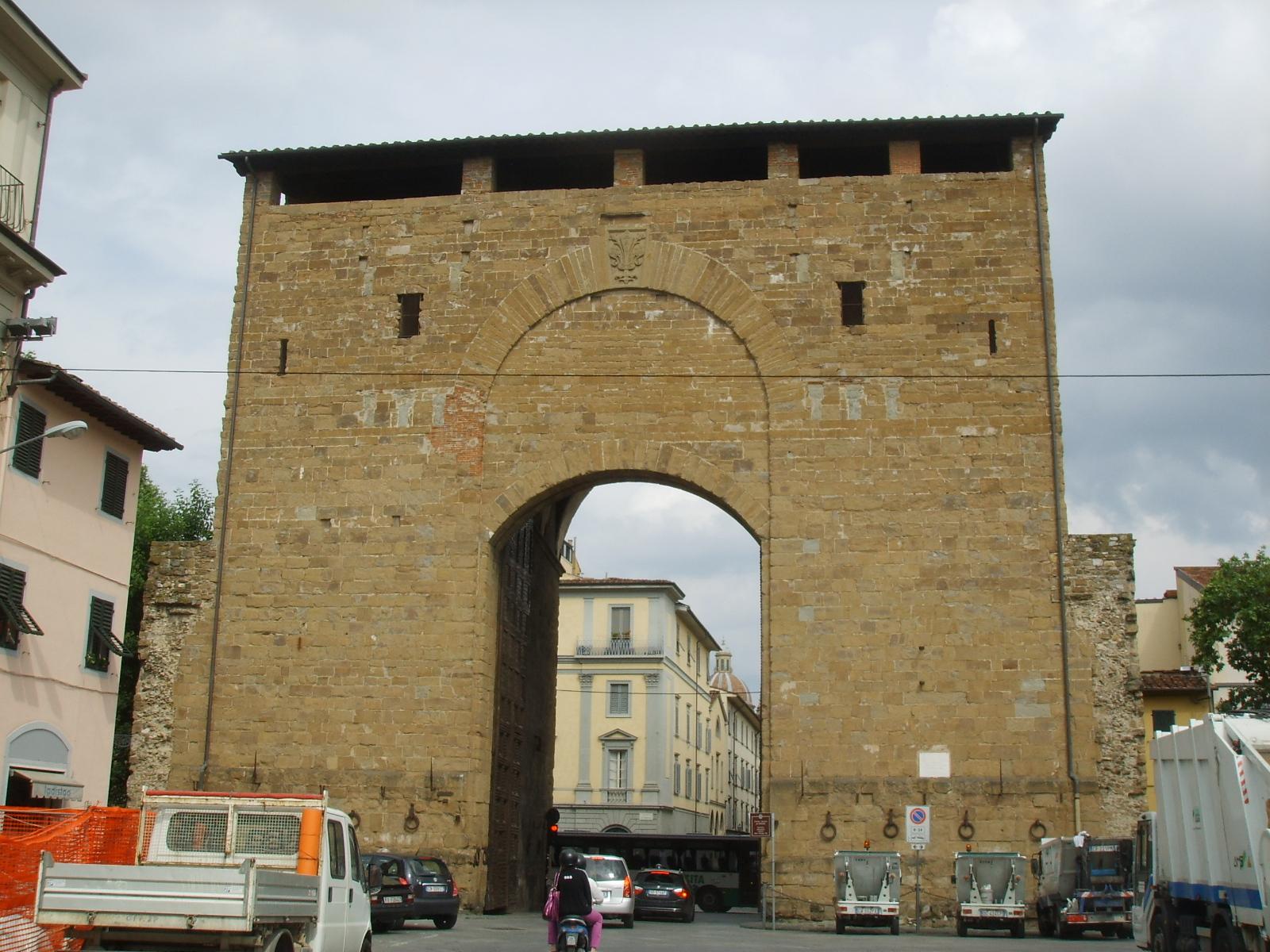
From here Borgo San Frediano runs straight towards the old city gate, which you can already see rising above the rooftops in the distance.
Sources. Story: Treccani (tumulto dei Ciompi, Michele di Lando); Comune di Firenze (San Frediano, storia del quartiere) Photos: Giuseppe Lorenzo Gatteri, Il tumulto dei Ciompi, Civici Musei di Storia ed Arte Trieste, via Wikimedia Commons, public domain