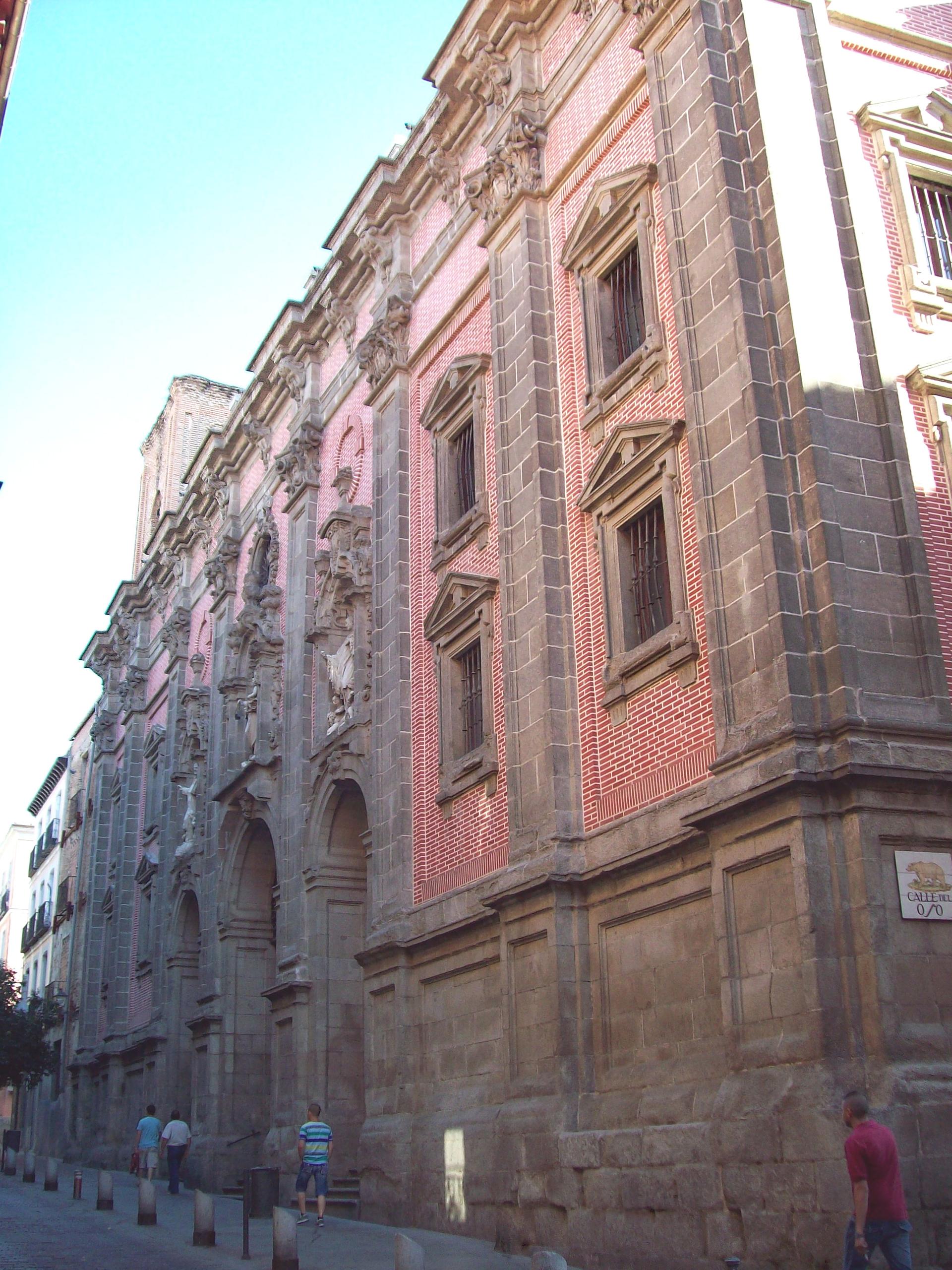
The church front on Calle de Embajadores, with its rippling lines and heavy half columns, is credited to , which makes it one of the few pieces of Madrid baroque in this neighbourhood that have made it all the way to today.
The word is named after that family, and it stands for baroque that has let go of all restraint, with ornament that grows over the structure until the building itself almost disappears. Here on this facade it is toned down, because the church went up in fits and starts and several architects left their mark on it, among them , who you come across on our walk about over by the city museum.
In 1936 the church went up in flames and only this front stayed standing, after which the interior was rebuilt in the years that followed. So what you see is a genuine eighteenth century facade in front of a twentieth century interior.
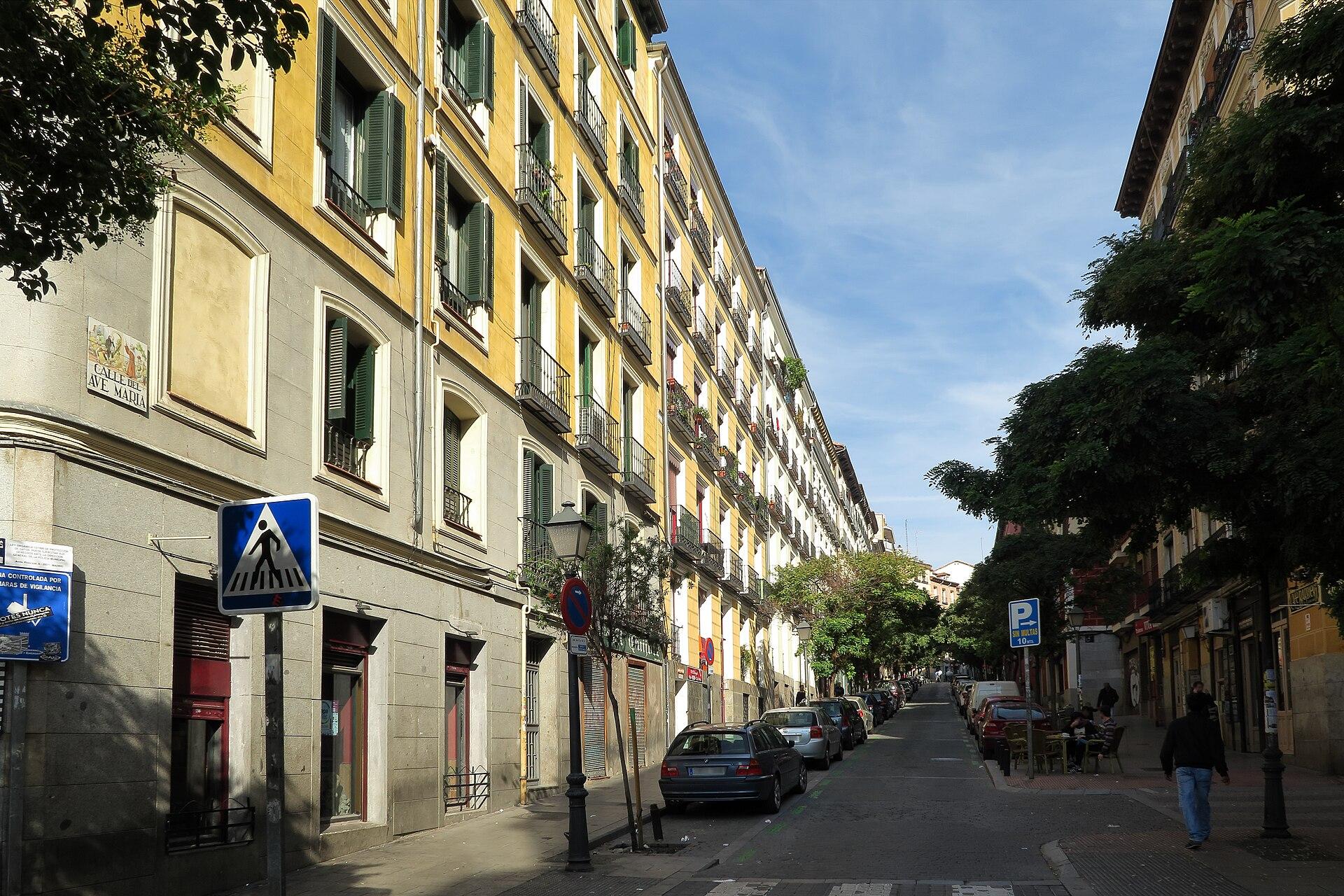
From the church we take Calle del Oso east as far as Calle de Mesón de Paredes, and there we turn left until we reach Calle del Ave María.
Sources. Story: Hispanopedia, Iglesia de San Cayetano (Madrid); Ayuntamiento de Madrid, esMadrid; Real Academia de la Historia, Diccionario Biográfico, entry José Benito de Churriguera. Photos: Photo of the Iglesia de San Cayetano: Luis García, CC BY-SA 3.0 via Wikimedia Commons.