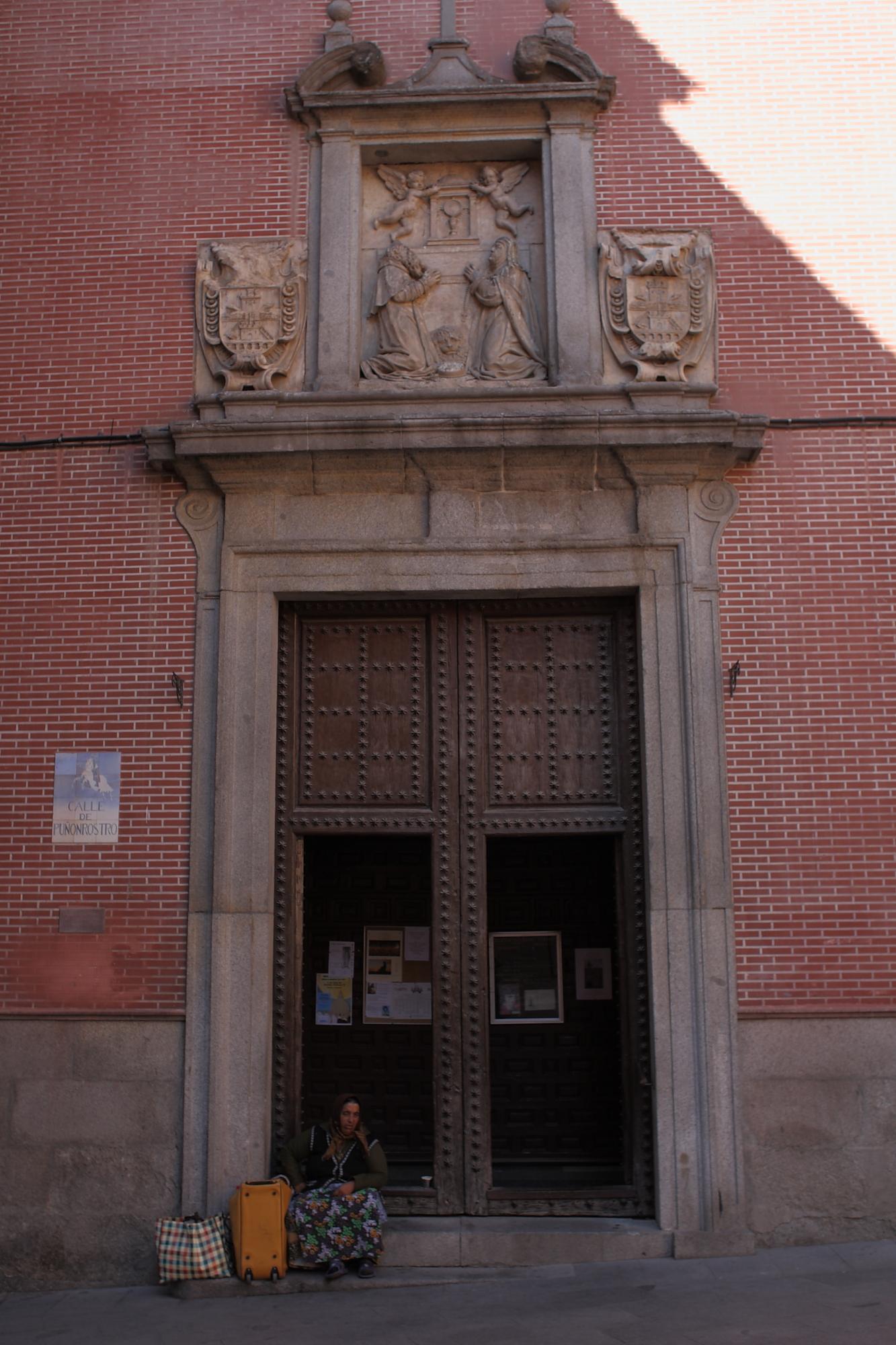
At the door of this convent, where sisters have lived for almost four centuries shielded from everyone outside, the walk runs out.
This is the Convento del Corpus Christi, which everyone in Madrid calls las Carboneras, after a painting of the Virgin that was said to have been found on a sack of coal. It is an , which means the community leaves the outside world to itself, and to earn a living the sisters bake and sell biscuits.
They do it through a torno, a wooden revolving hatch set into the wall. You ring the bell, say what you want, place the money on the hatch, and it turns away and comes back with a box, handed over by hands that stay behind the wall. A conversation with a voice behind a wall, and that is all.
So the walk closes exactly as it began, because from the eight cells in the court prison to this revolving hatch it is always about who a city keeps inside and who it shuts out, and how little of that stays visible from the street.
A hundred metres to the north lies the , where the great ceremonies you heard about at the pillory were staged, and where our walk past the icons of Madrid passes through. The Plaza de la Provincia, where you started, lies four hundred metres to the east along the Calle Mayor.
Sources. Story: Hispanopedia, Convento del Corpus Christi (Madrid); Ayuntamiento de Madrid, esMadrid, Convento de las Carboneras. Photos: Photo of the Convento del Corpus Christi: Sanva1959, CC BY-SA 4.0 via Wikimedia Commons.