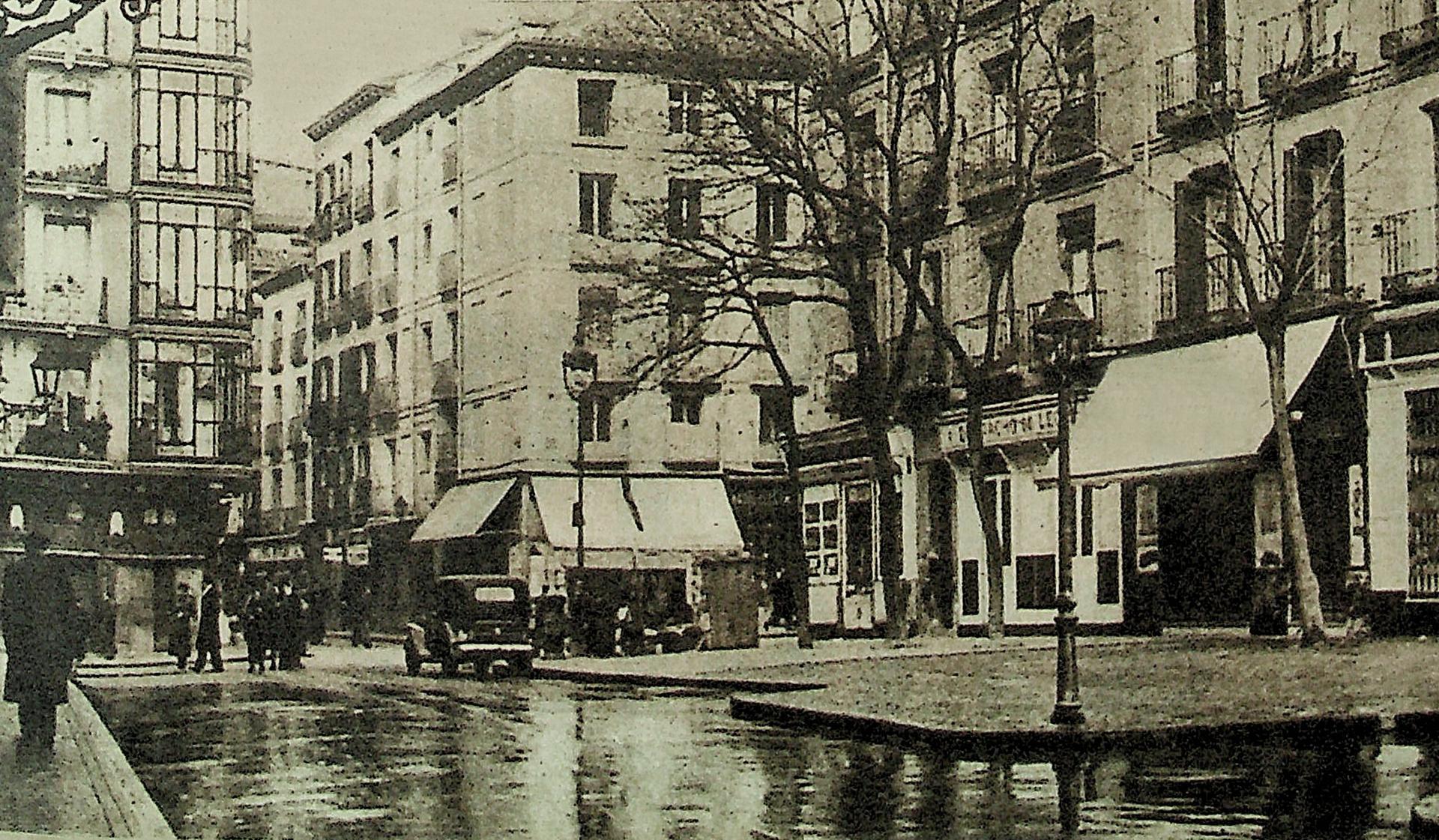
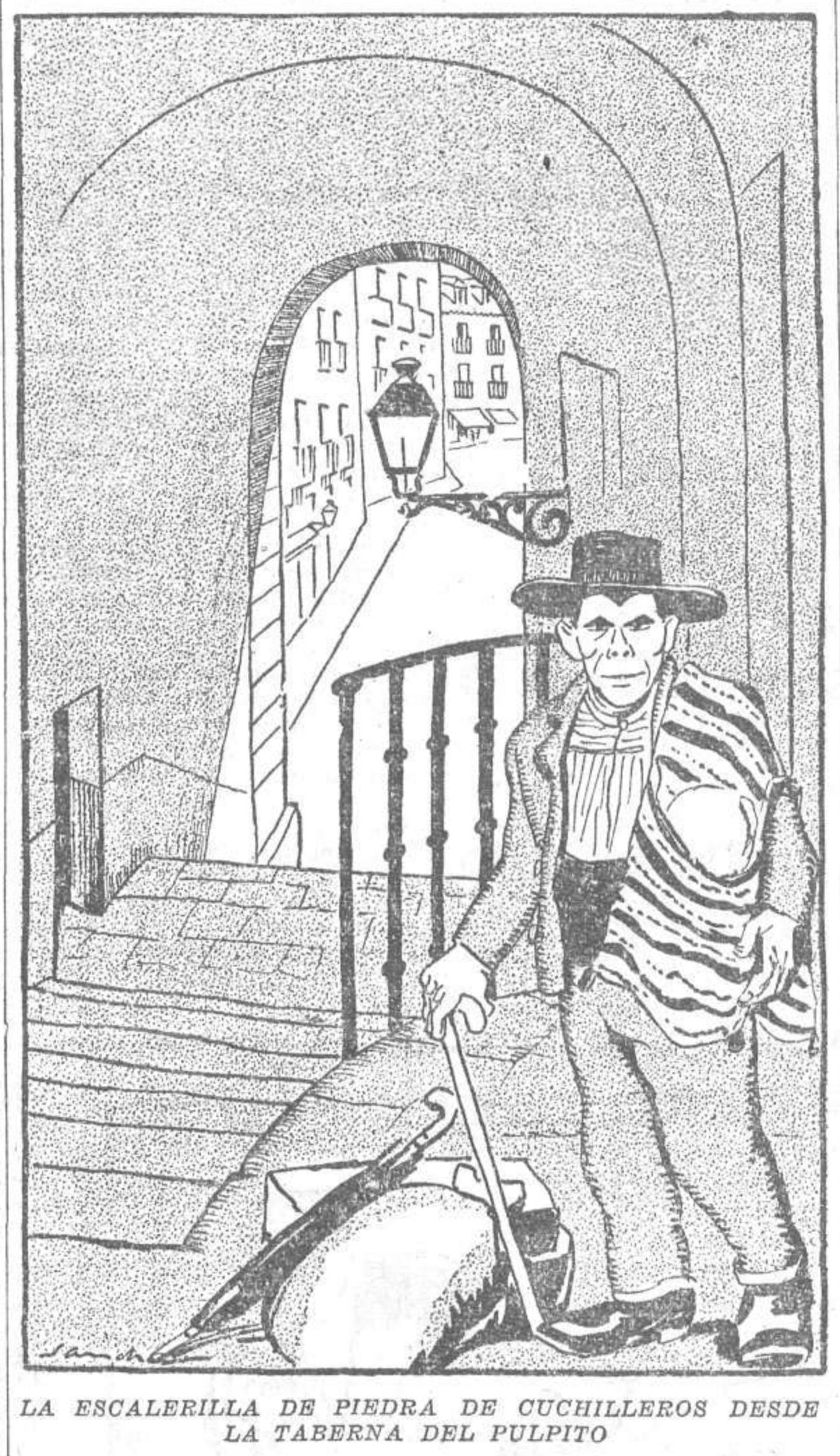
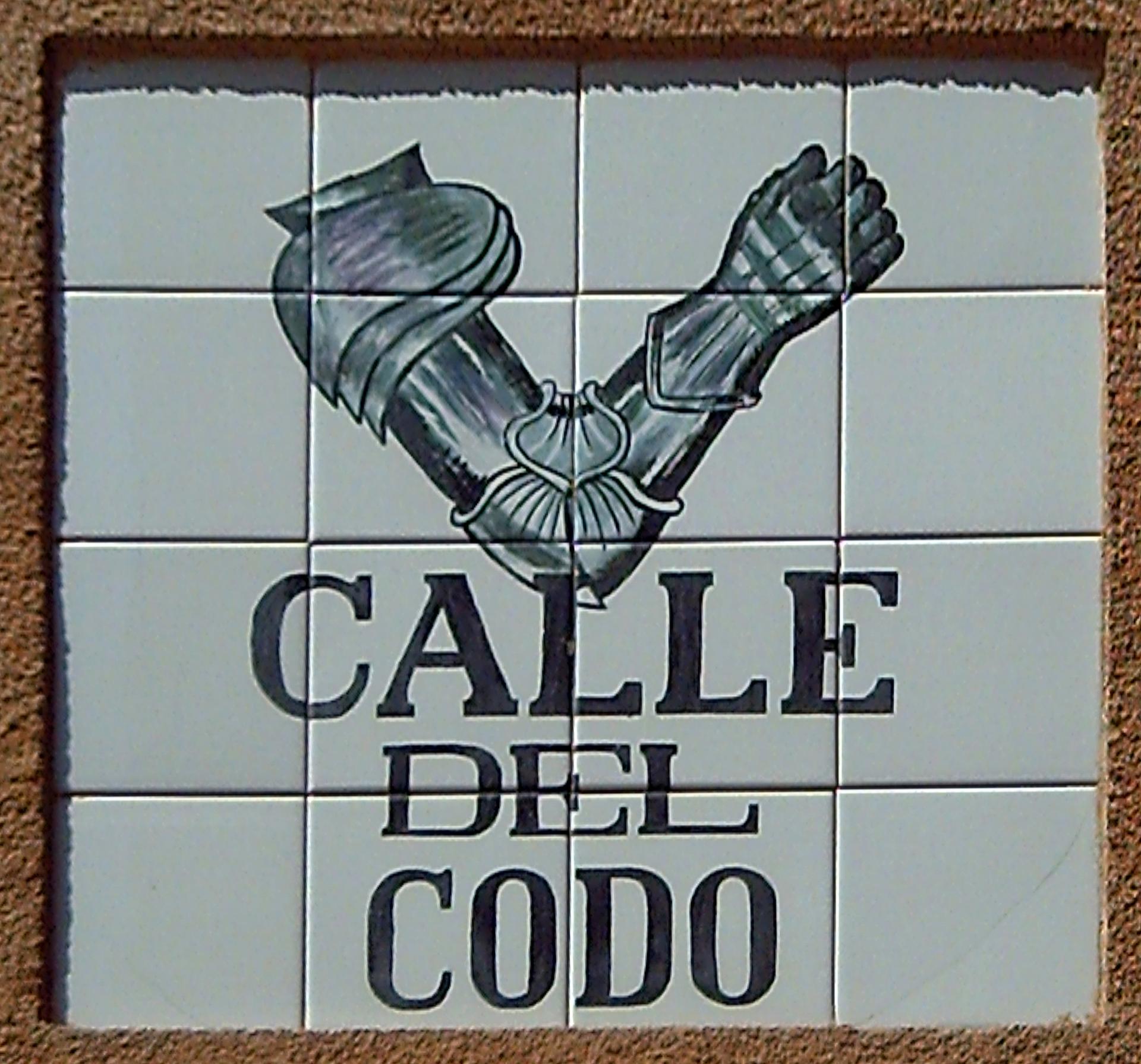
The bend you're standing in is called the Calle del Codo, the elbow, and it's so narrow and so sharp that two people with their arms stretched out can touch the walls on either side, which tells you exactly what the whole centre looked like before the seventeenth century.
This is a piece of the city's layout that was never straightened out. , in came the broad avenues, the symmetrical squares and the straight sightlines, with the as the clearest example, and everything beyond that was simply left as it was. So the houses here still follow the curves that carts and mules wore into the ground centuries ago.
In a city without lighting, narrow streets like this one were also exactly where you'd rather not find yourself after dark, which is the same reason the gate at the start of this walk was shut for the night.
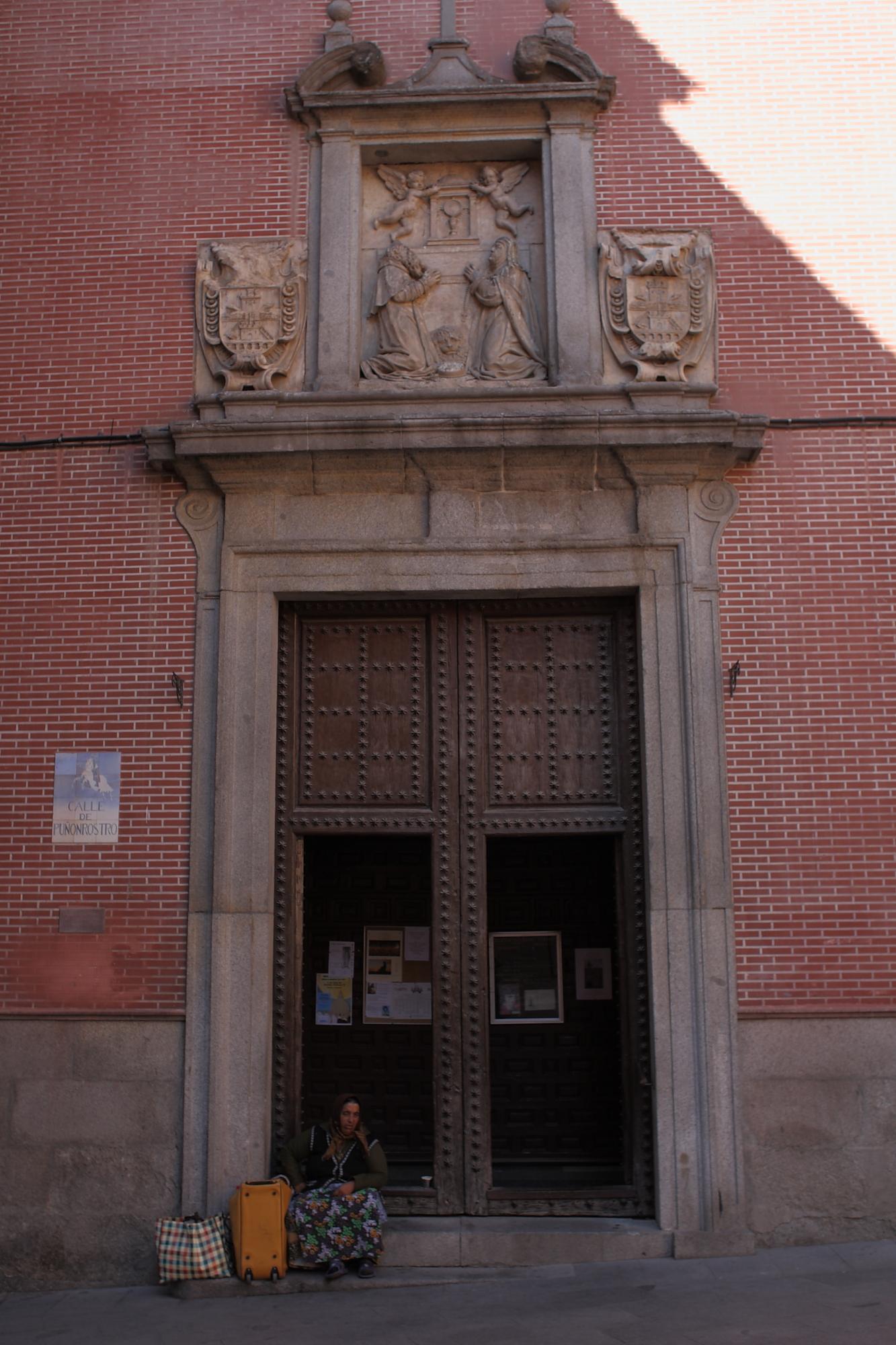
We follow the bend until we come out at a small square with a convent wall and a closed door.
Sources. Story: Pedro de Répide, Las calles de Madrid, 1921; Hispanopedia, Calle del Codo en Madrid de los Austrias; Ayuntamiento de Madrid, esMadrid. Photos: Photo of the Calle del Codo: Luis García, CC BY-SA 3.0 via Wikimedia Commons.