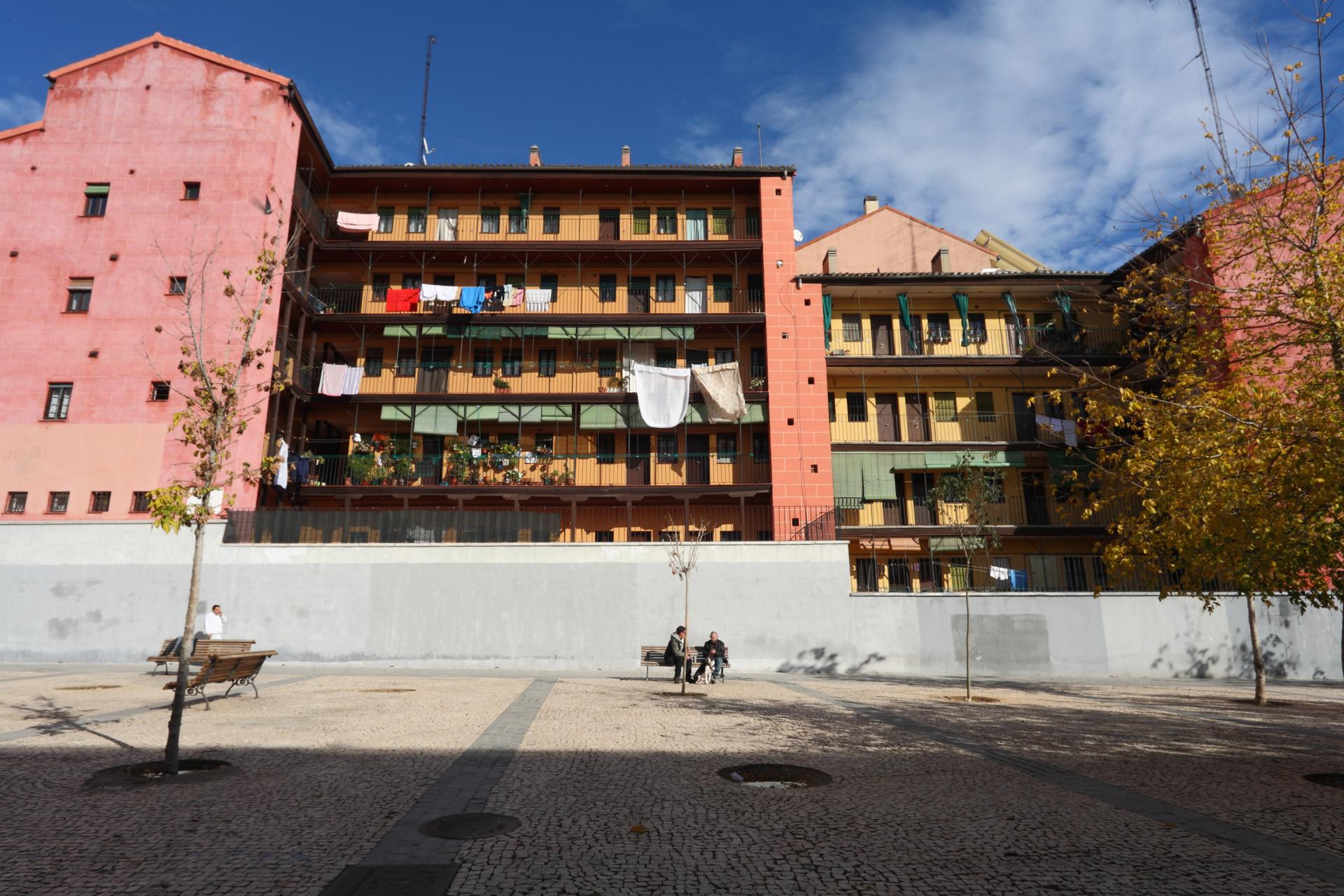
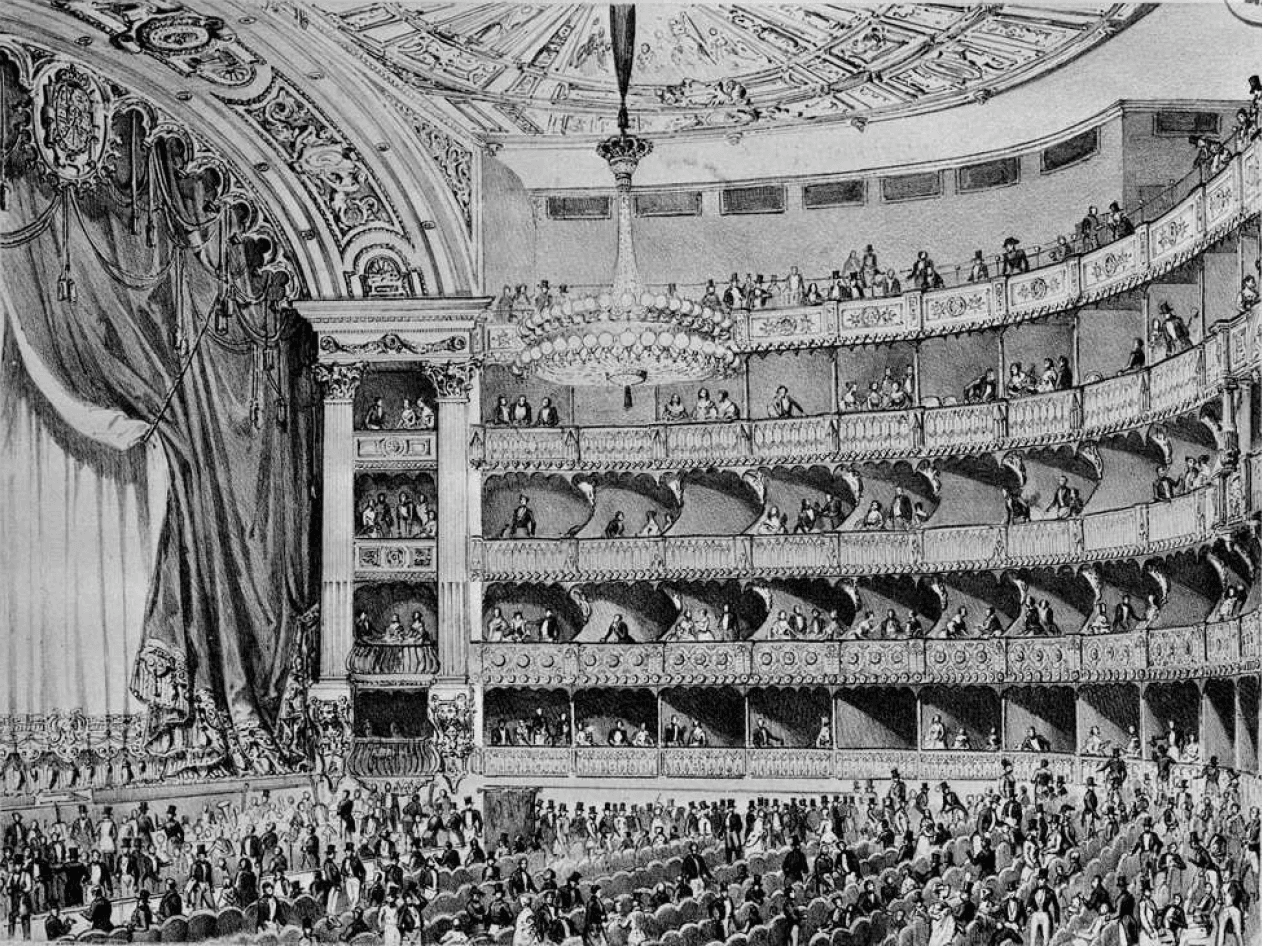
Water runs beneath the opera house you're standing in front of, because the Calle del Arenal takes its name from the sand of a brook that once came down the hill here, and the Teatro Real has stood on that soggy ground since 1850.
That ground has haunted the building ever since. When the metro was dug right alongside the foundations back in the 1920s, cracks began to show in the walls, and in December 1925 a royal decree closed the doors. Then came a silence that lasted more than forty years, because it was only in 1966 that concerts were heard again, and the building did not reopen as an opera house until October 1997, nearly three quarters of a century after that final performance.
We cross the and take the Calle del Arenal. A few hundred metres along, on the left, there's a church with a porch of brick arches.
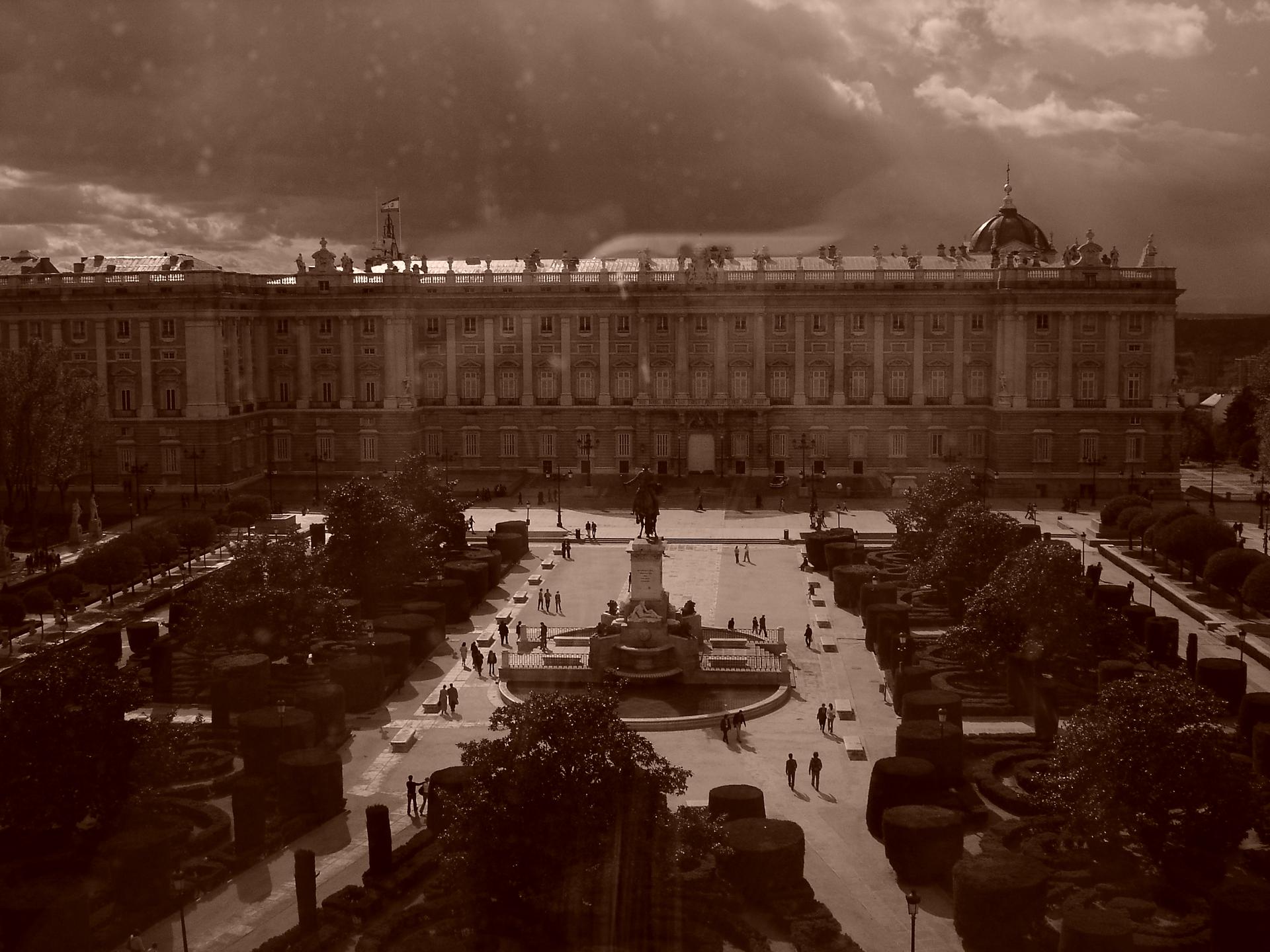
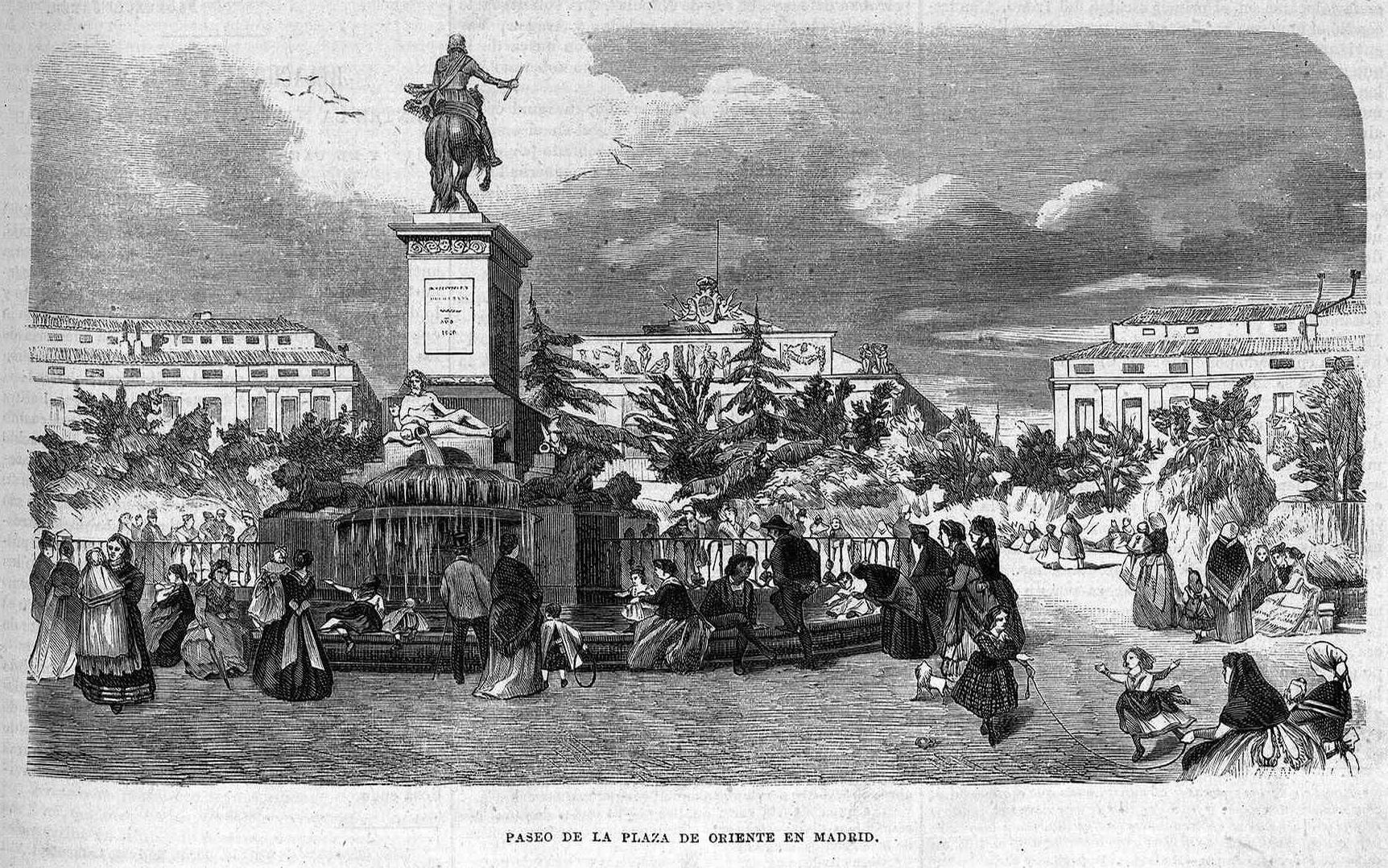
Sources. Story: Teatro Real, Fundación del Teatro Real; Ayuntamiento de Madrid, Memoria de Madrid. Photos: Vicente Urrabieta, interior of the Teatro Real, engraving from 1850, Biblioteca Nacional de España, public domain via Wikimedia Commons. Charles Clifford, the Teatro Real and the Plaza de Oriente, 1853, Biblioteca Nacional de España, public domain via Wikimedia Commons.