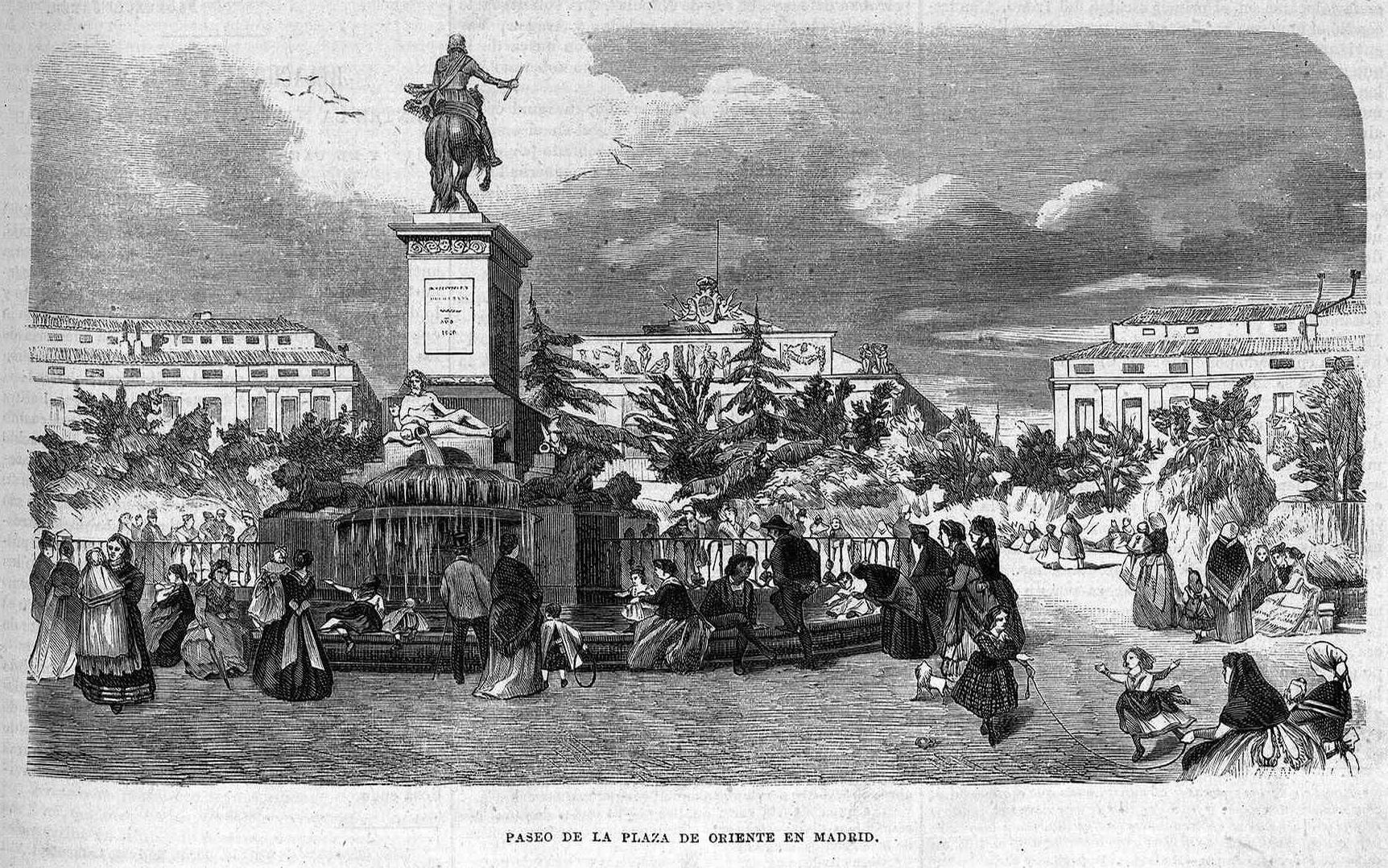
The horse beneath balances on two legs, and in the seventeenth century that was a problem nobody had cracked. The sculptor took on the commission from Florence and got stuck on the weight, after which, as the story goes, was asked for advice. The answer lies in how the mass is spread out. The front of the horse is cast hollow, the back solid, so that everything rests on the hind legs and the tail. supplied a painting to work from, since the king was never going to sit for an Italian workshop himself.
All around you the kings of old Spain stand lined up in rows. They were meant for the balustrade of , high above the roofline, and they never got there. The sober explanation is the weight. The nicer one is that the queen dreamed they came crashing down during an earthquake, after which they were quickly moved to the ground.
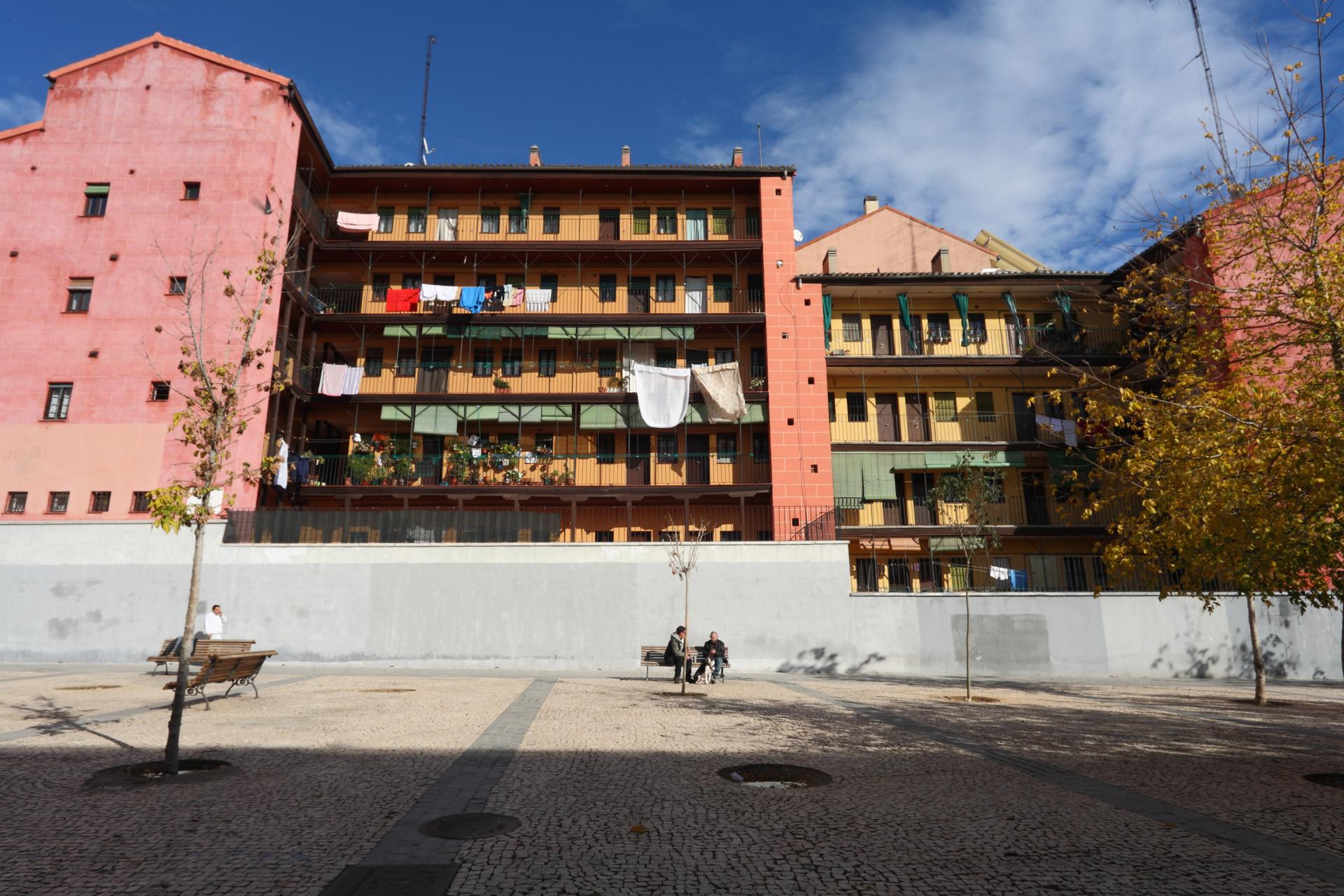
The square itself exists because , Napoleon's brother, had an entire neighbourhood torn down here during his brief reign as king. He did the same in other parts of the city, which earned him the mocking nickname the little squares king. The square wasn't finished until around the middle of the nineteenth century.
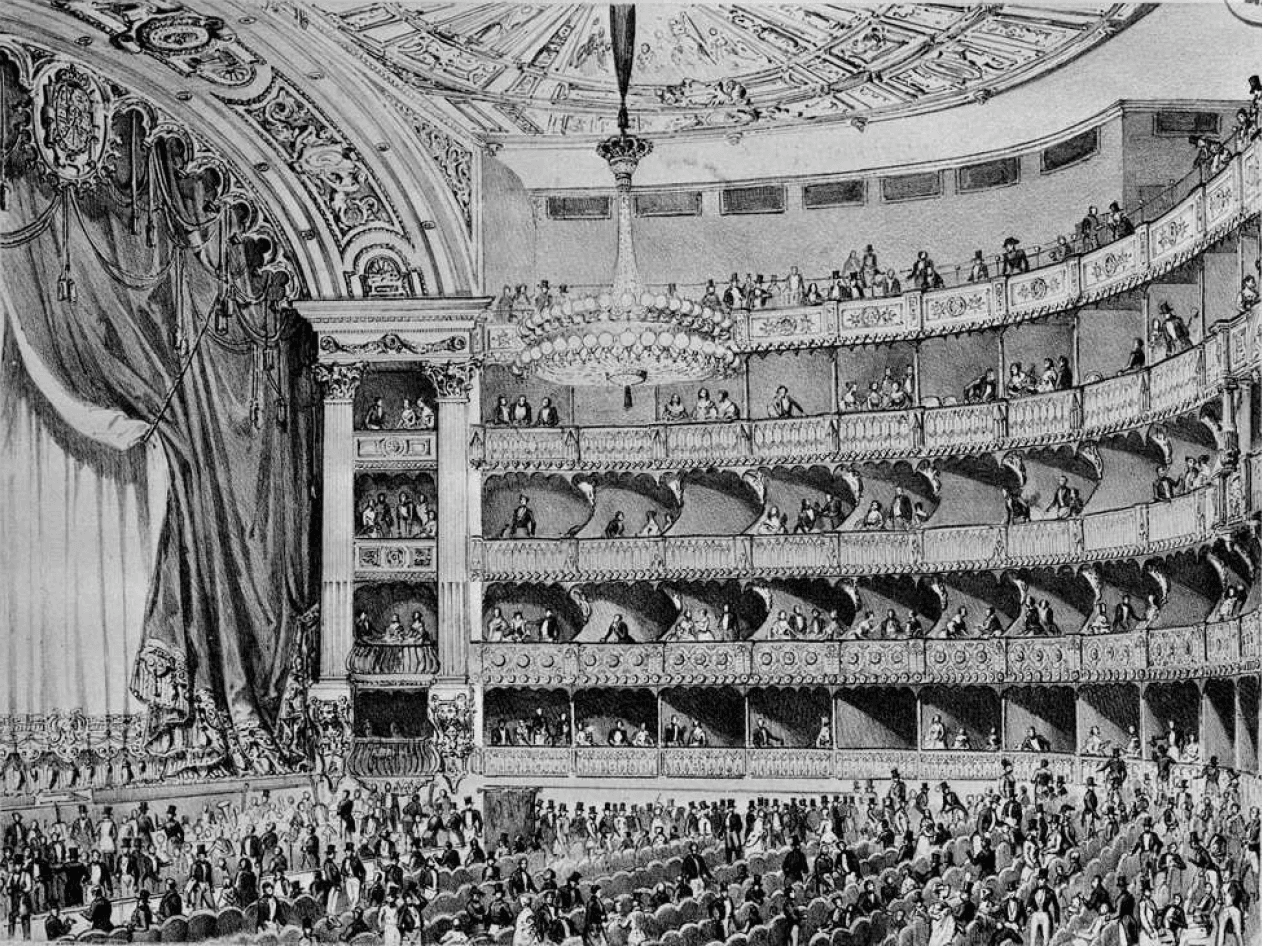
On the far side of the square stands the back of a theatre. We walk around it to the square on the other side, where the main entrance is.
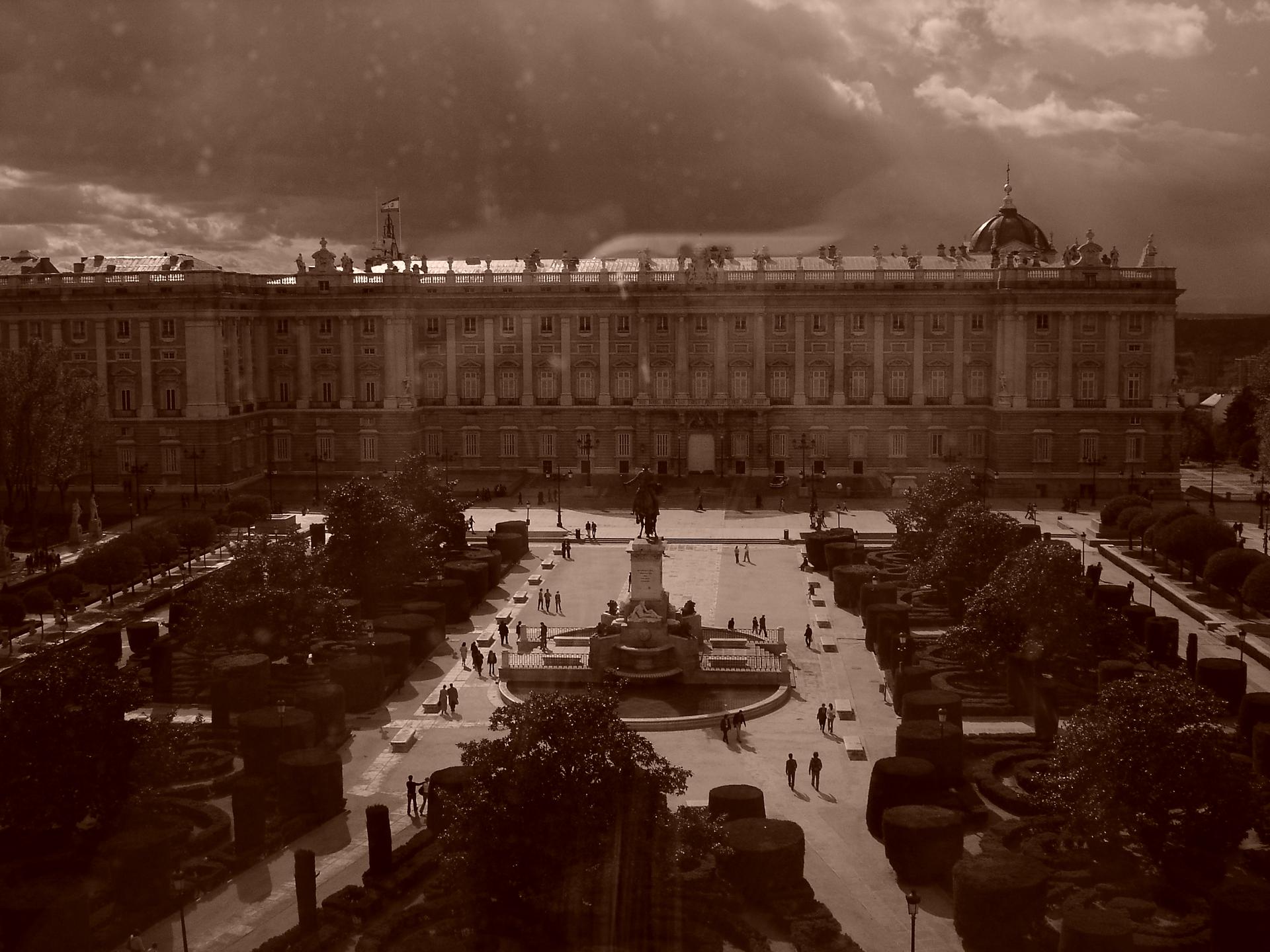
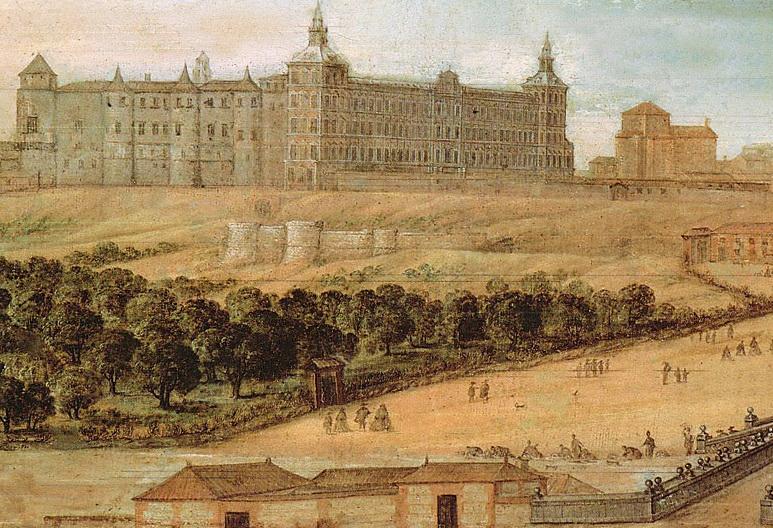
Sources. Story: Patrimonio Nacional; Ayuntamiento de Madrid, Memoria de Madrid. Photos: Francisco Pradilla y Ortiz, Paseo de la Plaza de Oriente en Madrid, in La Ilustración de Madrid of 27 May 1870, public domain via Wikimedia Commons. Photo of the Plaza de Oriente: losmininos, CC BY-SA 2.0 via Wikimedia Commons.