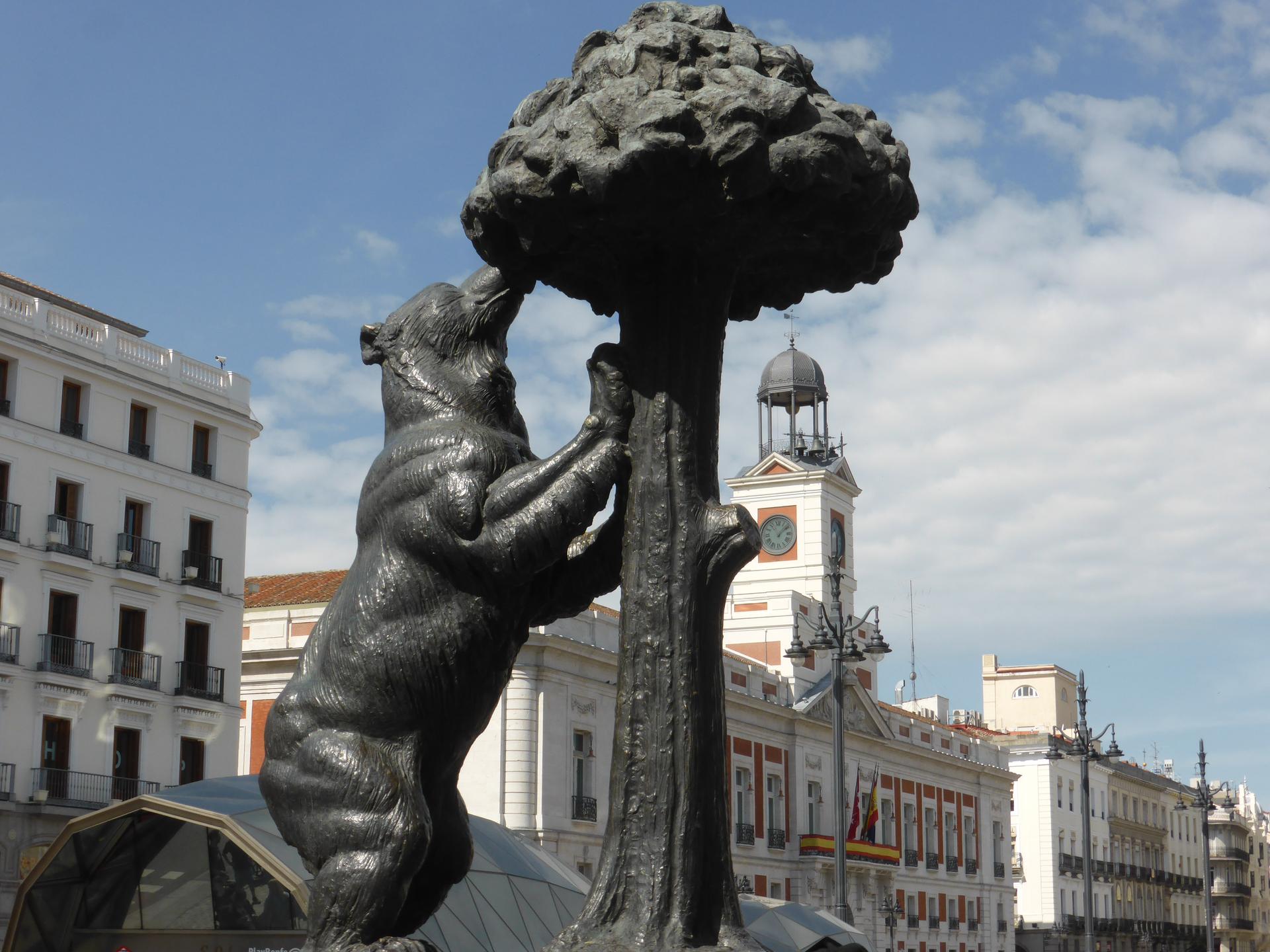
The bronze bear beside you, reaching up against a , owes its place on the city's coat of arms to an argument about a forest. Back in 1222, a ruling settled who could use the land around the city, and the church was given the meadows while the city kept the trees and the hunting rights. The statue itself only went up in 1967.
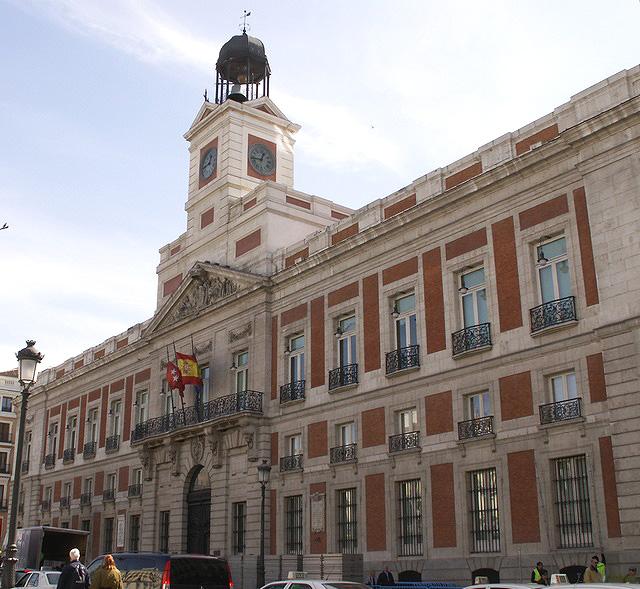
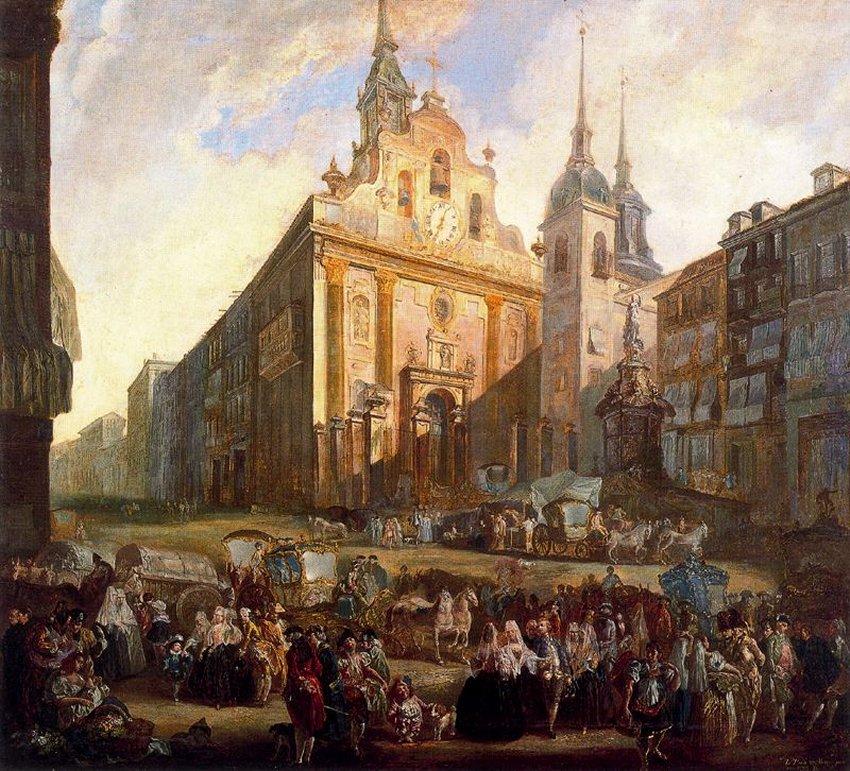
Beneath your feet lies the second symbol of this square, because set into the pavement in front of the , the white building with the clock tower, is kilometre zero, the stone from which all of Spain's national roads are measured.
The clock in that tower brings the entire country to a halt on New Year's Eve. Just before midnight the ball at the top slowly drops, then four quarter-hour chimes ring out, and after that come the twelve strokes of midnight, each one paired with a grape, twelve in all, one for every month of the year ahead. Get through them all in time and you can count on a good year. Tens of thousands gather on the square to do it, while the rest of Spain watches the same clock face on television.
The custom is said to have started in 1909, when a bumper harvest in Alicante made grapes cheap, though it already turns up in newspapers a quarter of a century earlier, as ordinary mocking the wealthy families who saw in the new year with champagne and grapes.
We walk along the Casa de Correos to leave the square and take the Calle Mayor, which in a few minutes brings us to a walled plaza lined with arcades.
Sources. Story: Ayuntamiento de Madrid, Memoria de Madrid, "Escudo de armas de la Villa de Madrid"; Comunidad de Madrid. Photos: Statue of the bear and the strawberry tree, photo via Wikimedia Commons. The Puerta del Sol around 1870, photo by J. Laurent, public domain via Wikimedia Commons.