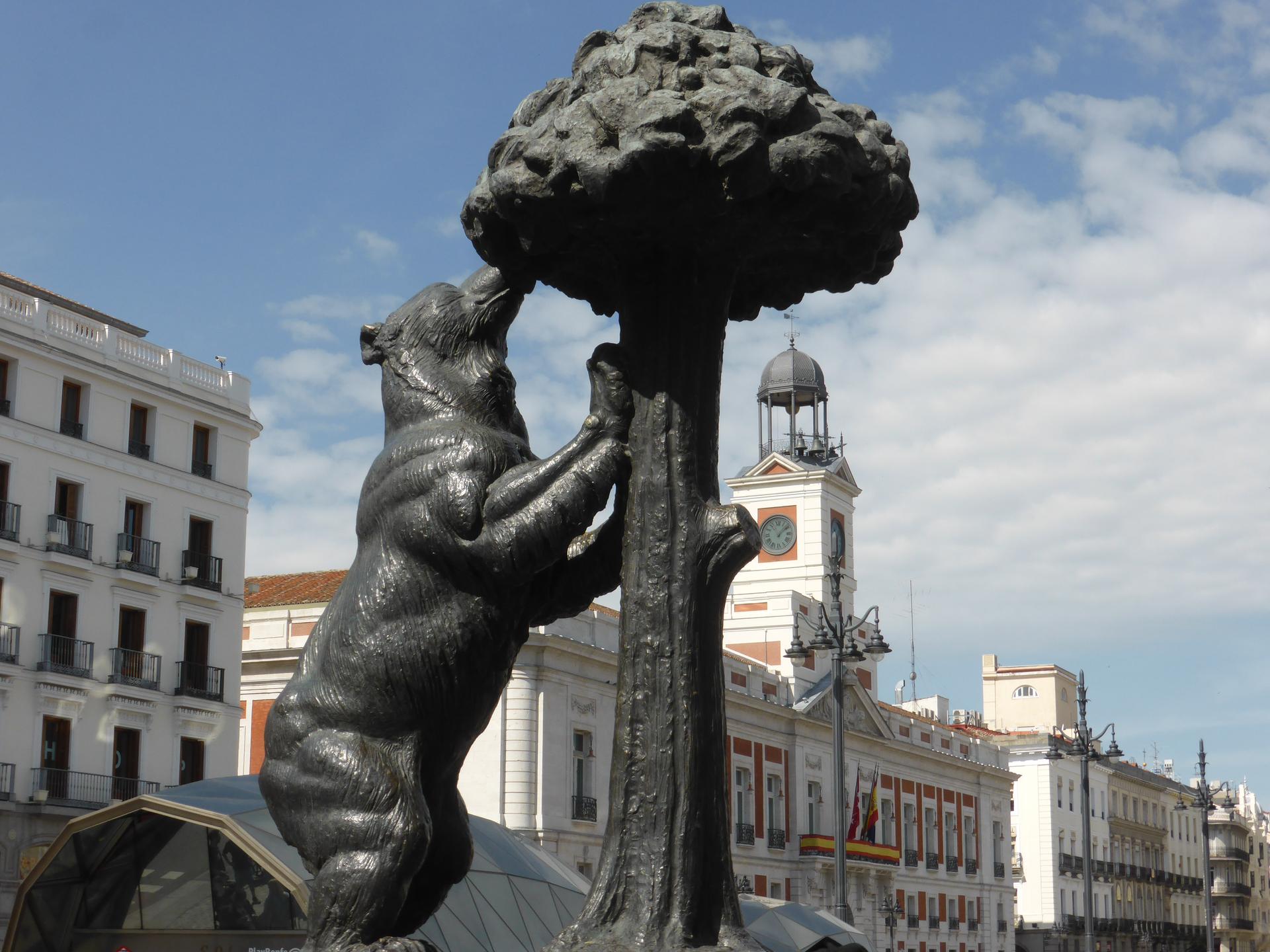
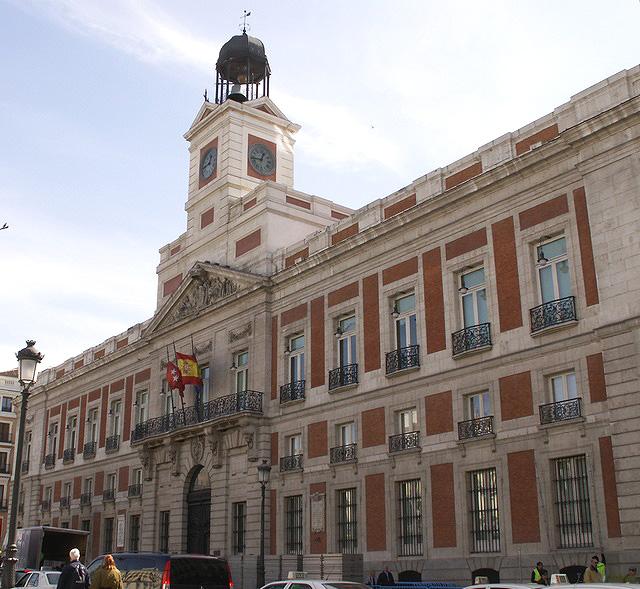
Of everything standing around this square today, this is the only building that was already here. The Real Casa de Correos dates from the second half of the eighteenth century and is the oldest building on the , so this facade watched the cavalry ride in.
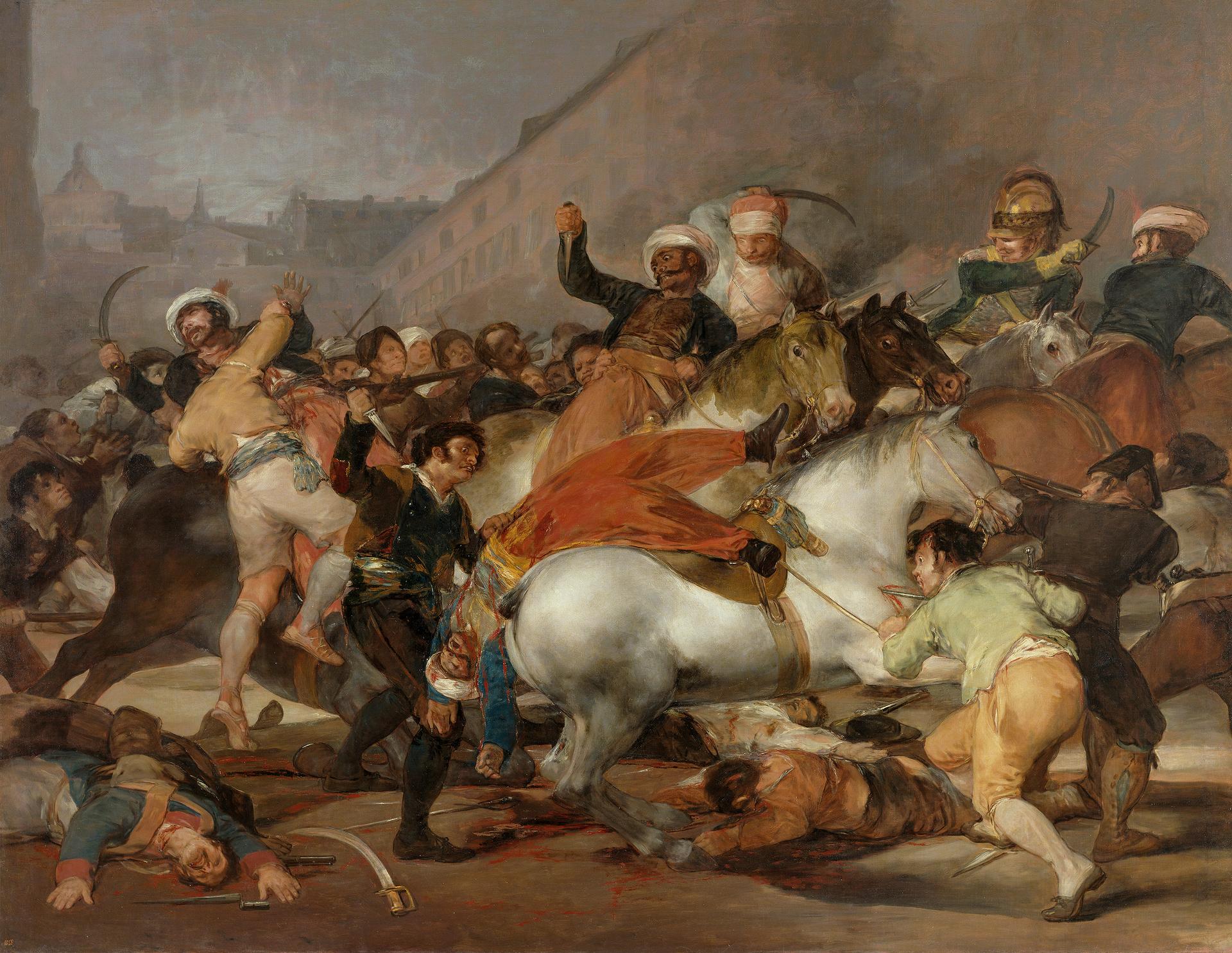
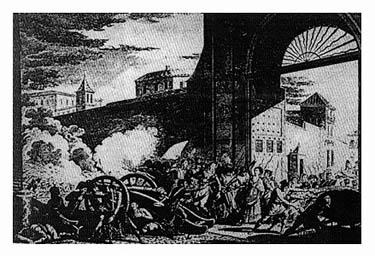
By the middle of that afternoon had been crushed. signed a decree setting up a military commission under , ordering that anyone caught with a weapon in hand would be shot. That same day thirty-two people were executed in the Salón del Prado and eleven others at scattered spots around the city, and the following day another twenty-four were shot on the .
The clock at the top of the tower is the same one that all of Spain watches on television on New Year's Eve. These days the building houses the government of the Madrid region, and set into the pavement in front of it is , which our other walk through Madrid tells you more about.
We take the Calle de la Montera, which climbs away from the north side of the square.
Sources. Story: Hispanopedia, Real Casa de Correos and Levantamiento del 2 de Mayo; Juan Pérez de Guzmán, El dos de Mayo de 1808 en Madrid, 1908. Photos: Photo of the Real Casa de Correos: J.L. de Diego, public domain via Wikimedia Commons.