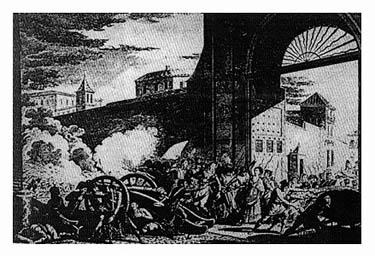
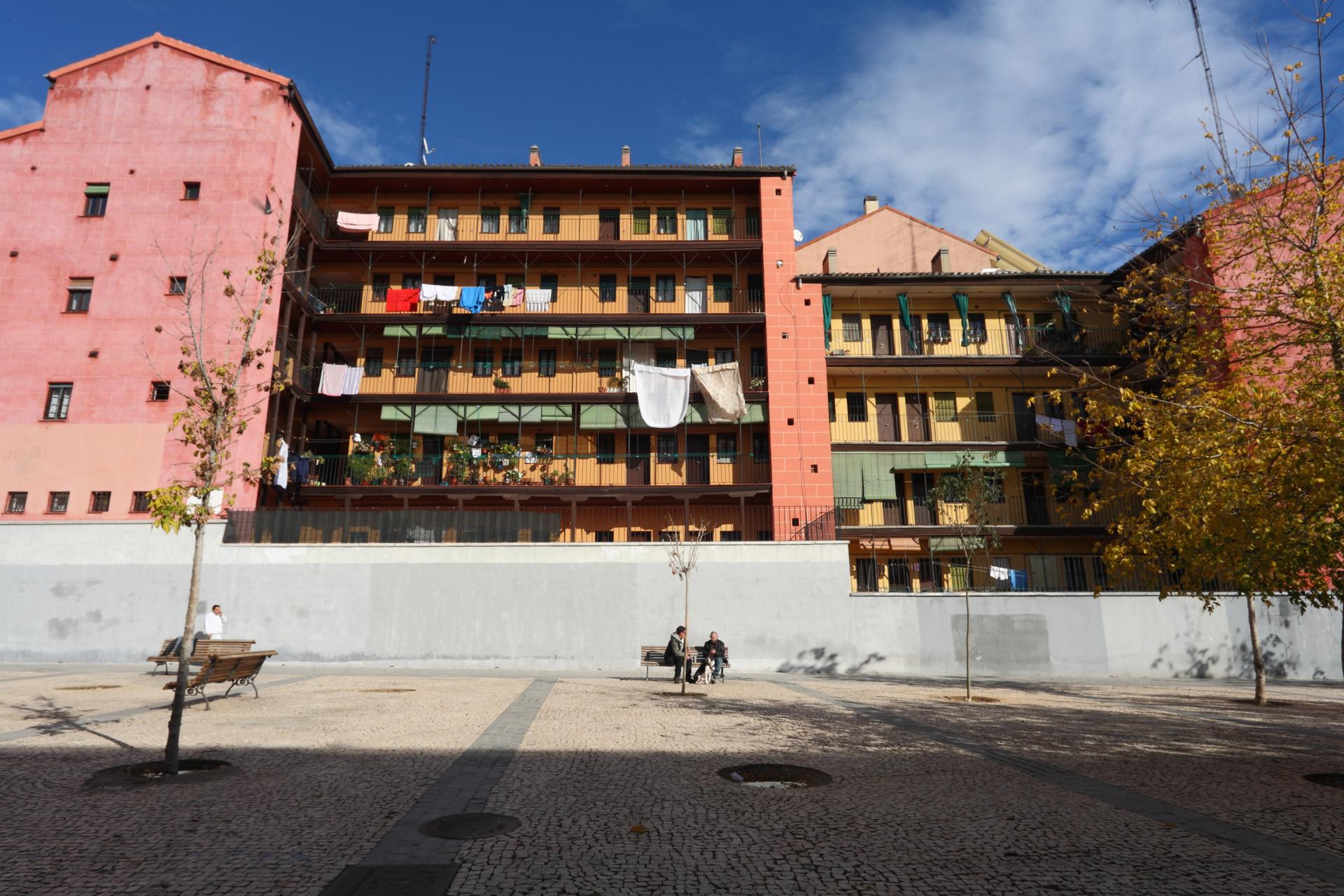
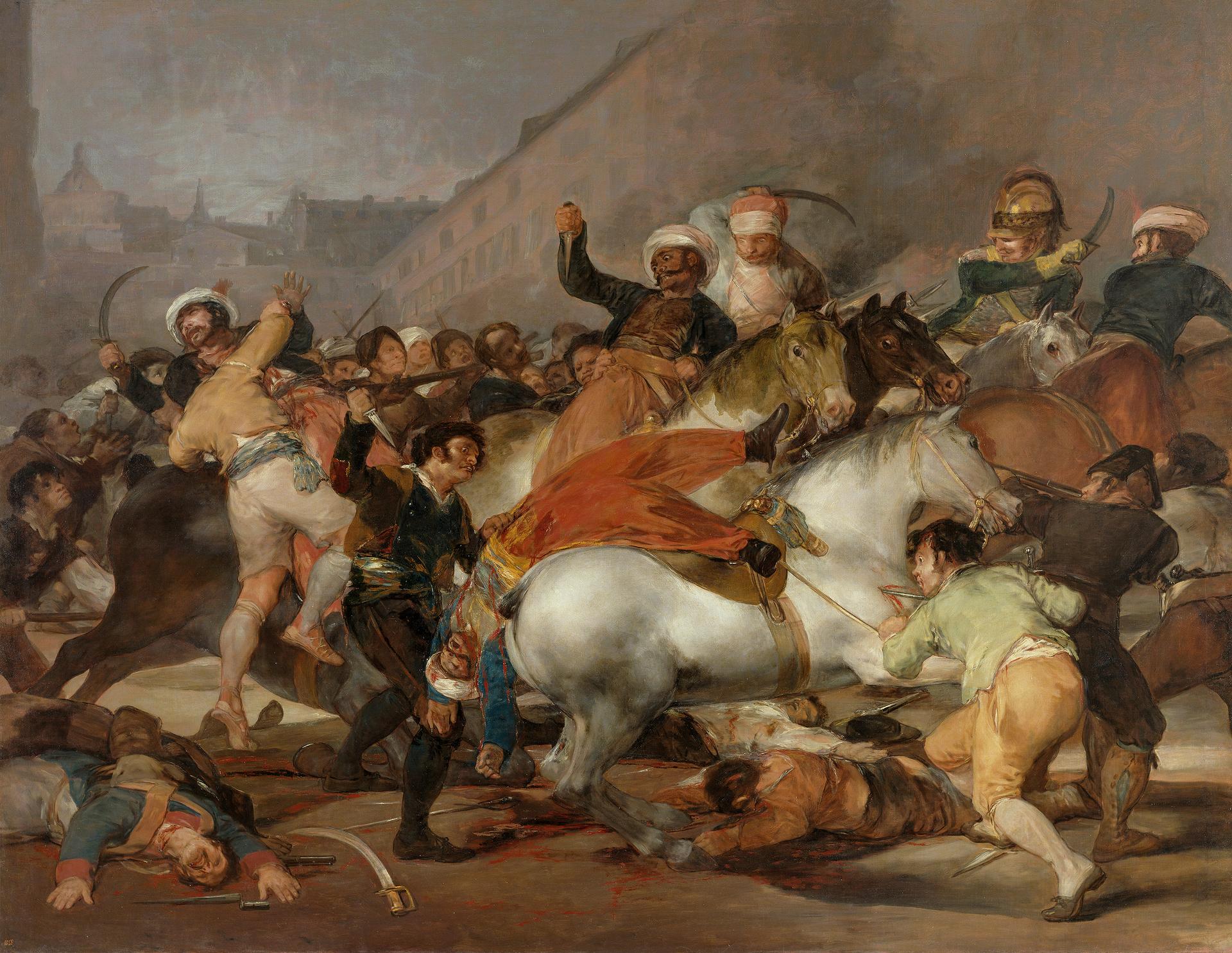
lived a few streets from here and painted what unfolded on this spot six years later, though to this day it's unclear whether he saw it with his own eyes. For he did his research carefully, and he chose a vantage point that drops you straight into the fighting, with the horses so close you'd want to step aside.
What he painted happened here. sent his into the , cavalrymen of the imperial guard recruited in Egypt and reckoned the most feared troops he had, and they rode down a crowd that had almost nothing to defend itself with.
The canvas hangs in the , a fifteen-minute walk from here. During the it was so badly damaged in an accident with a truck that pieces of it were missing, and the restoration wasn't finished until 2008.
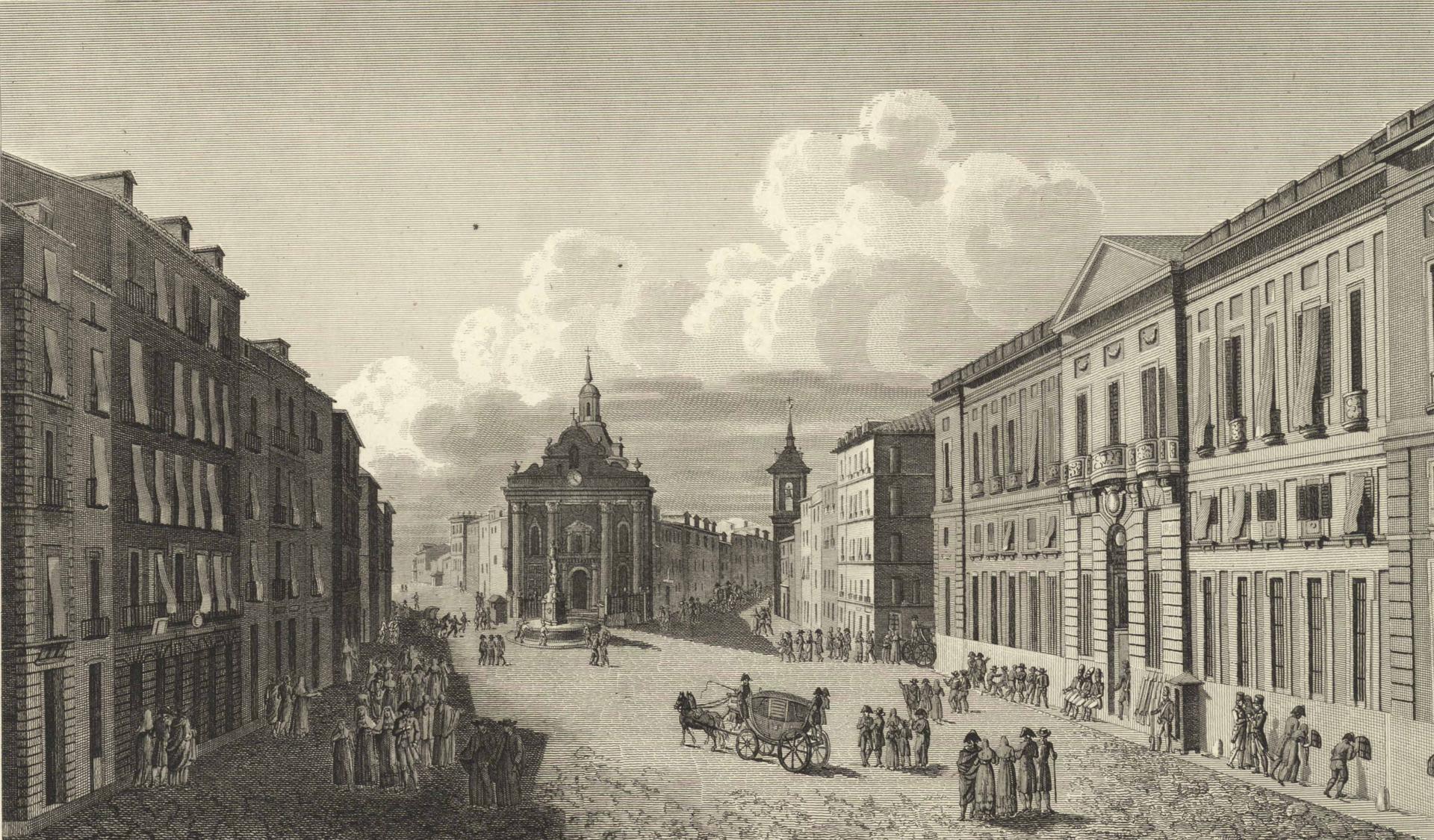
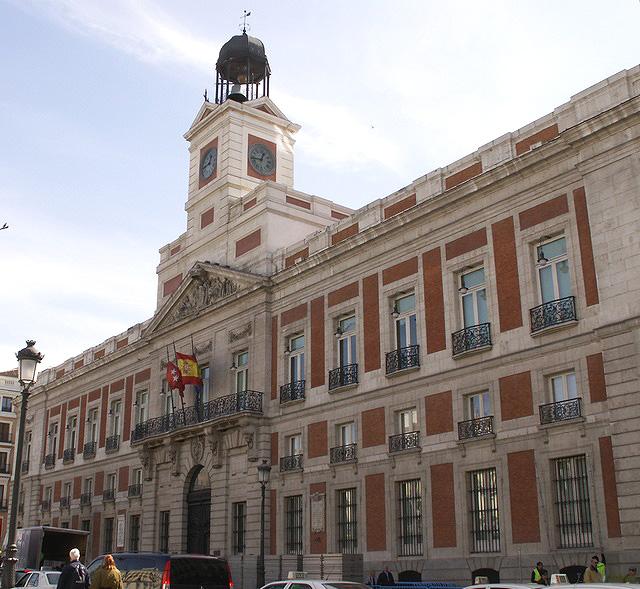
To your right, on the south side of the square, there's a building with a bell tower.
Sources. Story: Museo Nacional del Prado, catalogue record P00748, El 2 de mayo de 1808 en Madrid o La lucha con los mamelucos; Manuela B. Mena Marqués (ed.), Goya en tiempos de guerra, Museo Nacional del Prado, 2008. Photos: Francisco de Goya, El 2 de mayo de 1808 en Madrid o La lucha con los mamelucos, 1814, Museo Nacional del Prado, public domain via Wikimedia Commons.