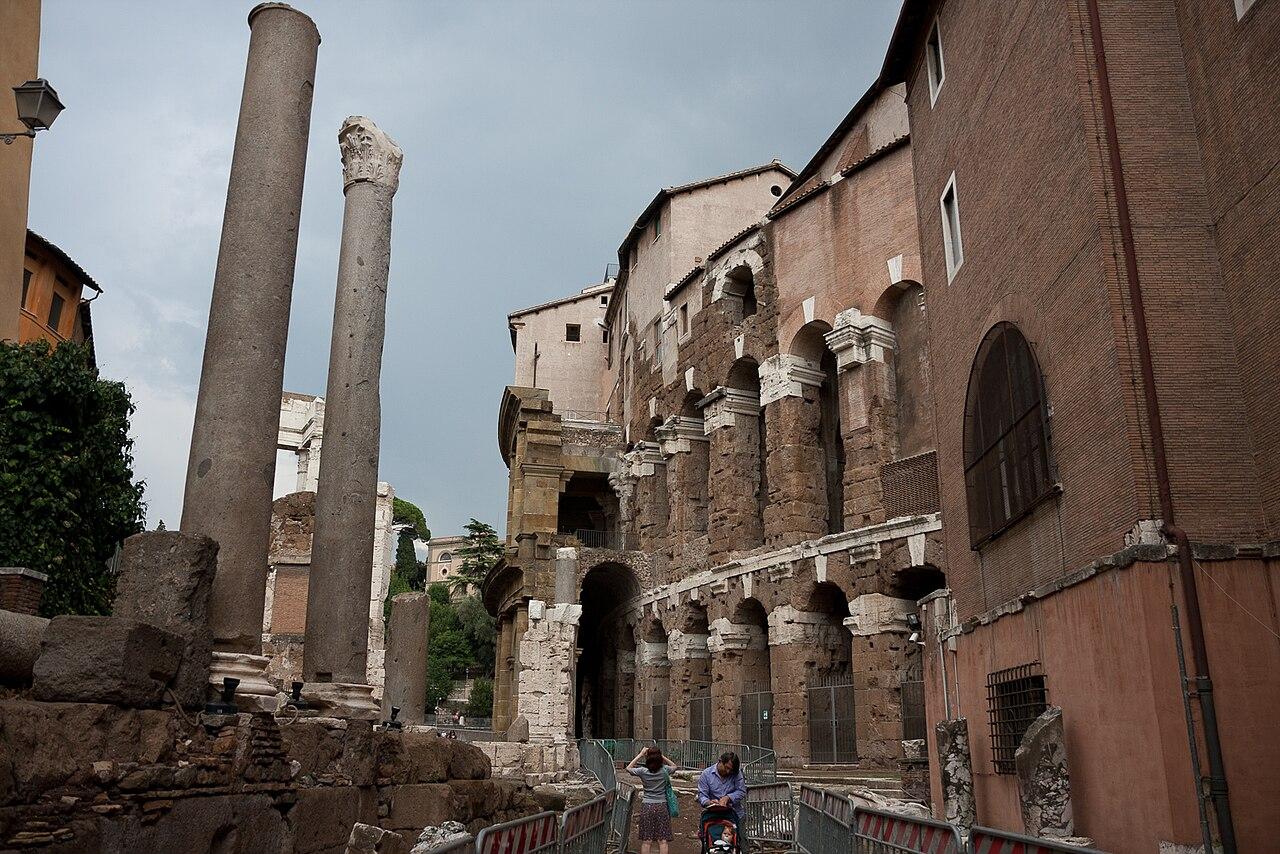
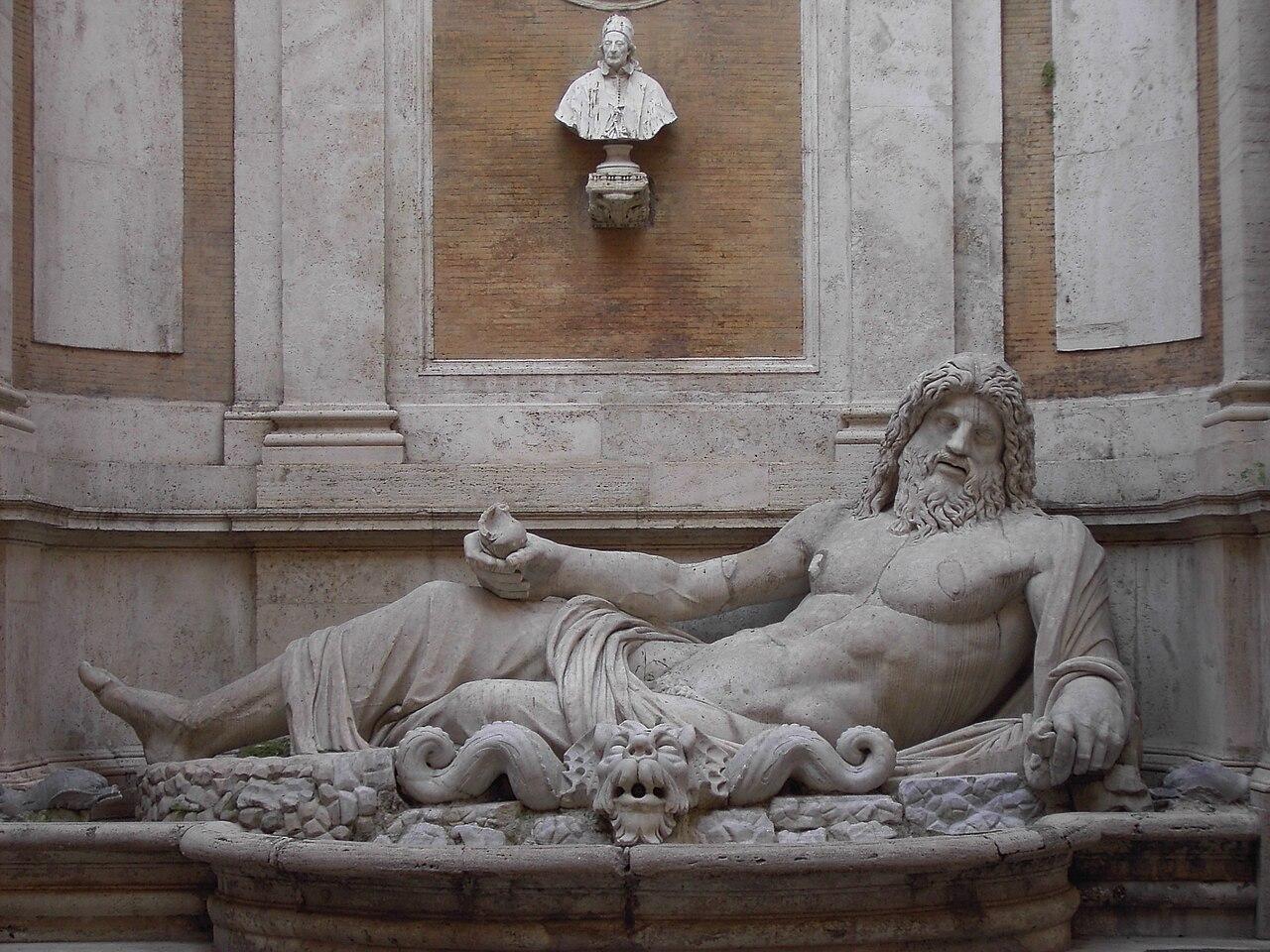
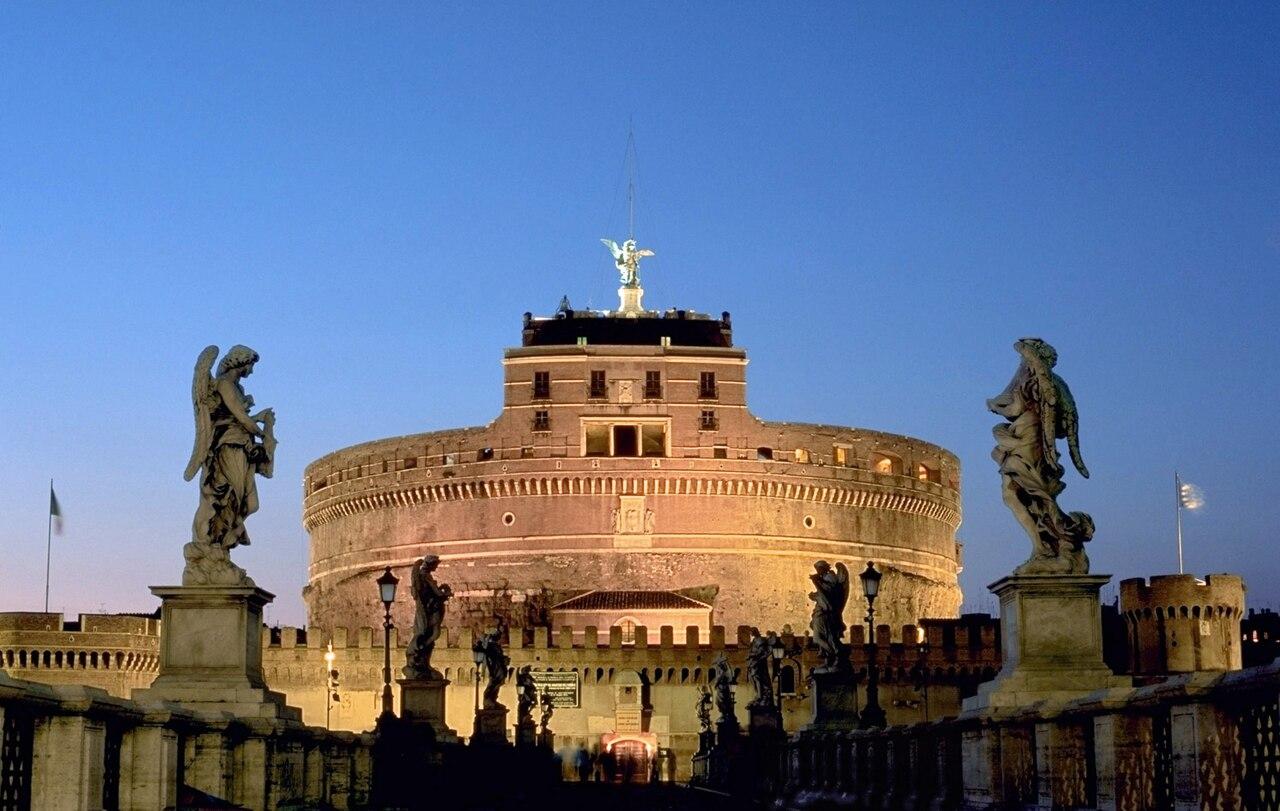
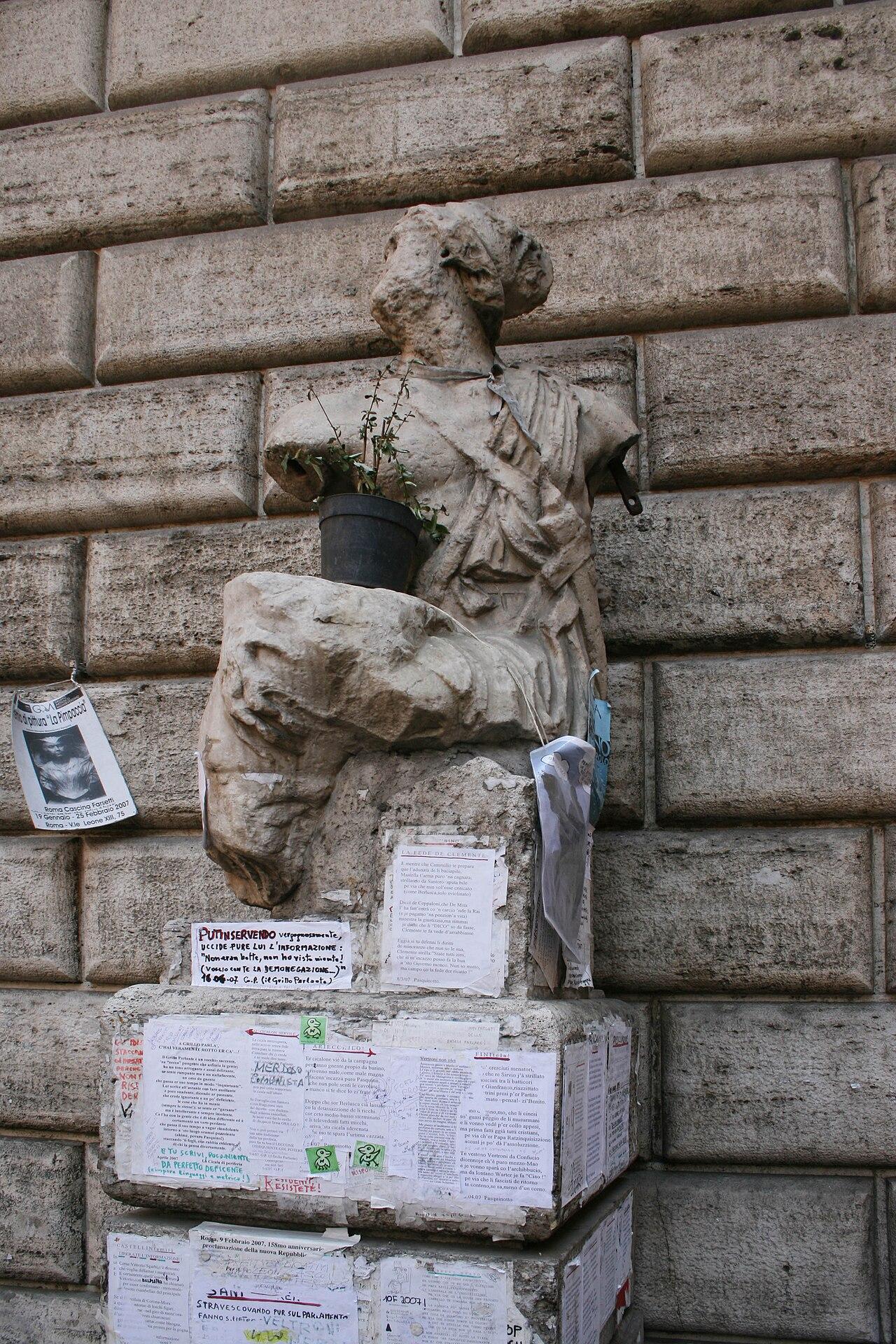
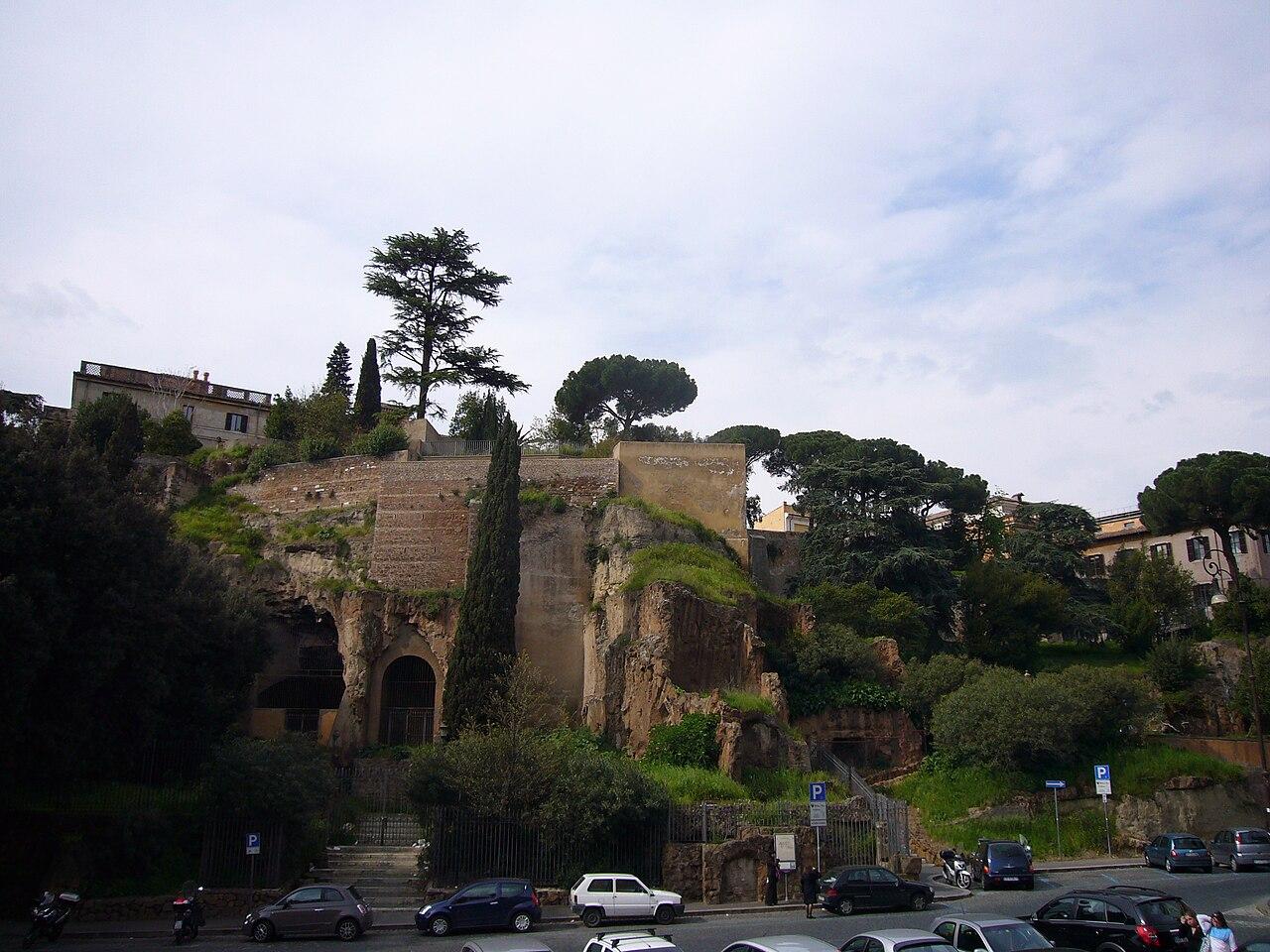
Below this edge sits the Tarpeian Rock, and the name comes from how the story unfolds.
The city was full of men and had almost no women, so invited the neighbouring peoples to a festival with games. During the show, at a signal, his men seized the unmarried daughters of the Sabines and carried them off. The word the sources use means to abduct, and later painters turned it into something rather gallant that it never was.
The Sabines came back with an army. They took the stronghold on this hill thanks to Tarpeia, the daughter of the commander, who opened the gate for them in exchange for what they wore on their left arms, meaning their gold bracelets. The Sabines gave her what they carried on that arm: their shields, under which they buried her. For centuries afterwards, traitors were thrown from this rock.
While the two armies faced each other, the one thing happened that nobody had counted on. The abducted women walked out onto the battlefield and stood between their husbands and their fathers, arguing that either way they would lose. The sides made peace and the two peoples carried on together, with two kings side by side for a while.
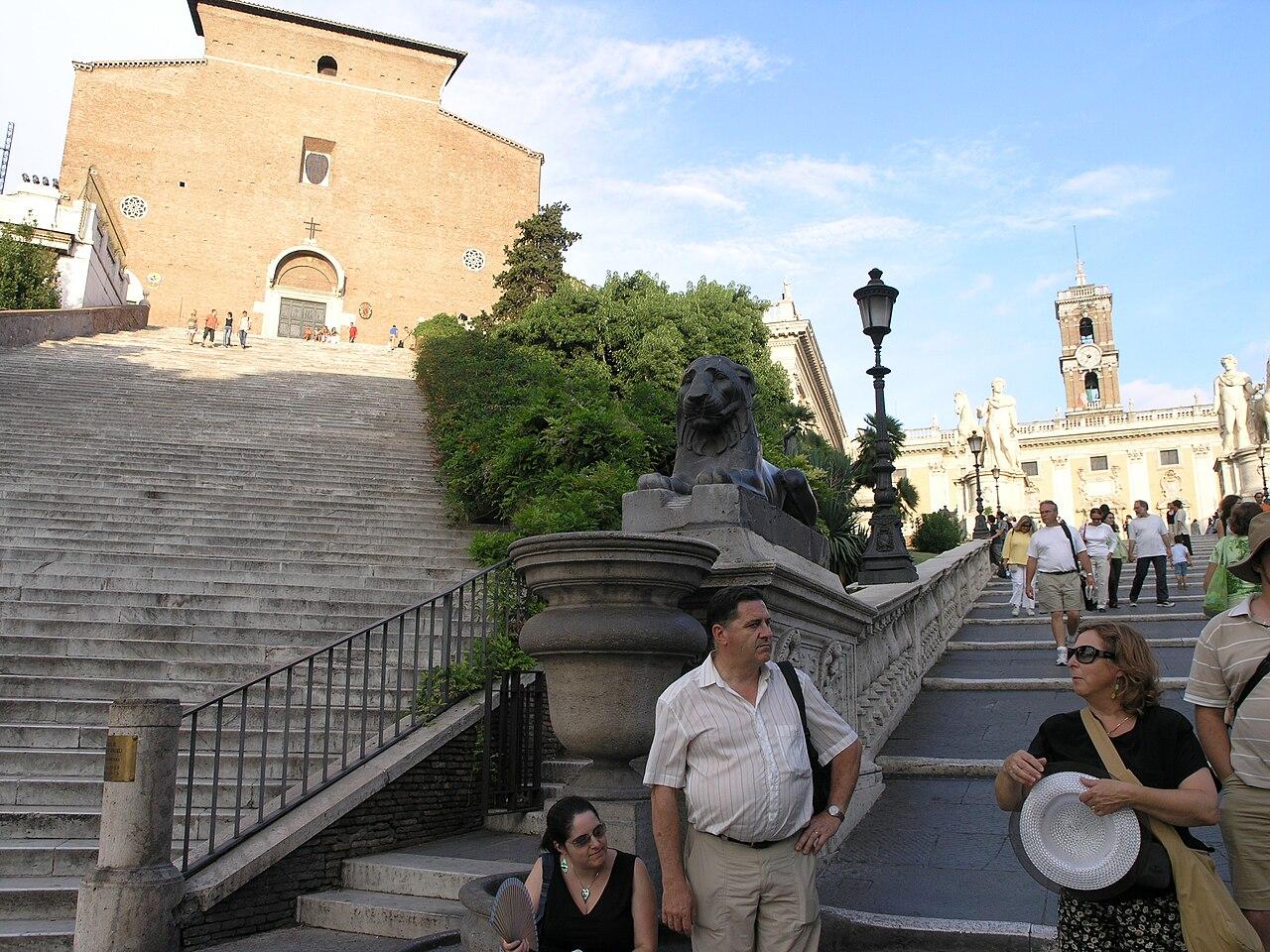
We head back to the middle of the square, to the column by the steps.
Sources. Story: Sovrintendenza Capitolina ai Beni Culturali (Rupe Tarpea); Treccani (ratto delle Sabine, Tarpeia) Photos: Photo: Lalupa (Wikimedia Commons, CC BY-SA 4.0)